• English
  • Русский

Libyan commander Haftar helped secure release of US hostage in Sahel

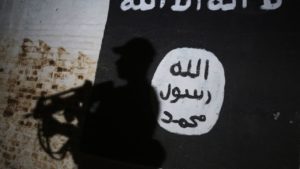
A deal to free an American hostage held by an Islamic State affiliate in West Africa’s Sahel region was brokered with the help of the eastern Libyan military commander Khalifa Haftar, four sources told Reuters.

The hostage, a pilot working for a Christian missionary organization in Niger, was handed over to eastern Libyan authorities late Thursday, one of the sources said. Libya's role in the deal has not previously been reported.

Haftar’s involvement in the freeing of a US hostage reflects how he has carved out a position as a major security broker in the Sahel region, and has used it as leverage to curry favor with the Trump administration.

The missionary, Kevin Rideout, worked for the evangelical agency Serving in Mission and was kidnapped in Niger in October. It was not clear what, if anything, was traded in exchange for his release. One of the four sources said the Libyan side had paid a ransom, without providing further details.

The State Department declined to comment. The White House did not respond to a request for comment about Haftar's involvement. In a social media post, Trump said the US looks forward to welcoming Rideout home.

The authorities in eastern Libya were not immediately available for comment.

Reuters reported last year that Rideout was seized by three unidentified men on his way to the airport in Niamey and taken to the western Tillaberi region of Niger, where Islamist militants linked to Islamic State and al Qaeda operate.

The US has made recovering Rideout one of its top priorities in the Sahel. The Trump administration lifted sanctions on top Malian government officials earlier this year in an effort to secure overflight access to the country's airspace to hunt for the pilot.

For months, officials believed Rideout may have been moved to Malian territory.

The details of Rideout’s handover to Libyan authorities and his journey to Libya were not immediately clear.

Two sources said the recent effort to secure his release from the Islamic State affiliate was led by Cherif Ould Tahar, a Malian Arab businessman with connections to regional armed groups and smuggling networks. Tahar could not immediately be reached for comment.

Woman charged over vandalism of Washington’s World War Two memorial

A Kentucky woman has been taken into custody and charged with two felony counts in connection with the vandalism at the World War Two memorial in Washington, US Attorney for the District of Columbia, Jeanine Pirro, said on Friday.

Pirro said on social media that Melissa Farris faces charges, each carrying penalties of up to 10 years in prison.

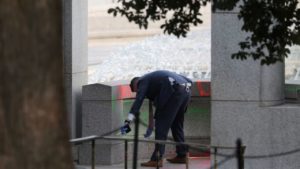
The World War Two memorial was vandalized with bubbly soap and graffiti on Thursday. The fountain bubbled over with suds and the words “Clean hands Dirty $” were painted on one surface, splattering the area with red and green paint.

In videos posted to her Facebook account, Farris records herself spray painting the memorial and asking why she has not been arrested. She describes herself on the social media platform as a "pirate captain" who is "panhandling for America."

The criminal complaint filed Friday quotes Farris as saying, “Someone has to make choices that are different, and I am accountable for my actions,” she said. “I am going to make these choices today, and I will step foot into the courtroom, and I will wait to be arrested …. Our government needs to be accountable for their choices too.”

In later videos posted after the incident, she appears disheveled and crying, saying she knows she upset people by her actions but was trying to get help for herself.

According to the complaint, a witness took a photo of Farris spray painting the memorial, an image that was circulated among US Park Police.

An officer recognized Farris as someone they had arrested three days earlier for unlawfully camping on federal property a few blocks from the memorial.

Law enforcement found a white sign with painted letters in a nearby trash can, with paint that appeared to match the paint used on the memorial.

Along with her statement on X/Twitter, Pirro posted photos of a woman who appears to be Farris holding a can close to the red paint on the memorial.

Two of Farris’ family members contacted by Reuters declined to comment.

Pirro has recently drawn US President Donald Trump’s anger for dropping charges against four people accused of vandalizing the Reflecting Pool after Trump oversaw renovations of the pool.

The pool's condition soon deteriorated, with a peeling liner and algae blooms. Pirro blamed that deterioration on faulty installation in dropping the vandalism charges.

Trump said in response that Pirro had "folded like an umbrella."

Trump appeared to link the Reflecting Pool damage to the World War Two memorial in a post on social media on Friday, calling it an insult to Americans who had died in the conflict.

"First the Reflecting Pool, now this," he wrote. "We are on their trail! Where do these animals come from???”

American Christian missionary kidnapped in Niger back in US hands, on his way home – report

Kevin Rideout, an American missionary pilot who was kidnapped in Niger’s capital Niamey in October last year, has been released and is in US hands, The New York Times reported late on Thursday, citing two US officials.

Rideout is on his way to the United States, the Times said, adding that he was in good health based on proof-of-life images that were provided to American officials in the past 48 hours.

The US State Department and the White House did not respond to requests for comment on the report outside regular business hours.

Reuters had reported in October that the missionary, who is a pilot for the evangelical missionary agency Serving in Mission, was seized by three unidentified men as he headed to the airport, citing an unnamed diplomat, but did not identify Rideout by name at the time.

The kidnappers then headed toward the western Tillaberi region of Niger, where Islamist terrorists linked to Islamic State and al-Qaeda are active.

Niger, like its neighbors Mali and Burkina Faso, has been battling jihadist insurgencies for over a decade.

The US issued a travel warning to Niger days after the kidnapping, warning its citizens against traveling to Niger, citing crime, unrest, terrorism, health, and kidnapping.

Reuters had later reported in March that the US was pushing to resume intelligence gathering in neighboring Mali, partly driven by a desire to find the kidnapped missionary, who at the time was believed to be held in Mali by the local al-Qaeda affiliate, Jama’at Nusrat al-Islam wal-Muslimin (JNIM).

According to the New York Times, details of how and where Rideout was released remained unclear. It was also unclear which group was holding Rideout at the end of his captivity, as he may have been moved recently, the Times added.

UK Reform party leader Nigel Farage defeats main opponent Count Binface to return to parliament

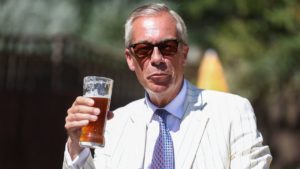
Reform UK leader Nigel Farage regained his parliamentary seat on Friday in an election he triggered to bolster his position against allegations of financial impropriety, a strategy that was undermined when his main challenger, a comedian dressed as a trash can, won more than a quarter of the vote.

Farage, one of Britain's leading Brexit campaigners, in a highly unusual move, did not turn up at the vote count in the southern English seaside resort of Clacton because he said the police had advised him there was a campaign to disrupt the result. He also canceled a victory speech planned for later on Friday.

"I am damned if I am going to stand on a stage, having won a resounding victory… and be demeaned and humiliated by nobodies," Farage told supporters at a party before the result was announced.

The election was triggered after Farage resigned from parliament last month to seek a fresh mandate from voters in what he described as a war against an establishment bent on discrediting him over taking undeclared gifts from donors.

The result, while a victory, underscored the political risks of Farage's gamble. With a parliamentary investigation into his finances set to resume, the vote may have done little to remove a threat he wanted to sideline.

After Britain's main parties pulled out of the race, calling it a self-serving stunt, Farage's main challenger ended up being Count Binface, a figure created by comedian Jonathan Harvey, who has become a fixture of fun at British elections.

While Farage took 62.8% of the vote, Count Binface, whose policies included capping the price of ice cream cones and conscripting anyone using a speakerphone on public transport, secured 26.7%.

After enjoying a lengthy lead in the opinion polls, Reform has seen its popularity wane, driven partly by the funding accusations made against Farage, who is under investigation in parliament over whether he should have declared a £5 million gift from a cryptocurrency billionaire investor.

After declaring his decision to trigger the election in Clacton little more than a ploy to distract from those allegations, other British parties pulled out of the race, leaving even some of Farage's strongest supporters questioning whether the veteran politician had been wrong-footed.

Laura Richards-Gray, a politics lecturer at Birkbeck University in London, said the absence of major-party opponents undermined his attempt to turn it into what he called a "people versus the establishment" contest.

"This has backfired, particularly nationally, as Farage lost control of the narrative," she said, adding some voters saw the election as "a waste of time and money."

Farage's position has not been helped by a rise in support for the governing Labour Party.

Since Andy Burnham became prime minister last month, Labour has been enjoying a bounce in ratings, with the party leading Reform 28% to 25%.

Burnham has dominated the airwaves and social media in his first few weeks in office, and while the next national election is expected in three years’ time, he appears to be consolidating a left-leaning bloc around Labour.

Reform, on the other hand, is competing for a divided right-wing vote with the Conservative Party and the anti-immigration party Restore Britain gaining in support.

Despite winning this vote, the parliamentary watchdog is expected to continue its investigation into his financial declarations once he returns to parliament.

At the heart of the investigation is whether he should have declared the gift from a Thailand-based billionaire before the 2024 national election. Under ‌parliamentary rules, members of parliament must declare any donations received in the year preceding an election within one month of taking office.

Farage has admitted receiving the money, but not declaring it, saying he has done nothing wrong because it was a personal gift.

If the parliamentary authorities, who are investigating, conclude that Farage breached declaration rules, he could face a suspension from parliament, and another vote to retain his seat, where the main parties would probably field candidates.

US World War Two memorial vandalized with soap, graffiti, government vows to find perpetrator

The World War Two memorial in Washington was vandalized with bubbly soap and graffiti on Thursday, prompting vows from the US government to find the perpetrator.

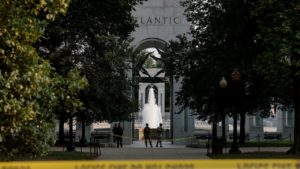
The fountain bubbled over with suds and someone painted "Clean hands Dirty $" on one surface, splattering the area with red and green paint. Uniformed police and National Guard troops converged on the scene, which was cordoned off with yellow crime scene tape, keeping visitors away.

One investigator in plainclothes bent over the site of the graffiti, measuring the damage with a tape measure, Reuters pictures showed. Workers arrived to remove the graffiti, the Washington Post reported, citing Park Police officers at the site.

Dedicated in 2004, the memorial features 56 granite pillars around the edge of an elliptical plaza on the National Mall as a monument to the 400,000 Americans who died and 16 million who served in the armed forces during the conflict, according to the National Park Service.

"The vandalism that occurred is an utter disgrace and will not be tolerated," the Interior Department, which oversees the National Park Service, said in a statement. "Our US Park Police are on the scene and the investigation is ongoing. The public should know we will find the person responsible for this disgusting act."

The Friends of the National WWII Memorial, a nonprofit group dedicated to preserving the memorial, called the vandalism “unacceptable,” saying the memorial was a “sacred place of remembrance.”

"There are many places in our country for expression, debate, and disagreement. A national memorial honoring those who served and those who never returned home should never be used as a canvas for vandalism," the Friends said in a statement.

The US role in World War Two is largely a matter of national pride and unity even in highly polarizing times, though many Americans still debate whether the US should have dropped two atomic bombs on Japan to end the war.

The vandalism comes as US President Donald Trump has launched a personal and sometimes politically divisive campaign to alter memorials around Washington.

Trump announces steep tariffs on drones, citing US reliance on foreign suppliers

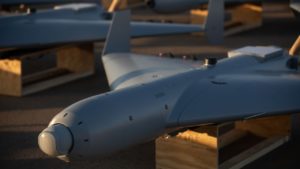
US President Donald Trump said on Thursday he will impose tariffs on imports of drones and their components, including from some key U.S. allies, with the Trump administration saying the country was “too reliant” on foreign sources of drones.

A proclamation signed by Trump imposes a 100% ad valorem tariff on drones of a certain size or with certain capabilities that are particularly sensitive for national security purposes, the White House said, adding that a tariff of 25% will be imposed on drones that are smaller in size.

A 15% tariff will be imposed on drones and components from the European Union, Japan, Liechtenstein, South Korea, Switzerland, and Taiwan, and a 10% ad valorem tariff will be imposed on drones from the UK, the White House added.

Trump has made tariffs a central pillar of his foreign and trade policies despite legal setbacks and criticism from some analysts.

Trump said in the proclamation text released by the White House that Commerce Secretary Howard Lutnick had probed the effects of imports of unmanned aircraft systems or drones.

"The Secretary found that import penetration from foreign producers of UAS is substantial and that the United States is too reliant on foreign sources of UAS and UAS components," Trump said.

Lutnick found that drone and drone components from certain foreign entities “pose security and safety risks” and that the domestic US industry does not produce enough to meet security needs, Trump said.

The tariffs will take effect in 21 days, the White House said.

For components of drones that are not particularly sensitive, the tariffs will take effect 180 days after signing, it said.

For products the Pentagon has approved for an exemption from the Federal Communications Commission's "Covered List" within 20 days of signing, the tariffs will take effect 180 days after signing, the White House said.

What Venezuela’s renewed ties with Israel could mean for Iran – analysis

Four days before then-Venezuelan strongman Nicolas Maduro was captured by US forces on January 3, the United States Treasury announced sanctions against 10 Iranian and Venezuelan individuals and entities involved in the two countries’ weapons trade.

Among them was Venezuela’s state-owned Empresa Aeronautica Nacional SA, or EANSA. According to the US Treasury Department, the company maintained and oversaw the assembly in Venezuela of Mohajer-series unmanned aerial vehicles (UAVs) produced by Iran’s Qods Aviation Industries and had directly negotiated the purchase of millions of dollars’ worth of Mohajer-6 combat drones.

The relationship between the two companies dates back to 2006. The Iranian Mohajer-2 was produced in Venezuela as the Arpia and later developed into the armed ANSU-100, which the Treasury said was capable of launching Iranian-designed Qaem guided air-to-ground bombs. EANSA’s chairman had coordinated with members of both the Iranian and Venezuelan armed forces on UAV production inside Venezuela.

“The Treasury is holding Iran and Venezuela accountable for their aggressive and reckless proliferation of deadly weapons around the world,” Treasury Under Secretary John Hurley said when announcing the sanctions.

Now, a matter of months later, Venezuela’s relationship with Iran is back in the spotlight, but for very different reasons – reasons that may have Tehran worried. It was announced this week that Venezuela’s post-Maduro government is establishing an official consular channel with Israel for the first time in 17 years. After two wars with Israel in the past 14 months, Iran may worry its influence in Venezuela will now be tested.

Israel and Venezuela have not restored full diplomatic relations nor announced the reopening of embassies, but after talks between Venezuelan Foreign Minister Felix Plasencia and Israeli Foreign Minister Gideon Sa’ar, they agreed to establish a mechanism to provide consular services and to continue technical cooperation that began after Israel sent personnel to assist Venezuela following June’s devastating earthquakes.

“The two countries agreed to allow the continuation of bilateral technical cooperation arising from the emergency and recovery efforts following the double earthquake,” Plasencia said in announcing the agreement, adding that they would establish a mechanism for consular services.

“Both governments recognize the importance of the relationship between the State of Israel and the Jewish community in Venezuela, which constitutes an important historic bridge of friendship between the two countries,” Venezuela’s government said in a statement, which was also issued by Israel’s Foreign Ministry.

It is the identity of Venezuela’s new partner, rather than any specifics within the agreement, that makes it relevant to Iran, and a sign of how far things have come since the turn of the century. Many countries around the world maintain relations with both the Islamic Republic and Israel, but few are so close to Iran and have seen such a diplomatic about-face with regard to the Jewish State.

Former president Hugo Chavez condemned Israel during the 2006 Lebanon war in extreme terms, accusing Israel of “going mad and inflicting on the people of Palestine and Lebanon the same thing they have criticized, and with reason: the Holocaust. But this is a new Holocaust.”

In August of that year, Chavez had called for Israeli leaders to face a trial for genocide, stating the Jewish state had “done something similar or, perhaps worse, who knows, than what the Nazis did.”

In 2008, during a diplomatic disagreement with neighboring Colombia over the latter’s intrusion into Ecuador, Chavez said: “the Colombian government has become the Israel of Latin America.” Just one year later, during Operation Cast Lead in Gaza, Venezuela expelled Israel’s ambassador and broke diplomatic relations, with Chavez declaring during a TV broadcast, “Damn you, State of Israel.”

In 2010, Chavez accused Israel and the Mossad of plotting against him and denounced Israel as a “terrorist and murderous state.”

While relations with Israel reached new lows under Chavez, Caracas also saw a deepening relationship with Iran. Chavez and former Iranian president Mahmoud Ahmadinejad, both self-styled anti-American revolutionaries, struck up a close rapport after Ahmadinejad took office in 2005, and the two leaders visited each other’s countries three times apiece between 2005 and 2007. On a July 2006 trip to Tehran, Chavez met with former supreme leader Ayatollah Ali Khamenei and was awarded the Higher Medal of the Islamic Republic of Iran, the country’s highest state honor – a gesture that followed Chávez’s public backing of Iran’s nuclear program at the UN earlier that year. During the same visit, he accused then-president George W. Bush of having a “relationship with the devil.”

By the end of Chavez’s presidency in 2013, Iran and Venezuela had signed hundreds of agreements covering energy, banking, housing, agriculture, cement, and automobile production. The Center for Strategic and International Studies later estimated Iranian investments and loans in Venezuela at between $15 billion and $20 billion by 2012, although many projects either stalled or produced substantially less than their governments had promised.

However, under Maduro, the relationship took on a different meaning. US sanctions progressively restricted both countries’ access to conventional financial, energy and industrial markets, giving each something the other increasingly needed.

The extent of that dependence was evident by 2020, when the deterioration of Venezuela’s refining industry led to acute gasoline shortages. Iran supplied fuel, refinery components, and technical assistance to the isolated South American nation. The two governments subsequently developed oil swaps under which Iran supplied condensate and crude to Petroleos de Venezuela, SA (PDVSA), Venezuela’s state-owned national oil and gas company.

Venezuela imported around 73,000 barrels per day of Iranian crude and condensate in 2022 and approximately 40,000 barrels per day in 2023, according to company records and shipping data cited by Reuters.

Iran was also working inside Venezuela’s refining infrastructure. Tehran agreed to a roughly €110 million overhaul of the 146,000-barrel-per-day El Palito refinery, while plans were developed for Iranian state refiner NIORDC to work on the much larger Paraguana refining complex.

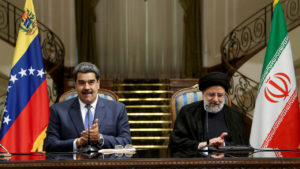
The relationship was further strengthened in June 2022, when Maduro and then-Iranian president Ebrahim Raisi signed a 20-year cooperation plan covering oil, petrochemicals, defense, agriculture, tourism, and culture, including Iranian repairs to Venezuelan refineries and the export of Iranian technical and engineering services.

“Venezuela has shown exemplary resistance against sanctions and threats from enemies and Imperialists,” Raisi said at the time. “The 20-year cooperation document is testimony to the will of the two countries to develop ties.”

Khamenei was explicit about what Iran believed it had achieved in Latin America.

“The successful experience of the two countries showed that resistance is the only way to deal with these pressures,” he said during Maduro’s visit. “The two countries have such close ties with no other country, and Iran has shown that it takes risks in times of danger and holds its friends’ hands.”

“You came to our aid when the situation in Venezuela was very difficult, and no country was helping us,” Maduro told Iranians in response to Khamenei’s comments.

Given such close relations and the departure of both Maduro and Khamenei from the geopolitical scene, the changes taking place in 2026 cannot be overstated.

The Iranian-Venezuelan alliance also gave Iran an established state partner in the Western Hemisphere willing to cooperate with the Islamic Republic’s defense industry and support its challenge to American policy.

There were the occasional signs that this arrangement was becoming less attractive to Caracas before Maduro’s removal.

In March 2024, Reuters reported that PDVSA had fallen behind on its side of oil-swap agreements, prompting Iran to halt cargoes in May 2023. Projects had stalled, and the two governments had failed to come close to their ambitions for $25 billion in trade and investment.

Less than $10 billion in business remained active, according to the Reuters report. More significantly, when Washington temporarily relaxed sanctions and Venezuela gained greater access to international markets, PDVSA began favoring customers that could pay cash rather than sending cargo to Iran under the swaps.

Iran’s greatest economic value to Venezuela came when Venezuela had few alternatives. If access to US and other Western markets, investment, technology, and customers is restored, Iranian cooperation has to compete with options that sanctions had previously removed.

Maduro’s capture helped to speed up that change.

The US made clear that reducing Iranian influence was among its objectives, and just days after Maduro was removed, American officials were pressing acting President Delcy Rodríguez to distance Venezuela from Iran, Russia, and China. Initial US intelligence assessments reportedly questioned whether Rodríguez, Maduro’s former vice president, would comply, but the developments that followed have moved consistently in that direction.

Caracas began an exploratory process with Washington within days of Maduro’s removal. In March, Venezuela and the US formally agreed to restore diplomatic and consular relations.

Then, in July, came a public dispute with Tehran.

On July 28, Venezuela summoned the Iranian ambassador and presented him with a formal diplomatic protest over what its Foreign Ministry called “contemptuous and inappropriate” remarks concerning Venezuelan institutions and authorities. Reports linked the dispute to Iranian Foreign Minister Abbas Araghchi’s assertion, while discussing negotiations with Washington, that Iran was “not Venezuela.”

Venezuela went further than simply complaining about the remark. The Foreign Ministry demanded “the cessation of any allusion or comparison that undermines the dignity, sovereignty, institutional integrity, or good name” of Venezuela.

When set against Khamenei’s description four years earlier of two countries with ties so close that neither possessed an equivalent relationship elsewhere, it is a mighty fall from grace.

Less than two weeks after Venezuela protested against Iran, the establishment of official consular cooperation with Israel was announced.

The move also came just one month after Israel and Israeli aid organizations rushed to Venezuela to help deal with the aftermath of an earthquake which left over 6,300 dead according to latest estimates, and over 70,000 injured. The IDF also traveled to Venezuela to help with the aid efforts.

Rodríguez thanked Israel last month for sending “a highly specialized and professional group” after the twin earthquakes that recently shook the country. The team, she said, was brought in through the efforts of Venezuela’s Jewish community, allowing the Venezuelans “to connect with the Israeli government,” and was helping determine which damaged buildings might still hold survivors and whether they still contain bodies needing to be recovered.

This does not automatically mean that Caracas has decided to end its relationship with Tehran. Venezuela has yet to announce any withdrawal from the 20-year cooperation agreement or termination of Iranian military cooperation. The infrastructure developed during two decades of relations cannot be dismantled through a consular agreement.

The more useful question is what Venezuela still requires from Iran.

In 2022, Maduro could tell Tehran that Iran had helped when “no country was helping us.” In 2026, that is no longer applicable.

Venezuela again has access to diplomatic and economic arenas with the West that were previously unavailable, and its government has demonstrated that it is prepared to publicly rebuke the Iranians. With renewed ties with Israel, it offered Venezuela another friendly option when it appeared no one else would help them. And for the Iranians, that must be a worrying prospect.

Poland says it arrested Russian hired to kill ‘inconvenient’ Ukrainian-American citizen

Poland has arrested a Russian man who was hired by Moscow to kill a Ukrainian-American citizen in Warsaw, Polish Prime Minister Donald Tusk said on Thursday.

The Russian was detained on August 7 and had been recruited to kill a man who was "inconvenient to the Putin regime," Tusk told journalists.

The Russian embassy in Warsaw did not immediately respond to an emailed request for comment. Moscow has regularly dismissed accusations by European powers of attacks, saying the West is stoking anti-Russian paranoia.

"Thanks to the truly brilliant action of our services … we detained a Russian citizen recruited by Russian intelligence services," Tusk said.

The Russian had been hired to kill a man who had both Ukrainian and US passports, Tusk said, without giving any more information on his identity.

"At the last minute, thanks to the action of the Internal Security Agency and the police, we managed to prevent this execution, this attack," Tusk added.

In June, a Russian artist critical of President Vladimir Putin was shot and killed in the eastern Polish town of Biala Podlaska, prosecutors said.

Poland says its role as a hub for military and other supplies to neighboring Ukraine has made it a target for Russian espionage and attacks.

USS Abraham Lincoln conditions under scrutiny after reports sailors attempted to jump overboard

US Senator Richard Blumenthal (Connecticut) has demanded a formal inquiry into the conditions aboard the USS Abraham Lincoln in a letter sent Wednesday to US Defense Secretary Pete Hegseth and Acting US Navy Secretary Hung Cao.

Blumenthal, who himself served in the US Marine Corps Reserve, sent the letter following reports of several US Navy service members stationed aboard the USS Abraham Lincoln attempting to jump overboard as the aircraft carrier enters its ninth month of deployment at sea.

Two American newspapers that cover matters related to the US military, Navy Times and Stars and Stripes, originally reported on the matter earlier this week. 

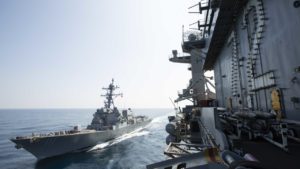
The carrier has spent nearly 250 consecutive days at sea without making land since its departure from San Diego in November 2025. It was originally deployed for duty in the South China Sea before being rerouted to the Middle East ahead of the outbreak of Operations Epic Fury in February 2026.

“The Lincoln’s extended deployment raises broader questions about the Navy’s ability to sustainably generate carrier forces while preserving service member well-being, maintenance, schedules, fleet readiness, and the capacity to respond to future contingencies,” wrote Blumenthal in his letter.

Citing reports of supply shortages, water contamination, and several other issues that have arisen over the past months, Blumenthal granted the US Navy two weeks, until August 27, to provide answers.

In his questions posed to the naval force, Blumenthal requested details surrounding Lincoln’s extended deployment, how the Navy assesses the mental health and morale of its soldiers, and how it has worked to solve the quality-of-life problems that have been reported on board the carrier.

Further, Blumenthal asked the Navy to explain what military objective Lincoln’s ongoing deployment is meant to achieve and how the US Defense Department “assess[es] whether the carrier’s continued presence is necessary to accomplish that objective.”

US Senator Ruben Gallego (Arizona) echoed Blumenthal in a post to X/Twitter on Thursday, saying that he is looking into conducting an official oversight visit with a bipartisan Senate Delegation due to the reports.

“Unlike Donald Trump, I’ve seen active duty. The way he’s treating our service members as he carries out this illegal war is not just disgusting; it’s dangerous,” Gallego wrote. “These sailors are owed a sense of when they will go home.”

“The stories of crew members threatening to jump off the ship are a frightening alarm bell as to how bad the situation has become: moldy showers, sporadic hot water, rationed meals and soap, broken toilets, and grueling 12- to 16-hour shifts with no days off.”

“Congress must do its duty to provide oversight and hold the administration accountable for these actions,” he said.

Late last week, Cao and several other senior Navy officials had reportedly held a town hall-style meeting with the families of the service members aboard the Lincoln.

One of the spouses told Cao and the other officials that her husband had sent her a message on Thursday saying that “he hopes he doesn’t wake up tomorrow,” reported Stars and Stripes, citing one of the meeting attendees.

According to the spouse, officials didn’t directly address that or other similar statements presented to them by concerned family members, but did affirm that those aboard Lincoln had access to mental health professionals, chaplains, and doctors.

Navy Times reported that Cao said that the US Navy is preparing the USS Theodore Roosevelt carrier strike group to relieve Lincoln, but could not provide a timeline due to “operational security.”

Annabelle Loma, the wife of one of the service members who tried to jump from the aircraft carrier, told Navy Times that her husband had been repeatedly overextended before his attempt. 

“He’s scared,” Loma told Navy Times. “He thinks he’ll get a dishonorable discharge, and just because he was burnt out, his 13-year career is ruined, just like that. That’s not fair, that’s not right. That’s not what he should be worrying about right now.”

According to Navy Times, the Lincoln’s ombudsman had initially called Loma to inform her of the incident and that her husband was put on medical hold.

She has not heard anything else from the US Navy “in recent weeks,” Navy Times reported.

Both papers gave details of several other attempts made by service members to jump overboard, including an incident where the jumper was restrained by other soldiers who happened to be on watch.

“When she can email me, she’s definitely down,” Shelby Sander, whose mother is stationed on Lincoln, told Navy Times. “I think they’ve had five weeks of non-stop combat operations or something like that, so that makes it really tough to communicate consistently or even know if we’ll be able to. It sucks.”

“I don’t know how to enjoy starting my senior year when my mom isn’t here, you know?” Sanders said. “Will she be back before homecoming? My birthday? Christmas? I have no idea, and that’s all that I think about.”

Manuel Guevara, the father of a soldier serving on Lincoln, told Navy Times that his son had sounded “exhausted, down and worried the last time they spoke.”

“Us being out there keeps wars out of our country, but it sucks having your family away. It makes the homecoming that much sweeter, but the uncertainty of when that day will come starts to eat away at you,” Guevara shared with Navy Times. 

“I don’t want to worry that the circumstances of this deployment will get the best of my son, and he doesn’t make it back home,” Guevara said. “That’s an unbearable burden on my heart.”

Explosion in Rotterdam kills at least one person, is under investigation

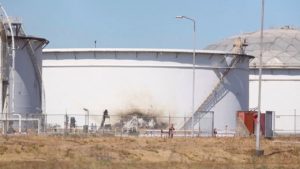
A blast at a storage facility for petroleum products at the Netherlands’ Rotterdam Port killed one person and wounded several others on Thursday, officials said, adding that the cause was unknown.

A spokesperson for major energy commodities trading company Gunvor said an "incident" occurred during maintenance work on a storage tank. A police spokesperson said that there was no immediate sign of sabotage and that all possible scenarios were under investigation.

Rotterdam is Europe’s largest port and comprises oil refineries, liquefied natural gas terminals and multiple petrochemical facilities. Shell, Exxon Mobil, BP, and Gunvor Energy are among the energy majors operating at the port.

The explosion occurred at around 11:30 a.m.

Gunvor said it was cooperating with local authorities.

Shell said its operations at the port were unaffected by the blast.

A Rotterdam Port spokesperson said LNG terminals were not affected.

ExxonMobil shut all units at its 191,000 barrels/day Rotterdam refinery due to a power outage, consultancy Wood Mackenzie said in an alert to clients seen by Reuters.

ExxonMobil did not immediately respond to a request for comment.

Rotterdam Port said there was no connection between the blast and the power outage.

Get help now

Send a message with a description of your problem and possible ways of assistance and we will contact you as soon as we consider your problem.