• English
  • Русский

Venice Film Festival grapples with activist demands to exclude Israel-tied films

Film festival executives used to spend their time programming movies, inviting guests, and planning events, but now they must cope with demands to politicize their festivals, specifically demands for the festivals to focus on Gaza and Israel.

This has been the case more than ever in the run-up to the 83rd Venice International Film Festival, which opens on Wednesday.

Festivals generally open with a press conference in which the jurors in the main competition answer questions, but this led to controversy last year at Venice, when director Alexander Payne, who headed the jury, said he was not prepared to speak about Gaza, and this year at the Berlin International Film Festival, when jury president Wim Wenders declined to speak on the issue and said filmmakers should steer clear of politics.

Last week, the organizers of Venice announced that they were canceling the opening press conference. Deadline reported that the festival staff denied that this was out of a desire to avoid questions about the Israel-Hamas conflict, claiming it was due to scheduling conflicts.

But on Sunday, Venice made an about-face and said that it would hold a panel featuring the jurors on Wednesday.

This year, the international jury is headed by actress/director Maggie Gyllenhaal.

The other jury members are Tunisian director and screenwriter Kaouther Ben Hania (who made the film The Voice of Hind Rajab, about a Palestinian girl in Gaza killed by Israeli fire, which won the Grand Jury Prize at Venice last year), English composer and artist Daniel Blumberg, Italian professor Francesco Casetti, French director and screenwriter Xavier Giannoli, Afghan director and screenwriter Shahrbanoo Sadat, and the Hong Kong director and producer Johnnie To.

The jury will have its work cut out for pacifying activists, especially after a letter was published last weekend by the Venice4Palestine collective, signed by notable figures such as anti-Israel musician Roger Waters, calling on the Venice International Film Festival, its sponsor, the Venice Biennale, and the rest of the film industry to condemn Israel. Other signatories include Nobel Prize-winning author Annie Ernaux and directors Matteo Garrone and Céline Sciamma.

Last year, the group made a similar demand and held demonstrations against Israeli policy.

“One year after its first appeal, Venice4Palestine is once again calling on the Venice Biennale, the Venice International Film Festival and professionals across the film, audiovisual and cultural sectors to take concrete action in support of Palestine,” the group wrote in its latest letter.

Among the “concrete action” it calls for is “greater transparency throughout the film industry and the suspension of agreements with organizations and institutions linked to the Israeli government, the introduction of safeguards for professionals who choose to dissociate themselves from such ties.”

This line is worrisome to Israeli filmmakers, virtually all of whom take some funding from film funds that receive government money. These include left-wing art house favorites such as Nadav Lapid and Amos Gitai, whose latest film, The Road to Jericho, will be shown at Venice. This amounts to a veiled call to boycott all Israeli filmmakers.

The Venice4Palestine letter also called for the Palestinian flag to be flown throughout the festival to herald the inclusion of two Palestinian films in the festival: Ahmed Hassouna’s Citizen Osama and Muayad Alayan’s Conversation with the Sea.

Yuval Abraham and Rachel Szor, two Israelis who co-directed the Oscar-winning No Other Land, have a new documentary at Venice this year, Naza, about civilian deaths in Gaza during the war.

Venice4Palestine has also announced that it will hold a panel, “And Yet Gaza Continues to Burn – What Is the Point of Seeing If We Do Not Act?” as part of the Giornate degli Autori.

While it defines itself as a pro-Palestinian group, Venice4Palestine makes no mention of Hamas in its letter, although Hamas has been widely accused of executing and torturing Palestinians who oppose it.
‘What a stupid question’: Trump dismisses use of nuclear weapon against Iran

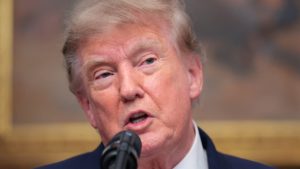
US President Donald Trump dismissed the possibility of using a nuclear weapon against Iran when questioned by a reporter on Monday.

“Have you ruled out using a nuclear weapon against Iran?” the reporter asked.

“They’re totally defeated militarily, so I defeat them, and now I should use a nuclear weapon on top of them? What a stupid question,” Trump responded.

Trump previously said in April that he would not use a nuclear weapon against Iran, telling reporters that nuclear weapons “should never be allowed to be used by anybody.” 

This is a developing story.

Pentagon covertly puts conservative military influencers into US government positions – report

Senior US military influencers were discreetly placed in government positions as part of a covert Pentagon operation, The Washington Post reported on Monday, citing anonymous sources familiar with the matter and corroborating material.

According to the report, the influencers in question have worked to push against criticism of the Trump administration while advancing the positions of Defense Secretary Pete Hegseth, being assigned as “special government employees (SGE)” or “highly qualified experts (HQE).”

The report noted that HQEs are permitted to work either part-time or full-time with no compensation limitations, whereas SGEs may work up to 130 days per year.

The sources, which named two of the influencers as US Air Force Col. (ret.) Rob Maness and US Army Col. (ret.) Kurt Schlichter, told the Washington Post that several of the veterans are in positions powerful enough to potentially influence policy changes. 

Both Maness and Schlichter, as well as US Army Col. (ret.) Thomas Anderson, have active government email addresses with a “.civ” suffix, indicating they are civilian rather than military employees, according to Pentagon records reviewed by the Washington Post.

In terms of online influence, Schlichter has over 620,000 followers on X/Twitter; Maness has over 135,000; and Anderson, now an attorney, retains over 323,000 under the pen name Cynical Publius, the report noted.

The records further showed that the retired officers, who served for several decades prior to their online presence, are employed in the office of Defense Under Secretary for Personnel and Readiness Anthony Tata.

According to the Washington Post, Tata’s office has been tasked with tackling several issues central to conservative politics, including “woke” college ideology and COVID vaccine policies for American soldiers under former US president Joe Biden.

Anderson and Pentagon spokesperson Joel Valdez declined to comment to the Washington Post, while Maness and Schlichter did not respond to requests for comment.

King Harald, Norway’s reform-minded head of state, dies at 89

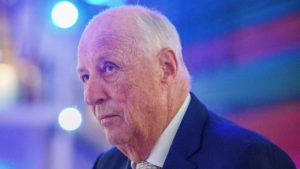
Norway’s King Harald, a reformer who emerged from the shadow of his well-loved father and reigned for more than three decades, has died at age 89, the royal palace said on Friday.

"King Harald passed away peacefully at Oslo University Hospital on Friday 28 August, 0635," the royal palace said on its website.

Harald, who was Europe's oldest living monarch, was taken to hospital on August 17. The palace said doctors were treating him for a bacterial infection in his blood.

In 2024, he had been hospitalized for an infection while on holiday in Malaysia and received a temporary pacemaker at a hospital there. He was flown back home by the Norwegian armed forces and later fitted with a permanent device.

That same year, Harald, Norway's ceremonial head of state since 1991, said he would reduce the number of official engagements he took part in but ruled out abdication, insisting that his oath as king was for life.

Harald's death comes at a tumultuous time for the royal family.

Crown Princess Mette-Marit, married to Harald’s son Crown Prince Haakon, is facing intense scrutiny for her friendship with the late sex offender Jeffrey Epstein, a relationship for which she has apologized.

Her son Marius Hoiby, born from a relationship predating her marriage to Haakon, was found guilty in June of ​two out of four counts of rape and one count of domestic violence and sentenced to four years in prison after a seven-week trial. Both he and the prosecution have appealed the sentence.

Two days after Marius was convicted, the palace said Mette-Marit had undergone a successful lung transplant, without specifying when the procedure took place.

After several weeks of recovery in hospital, she returned home and celebrated her silver wedding anniversary with Haakon in August.

Support for the monarchy dropped to 60% in February 2026, from 70% the previous month, according to a Norstat poll published by public broadcaster NRK, rising slightly to 64% in May.

Harald had consistently remained popular with Norwegians. According to the February poll, he was the royal who best represented the Norwegian royal family, with a score of 9.2, on a scale of 1 to 10.

A great-great-grandchild of Britain's Queen Victoria, Harald acceded to the throne in 1991 and slowly introduced modern touches that brought a ceremonial post seen mainly as a symbol of national independence into the 21st century.

The popular king played a crucial role in comforting the nation in times of mourning.

When far-right, anti-Islam fanatic Anders Behring Breivik killed 77 people in 2011 in Oslo and on Utoya island, the king consoled the nation with a powerful televised speech. His voice trembling with emotion, he said that "freedom is stronger than fear."

After floods, storms and other disasters, he would travel to the scene wearing rubber boots and a well-worn jacket to meet those who had lost homes or loved ones.

Late in life, he spoke up for tolerance, declaring in a 2016 speech that Norwegians could have many backgrounds, beliefs and sexual orientations.

In November 2005, Harald and his wife, Sonja Haraldsen, invited 550 Norwegians to a ball to celebrate the centenary of the country's independence from Sweden.

Harald said in an interview at the time that Europe's royal families should not be tempted to reverse moves towards openness and retreat to their palace towers.

"If you've opened the gate it's very difficult to close it again," he told Reuters. "I'm not sure I'd want to close it. So far so good, as far as I'm concerned."

Like his father Olav, Harald was a sports and automotive enthusiast and often drove his own car, particularly to informal events.

A sailor, he captained his boat to win a world championship title and competed in several Olympics, but failed to repeat his father's feat of winning Olympic gold.

Harald also took a great interest in the preservation of nature. He realized a lifelong dream when, aged 76, he spent four days deep in the Amazon jungle of Brazil, living with the Yanomami people and sleeping in a hammock.

Harald's birth on February 21, 1937, was cause for national celebration – he was the first royal heir to be born in Norway in almost 570 years. Danish and Swedish monarchs had ruled over the Scandinavian nation for centuries, until 1905.

Just three years after Harald was born, Nazi Germany invaded the country. King Haakon and then-Crown Prince Olav fled to Britain, where they led Norway's government-in-exile, while the 3-year-old Harald went with his mother, Crown Princess Märtha, to neutral Sweden, then to the United States.

After living briefly at the White House and then for five years in Bethesda, Maryland, Harald, his older sisters Ragnhild and Astrid, and their mother met frequently with U.S. President Franklin D. Roosevelt, whom Harald years later described as like a grandfather.

When he returned to Norway after the war ended in 1945, Harald attended state schools rather than the private lessons his father had received.

His 1968 marriage to a commoner broke with tradition and followed a nine-year standoff with his father that ended only after Harald threatened never to marry rather than give up Sonja.

In 1998, the king faced an unprecedented wave of public criticism over press reports that he had accepted a 4-million-crown ($400,000) yacht from a group of industrialists as a birthday present, and that palace repairs had cost the government 500 million crowns.

Around the same time, his former deputy private secretary suggested that Harald should abdicate at the egalitarian country's normal retirement age of 67.

Opinion polls gave the king firm backing to stay on for life, however, and the criticism subsided. A year later, in another Reuters interview, Harald joked that he would remain on the throne for life unless he went mad.

"There is no tradition in Norway for that (abdication). But you never know. If you go completely bonkers," he said. Queen Sonja laughed and said: "But who will ever tell you that?"

Harald's son Haakon, 53, will be Norway's fourth king since the country gained independence from Sweden in 1905, with Mette-Marit, also aged 53, as his queen.

South Korea open to reviving North Korea talks, seeks progress on nuclear weapons

South Korea supports US President Donald Trump’s efforts to resume dialogue with North Korea, but aims to ensure its security posture is not weakened and that Seoul is not sidelined, South Korea’s national security adviser said on Friday.

Seoul believes the resumption of talks between the US and North Korea should focus on progress on the North Korean nuclear weapons issue and must not undermine the country’s security readiness, Wi Sung-lac told reporters.

"One point to keep in mind is the need to coordinate with the United States to ensure that any resumption of US-North Korea dialog leads to substantive progress on the North Korean nuclear issue, alongside efforts to establish a peace regime on the Korean Peninsula," Wi said.

To achieve these aims, he said policy coordination and communication between South Korea and the United States were more important than ever.

Wi cited Trump's order earlier this month to substantially scale back major joint military drills between the two allies, saying the US president was signaling a willingness to engage with North Korea.

At the same time, Seoul should ensure it was not “sidelined” in Washington’s efforts to restart talks with Pyongyang, Wi said.

Trump cited in part Seoul's refusal to offer help in the Iran war for cutting short the Ulchi Freedom Shield drills this month and said they sent a wrong message to North Korea. Trump has been seeking a new summit with North Korean leader Kim Jong Un.

The two met three times in 2018 and 2019.

South Korea, Japan and the United States will conduct joint military drills from September 9 to 11 to test readiness against North Korea’s missile and nuclear weapons threats, South Korea said on Friday.

Wi said South Korea is seeking to deepen cooperation with Washington on a range of issues that have sometimes caused friction between the allies.

These include South Korean investment in the US agreed under a trade deal, the treatment of US-listed e-commerce firm Coupang, security cooperation, intelligence sharing and the transfer of wartime operational control, he said.

Tate brothers denied immediate bail as they contest extradition to Britain

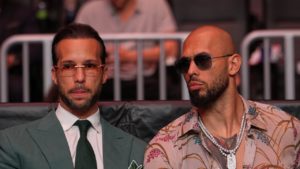
Social media influencers Andrew and Tristan Tate will remain in a Miami jail for now as they contest extradition to Britain, where they are wanted on rape charges.

At a hearing in Miami federal court on Thursday, Magistrate Judge Lauren Louis declined to rule immediately on the Tate brothers' request for bail, meaning they will remain in federal custody until she issues her ruling.

The Tates were led out of the courtroom in handcuffs and shackled at the feet by US marshals.

The brothers were arrested in Miami on July 18 after Britain requested their extradition. The Tate brothers, who have ​dual US and British citizenship, have denied any wrongdoing.

The former kickboxers have built a large online following promoting their views on masculinity and wealth. Andrew Tate, 39, has previously described himself as a misogynist.

The Tate brothers were seeking to preempt federal prosecutors' argument that they should remain detained as they contest extradition to Britain, where they face charges of rape, assault and facilitating trafficking, because they would pose a danger to the community if released.

After the Tates testified, prosecutor Abbie Waxman showed the court a video of Andrew Tate saying, “slap, slap, grab, choke, shut up bitch, sex.”

"They promote incredible violence against women," Waxman said. "It is not a character, it is who they are."

The Tates recruited dozens of women to work for a webcam pornography business starting in 2014, and later ran online courses called "Hustler's University," prosecutors with the Miami US Attorney's office said in an August 10 court filing.

On the witness stand on Thursday, Andrew Tate said he stopped saying “stupid things” on the internet when he was first arrested in Romania about five years ago. The brothers face human trafficking charges in Romania.

"Top G is a caricature," he said, referring to an online moniker that he called a "hyperbolic character."

"I do this to shake men out of apathy," he said.

Tristan Tate, 38, testified he and his brother played characters online to help their posts gain traction.

"It’s his flamboyant, outlandish, sometimes crude comedy that makes him go viral," Tristan Tate testified, referring to his brother. "He’s the only person in the world who is judged by a character that he plays."

At the hearing, the brothers were shackled at the feet, wore beige prison garb and sported beards.

The Tates' defense lawyers proposed that Louis release them on the conditions they post bond, surrender their passports and submit to location monitoring.

Earlier on Thursday, the mother of one of Andrew Tate's children, Natasha Sesay, said his sometimes provocative comments online did not reflect who he truly was.

"It’s a very different character between the person that you see online and the person I know," said Sesay, who is expecting another one of Andrew Tate's children next month.

On cross-examination by federal prosecutor Abbie Waxman, Sesay acknowledged that Andrew Tate paid for her home in Dubai as well as luxury bags, shoes and jewelry.

The legal process ​for determining whether the Tate brothers may be extradited could take months. ​Britain has until ⁠September 16 to submit its full extradition request to the State Department, U.S. court records show.

The impetus for the brothers’ arrests in Miami was new charges brought by Britain’s Crown Prosecution Service relating to alleged offenses ​involving four alleged victims between July 2010 and August 2017.

They had previously faced rape and human trafficking charges in Britain related to three alleged victims, the ⁠CPS said. A ​British judge issued a warrant for their arrests in ​2024. They have not appeared in British court to enter a plea to those charges.

Britain is seeking to extradite the brothers to ​face both sets of charges.

US, Venezuela negotiate deal for American access to Venezuelan oilfields

Trump administration officials are working on a deal to secure long-term access to a portion of Venezuela’s crude reserves, sources with knowledge of the negotiations said on Thursday, a move that could ultimately lower the cost of crude imports.

The agreement, which could be signed and made public soon, is expected to operate in a way that would let the US government lock in a group of Venezuelan oilfields to be developed by American companies, the sources said, adding that the resulting supply would be guaranteed for the US.

"This is real and being discussed at the highest levels of the US and Venezuelan governments," one of the sources said.

A separate source said a "lease" was in consideration as the legal model to make the deal work, with a further auction or tender to allocate each one of the fields among US producers.

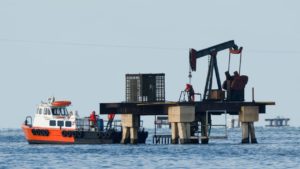
A list of 17 fields in negotiation seen by Reuters includes green fields in the vast Orinoco Belt combined with mature areas in Lake Maracaibo, some of which are currently operated by a small Chinese firm whose contract was signed during Maduro’s administration.

The White House referred questions to the US Department of Energy. Venezuela's oil ministry, state oil company PDVSA and the Energy Department did not immediately reply to requests for comment. Venezuelan oil minister Paula Henao could not be reached for comment.

Venezuela is considering leaving the OPEC oil production group as it strengthens ties with the US, Bloomberg reported late on Thursday. Venezuela, which joined the group as a founding member in 1960, has not met OPEC quotas for years as its state-run oil industry suffered from neglect and corruption. The US has long been at odds with OPEC for its influence on oil prices.

Current hydrocarbons regulation in Venezuela, which has the world’s largest crude reserves, does not include acreage leases for oil areas, while the Constitution reserves the industry’s core activities to the state.

Recently reformed oil legislation allows oilfield operation through joint ventures and production-sharing contracts. For decades, the Venezuelan government has prevented foreign producers from booking the country's oil reserves.

While full details of the prospective deal between Washington and Caracas have yet to emerge, it could raise constitutional questions and face legal challenges, according to experts.

Axios first reported on the talks on Thursday and said US Energy Secretary Chris Wright is planning a trip to Caracas as soon as next week.

Since the US captured and removed former President Nicolas Maduro from power in January, Washington has been trying to secure a stable flow of Venezuelan crude for US refineries while promoting American investment into the OPEC country's deteriorated energy industry, which currently produces some 1.25 million barrels per day of crude.

President Donald Trump’s administration is under pressure ahead of midterm elections scheduled later this year over rising gasoline prices, which could be eased through cheaper oil supplies and expanded output. The US also has been looking for solutions to replenish its Strategic Petroleum Reserve, the world’s largest emergency oil stockpile, including the possibility of crude swaps with US producers.

The SPR currently holds about 290 million barrels in underground salt caverns, about 41% of its total capacity. Funding shortages and ongoing maintenance at the reserve have limited the administration's efforts to refill it after the US tapped it following Russia's invasion of Ukraine in 2022 and then again after the Iran war began in February.

Venezuela is closely examining plans to leave OPEC, Bloomberg News reported on Thursday, citing people familiar with the matter.

The idea of an exit has been a topic in conversations with US officials, and no final decision has been made, the report added.

Reuters could not immediately verify the report.

From Abbey Gate to today: How five years reshaped the Middle East and world policy – analysis

It has been five years since the attack at Abbey Gate in Kabul, Afghanistan. US President Donald Trump put out a proclamation on August 26, the anniversary. “The terrorist was one of the thousands of prisoners released by the Taliban just 2 months earlier.  As a result, 13 American service members were killed, 45 were wounded, and more than 160 civilians were injured,” President Trump said.

He noted that on August 26, “a lone ISIS-K terrorist pressed into the crowd at Abbey Gate in Kabul, Afghanistan, and detonated a body-worn bomb.”

Trump called on the nation to honor the fallen. “On the fifth anniversary of the attack at Abbey Gate, we solemnly honor their selflessness and valor.” He noted that for 20 years Americans fought in Afghanistan.

He then got to the tragedy of the 2021 withdrawal. “Yet within months, President Biden squandered those hard-fought gains, putting politics over strategy and rushing through a poorly executed withdrawal that would soon become one of the worst military disasters in our Nation’s history.”

The Wall Street Journal’s Opinion section also released a new video documentary about the withdrawal. It is called The Path to Zero: The Withdrawal From Afghanistan.

The Journal described this as “an unflinching account of America’s disastrous withdrawal from Afghanistan, told by the people who lived it. Structured around President Biden’s 2021 decision to draw down to “zero” troops, the film traces how one choice cascaded into a chaotic, deadly ending – the closure of Bagram, the collapse of the Afghan army, and a frantic evacuation through three Kabul airport gates, culminating in the tragic Abbey Gate suicide bombing attack.” It includes “candid interviews with the diplomats, generals, and soldiers who were there, the film tells the riveting story of the unfolding tragedy – and gives voice to the moral injury many young Marines who manned the gates still carry.”

The video illustrates how the withdrawal became a tragic chaos and led to death and suffering.

The US left Bagram Airfield in July, before the final date of withdrawal. That withdrawal was supposed to go on through September but was accelerated. The Afghan security forces collapsed, and Afghanistan rapidly fell to the Taliban. This fall was likely envisioned in talks that had taken place in Doha. The first Trump administration had wanted to withdraw from Afghanistan. In fact, it was never clear why US troops had stayed so long.

The problem is that it’s easier to get into wars like Afghanistan than it is to leave.

The US has seen this before in Vietnam or other conflicts. However, the 2021 withdrawal from Afghanistan had large ramifications. Trump said this week that the withdrawal from Bagram  “surrendered our largest military base in the country, lost billions of dollars of military equipment, and left our remaining forces without their strategic advantages as the Taliban rapidly advanced.” He described the collapse in Afghanistan as the result of the previous Biden administration’s incompetence.

The WSJ video reminds us of how the tragedy unfolded. It also sheds a concerning light on the failed planning for withdrawal and a sense that no one was accountable for the failure. It also leads to questions about whether other countries looked at the withdrawal and drew lessons about a weakened America that couldn’t deter enemies.

In February 2022, Russia invaded Ukraine. The Biden administration had warned that Russia would invade. However, when the chips were down, many Western governments evacuated Kyiv and appeared to believe half of Ukraine would fall to Russia. In the end, the Ukrainians held on, and Russia failed to take Kyiv. Russia felt that it could get away with the invasion because it was not deterred. Did the Afghanistan chaos of withdrawal lead to that sense?

Other crises followed. In April, a civil war broke out in Sudan. Did the Rapid Support Forces (RSF) feel it could get away with launching a conflict in Sudan after there had been hope of transition to democracy? The civil war has been brutal and has included massacres. Did the US try to stop the civil war? It’s not clear, but it appears the Biden White House failed to do much. The Trump administration has called for a ceasefire, but it still hasn’t happened.

In Yemen, the administration also failed to make much progress, despite talks in Oman. A UN-backed truce in Yemen in March 2023 was a rare silver lining.

On other fronts, the US continued to appear to lose leverage around the world. Armenians in Nagorno-Karabakh were cut off throughout much of 2023 and under siege. This had followed a previous short conflict between Azerbaijan and Armenia in 2020. In September 2023, a new offensive led to 50,000 Armenians fleeing the enclave. Here, again, the US appeared absent.

On October 7, Hamas launched its attack on Israel, murdering 1,000 people and taking 251 hostages. Did Hamas feel emboldened by the Taliban victory? Hamas leaders were hosted in Doha, as the Taliban had been hosted. The Taliban had been careful not to carry out massive massacres when they marched on Kabul, instead handing the US a fait accompli. Hamas believed it could carry out a massacre and get away with it. It apparently believed it could then take over the West Bank and spread war across the region. What was the Hamas calculus? Didn’t it know Israel would launch a major war in response? Did it think the massive hostage taking would prevent the war?

We know that Hamas released two elderly Israelis and also several Americans soon after October 7, apparently hoping to achieve some kind of deal. This didn’t work, but it raises some questions. It has never been fully explained about the two Americans released by Hamas in October, before the Israeli offensive on October 27. At the time Reuters reported on October 21, 2023 that “U.S. President Joe Biden thanked Qatar and Israel” after the women were released. “Hamas said the two women, who Israel's Kan public broadcaster reported were dual Israeli-American nationals, were freed ‘for humanitarian reasons’ in response to Qatari mediation.”

Is there any connection to the US withdrawal from Afghanistan? Did that withdrawal lead to Russia assuming that the US wouldn’t stop its march on Kyiv? Did that lead to Hamas assuming it could get away with an unprecedented attack? Was US deterrence weakened? We may never know, unless we have access to internal documents of the Putin administration or Hamas leadership. What is clear is that the years after 2021 were ones of accelerating global chaos as the world order has shifted. Many countries want to weaken the US-led world order that emerged in the 1990s. Russia, China, and others have been clear about this.

Other trends were clear in the period 2021-2024. Economic blocs such as BRICS and the SCO expanded, as Russia and China grew their power. Many US partners and allies began hedging their bets by working with China.

The Abraham Accords also appeared to stagnate. No new countries joined. Concepts such as I2U2, meant to bring together India, the UAE, Israel, and the US, didn’t progress as much as hoped. Neither did the Negev Forum. Regional integration didn’t happen as planned. Instead, October 7 derailed hopes of peace. Iran also prodded its militias in Iraq to increase attacks. They targeted US forces in Erbil, and Iran also targeted ships using drones.

Iran also moved its Shahed 136 drones to the Houthis in Yemen in 2020, foreshadowing how it would send them to Russia. As such, it is clear that the years around the fall of Kabul became ones in which there were serious setbacks for the US and the US-led world order.

We now live in the aftermath of that era. The war in Ukraine and Sudan continues. The war in Gaza and the Middle East that began on October 7 has continued for more than 1,000 days with no end in sight. China continues to position itself as a more powerful country. The war with Iran, which began in February, has shifted US focus to the Middle East. This may embolden China.

Many trends that began years ago are continuing. The Trump administration has deterred US enemies and has had successes, such as in Venezuela. However, it remains to be seen if all the lessons of Kabul will be learned.

British PM reportedly ready to announce Israeli settlement trade ban in coming weeks

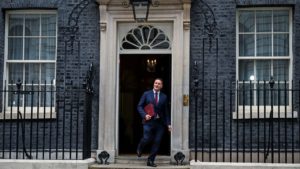
New British PM Andy Burnham is set to announce a ban on trade with Israeli settlements in the West Bank imminently, The Times and The Telegraph reported on Thursday.

According to both reports, citing government officials, Burnham is considering a trade embargo within the coming weeks. The new sanctions regime would likely stop the exchange of both goods and services.

Foreign Secretary Ed Miliband already announced on August 19 that measures are being prepared to “target sanctions at those who participate in illegal settlement expansion,” following Israel’s announcement of a tender for the E1 settlement project.

British sanctions on Israel trade could however cause a split inside the Labour party.

On one side, 140 Labour members of Parliament (about a third of the party’s representation in the House of Commons) have signed a letter to the new prime minister calling for sharp measures against the Israeli settlements.

On the other side, Labour Friends of Israel has warned it would be impossible to ban trade from settlements only, making the plans a “de facto boycott of all of Israel”.

In its most recent report, LFI said Britain should continue to take considered and calibrated steps against violent extremist settlers, but that at the same time, any further untargeted steps the UK government takes, "for instance, sanctions going beyond violent extremist settlers and organizations," would likely have a number of negative effects.

"A boycott of all trade with settlements is practically and politically impossible," said LFI. "It would affect all Israeli businesses operating in the settlement blocs, as well as East Jerusalem and the Old City, where major Israeli businesses like Bank Hapoalim and Teva operate, and where the tourism sector is critical for Israeli and Palestinian workers."

"A settlement boycott would thus become a de facto boycott of all of Israel, which would rightly be perceived within the UK Jewish community as a further example of the government singling out and targeting Israel for punitive action and harsh rhetoric," it added.

Get help now

Send a message with a description of your problem and possible ways of assistance and we will contact you as soon as we consider your problem.