• English
  • Русский

Fauci invokes Fifth Amendment at Rand Paul-led US Senate COVID hearing

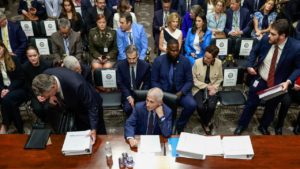
Anthony Fauci, the former top US infectious disease expert, declined to answer questions at a Senate hearing on Wednesday, invoking his constitutional right against self-incrimination and accusing Republican Senator Rand Paul of an "unhinged" campaign to see him imprisoned.

Fauci, who is 85 and retired in 2022, was subpoenaed by Paul of Kentucky, the chair of the Senate Homeland Security and Governmental Affairs Committee and a longtime adversary. Fauci accused Paul of an “unhinged” campaign to see him imprisoned, and refused to answer more than 100 questions.

Paul said Fauci was not allowed to plead the Fifth Amendment right to refrain from answering senators’ questions, that a pardon from former President Joe Biden would not protect him, and that there would be consequences for refusing to answer. He said the committee had scheduled a vote for next week to hold Fauci in contempt.

Fauci, who led the National Institute of Allergy and Infectious Diseases for 38 years, serving under multiple Republican and Democratic presidents, and became the face of the US pandemic response, has long been criticized by US President Donald Trump and many American conservatives. Trump, before the hearing, wrote of Fauci on social media: “His ideas were CRAZY!”

More than 1.1 million people died of COVID-19 in the United States, and the pandemic touched off a long-running effort by conservatives to assign blame for the toll of actions taken to stem the global health crisis. Fauci became the primary target of that anger, criticized for lockdown directives, guidance on mask-wearing and social distancing, and his promotion of vaccines, which became heavily politicized during the pandemic, despite being shown to be safe and effective.

He and many public health officials globally recommended such measures based on scientific evidence available at the time as best practices to slow the spread of a novel and deadly virus for which there was no immunity, until a vaccine became available.

Biden preemptively pardoned Fauci on January 19, 2025, to guard against "unjustified and politically motivated prosecutions" for allegations related to COVID or his role in the response. The pardon does not cover subsequent conduct.

Federal law makes it a crime to knowingly and willfully make a "materially false, fictitious, or fraudulent statement or representation" to Congress, potentially exposing Fauci to prison if prosecutors decided he lied after being pardoned.

Republicans criticized Fauci for refusing to answer and claimed federal law and a 19th-century US Supreme Court decision required him to testify.

The 1896 decision lets Congress compel testimony from witnesses by immunizing them from criminal prosecution for what they say, without violating the witnesses' Fifth Amendment right against self-incrimination.

Fauci even invoked the Fifth when Senator Josh Hawley, a Republican from Missouri, asked him what day it was and what color his tie and the carpet were. Ohio Republican Senator Bernie Moreno repeatedly asked if Fauci would apologize to various groups Moreno claimed were harmed by pandemic-era policies for which he blamed Fauci.

Paul had David Schertler, one of Fauci's lawyers, removed from the hearing after refusing to recognize his attempts to speak.

In a statement, Schertler called Paul's pursuit "an obsessive vendetta" and said the accusations "are false and disgraceful, and we will examine all options to hold him accountable."

Paul has for years called for Fauci's indictment and accused him of lying to Congress about whether the National Institutes of Health funded virus research in Wuhan, China, and of helping cover up COVID's origins.

Fauci denies both claims and says he has testified truthfully multiple times before Congress on these issues, with Paul often his chief antagonist.

Fauci said Paul's "obsession" with prosecuting him, his "slanderous comments" and his release of Fauci's unredacted personal diary showed the hearing's sole reason was to make him "say something that could vindicate" Paul's public pledges to see him behind bars.

Michigan US Senator Gary Peters, the committee's top Democrat, called the hearing biased and one-sided, describing it as an effort "to legitimize a predetermined conclusion that was reached years ago."

Claims of so-called gain-of-function research in China have been behind many COVID origin conspiracy theory accusations. It broadly means modifying a pathogen in ways that could make it more transmissible or dangerous.

Paul had long suggested that the US National Institutes of Health funded such work in Wuhan and that Fauci lied when he denied it, while Fauci says the research did not meet the government's formal regulatory definition.

COVID's origins remain unresolved. The FBI said in 2023 that a leak from a Wuhan laboratory likely caused the pandemic, a claim China said had "no credibility whatsoever." The CIA said in January 2025 a lab leak was likely, but with "low confidence," while four other US intelligence agencies and the National Intelligence Council believe the virus most likely emerged via natural transmission from some animal.

Paul this week published a 1,141-page tranche of Fauci's pandemic-era diary entries, from December 2019 through December 2022, saying they "completely undermine the official narrative that Fauci and other public health officials espoused."

A review provided by a representative of Fauci said the entries matched what he said publicly at the time. Fauci has maintained since 2021 that he kept an "open mind" that COVID could have leaked from a lab, and spoke publicly in early 2020 about asymptomatic transmission and China's lack of transparency, the very matters Paul says the diary reveals.

The entries largely chronicle Fauci's media appearances and rising fame.

The Trump administration issued a policy on Tuesday barring federal funding for "dangerous gain-of-function" research.
Convicted assailant of author Salman Rushdie found guilty of federal terrorism charges

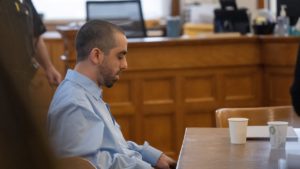
The man who stabbed and partially blinded author Salman Rushdie on stage at a New York arts institute in 2022 was found guilty on Wednesday of federal terrorism charges stemming from the attack.

Hadi Matar, 28, was convicted of attempting to provide material support to Lebanon’s Iran-backed militant group Hezbollah, a US-designated terrorist organization, as well as engaging in transnational terrorism and providing material support to terrorists.

A US District Court jury in Buffalo, New York, returned its guilty verdict on all charges after deliberations of just two hours, capping a trial that began last Tuesday, according to a spokesperson for federal prosecutors.

Rushdie, 79, had faced threats on his life since the 1988 publication of his novel “The Satanic Verses.” Ayatollah Ruhollah Khomeini, then Iran’s supreme leader, denounced the book as blasphemous, leading to a call for Rushdie’s death, an edict known as a fatwa.

According to evidence presented at his trial, Matar spent more than a year researching the fatwa before deciding to try fulfilling the edict with an attack on Rushdie while the author was speaking at the Chautauqua Institution in Mayville, New York.

Rushdie was stabbed with a knife multiple times in the head, neck, torso and left hand, blinding his right eye and damaging internal organs, requiring emergency surgery and months of recovery.

Matar, a US citizen from Fairview, New Jersey, was found guilty of attempted murder in New York state court in 2025, and was sentenced to 25 years in prison.

His conviction on federal terrorism charges carries a maximum penalty of life in prison. Sentencing was scheduled for November 3.

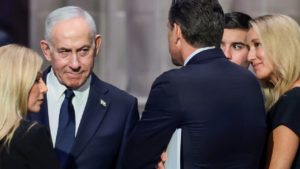
Netanyahu meets with Evangelical community leaders to discuss Iran war, standing up to hatred

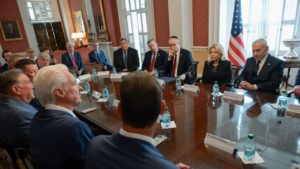
Prime Minister Benjamin Netanyahu discussed the Iran war with the leaders of the Evangelical community, who he met on Wednesday during his trip to Washington.

The community leaders welcomed Netanyahu to the US and thanked him for Israeli involvement in the Iran war, supporting him in "his struggle against the Iranian axis of evil," a statement from the Prime Minister's office said.

The Prime Minister told the leaders that both Jews and Evangelical Christians are "descendants from the original Hebrews of the Holy Land, and we are the first part of that Judeo-Christian heritage, which we cherish and which has given the world, the civilization, freedom, and faith."

The world is "under attack from the rising tide of antisemitism and anti-Evangelicalism," he added. "It’s not accidental that the two are coming under a joint attack, because we are one."

The Prime Minister continued his speech with a call for the leaders to actively fight against antisemitism and anti-Evangelicalism, telling them, "Stand up. Stand up and don't cower."

He went on to pose a question to them, asking "When you're faced with an attack, what do you do? Attack back."

Both the Evangelical leaders and Netanyahu emphasized the importance of unity and support between the two communities.

The Prime Minister ended his address by thanking the community leaders, "I'm very grateful to you for your consistent support, for the constancy of you friendship."

"Now it's time to fight, fight, fight, that's it," he concluded.

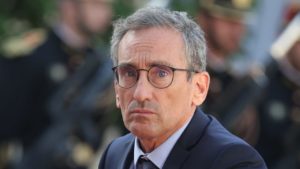
US weighs delaying France’s Washington ambassador pick over human rights spat

The United States is considering delaying, or even blocking, French President Emmanuel Macron’s choice for France’s next ambassador to Washington following public French criticism of the country’s human rights record, according to four sources.

While the sources said no decision has yet been taken, two said France’s criticism – delivered in a social media post by France’s mission to the United Nations in Geneva – had sparked genuine anger among some senior officials in US President Donald Trump’s administration. Two other sources said officials were hoping to de-escalate tensions with France.

"The United States is very disappointed in the irresponsible and disrespectful rhetoric from the French," a State Department official said. "We are responding appropriately to their comments."

A US move to delay or reject Macron’s nominee would be highly unusual and could widen the fissure between the allies, who have recently clashed over tariffs and the Iran war.

Macron has filed the relevant paperwork for Aurelien Lechevallier, a former Elysee aide who is currently Foreign Minister Jean-Noël Barrot's chief of staff, to become France's next ambassador to Washington. France had hoped to have him installed by September, one of the sources said.

But the process has run into difficulties since a post on X/Twitter by France's mission to the United Nations in Geneva.

In the post on Saturday, the mission criticized Washington for joining Russia, North Korea and seven other countries in voting against a proposal to extend the mandate of Volker Turk, the UN human rights chief, for another four years.

"The US used to be a beacon of human rights. Not anymore," the French mission wrote. "The world no longer listens to it."

One of the sources said the post had been reviewed and approved through official channels, dismissing suggestions that it was the work of a junior staffer acting independently.

Tensions flared further on Monday when the US delegation walked out as France addressed a United Nations Security Council meeting on Ukraine, accusing its ally of "disingenuous grandstanding."

France's support for the renewal of Turk's mandate "does not preclude close dialogue with the United States," a French diplomatic official said.

"Differences of opinion regarding a vote do not call into question the quality of our relationship or our ability to work together," the official added.

France has been a longstanding US ally, but relations have soured during Trump's second term. While Trump and Macron speak regularly, that hasn't stopped the US president from targeting France with tariffs, accusing European governments of suppressing right-wing voices, and threatening NATO allies over defense spending and Greenland.

Even before the latest spat, Washington had been riled by Barrot's public comments about the US government, one of the sources said.

Earlier this month, Barrot posted on X/Twitter about a State Department program that offered funding of up to $3 million to groups promoting "civilizational self-confidence" in Europe.

The funding was offered by the State Department's Bureau of Democracy, Human Rights, and Labor (DRL), whose officials offered to support far-right leader Marine Le Pen last year during her embezzlement trial.

"France and the Europeans will not tolerate any attempt at foreign interference in their electoral processes, regardless of where it comes from," Barrot wrote.

French officials have also been irked by US Ambassador to Paris Charles Kushner, who is emblematic of a brash new breed of America-first diplomats causing consternation across Europe. Kushner, whose son Jared is married to Trump’s daughter Ivanka, has twice failed to appear to summonses in Paris following diplomatic incidents.

The process of installing an ambassador in Washington is carefully prescribed. Before a foreign government can appoint its envoy, it must first secure the confidential consent of the US government.

Washington rarely slow-walks or rejects nominees publicly, diplomatic sources said, with concerns typically resolved privately before a formal decision is made.

Critics allege that a wave of recent Macron nominations and appointments to key jobs is part of an effort to install loyalists who can ensure his legacy and hedge against a potential victory by the far-right in next year's election.

Macron, whose approval ratings remain low, cannot run again in 2027.

In recent months, he has appointed his former chief of staff, Emmanuel Moulin, as head of France's central bank, while Richard Ferrand was chosen to lead the Constitutional Council and Amélie de Montchalin to head the Cour des Comptes, which certifies the public accounts. All are key Macron allies.

The Elysee had no immediate comment on that criticism.

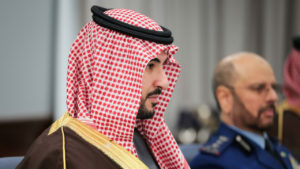
Saudi defense minister meets with Vance in Washington following joint attack on Iraq – report

Saudi Defense Minister Prince Khalid bin Salman Al Saud met with US Vice President JD Vance on Wednesday in Washington to discuss the recent US-Saudi strikes against Iran-backed militias in Iraq, according to a CNN report.

Khalid originally planned to make the brief trip last week before postponing it, CNN reported, citing sources familiar with the trip.

In the meeting, the defense minister told Vance that Crown Prince Mohammed bin Salman is interested in de-escalating the situation with Iran, according to a source familiar with the details of the meeting. Notably, the comment stands in opposition to Prime Minister Benjamin Netanyahu's stance on the war with Iran.

This comes as US Central Command (CENTCOM) struck Iraq on Wednesday together with the Saudi Arabian Armed Forces, targeting "Iran-aligned terrorists that the Islamic Revolutionary Guard Corps (IRGC) directed to attack US forces and Saudi energy infrastructure," according to a CENTCOM post on X/Twitter.

"US and Saudi fighter aircraft struck multiple terrorist logistics and weapons sites across eastern Iraq in a strong response to over 30 IRGC-directed aerial drone attacks in the last 72 hours," CENTCOM said.

The sources told CNN that Saudi Arabia believes Iran is seeking to generate leverage through regional escalation, with attacks from its proxies expected to continue.

Saudi Arabia stressed that it still seeks de-escalation regardless, the sources said, with the kingdom’s response meant to send the message that attacks against it will not go unanswered.

Esther Davis and Ruby Sadikman contributed to this report.

Russia charges Telegram founder Pavel Durov with terrorism, issues arrest warrant

Russia’s Federal Security Service (FSB) said on Wednesday that it had charged Telegram founder Pavel Durov with facilitating terrorist activities, and that it had issued an international warrant for his arrest.

The FSB said that the charges related to Telegram’s failure to remove material “used by Ukrainian special services and by terrorist and extremist organizations to prepare and coordinate acts of sabotage and terrorism, mass killings, and cyber-fraud operations within the Russian Federation.”

There was no immediate comment from Durov or Telegram.

Telegram, an encrypted messenger app founded in 2013, says it has more than 1 billion users and is widely used on both sides of the Russia-Ukraine war.

Russia has repeatedly tried to restrict Telegram's use in recent years, promoting its own state-backed MAX messenger service.

Durov, who was born in Russia but now holds Emirati and French passports, founded Russia’s Facebook equivalent, VKontakte, before selling his remaining stake in 2014 amid pressure from Russian authorities.

French authorities are investigating Durov over allegations that Telegram failed to adequately counter criminal activity on the platform and did not sufficiently cooperate with law enforcement requests. Durov denies wrongdoing.

US-Israel alliance pushed toward a bitter Democratic split over Gaza war and Netanyahu

For generations, support for Israel united Washington. Now Israel’s attacks on Gaza, the Iran war and Prime Minister Benjamin Netanyahu’s close ties to US Republicans are eroding Democratic backing, threatening to turn one of America’s closest alliances into a partisan divide.

Support for Israel among Democratic voters has plummeted, candidates critical of Israel are winning Democratic primaries, and even moderate lawmakers are increasingly willing to challenge decades of US support for Israel.

The shift is evident in Congress. This month, nearly half of House Democrats voted for a failed amendment to cut off aid to Israel, legislation that once likely would have been defeated by an overwhelming bipartisan majority. Israel receives $3.8 billion annually in US military aid and received billions more in emergency funds in recent years.

House Democratic Leader Hakeem Jeffries and some of his lieutenants opposed the measure, calling it overly broad. But former Speaker Nancy Pelosi and House Democratic Whip Katherine Clark were among those voting yes.

Democrats are increasingly divided over whether military aid should continue unchanged, be restricted to defensive weapons or be halted altogether.

US Senator Chris Coons of Delaware, the leading Democrat on the Senate Foreign Relations Committee, said he hopes Israeli elections in October help restore bipartisan US support while opening a new chapter beyond Netanyahu's leadership.

"New governments get to change direction," Coons told Reuters, adding, "Netanyahu has kept Israel at war for years now, partly to avoid the political consequences of his choices."

Overall sentiment toward Israel is declining. A June Quinnipiac University poll found 48% of voters and 66% of Democrats believe the United States is too supportive of Israel, up from 16% and 20% when the question was first asked in 2017.

"Yes, there is a vigorous debate, but across broad segments of the parties, support for Israel remains firmly in the mainstream," said Danny Danon, Israel's ambassador to the United Nations, in an interview.

The shift faces a major test in Tuesday's Democratic US Senate primary in Michigan, where voters will weigh competing visions of US support with growing numbers of congressional Democrats questioning longstanding US military aid.

The race between progressive Abdul El-Sayed and US Representative Haley Stevens will determine who faces Republican Mike Rogers in November and reflects the wider Democratic debate over Israel and longstanding US military support.

Stevens made a video with AIPAC, the American Israel Public Affairs Committee, a major donor to her campaign, arguing that a close relationship with Israel "yields trade, that yields economic growth and that keeps our freedoms safe."

By contrast, El-Sayed, a former public health official, told Fox News: "The question is whether we want a politics where our money is sent over to Israel to fund genocide and apartheid instead of investing in our own kids."

A U.N. inquiry and several human rights groups have accused Israel of committing genocide in its military's devastation of Gaza, an allegation Israel rejects, saying it is fighting Hamas and taking steps to reduce civilian harm.

Israeli policy has been a factor in other battleground congressional races, including New York, Florida and Colorado.

Strains with Democrats deepened 11 years ago, when in a speech to Congress at the request of the Republican majority, Netanyahu attacked a deal crafted by then-President Barack Obama, a Democrat, on controlling Iran's nuclear program.

Sentiment critical of Israel grew after Israel launched its war in Gaza in response to the Hamas-led October 7, 2023, attack, in which nearly 1,200 Israelis and foreign nationals were killed and hundreds were taken hostage. More than 73,000 Palestinians have since been killed, according to Gaza health officials.

Israel's bombardment of Gaza has reshaped Democratic politics, fueling a backlash among younger voters and deepening a generational divide within the party.

Campus protests in 2024 intensified pressure on Democrats to reassess support for Israel. Some analysts say President Joe Biden's refusal to do so contributed to Democratic nominee Kamala Harris' loss to Trump later that year.

Adding to tensions, New York Mayor Zohran Mamdani called for Netanyahu's arrest for alleged war crimes.

This primary election cycle, some establishment candidates have been defeated by more progressive challengers who have questioned support for Israel, mostly in congressional districts dominated by Democrats.

Jeremy Ben-Ami, president of J Street, a progressive pro-Israel rival to AIPAC, said the debate within the Democratic Party reflected a backlash against the right-wing Netanyahu and AIPAC, calling it "a toxic brew that really has helped to make Israel, unfortunately, a real wedge issue in the Democratic Party."

AIPAC did not respond to requests for comment.

Shibley Telhami, a University of Maryland professor of government and politics and senior non-resident fellow at the Brookings Institution, called it a "paradigm shift that sees Israel now as a villain, even a genocidal villain, in a way that was never the case before."

While some conservative influencers have joined the attack, the Republican Party will support Israel as long as evangelical Christians and Trump stand firm, Telhami said in an interview.

The divide over Israel is spilling into congressional campaigns elsewhere.

Republican Representative Mike Lawler, who represents a district outside New York City with a large Jewish population, has used the Democratic shift on Israel to attack challenger Cait Conley in a battleground fight for control of the House.

In southern Florida, moderate Representative Jared Moskowitz, a consistent supporter of Israel aid, is being challenged in the August 18 Democratic primary by democratic socialist Oliver Larkin, who campaigns on his belief that Israel has committed genocide in Gaza and supports an immediate suspension of US military aid to Israel.

Recent opinion polls show Moskowitz leading Larkin by 32 percentage points.

Longtime US Representative Diana DeGette was defeated in the Colorado Democratic primary by Ethiopian-born Melat Kiros. Kiros has called for ending wars, including by stopping military aid to Israel, while DeGette said she supported sending only defensive weapons to Israel.

US Senator Mazie Hirono, who has advocated for a two-state solution and more humanitarian aid for Palestinians, said, “I think the support for Israel’s right to exist, all of that is there. It’s just the (Israeli) leadership we seriously question.”

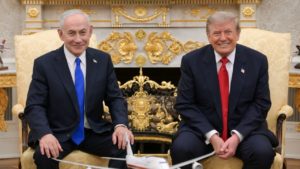
Netanyahu, Trump conclude ‘positive, productive’ meeting at White House

US President Donald Trump hosted Prime Minister Benjamin Netanyahu on Tuesday to discuss the war in Iran.

They also spoke about expanding the Abraham Accords, following calls by Trump for Saudi Arabia to normalize ties with Israel.

“It was a very positive meeting,” a person familiar with the matter told The Jerusalem Post. “You could see the chemistry between the leaders.”

There were no final agreements, but the parties made progress during the meeting, informed sources told the Post.

“It was an extremely positive meeting,” a senior Israeli source who was at the meeting said. “The prime minister and president held an excellent and comprehensive discussion on the key issues of the day, first and foremost Iran. The leaders reaffirmed their ironclad commitment to ensuring that Iran never has nuclear weapons.”

Separately on Tuesday, Middle Eastern diplomats said there had been progress in efforts to resolve the crisis surrounding the Strait of Hormuz, although no final agreement was reached.

“The prime minister and the president reiterated the message that Iran must not be allowed to obtain a nuclear weapon – whether through an agreement or otherwise,” another source said, adding that the Israeli side was also describing the meeting as positive, and that all of the issues on the agenda were reviewed.

The Israeli delegation included Ambassador to the US Yechiel Leiter, Netanyahu’s Chief of Staff Ido Norden, Military Secretary Maj.-Gen. Guy Markizeno, and advisers Ofir Falk and Caroline Glick.

They met with US Secretary of State Marco Rubio, Defense Secretary Pete Hegseth, Chairman of the Joint Chiefs of Staff Gen. Dan Caine, Vice President JD Vance, and special envoy Steve Witkoff.

White House Press Secretary Karoline Leavitt said the talks lasted about an hour and a half and went well.

Netanyahu entered the White House through the side entrance. It was unclear whether anyone came outside to greet him.

Netanyahu would like to get Trump’s support for his reelection campaign ahead of the October 27 election, people familiar with the matter said.

Ahead of the meeting, Trump was asked about reports that Netanyahu planned to talk to him about work happening at Pickaxe Mountain, a fortified facility buried deep underground near one of Tehran’s main nuclear sites.

“I don’t need Bibi to tell me that,” Trump told Fox News. “Bibi’s telling me that because he wants me to stay involved.”

US relations with Ukrainian President Volodymyr Zelensky, who met with Trump at the White House earlier on Tuesday, have warmed as Ukraine has blunted Russian advances.

Netanyahu arrived amid growing White House frustration over the lack of progress toward a broader settlement in the Iran conflict and criticism from some of Trump’s supporters who oppose deeper US involvement in the Middle East.

Zelensky and Netanyahu attended a memorial service for senator Lindsey Graham, a hawkish Republican who was an advocate for both Israel and Ukraine in Washington, especially in getting their views heard by Trump.

Zelensky said anti-ballistic defense and strategic cooperation with the US were the “No. 1 priority” for meetings with Trump and his team.

“Peace needs to be brought closer,” he said in a post on X/Twitter.

After his meeting with Trump, Zelensky thanked the US president for "all that we are doing together to protect the lives of Ukrainians and achieve peace."

Zelensky added that the two leaders had discussed licenses for the manufacture of Patriot interceptors, and the importance of intensifying the diplomatic process.

Zelensky and Trump clashed repeatedly in the early months of the US president’s second term, but relations between the two have improved in recent months as Ukraine has had greater success in the war, including with increased attacks on Russia’s oil industry.

Zelensky was expected to press Trump for urgently needed air-defense capabilities and to complete a drone deal with the US. They were expected to discuss Trump’s promise at the NATO summit to grant Ukraine a license to produce Patriot interceptors.

Trump honors Lindsey Graham: ‘America lost a patriot, I lost a great friend’

Former US senator Lindsey Graham was liked by nearly everybody who met him, US President Donald Trump said during the late Republican senator's funeral on Tuesday.

"Virtually everyone, Republican or Democrat, liked Lindsey," added Trump. "Well, not everybody, but he sounds good. Not everybody. He was a tough cookie."

"When Senator Tim Scott, a great gentleman in his own right, I can tell you, invited him to prayer breakfast at 8:30 a.m., Lindsey told him, 'Tim, if Jesus Himself comes back before 10 a.m., I ain't going,'" Trump continued.

"I end by saying something very, very special, Lindsey," Trump concluded. "We love you. God bless you. We will always be with you, and you are very, very special. Thank you. Thank you very much."

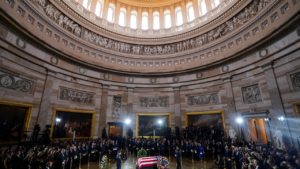
Hundreds of US lawmakers gathered in the Capitol Rotunda to honor Graham, whose outspoken support for an assertive foreign policy made him one of the party's last prominent hawks.

US Air Force bands played, a nod to his service in that branch of the armed forces, and colleagues paid tribute to one of the country's best-known senators, remembering him as gregarious, funny and persuasive. They stood before Graham's flag-draped coffin, which was placed at the center of the cavernous rotunda.

Israeli Prime Minister Benjamin Netanyahu and Ukrainian President Volodymyr Zelensky attended the funeral of an ally who forcefully lobbied Washington to back both countries during conflict later that day.

Netanyahu and his wife Sara attended a memorial dinner the night before.

"America has lost a great patriot. Israel has lost one of its greatest friends and supporters. And I have lost a dear friend," Netanyahu said.

Trump, who Graham denounced early in his political career before becoming a staunch supporter, spoke at the funeral at the Washington National Cathedral in the afternoon.

"It really ended up being a great friendship," Trump said of his fellow Republican in an interview with Fox News on Tuesday, praising Graham for his help navigating partisan politics in Washington. "If I needed a Democrat, he could usually produce that Democrat if I had to have them in an emergency. He was a great politician and a great gentleman."

Graham, a South Carolina Republican who died suddenly from a heart ailment on July 11 at age 71, was a defense hawk who regularly called for an interventionist US role on the world stage and strongly backed both Israel and Ukraine.

At the Capitol ceremony, Vice President JD Vance recalled him as a compelling figure in the Senate whose risqué jokes could make him laugh to the point of abdominal cramps.

"Because he loved people, he saw that the Senate, at its very best, could be a deliberative body geared towards persuading people," Vance said.

Senate Majority Leader John Thune said: "There was no one, no one, who took his job more seriously than Lindsey Graham, but also, no one was more capable of cracking up a room during the work week here in Washington."

They also recalled Graham's charm working on leaders of US allies. Graham met with Zelensky in Kyiv only a day before his death, the 10th time he had visited Ukraine since Russia's 2022 invasion. On Tuesday, the Senate was expected to vote on a bipartisan package of new sanctions on Russia that Graham spent his final days trying to push across the finish line.

Graham was one of Trump's most visible allies, making frequent appearances on cable television news shows to tout the administration's policies. In recent months, he had been a stalwart defender of the unpopular war in Iran.

Graham had been running for a fifth term in the Senate after winning the South Carolina Republican primary in June. His sister, Darline Graham, was appointed by South Carolina Governor Henry McMaster to fill the remainder of his term.

She has announced her intention to seek a full six-year term in November, with Trump’s endorsement. The Democratic candidate, pediatrician Annie Andrews, is considered a long shot given South Carolina’s strong Republican lean.

Lindsey Graham served as his sister’s guardian after their parents died when she was still a girl.

A former Air Force lawyer and a member of South Carolina’s Air National Guard, Graham served in the state legislature and the US House of Representatives before winning his Senate seat in 2002.

He briefly ran for president in the 2016 election, when he was adamantly opposed to Trump’s candidacy; he called the future president a “race-baiting, ⁠xenophobic, religious bigot” on CNN.

But he eventually became one of Trump’s most loyal backers in the Senate, and the two were frequent golf partners.

In addition to Tuesday's ceremonies in Washington, there will be funeral services for Graham on Wednesday in South Carolina, where he will be buried.

Berlin Pride attacker recorded masked pledge of allegiance to IS on phone, prosecutors say

The man believed to be behind a deadly vehicle attack near Berlin’s Pride celebration over the weekend left a video on his phone pledging allegiance to the terrorist group Islamic State, German prosecutors said on Tuesday.

Though the person in the video was masked, authorities assume it shows the suspected attacker, 21-year-old German citizen Abdul Ballout, a spokesperson for the federal prosecutors’ office said.

He would not specify when the video was recorded.

Ballout, who was shot dead by police on Sunday, is suspected of plowing a vehicle into crowds in Tiergarten park near the Brandenburg Gate late on Saturday, killing a Polish woman in her 60s and injuring 29 people.

Germany’s interior minister announced a security overhaul on Monday after the vehicle attack prompted an angry debate over why the suspected driver had been freed under supervision of a probation officer and was not in prison.

The suspect had been convicted and sentenced to jail time in May for preparing a serious act of violence endangering the state.

Get help now

Send a message with a description of your problem and possible ways of assistance and we will contact you as soon as we consider your problem.