• English
  • Русский

Republican campaign staffer fired over use of SS soldiers in Facebook profile photo

A campaign staffer for Ohio Republican Senator Jon Husted was fired following revelations that the 25-year-old once had a Facebook profile photo of German SS soldiers, a spokesperson for Husted told The Washington Post on Friday.

The staffer, identified as Stephen Woytek, further posted a song playlist celebrating the defunct nation of Rhodesia, a former British colony often revered by white supremacists, the report added.

“Steve serves our country honorably as a lieutenant in the US Army and is a proud graduate of The Citadel,” the spokesperson said. “He studies military history and routinely reenacts historical battles. While he denies negative intent, his social media activity displays a complete lack of judgment and disregard for its impact on others.

"Senator Husted demands better of those who represent him," she added. "Upon learning about the social media posts today, Senator Husted made the immediate decision to part ways.”

Husted’s campaign did not respond to a Washington Post request for comment on the vetting process for Woytek before he worked for them during the Senate race against former Democratic senator Sherrod Brown.

According to the report, Woytek responded to his dismissal by saying that he rejects “the racist and antisemitic ideology the SS and Nazi Germany represented.”

"I believe it is important to educate our younger generations, which is why I participate in historical reenactments,” he said, noting that he should have “exercised better judgment when posting about my activities online.”

“I am utterly heartbroken," he added, "but respectfully am parting ways with his campaign."

According to The Washington Post, Woytek follows a self-described “non-political” military reenactment group whose members dress up in SS uniforms, with the group having previously shared photos from 2018 allegedly showing the now-former staffer wearing such a uniform while marching amongst Nazi flags.

Woytek also follows SS uniform suppliers on Facebook, and the report notes his apparent longstanding hobby of military reenactment, which extends beyond World War II, as well as his general interest in military history.

The report cited Woytek’s LinkedIn profile, which shows he continues to serve in the Ohio National Guard; the National Guard did not respond to a Washington Post request for comment.

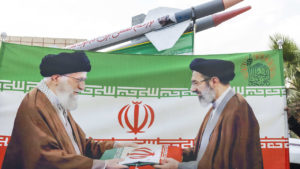
BRICS summit: Iran, UAE, others urge restraint over Middle East escalation

The BRICS group of nations unanimously adopted a joint declaration on Saturday, expressing “deep concern” over the war in the Middle East and urged maximum restraint, advocating for a “multilateral approach” that respects national viewpoints.

The declaration, adopted on the first day of the BRICS leaders’ annual summit in New Delhi, comes at a time when US and Iran have resumed tit-for-tat strikes against each other, after a pause in fighting for much of August.

The BRICS bloc includes both Iran and Washington-ally United Arab Emirates, which was expected to make clinching a joint statement consensus a particularly challenging task for host New Delhi.

"We express deep concern over the continued escalation of tensions in the Middle East…call for exercising maximum restraint…avoiding actions that could further aggravate the situation," the 'New Delhi Declaration' said.

The declaration also reiterated the commitment of member nations to a peaceful resolution of international disputes "through dialog, consultation, and diplomacy."

In addition, they voiced concerns about the rise of “unilateral tariff and non-tariff measures” that distort trade, against the backdrop of US sanctions against Tehran amid its war with the country, and against Russia over its conflict with Ukraine.

BRICS includes Brazil, Russia, India, China, South Africa, Egypt, Ethiopia, Indonesia, Iran and the United Arab Emirates.

Iran used Chinese-sourced satellite images to target US bases, intelligence reveals – report

Iran obtained high-resolution satellite imagery of a US base in Jordan from Chinese sources before launching the missile attack that killed three American soldiers in July, according to a Friday report by The Wall Street Journal, which cited US officials familiar with the matter.

The WSJ reported that Washington has drawn a direct line between the Chinese-sourced imagery and the July 17 strike on Muwaffaq Salti Air Base, but did not confirm direct involvement from the Chinese government. 

The officials told the WSJ that Iran acquired the images both ahead of and following the assault, though they would not name the Chinese firms involved and stopped short of accusing Beijing’s government of direct involvement.

According to the WSJ report, Iranian ballistic missiles slammed into a housing area at the base in northeastern Jordan where US troops were sleeping, killing three soldiers and wounding four others who were evacuated for treatment.

The strike was one of three missile attacks on the base within a 24-hour span and represented the first American combat deaths since an April ceasefire.

The WSJ noted that within days of the attack, Iran published high-resolution images documenting damage across three sections of the base, visuals more detailed than the lower-resolution commercial satellite imagery WSJ’s own analysis had reviewed, which showed harm to more than 20 structures.

The disclosure comes weeks before a planned September 24 meeting between US President Donald Trump and Chinese leader Xi Jinping. Citing officials, the paper said senior US figures had raised the imagery findings directly with Chinese counterparts, who demanded evidence and rejected the allegations.

US officials told the WSJ that Beijing has denied that Chinese companies supply such material to Iran.

A spokesperson for the Chinese Embassy in Washington, Liu Chang, did not directly address the specific claims but accused unnamed parties of “maliciously linking and smearing other countries,” the WSJ reported.

A White House official, responding to the WSJ, said no outside assistance had improved Iran's ability to strike US targets, without directly addressing the imagery findings.

Secretary of State Marco Rubio, asked days after the attack whether China was feeding Iran targeting data, declined to answer directly and said Beijing's actions had not altered the conflict's course.

The WSJ cited analysts and former officials as saying the satellite imagery was likely just one of several intelligence sources feeding Iranian targeting, alongside Tehran’s own satellites, human intelligence and support from Russia.

Early in the war, US strikes on Iranian radar and satellite systems had degraded Iranian battlefield awareness, and Iranian strikes often missed militarily significant targets. But officials cited by the WSJ said that Iranian targeting accuracy appeared to improve over the summer.

A former CIA analyst specializing in Iran’s military, Jim Lamson, told the WSJ that updated high-resolution imagery could help Iran identify high-value targets more precisely and assess strike damage. 

The Trump administration already sanctioned three Chinese companies in May, MizarVision, Earth Eye, and Chang Guang, over allegations that they provided or published satellite imagery usable by Iran against US forces.

The State Department had previously accused Chang Guang of supplying imagery that supported attacks by Yemen’s Iran-backed Houthi militia.

The administration has briefed congressional intelligence committees in recent weeks on both Chinese and Russian support for Iran.

Fan carrying a Palestinian flag ran onto the field in Yankee Stadium during 9/11 commemorations

A fan carrying a Palestinian flag ran onto the field at Yankee Stadium at 9:11 p.m. on Friday, the 25th anniversary of the September 11 terrorist attacks, before being tackled and detained by security, The Athletic reported.

The fan entered from the left-field seats and ran toward center field, briefly evading police officers and stadium security personnel before he was brought down on the outfield grass.

After officials escorted him beyond the center-field wall, spectators seated above the New York Mets bullpen threw beer cans in his direction and booed as he was removed from the stadium. Chants of “USA” then broke out among the crowd.

The Yankees declined to comment on the incident, according to The Athletic.

The disruption came in the top of the seventh inning at a critical point in the Yankees-Mets game. The Mets had loaded the bases with Francisco Lindor at the plate, two outs and a full count, while the Yankees led 5-2. After play resumed, Lindor lined out to end the inning.

The incident occurred during a game steeped in commemorations of the attacks, which killed nearly 3,000 people on September 11, 2001. Before the game, the Yankees honored those killed in the attacks and welcomed members of the 2001 Yankees team, including Derek Jeter, for pregame ceremonies.

The anniversary was also marked in Israel this week. The US Embassy, Keren Kayemeth LeIsrael-Jewish National Fund and JNF-USA held a ceremony at Jerusalem’s 9/11 Living Memorial on Thursday, marking 25 years since the attacks. The Jerusalem memorial contains the names of all those killed on 9/11 and incorporates a fragment of the World Trade Center.

The Palestinian flag displayed at Yankee Stadium also evoked memories of reactions in the Palestinian territories and Jerusalem on the day of the 2001 attacks.

A 2023 Jerusalem Post opinion article by former Israeli ambassador Mark Regev, recounting Palestinian reactions to the September 11 attacks, said then-PLO chairman Yasser Arafat’s security services moved to suppress spontaneous celebrations that emerged in Palestinian-controlled areas following the attacks. In Jerusalem, where Arafat’s forces had no authority, footage from Damascus Gate showed Palestinians celebrating the attacks, Regev wrote.

The Yankee Stadium incident comes against the backdrop of the Gaza conflict, which began after Hamas-led terrorists invaded southern Israel on October 7, 2023, killing some 1,200 people and taking more than 250 hostages.

A ceasefire under US President Donald Trump's Gaza plan took effect in October 2025, ending the period of full-scale fighting, although Israeli strikes and clashes have continued amid accusations by Israel and Hamas of violations of the agreement. The implementation of the Trump-backed Gaza ceasefire plan has since proceeded in stages.

Explosion hits another weapons site in Bulgaria

An explosion caused a fire at a weapons storage site in central Bulgaria overnight, local media and officials said on Saturday, the second blaze at a munitions facility in the past few weeks.

No one was reported injured in the blaze, which broke out near the village of Tsareva Livada and could be seen lighting up the night sky in videos broadcast locally.

“At the moment, the fire is on the territory of the storage base of the factory. It is moving from warehouse to warehouse," Gabrovo regional governor Kristina Sidorova told journalists in the early hours of Saturday.

Local media reported that the fire was at a site run by EMCO, which experienced an explosion at another facility last month, citing an EMCO company official. Reuters was not immediately able to reach EMCO for comment.

EMCO is run by Bulgarian arms trader Emilian Gebrev, who Bulgarian prosecutors allege was the target of past attacks on his facilities by Russian operatives.

In 2024, Bulgaria issued an arrest warrant for six Russian citizens accused of involvement in the destruction of EMCO arms depots that were storing munitions for export to Ukraine and Georgia between 2011 and 2020.

Prosecutors at the time said that they could reasonably assume links between the blasts in Bulgaria, an attempted poisoning of Gebrev in 2015, and munitions depot explosions in the Czech Republic in 2014.

Washington eyes foreign warships from Japan, South Korea, Turkey amid China naval threat

About a century ago, Congress barred the US Navy from buying ships from foreign shipyards to protect the American shipbuilding industry and preserve domestic capabilities. But growing concerns over China’s rapidly expanding navy and the aging of the US fleet are now pushing Washington to reconsider that long-standing policy.

The United States has struggled to reach its goal of maintaining 300 operational warships, while China’s navy has expanded to around 400 vessels. Beijing’s fleet also increasingly includes modern ships that represent a significant advance over earlier generations.

The US Defense Department is expected to issue its first tender in October for the purchase of frigates from foreign shipyards. Under the plan, foreign shipbuilders could construct some of the vessels themselves while helping train American shipyards to build additional ships in the future, a move intended to reduce costs and speed up production.

The tender is expected to include ships from two close US allies, South Korea and Japan. Japan, which fought against the United States during World War II, became a US ally after the war ended 81 years ago with the atomic bombings of Hiroshima and Nagasaki.

A third contender is also expected to join the competition. After a conversation between Turkish President Recep Tayyip Erdogan and US President Donald Trump at last month’s NATO summit, Turkey will also participate in the tender.

Over the past decade, Erdogan has invested billions of dollars in Turkey’s domestic defense industry, which has expanded into advanced shipbuilding capabilities. However, security ties between Washington and Ankara remain complicated.

Turkey has not been returned to the F-35 fighter jet program despite Erdogan’s efforts after being removed from the project over its purchase of Russian air defense systems. The US argued that the systems could have exposed sensitive information about the aircraft’s stealth capabilities.

Erdogan also prevented the US from launching attacks against Iran from Turkish territory. Despite those tensions, Trump agreed to provide Turkey with jet engines for the Kaan stealth fighter aircraft that Ankara is developing.

The US has never previously purchased Turkish weapons systems, unlike its defense acquisitions from Israel. A decision to purchase Turkish-built naval vessels would therefore represent a significant step forward in the defense relationship between the two countries.

It remains unclear whether Trump could secure congressional approval for a multibillion-dollar purchase from Turkey.

The Istanbul-class frigate that Turkey is expected to offer is smaller than its competitors, measuring 113 meters in length with a displacement of approximately 3,100 tons.

The vessel is equipped with 16 modular vertical launch system (VLS) cells, a 76 mm main gun, locally produced Atmaca anti-ship missiles, and a Phalanx close-in weapon system.

Its radar is based on an AESA system developed by Turkish defense company Aselsan.

The frigate’s main advantages are its lower production costs and the availability of multiple production lines at private shipyards across Turkey. Turkey has already ordered eight vessels of the class, while Indonesia has ordered two.

South Korea’s Chungnam-class frigate is larger and heavier than the Turkish vessel, measuring approximately 130 meters in length with a displacement of around 4,300 tons.

The frigate is armed with a 127 mm (5-inch) gun, 16 vertical launch cells, and a multifunction AESA radar integrated into an advanced electronic mast.

South Korea’s main advantage lies in the industrial capabilities of major shipbuilders HD Hyundai Heavy Industries and Hanwha Ocean, which can produce warships at a rapid pace.

South Korea has ordered six vessels of the class so far.

Japan’s Mogami-class frigate is the largest and most heavily armed of the three competitors. The vessel ranges from 133 to 142 meters in length and has a displacement of approximately 5,500 tons.

Its weapons systems include a 127 mm (5-inch) gun, 16 to 32 Mk 41 vertical launch cells, and Type 17 missiles.

The frigate is notable for its advanced enclosed stealth mast, known as UNICORN, which is integrated with an AESA radar system.

Its main advantage is its high level of automation, allowing the ship to operate with only about 90 crew members, roughly half the number typically required for comparable Western frigates.

Japan has ordered 10 ships of the class.

CIA reveals Clinton administration was warned in 1998 of potential bin Laden plane attack

Nearly three years before the September 11 attacks, US intelligence officials warned then-US president Bill Clinton and the administration that Osama bin Laden was planning to attack the United States using a plane “loaded with explosives” that would be flown into an American city, according to classified documents declassified and released by the CIA on Friday.

The documents, released ahead of the 25th anniversary of the attacks, show that US intelligence agencies repeatedly warned senior officials about bin Laden and al-Qaeda’s intentions to strike inside the United States in the years leading up to September 11, 2001.

The document, dated September 10, 1998, was titled “Bin Laden’s Location and Intentions” and was prepared for senior administration officials with access to the President’s Daily Brief, or PDB, one of the most highly classified intelligence documents provided to the president and a small group of national security officials.

The document did not contain definitive intelligence about how bin Laden planned to carry out an attack or where it would occur. However, it noted that his attention had turned toward Washington.

The document does not indicate that US intelligence had advance knowledge of the specific aircraft hijacking plot carried out on September 11, 2001. Rather, it shows that a scenario involving the use of a plane against a target inside the US had emerged within the intelligence community years before the attacks.

The document was among a collection of 71 documents released by the CIA to mark the 25th anniversary of the attacks, 69 of which are being made public for the first time.

The documents show that in the years before the attack, the CIA issued a series of warnings about bin Laden and al-Qaeda to senior officials across multiple US administrations. In 2001 alone, at least 18 presidential intelligence briefings mentioned bin Laden.

One question remains unanswered: whether Clinton himself read the 1998 document or received a direct briefing on its contents. According to the report, that could not be determined.

The document had previously been referenced in the 9/11 Commission’s report as a “threat report,” but the commission did not disclose at the time that the information was included in material provided to recipients of the President’s Daily Brief.

The release is particularly significant because of another well-known intelligence document from the months before the attacks: the PDB received by President George W. Bush on August 6, 2001, titled “Bin Ladin Determined to Strike in US.”

That document stated that bin Laden had sought for years to carry out attacks inside the United States and that al-Qaeda had operatives and a presence in the country. However, it did not include operational intelligence identifying the four aircraft, the targets, or the timing of the attack.

CIA Director John Ratcliffe said the release of the documents, timed to coincide with the anniversary of the attacks, was “the largest release ever of CIA analysis related to 9/11.”

The release could renew debate in Washington over a question that has persisted for 25 years: whether the failure was caused by intelligence agencies failing to connect the available information in time, or by political leaders and the national security establishment failing to take sufficiently forceful action in response to the warnings that had accumulated.

The 9/11 Commission concluded that the failure was not the responsibility of a single agency, but instead resulted from several factors, including a “failure of imagination,” inadequate coordination between agencies, and insufficient operational intelligence to disrupt the plot.

The CIA has also emphasized over the years that while numerous warning signs indicated al-Qaeda was seeking to attack the United States, the agency did not possess intelligence before September 11 that identified the specific timing and location of the attack in a way that would have allowed it to be prevented.

The newly released documents do not change that assessment, but they add another layer to the historical record: years before 19 al-Qaeda terrorists hijacked four passenger planes and killed nearly 3,000 people, a scenario in which bin Laden’s followers would use an aircraft to strike an American city had already appeared within the classified intelligence system, reaching the highest levels of the US government.

ChatGPT invented fake police testimony in murder appeal, New Mexico high court says

A defense lawyer appealing his client’s murder conviction submitted a brief containing made-up police testimony and witnesses fabricated by OpenAI’s ChatGPT, New Mexico’s highest court said.

The New Mexico Supreme Court on Wednesday fined the attorney, Stephen Aarons, and held him in contempt for failing to verify the accuracy of the court filing, which Aarons said he prepared with help from the AI program.

The filing “contained false testimony from wholly fabricated witnesses,” the court said.

The panel also said Aarons had “demonstrated a lack of remorse and a lack of concern for his client.” The justices fined Aarons $5,000 and said they will refer him to an attorney disciplinary board for investigation.

Aarons in a statement to Reuters said he had used ChatGPT to summarize the trial proceedings when he agreed to take up the defendant’s appeal last year, and did not understand the degree to which AI could “hallucinate” facts.

“I am remorseful but hopeful that the disciplinary board takes into account it was an honest mistake,” he said. “It is a lesson learned for all professionals who rely upon this powerful but sometimes unstable technology.”

OpenAI did not immediately respond to a request for comment.

The court’s sanction is the latest in a growing number of cases in which state and federal judges have disciplined lawyers for submitting court documents generated by AI tools without adequately vetting them. Some judges have also faced scrutiny over the use of AI.

Dozens of lawyers have been sanctioned for filing briefs where AI made up case ​citations or misquoted the law. Aarons’ filing appears to have gone further, containing fabricated witness testimony in a criminal appeal.

Aarons, a private attorney based in Santa Fe, was handling the appeal of Oscar Renee Sandoval, who pleaded not guilty to the murder of the mother of his children before he was convicted and sentenced last year to life in prison.

The appeal is still pending and was assigned on September 2 to Kim Chavez Cook, a New Mexico public defender. Cook declined to comment.

The district attorney's office for Doña Ana County also declined to comment.

The state supreme court last month ordered Aarons to explain how the fabricated material, which it said appeared to include "fictional statements that the shooter was wearing dark pants and a white shirt," was included in his primary brief in the appeal.

Aarons told the court at an August 21 hearing that he fed a computer-generated transcript and other case materials to ChatGPT, presuming it would generate "a bulletproof summary."

The justices sounded incredulous that Aarons was not fully aware of how AI can make mistakes.

"Counsel, do you watch the news? Do you listen to the radio? Do you read anything about what's going on in the world?" Justice C. Shannon Bacon said at the hearing. "Because the problem with lawyers relying on AI hallucinations is an above-the-fold story every single day.”

Trump sends Rosh Hashanah greetings, vows to combat antisemitism

The White House issued a Presidential Message on Rosh Hashanah on behalf of US President Donald Trump and First Lady Melania Trump on Friday, extending greetings to the Jewish community ahead of the Jewish New Year.

Written in the president’s voice, the message began by offering “warmest greetings” to Jewish communities in the US and around the world. “Melania and I send our warmest greetings to the entire Jewish community on Rosh Hashanah, the Jewish New Year and the first of the High Holy Days,” Trump wrote.

The message highlighted the biblical significance of Rosh Hashanah, describing it as “the anniversary of when the Almighty created Adam and Eve and the story of humanity began.”

Trump also noted that the two-day holiday begins a period of reflection and repentance leading up to Yom Kippur, the holiest day in the Jewish calendar. The message described the High Holy Day season as a time of “prayer, repentance, and spiritual renewal.”

The president reaffirmed his administration’s commitment to promoting religious faith across the US, combating antisemitism, and protecting religious freedom.

“My Administration reaffirms our steadfast commitment to ushering in a historic renewal of faith across our country, eliminating the scourge of anti-Semitism, and defending the sacred right of religious liberty for every single American,” the message said.

The message concluded with a traditional High Holy Days greeting, expressing the hope that members of the Jewish community would “be inscribed in the Book of Life.”

“Wishing you a Happy, Healthy, and Sweet New Year!” Trump wrote.

Norway’s Princess Astrid dies, aged 94, two days after king’s funeral

Norway's Princess Astrid, an older sister of the late King Harald, died on Friday at the age of 94, the royal palace said in a statement.

Astrid's brother Harald died last month, aged 89, after more than 35 years on the throne, and the princess made her last public appearance at his funeral on Wednesday.

"Throughout her long life, Princess Astrid represented the Royal House in a warm and dutiful manner," King Haakon VIII said in the statement.

This is a developing story.

Get help now

Send a message with a description of your problem and possible ways of assistance and we will contact you as soon as we consider your problem.