• English
  • Русский

Argentina to file criminal complaint against Israeli drilling company for operating in Falklands

Argentina’s government announced on Monday that it will file a criminal complaint against Navitas Petroleum, an Israeli oil company, for operating in the Falklands.

The announcement came from Argentine President Javier Milei’s office and included complaints against several petroleum companies operating in the area.

According to the announcement, Navitas has been operating under the license of the United Kingdom's "illegitimate government," with the complaint aiming to "protect natural resources and safeguard the sovereignty of the Argentine Republic over the Malvinas Islands, South Georgia and the South Sandwich Islands, and the corresponding maritime and insular spaces, as they are an integral part of the national territory."

The status of the Falkland Islands is disputed between Argentina and the UK, with both claiming sovereignty over the territory.

The complaint follows a January report by N12 News that Argentina reportedly delayed moving its embassy to Jerusalem because of bilateral tensions over Navitas’s plans to drill oil from a field near the Falkland Islands.

The Argentine Foreign Ministry said in December that Navitas, along with partner British company Rockhopper Exploration, had not obtained the proper permits and that their plans were “unilateral and illegitimate.”

The ministry warned of “potentially irreversible future consequences” if the plan proceeds, with both companies banned from drilling in Argentina for drilling without a permit.

Argentine sources told N12 at the time that they considered the plan to be “the theft of a natural resource that belongs to them.”

Mathilda Heller contributed to this report.

Trump claims Tehran trying to influence midterms, says war will end after election

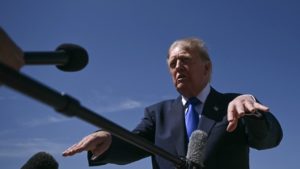
US President Donald Trump said Wednesday that he expects the war with Iran to end “immediately after” the US midterm elections, arguing that Tehran is attempting to influence the vote in hopes of facing a weaker Congress.

Speaking to reporters before departing for Dallas, Trump was asked about the continued conflict with Iran and the sharp rise in oil prices.

“I think the war will end immediately after the election,” Trump said. “I think the war will end immediately after the election because they can’t hold out any longer.”

Trump then accused Iran of attempting to influence the November vote: “They’re desperate to try and affect the election so that we can get a nice weak group of people in there and leave them alone and let them have their nuclear weapon,” he said. “All they want is a nuclear weapon, and if they had a nuclear weapon, the whole world is in deep trouble.”

Trump’s remarks came as oil prices climbed above $100 a barrel amid renewed US-Iran military action. He acknowledged that Americans are paying higher prices but again framed the conflict around preventing Iran from obtaining a nuclear weapon. 

“All you have to do is say, ‘Will you let Iran have a nuclear weapon?’ And the answer is no,” Trump said. He claimed Iran’s economy was in severe distress, citing high inflation, a weakened currency and difficulties paying its military.

“We control the strait and lots of other things,” he added.

Trump predicted that energy prices would begin falling after the midterms. “Right after the election, oil prices are going to be tumbling downward,” he said. “They’re going to be tumbling down, and we’ll get them down. I think for gasoline, we’ll get them below $2 a gallon.”

He cautioned, however, that the decline would not come before the vote. “But not until after the midterms,” Trump said. “I think it’s going to take a little bit longer than the midterm.”

Asked about the latest US attacks on Iranian assets, Trump said Washington was responsible for the strikes and signaled that more could follow. “The attacks are made by us,” Trump said. “We’ve knocked out nine of their ships. I would say that the attacks are caused by us. Yeah, and you’re going to see a lot more.”

He later said the United States had “taken out about nine of their tankers.” Trump was also asked whether a nuclear agreement with Tehran remained possible after Energy Secretary Chris Wright reportedly suggested such a deal might no longer be on the table.

“I’m doing much more than a nuclear deal,” Trump replied. “There’s a lot more than nuclear. We’re going to have nuclear. That’s 99.9, but there’s going to be a lot of other things on the table that wouldn’t have been on the table three months ago.”

Trump also addressed for the first time the sanctions announced by Britain, France and Canada targeting Israeli settlements in the West Bank. The measures have prompted a sharp response from Israel, including a demand that Britain close its East Jerusalem consulate within 30 days.

Asked for his reaction and whether he opposed the measures, Trump said he had only just learned of them. “Well, I’ve just seen it, and I’ll be speaking to Israel,” Trump said. “I’ll be speaking to them, and I’ll find out what their thinking is. I understand, you know, I understand exactly what’s going on, but I want to find out why all of a sudden that has happened.”

The comments were more cautious than those of US Ambassador to Israel Mike Huckabee, who has publicly condemned the sanctions. Secretary of State Marco Rubio had also previously declined to directly endorse or condemn the British move, while saying Washington did not want to see “anything destabilizing” in the West Bank.

Palestinian officials tell ‘Post’ UK settlement ban, ‘a victory for the two-state solution’

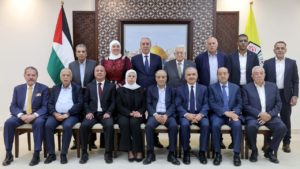
Palestinian officials in Ramallah described Britain’s decision to ban dealings with Israeli settlements in the West Bank as a “significant political achievement,” particularly in light of growing incidents of violence by settlers against Palestinians recently. 

They emphasized that the move represents an important step toward protecting the two-state solution and is widely regarded as a setback for far-right policies and “radical elements within the Israeli government.”

A senior Fatah official hailed Britain’s move as “an excellent and outstanding step,” calling it “a victory for those working for peace and for the two-state solution.” 

The official pointed out that the UK, as a major world power and the country behind the Balfour Declaration, is now sending a strong message by taking this position. “This shows Britain’s understanding of international relations and its support for Palestinian statehood,” he told The Jerusalem Post

"The decision tells Israel that it cannot expect to enjoy security or normal ties with other countries while it continues settlement expansion and aggressive actions and policies against Palestinians," he said.

He added that the move gives Palestinians hope, demonstrating that the "world rejects Israeli settlement policies and stands with Palestinians' rights."

Another Palestinian Authority official told the Post that “It affirms that the world cannot accept the continued Israeli occupation and settlement activity, which violate international law.” 

Other Palestinians added that "this is a meaningful action to protect the two-state solution," noting they are pleased with any initiative that restricts settlement activities.

A former official from the PA foreign affairs ministry told the Post that Palestinians have urged other countries to follow Britain’s example.

A statement issued by Palestinian President Mahmoud Abbas said the PA “appreciates the determination of these countries to impose restrictions on trade with Israeli settlements in the occupied Palestinian territories, and to support the adoption of similar measures at the European level.” 

The statement considered it an "important practical step," and called on the entire international community to expedite the translation of these positions into binding measures, including imposing sanctions on extremist settlers and those supporting them."

It also called to "immediately halt settlement activities, cancel the E1 plan, and refrain from all measures aimed at annexing Palestinian land or displacing its residents."

Chairman of the Palestinian National Council Rawhi Fattouh welcomed the French and British decisions to ban products from Israeli settlements, describing them as "important political and legal measures that strengthen the international stance rejecting annexation and the seizure of land by force."

He stated that confronting settlement activity is not merely a political choice but an 'international responsibility'. He said that protecting the two-state solution begins with halting settlement expansion, holding accountable those who undermine it, and isolating the "apartheid government."

Fattouh emphasized that international positions must go beyond political condemnation to include binding legal, diplomatic, and economic measures, such as a comprehensive ban on settlement products entering markets, ending all commercial or investment dealings with settlements, and restricting entities and companies that finance or support settlement activity.

He also called on European countries and Canada to adopt a clear international framework to isolate settlements, cut off funding sources, and end any form of political or economic protection that enables their continuation.

Russia says it hopes US-mediated talks with Ukraine will resume soon

Russia hopes that US-mediated peace talks on ending the war in Ukraine will resume soon, Kremlin spokesman Dmitry Peskov said on Wednesday.

No such talks between Russia and Ukraine have taken place since February, but US President Donald Trump sent his negotiators to Moscow and then Kyiv at the weekend in a bid to relaunch the stalled process.

Peskov was responding to a comment by US Secretary of State Marco Rubio that it may be possible to draw up a roadmap to restart talks and work towards an acceptable outcome for both sides.

A huge gulf remains between Russia and Ukraine on how to end the 4-1/2-year war, with Kyiv rejecting Moscow’s demands that it give up more territory.

Peskov said Moscow would not publicly discuss any specifics of a potential settlement, but there was a "confirmed political will" to resume talks.

"We hope that these negotiations will resume in the foreseeable future, and we remain in contact with our American counterparts," he said, a day after Trump and Russian President Vladimir Putin spoke by phone.

Peskov added that the issue of exchanging prisoners between Russia and the US was "a constant item on the agenda," including between the two presidents. He noted that Russia had released one American prisoner, Robert Gilman, at Trump's request last month.

The two countries have traded prisoners at several points in the past few years.

The biggest such deal was in August 2024, when Russia got back eight prisoners held in the West, including a member of its FSB security service convicted of murder in Germany.

In exchange, 16 people were released from Russian and Belarusian jails. Among those freed by Moscow were prominent Russian dissidents and three US citizens, including Wall Street Journal correspondent Evan Gershkovich.

Serbia’s Vucic dissolves parliament, calls snap elections amid anti-corruption protests

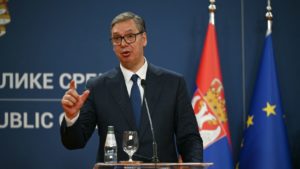
Serbia’s President Aleksandar Vucic on Wednesday dissolved parliament and announced snap elections for next month as he seeks to extend his hold on power by running for prime minister.

Vucic, a populist who has been in power as ‌president or prime minister for 12 years, has faced nearly two years of anti-corruption demonstrations triggered by the collapse of a railway station awning in the city of Novi Sad in November 2024 that killed 16 people.

"Were the elections necessary for us if there were no such tensions, if there were no such political conflicts, certainly they would not be necessary," Vucic said in a televised statement. He added that any delay in the election "would threaten the survival of democracy."

He set the election date as October 25, confirming earlier statements on timing. A parliamentary vote was initially scheduled for next year.

Vucic ​has ruled as prime minister or president since 2014 and held the strings of power in both positions. While he has overseen a chapter of economic development, he has faced growing rancor against perceived corruption and authoritarianism.

Still, he commands support from his ruling Serbian Progressive Party, which on Saturday nominated him to run for prime minister in the upcoming elections. It is unclear if Vucic will resign from his position as president before the parliamentary elections or after.

Pilots considered aborting landing after touchdown in Miami cargo crash, NTSB says

The National Transportation Safety Board (NTSB) said on Tuesday that evidence recovered from a flight data recorder suggested the pilots of an Amazon Prime Air cargo plane involved in a deadly crash considered aborting the landing after the aircraft touched down.

The 32-year-old Boeing 767 operated by Miami-based 21 Air overran the runway by some 1,300 feet (396 m) and crashed into two vehicles, killing five people and injuring five others on Sunday.

NTSB Chair Jennifer Homendy told reporters that investigators would interview both of the pilots on Wednesday and then release details from the cockpit voice recorder.

The NTSB said 30 seconds before the end of the flight data recording, the nose landing gear and right main landing gear touched down on the runway at a speed of 158 knots (181 mph), while 19 seconds before the end of the recording, the left main landing gear touched down at a speed of 134 knots.

A few seconds later, the brakes were released, and the throttles were increased to values consistent with go-around thrust, indicating a late attempt to abort the landing and get back in the air.

But 11 seconds before the end of the recording, throttles were reduced to idle power, and brakes were reapplied. The final ground speed was 65 knots at the end of the recording.

The NTSB said there was no indication in the recorded data that speed brakes or thrust reversers were deployed to help slow the plane.

Homendy is leading a team of 32 investigators at Miami International Airport. She said the NTSB was able to reopen one of the two runways closed since the accident to allow for departures from an easterly direction late on Tuesday.

The Amazon cargo plane was on its third flight of the day, coming from San Juan, Puerto Rico. It had flown from Cincinnati to Miami and from Miami to San Juan earlier on Sunday before the crash at 1:53 p.m. EDT (1753 GMT).

The captain, 55, received his type rating for the 767 in May and has 7,145 hours of flight time, while the first officer, 37, received his type rating for the 767 in April 2025 and has 2,655 flying hours, the NTSB said.

Trump told Putin he wants swift end to Ukraine war and US-Russia ties restored, Kremlin claims

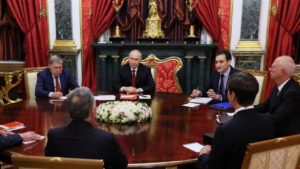
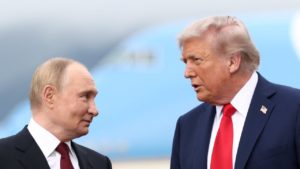
Donald Trump told Russian President Vladimir Putin by phone on Tuesday that he wanted a swift end to the war in Ukraine, which would allow US-Russia ties to be fully restored, the Kremlin said, adding that Putin had supported the US president’s view.

The call, which the Kremlin said lasted an hour, followed a weekend visit to Moscow and Kyiv by US envoys Steve Witkoff and Jared Kushner, who are trying to revive stalled talks designed to find a way to end the fighting.

Their weekend diplomacy did not appear to produce any immediate public breakthrough, although they did raise the possibility that three-way talks between Russia, Ukraine and the United States could resume. The Kremlin, which has said it does not rule that out, made no mention of the possibility in its readout of the Putin-Trump call.

Instead, Kremlin aide Yuri Ushakov told reporters that the two leaders had rated the US envoys’ weekend diplomacy “with a plus sign” and that Putin had told Trump what he believed the United States could do to help end the conflict and given him an assessment of the situation on the battlefield.

Trump, Ushakov said, had made it clear he wanted the war quickly finished.

"Donald Trump clearly emphasized the desirability of bringing the conflict to an end as soon as possible, which would immediately open up prospects – impressive and far-reaching ones at that – for the full restoration of relations between the US and Russia," said Ushakov.

"In his view, this would have a particular impact on trade and economic ties, promising enormous benefits for both countries. Donald Trump is keen to see a breakthrough achieved during his presidency. Vladimir Vladimirovich Putin supported this approach."

Russia and Ukraine remain far apart on how to end the war, the deadliest in Europe since World War Two, and both sides have escalated their attacks on each other in recent months. A person close to the Kremlin, speaking before the trip by Trump's envoys, said Putin remained intent on taking full control of the remainder of the Donetsk region in eastern Ukraine, something Kyiv has vowed to continue fiercely opposing with every weapon at its disposal.

Ushakov – who said Putin and Trump had also agreed on the need to continue prisoner exchanges – said he was not able to get into more detail about what had been discussed, but described the conversation as constructive and said the two leaders had agreed they would stay in touch and speak to each other by phone again if the need arose.

He said Putin had told Trump that Russia had no hostile intentions when it came to Europe despite repeated claims to the contrary by various European politicians.

"In light of speculation regarding Russia’s alleged hostile intentions towards European states, it was emphasized that we have absolutely no aggressive plans whatsoever towards Europe," said Ushakov.

"The myths being spread about the Russian threat merely serve as a pretext for Europeans to ramp up their support for Ukraine and their own military spending," he added.

Israel’s settlement policy triggers trade restrictions from 12 nations, incl. Canada, France

The foreign ministers of 12 countries confirmed on Tuesday their intention to impose national restrictions on trade in goods from Israeli settlements. Canada, Denmark, Finland, France, Iceland, Ireland, Norway, Poland, Portugal, Spain, Sweden, and the United Kingdom jointly confirmed the restrictions.

The 12 nations jointly said that the Israeli government’s actions in the West Bank “damage the possibility of realizing the two-state solution.”

They said that “the situation is deteriorating rapidly against the backdrop of unprecedented levels of settler violence and settlement expansion, including the unacceptable decision to publish tenders for the E1 settlement project,” they stated.

While the countries recognized Israel’s legitimate security interests and reiterated their condemnation of the Hamas terrorist attack on October 7, they called on the Israeli government to immediately halt settlement expansion and the expansion of administrative authorities in the West Bank, “ensure accountability for settler violence, and investigate allegations against the Israeli security forces.”

This joint announcement came as something of a surprise; all eyes were on the UK, which was expected to announce its measures on Tuesday; however, the involvement of the other 11 countries was not previewed, and the Israeli government was preparing its response for British measures specifically.

The exact details of the trade bans are not yet clear. For example, countries will need to differentiate between goods originating in West Bank settlements and products “Made in Israel.”

There is also set to be a religious exemption to the goods ban, but what this entails is again unclear.

The 11 European countries and Canada backing the settlement trade restrictions are home to roughly 1.2 million Jews, including some of the world’s largest Jewish communities in France, Britain, and Canada. The new restrictions are unlikely to have a major economic impact on these European and Canadian Jews, since they target a relatively small category of settlement-produced goods.

However, Jewish communities in those countries could experience reduced access to some Israeli products, particularly settlement-produced wine and agricultural goods. There would also be implications for businesses and organizations with ties to settlements – and more broadly, concerns about the effects of antisemitism on Jewish communal life and increasingly confrontational UK government policies toward Israel.

France will also launch a process to ban products from Israeli settlements in the West Bank, Foreign Minister Jean-Noel Barrot said on Tuesday, amid rising settler violence that further undermines prospects for a two-state solution with the Palestinians.

“France is going to put an end to its commerce with Israeli settlements in Palestine, along with 11 other countries which have also undertaken similar engagements,” Barrot wrote on X/Twitter.

“Why are we doing this? Because the West Bank is close to exploding; there is frenzied expansion of the settlements, a flare-up of violence against Palestinians by extremist settlers, and acts of terror which have been attacked by Israeli authorities themselves,” Barrot added.

The move comes as frustration has grown among some European Union states, which have sought a bloc decision but failed to gain a qualified majority with notable opposition from Germany.

Ahead of the announcement, a French diplomatic source told reporters in a briefing: “Given the situation on the ground, we can’t wait, so we are taking this national decision.” The modalities of the ban have yet to be finalized, and it was not immediately clear when it would be implemented.

“This announcement is part of the joint initiative between the president of the Republic and the prime minister of the United Kingdom, which was discussed in particular during their meeting in London and to which several of our partners in the European Union and beyond have signed up,” the source said, adding that as many as a dozen countries would follow suit.

The source said it was not a boycott of Israel.

“The Government of Israel’s actions in the West Bank are undermining the possibility of a two-State solution,” the statement said.

“Today, Canada, Denmark, Finland, France, Iceland, Ireland, Norway, Poland, Portugal, Spain, Sweden and the UK confirm their intention to introduce national and/or support European restrictions on trade in goods with settlements which are illegal under international law, or that they are actively considering these and other measures, in accordance with their national procedures,” it added.

While British Prime Minister Andy Burnham has not spoken to his Israeli counterpart since entering the role 50 days ago, Burnham did speak to US President Donald Trump on Monday to inform him of the impending pan.

The US government is expected to release a condemnation of the sanctions later on Tuesday. It could also contain implied or actual threats of retaliation against the UK over the decision.

Reuters contributed to this report.

India confronts a new regional security equation as Mecca pact takes shape – analysis

The newly established Mecca defense pact has put a strategic question before India: Will the collective-defense pact linking Pakistan, Saudi Arabia and Turkey remain mainly political, or develop into an operational military arrangement?

For more stories from The Media Line go to themedialine.org

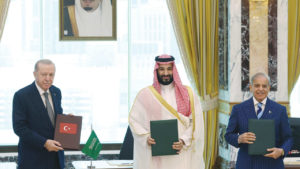
The three countries signed the Mecca Joint Defense Agreement on Aug. 7 and met in Istanbul on Aug. 31 to establish a secretariat in Saudi Arabia, to be led by a Pakistani secretary-general for three years. Reuters reported that the agreement treats an armed attack on one signatory as an attack on all three, but the governments have not released a detailed public text setting out the commitments that would follow.

Turkish Foreign Minister Hakan Fidan said after the Istanbul meeting that the alliance was designed to expand and that officials had begun work on an accession roadmap. The talks addressed counterterrorism, defense production and interoperability, including possible joint land, sea and air exercises, air defense, drones, autonomous systems, electronic warfare and artificial intelligence.

The alliance is taking shape as Gulf states confront renewed Iranian attacks. On Sept. 3, Kuwait said its air defenses intercepted Iranian missiles and drones targeting the country. Reuters reported that Tehran had struck a US base there after a major escalation in the US-Iran conflict.

India can measure the Mecca pact against Kuwait’s limited arrangement with Pakistan. The newer alliance uses broader mutual-defense language, but its practical military obligations have yet to be publicly defined.

American and Indian troops are training together this month in the Rajasthan desert, where India faces Pakistan, and in the Himalayas, where Auli is about 60 miles from the disputed frontier with China.

The US Embassy in New Delhi announced the exercise Tuesday, a day after the Istanbul meeting. Since 2004, the embassy said, Yudh Abhyas has strengthened the US-India Major Defense Partnership in support of a free and open Indo-Pacific.

Yudh Abhyas, Hindi for “training for war,” is in its 22nd edition. The three-week exercise involves 350 soldiers from each army, starting at the Mahajan Field Firing Range near Bikaner and moving to Auli. Mahajan focuses on live fire and mechanized maneuver, while Auli tests high-altitude logistics.

Dr. Arzan Tarapore, a research scholar at Stanford University, said the public record provides scant evidence that the pact is a binding mutual-defense treaty in the operational sense. He told The Media Line that he does not expect the three to conduct military operations together, whether against Iranian strikes on Saudi Arabia or in coordination against India.

He expects flows of money, arms and technologies, including drones, among the members and across the region. Pakistan already used Turkish drones against India in May last year, Tarapore said, and that is the kind of defense-industrial cooperation he expects to deepen.

Brig. Anil Raman, a retired Indian officer at the Takshashila Institution in Bangalore, reached a similar conclusion. India has asked Washington for nothing so far, he told The Media Line. It should seek tighter controls on American-origin weapons that could reach Pakistan through Turkey and urge Saudi Arabia and Turkey to limit the cooperation, he said.

“Any expectation that Saudi fighter jets, Pakistani F-16s and Turkish F-16s are going to be running joint raids somewhere in the Middle East is Hollywood fiction,” Kabir Taneja, who directs the Observer Research Foundation’s Middle East office in Dubai, told The Media Line. “It is never going to happen.”

Taneja also cautioned against comparisons with NATO. Article 5 of the North Atlantic Treaty has been invoked only once in the alliance’s history, he said.

The alliance does not eliminate or replace Turkey’s obligations under NATO or its other agreements, Fidan said in Istanbul. It complements them.

Asked at the same news conference about Israeli statements calling Turkey a strategic threat, Fidan said Israeli Prime Minister Benjamin Netanyahu should be stopped and called him “an enemy of humanity.” He said hostility toward Turkey from Netanyahu’s government had grown since Israel’s election campaign began.

The three countries do not agree on the adversary either, Taneja said. Each has its own view of what the arrangement is for and a different neighbor in mind.

“Ankara and Riyadh were not on good terms until 2022 or 2023,” he added. “That can happen again.”

Islamabad has reportedly sent 8,000 troops, a squadron of JF-17 fighters and an air defense system to Saudi Arabia under the bilateral agreement the two countries signed in September 2025. Neither government has publicly provided a full account of the deployment. Pakistan has sent soldiers to the kingdom for decades. More than 20,000 served under the 1982 Joint Defense Protocol, and a Pakistani general commanded the Saudi-led Islamic Military Counter Terrorism Coalition beginning in 2015.

Pakistan raised $3 billion on the international bond market on Sept. 3, its largest single issuance, with orders near $6 billion. The proceeds will repay a $3 billion Saudi loan made in April, which Islamabad had used to repay the United Arab Emirates and which Riyadh had already extended once.

Saudi Arabia committed another $3 billion in support in April and extended an existing $5 billion deposit as Islamabad faced repayment obligations to the United Arab Emirates. The assistance ties Riyadh to Pakistan’s financial stability as well as its defense planning.

Pakistan spent decades treating the Gulf as its own ground, Taneja said. It lobbied hard to keep India out of the Organization of Islamic Cooperation when the bloc of Muslim-majority states was founded in the 1960s.

India’s economic rise changed the picture. Dubai was built by Indian hands in the 1990s, Taneja said, and Indians now come as engineers, managers and chief executives rather than as construction workers, while it has become more difficult for Pakistani laborers to obtain Emirati visas.

“What we are seeing now with the Mecca agreement, with the mediation with Iran, with the—dare I say—good relationship with President Trump, is Pakistan finding a very good wedge to re-enter,” Taneja said. “And to be fair to them, they seem to be doing a decent job of it.”

“If you are going to build an architecture that will require mobilization at some level, you cannot mobilize if you are not trained, and you cannot mobilize if you are not experienced,” he said. “Pakistan brings all those things together.”

India’s national security adviser has visited Saudi Arabia four times in the past six months, Taneja said, and Riyadh kept New Delhi informed before signing its bilateral agreement with Islamabad so India would not read the arrangement as a coalition against it.

Asked at a New Delhi forum on Aug. 22 whether the pact worried him, S. Jaishankar said: “There are live military situations which each of the signatories face, what has the Mecca pact done in response to that?”

He said India would not ignore it either. “In my calculus, everything counts, everything will have a weight,” he said, “and sometimes things need to play out.” India factors in developments involving countries whose policies are not favorable toward it, he added.

India’s quarrel with Turkey predates the pact. Days after the May 2025 fighting, New Delhi revoked the security clearance of Celebi Aviation, a Turkish ground-handling company operating at nine Indian airports. Indian officials said drones Pakistan launched at Indian towns came from Turkey.

The deeper irritant is Kashmir, Taneja said. President Recep Tayyip Erdogan raises it at the UN General Assembly almost every year, which India treats as a red line and an endorsement of Pakistan’s position. New Delhi has told Ankara so repeatedly.

For India, he added, the larger concern is Saudi Arabia’s membership. The relationship with Turkey was already contentious.

Indian commentators have also asked whether the pact responds to India’s closer ties with Israel. India and Israel upgraded their relationship in February to what the two governments call a special strategic partnership for peace, innovation and prosperity. Their bilateral investment agreement took effect in July; the three countries signed in Mecca on Aug. 7.

The Hindi-language outlet Webdunia asked whether the alliance was a direct response to India-Israel ties and to mechanisms such as I2U2 and the India-Middle East-Europe Economic Corridor. Netanyahu telephoned Indian Prime Minister Narendra Modi on Aug. 6, the day before the signing, and Modi posted about the call in English and Hebrew.

India’s Foreign Ministry has rejected reports that New Delhi approached Israel seeking a new defense treaty in response to the pact.

The Qatari Foreign Ministry welcomed the pact as a positive step but declined to discuss joining it. Doha is already present in more than one platform, the ministry said.

Qatar has a US security assurance that Washington did not extend to Saudi Arabia. After the Israeli strike on Doha in September 2025, President Trump issued an executive pledge that the United States would treat an attack on Qatar as a direct threat to itself. The US-Saudi defense agreement two months later provided Riyadh with F-35s, tanks, civil nuclear cooperation and major non-NATO ally status, but did not include the same formula.

Turkey has maintained about 3,000 troops in Qatar for almost a decade under several defense agreements. Their presence did not prevent Iranian strikes on Qatar in 2025 and 2026 or the Israeli attack on Hamas leaders in Doha.

The United Arab Emirates has kept its distance. Abu Dhabi has the Abraham Accords, ties to Israel, expanding relationships with India and China, and a defense industry of its own. It has less urgency than Riyadh to accept automatically triggered obligations.

Col. (res.) Dr. Hanan Shai wrote for the Misgav Institute for National Security and Zionist Strategy on Aug. 18 that “Israel cannot assume that the Mecca pact will also remain an empty declaration.” He proposed not a rival military alliance but an economic-security organization built around the India-Middle East-Europe Economic Corridor, with India, Israel, Greece, Cyprus and the United Arab Emirates at its core, Jordan providing land continuity and Saudi Arabia welcomed even while Riyadh remains in the Mecca pact.

Saudi Arabia has invited Bangladesh, a Bangladeshi official told Reuters, and Dhaka says it is interested. Turkish officials said after Istanbul that they had begun building a mechanism for other countries to join. Taneja is untroubled by the prospect. Bringing in countries from outside the region would dilute the agreement, he said, and he does not know what Bangladesh would add to it.

The idea is to build a regional security architecture in the Middle East, he said. Expand geographically before it has any depth, and other organizations offer the warning: the core mandate becomes diluted, and symmetry replaces purpose.

“There is very little unity in the Gulf right now,” Taneja said. “They have a lot of their own stuff to figure out first. It is going to be chaotic. It may be violent.”

Hungary expels 10 Russian diplomats, foreign minister says in major break from Viktor Orban era

Hungary expelled 10 Russian diplomats on Tuesday, saying they had acted in ways incompatible with their status, in a clear signal that the pro-Russian era of former Prime Minister Viktor Orban is over.

Russia said it would retaliate against what it called an “extremely unfriendly step.”

“(Those expelled) were engaged in activities in Hungary that are unacceptable for diplomats under the Vienna Convention,” Hungarian Foreign Minister Anita Orban, who is not related to the former prime minister, said in an emailed statement.

“This decision… does not imply breaking off diplomatic relations with Russia. Hungary intends to continue the necessary dialog,” the statement added.

However, Russia’s ambassador to Budapest, Evgeny Stanislavov, rejected this suggestion.

"Their statements about keeping channels of dialogue with Russia open and continuing pragmatic cooperation are worth absolutely nothing," he said in a statement.

"This extremely unfriendly step is an unprecedented and unjustified escalation on the Hungarian side, and it will receive an appropriate response," Stanislavov added.

Viktor Orban, who lost power in Hungary in April after 16 years in office, had kept close ties with Russian President Vladimir Putin even after Russia invaded Ukraine in 2022.

Under him, Hungary continued buying Russian oil and gas, defied European Union sanctions on Russia, and blocked a €90 billion ($97 billion) EU loan to Ukraine.

After Russia invaded Ukraine, many European countries expelled dozens of Russian diplomats, while Hungary expelled none. Until Tuesday, it had not sent any home publicly since 2018.

New Prime Minister Peter Magyar and his center-right government have repeatedly said that Hungary's main alliances are the European Union and NATO and that the government aims to rebuild trust eroded under Orban's rule.

In a parliamentary hearing in May, Anita Orban said Russia would "remain a partner" but the relationship could not be based on "one-sided dependency," adding that Moscow's policies pose a security challenge to Hungary and Europe.

Get help now

Send a message with a description of your problem and possible ways of assistance and we will contact you as soon as we consider your problem.