• English
  • Русский

Trump bans ‘fake news’ CNN, MS NOW, Politico from White House ‘effective immediately’

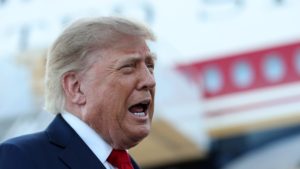
WASHINGTON – US President Donald Trump on Friday banned CNN, MS NOW, and Politico from the White House, effective immediately, accusing the three outlets of persistently spreading “fake news” and warning that more media organizations could face similar bans.

"I am proud to announce that, effective immediately, I am banning Fake News CNN, MSNOW… and Politico… from the White House as a result of their constant 'reporting' FAKE NEWS!" Trump wrote on Truth Social. "Other Fake News Media Outlets to follow," he added.

Later Friday, Trump elaborated on what he called a “very simple ban” while speaking at the White House.

“I don't want them in my office. I don't want them here. I would say the ban would go as far as you can,” Trump told reporters. “If they could straighten themselves out, I'd love it.”

Reuters and the Associated Press confirmed the announcement. It remained unclear by Friday evening whether the ban covers all access to the White House complex, or only participation in the rotating press pool that covers the president at limited-space events.

In response to Trump’s announcement, CNN said it fully stands by its White House team and the right to fair, accurate reporting.

“We have a right under the U.S. Constitution to do that reporting without hindrance or interference from the government. Should the ban which President Trump threatened go ahead, it would be an illegal assault on that fundamental and constitutionally-protected right,” CNN said in a statement released on Friday.

Trump’s move immediately raises fresh legal questions about the administration’s approach to news organizations it views as adversarial.

The First Amendment bars Congress from "abridging the freedom of speech, or of the press" — but courts have not recognized an unrestricted right for journalists to access government spaces closed to the public. The issue becomes murkier when the government grants access selectively, based on how outlets cover the president.

That question is already before the courts in a related case: the Associated Press’s fight over restricted access to the Oval Office and Air Force One, after the AP refused to adopt Trump’s preferred term “Gulf of America.”

A federal judge ruled in April that the restriction likely violated the First Amendment, but an appeals court paused that ruling pending appeal. The case remains unresolved.

The White House Correspondents' Association, which was involved in the AP dispute, has said the government's use of press-pool composition "tears at the independence of a free press."

MS NOW, Politico and the National Press Club had not responded to requests for comment as of Friday evening.

Trump also renewed accusations against Politico, claiming the outlet received an “illegal and ridiculous $8 million” government subscription under the Biden administration to keep it “alive,” and calling the arrangement “corruption.”

Reuters and AP have previously reported that the payments in question were for federal agencies’ Politico Pro subscriptions – standard information-service purchases, not a direct subsidy. Politico has denied ever receiving a government grant.

Trump's announcement came amid a chaotic day at the White House. A briefing with senior officials that this reporter had been scheduled to attend was canceled without explanation. Separately, a planned health-care event was delayed; Trump later announced that all 50 states, along with Washington and Puerto Rico, would join a new Medicaid drug-pricing model tying US drug costs to lower prices paid abroad. No link between the two developments and the media ban was confirmed.

The legal fight likely to follow will not center on whether Trump can criticize the press — he has done so repeatedly and sued several media companies. It centers on a narrower, and already contested, question: whether the government can bar news organizations from physical access because of how they cover it.


Archbishop of Canterbury revokes award from Pakistani cleric who praised Osama bin Laden

The Archbishop of Canterbury withdrew on Thursday an award given to a Muslim cleric who praised Osama bin Laden in comments he made in 2007.

Hafiz Muhammad Tahir Mehmood Ashrafi, a Muslim cleric from Pakistan, received the Hubert Walter Award for Reconciliation and Interfaith Cooperation at Lambeth Palace, the residence of the Archbishop of Canterbury, last Friday.

Ashrafi serves as the chairman of the Pakistan Ulema Council, an Islamic umbrella group composed of Islamic scholars from a wide spectrum of Islamic traditions.

The Archbishop’s office said that Ashrafi was being honored for “his outstanding work as an ambassador of interfaith harmony in Pakistan, known for his commitment to promoting religious tolerance.”

The statement continued to praise Ashrafi’s role in supporting “religious minorities in Pakistan, particularly the Christian community.”

The ceremony coincided with the 25th anniversary of the 9/11 terrorist attacks in New York City. Lambeth Palace announced the withdrawal of the award after Ashrafi’s comments resurfaced.

Comments made by Ashrafi emerged from 2007, in which he praised bin Laden, the architect of the 9/11 terrorist attacks, as someone who had “been fighting for Islam against the Russians, Americans, and British,” and in a different instance said he would give bin Laden the title “Saifullah,” meaning “sword of God.”

Lambeth Palace faced backlash over the resurfaced comments and announced it would withdraw the award.

“It is a longstanding principle of interfaith dialogue and co-operation that we must engage with one another across deeply held differences, and that remains the case,” Lambeth Palace announced.

“However, previous comments made by Imam Ashrafi have come to light that have led Lambeth Palace to reconsider this award, and we can now confirm today that the award has been withdrawn. We have contacted Imam Ashrafi to make him aware of this decision,” the statement continued.

In a statement to the BBC, Ashrafi told reporters that his comments from 2007  had been “totally taken out of context” and the subsequent outcry was “an unfair campaign” aimed at smearing him.

Ashrafi said he made the comments in response to “the hurt felt by many Muslims” after the British government’s decision to knight the “Satanic Verses” author Salman Rushdie.

Ashrafi has also been criticized since the award was first announced for his support of the Pakistani blasphemy laws, which have been criticized by human rights groups.

Ashrafi claimed the laws actually “save lives” by stopping people from taking matters of religious offenses into their own hands.

Human Rights Watch said last year that “the laws perpetuate religious discrimination and are used to target the poor and minorities in unlawful evictions and land grabs.”

The group also called on Pakistan’s government to reform the laws to prevent them from “being weaponized” against any of Pakistan's minority communities.

Zelensky seeks stronger trade, security links through Carpathian Eight

Ukrainian President Volodymyr Zelensky launched a new regional grouping of eight countries from the Carpathian region of central and eastern Europe on Friday at a summit in Ukraine designed to promote trade and security cooperation.

At the meeting in western Ukraine, Zelensky thanked regional allies for keeping trade and transport links open following Russia’s full-scale invasion in 2022.

The new grouping brings together Romania, Serbia, Poland, Slovakia, the Czech Republic, Austria, Hungary, and the European Union.

Polish Prime Minister Donald Tusk, Serbia’s President Aleksandar Vucic and Romania’s President Nicusor Dan attended the inaugural event, which is expected to last until Sunday.

"This marks the start of a movement that should bring our countries even closer together and create another strong framework for cooperation at the EU level," Zelensky said on Telegram, citing the expansion of energy and logistics cooperation, cross-border trade, and security.

"Naturally, security issues are a priority right now and for the years ahead," Zelensky said in a speech.

Close to 550 business representatives were expected to attend the forum, and Zelensky said investment and trade agreements worth €1 billion ($1.15 billion) were expected to be signed.

"It's a good start: energy, logistics, infrastructure and cross-sector agreements," he said in a speech transmitted on Ukrainian TV.

US gives UN more time to end support for Somalia peacekeepers

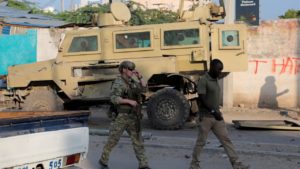
The United States has agreed to give the UN another year to wind down its support for African peacekeepers in Somalia, a document showed – a move that gives some breathing space to a force that was fearing quicker cuts, but still leaves its future in peril.

Reuters reported in July that Washington – increasingly frustrated with the fragile administration in Mogadishu – said it would block the UN from supporting the African Union force which props up the government and helps it fight al-Qaeda-linked terrorists.

Analysts have warned that any weakening of the African Union peacekeepers would severely undermine the government there and could exacerbate the political turmoil in a combustible region bordering the Red Sea.

The peacekeepers, known as the AU Support and Stabilisation Mission in Somalia, rely heavily on UN support for essential logistics such as food, water, fuel, medical services and transportation of troops.

The administration of US President Donald Trump, which has pulled back from many international commitments, had told the African Union in a diplomatic note in July that it would use its clout to prevent the UN from supporting the peacekeepers from the start of next year.

In another diplomatic note seen by Reuters and shared with embassies last week, Washington said “the United States is willing to support a 12-month drawdown followed immediately by liquidation” of the UN Support Office in Somalia (UNSOS).

Without that 12-month window, the funding could have stopped at the end of December, when the mandate of that UN office expires. Two diplomatic sources and a Somali government source said the new 12-month countdown would start in January.

A spokesperson for the US State Department told Reuters that Washington would no longer fund or support the UN office in Somalia, whose total budget is around $500 million.

"We would expect any drawdown processes and timelines to be discussed during UN Security Council deliberations in December," the spokesperson said in a statement. Five diplomatic sources and the Somali government source, speaking on condition of anonymity, confirmed the 12-month deadline.

Somalia's defense ministry, UNSOS and the African ⁠Union Commission did not immediately respond to requests for comment.

The move will buy Somalia and its partners some more time to find other backers, but does not lift the threat over the peacekeeping force's future.

"AUSSOM is a key pillar of Somalia's state," Afyare Elmi, professor at the City University of Mogadishu, said. "Without it, the country would face a real risk of state fragmentation and disintegration."

Samira Gaid, a regional security analyst, told Reuters the shutdown of UNSOS could spell the end for AUSSOM.

"The AU either needs to find alternative logistics arrangements or to draw down and exit," she said.

Financing for the AU mission has become increasingly precarious, leading to a huge funding shortfall.

Washington last year blocked a plan to shift to a financing model that would have seen UN funds cover three-quarters of the peacekeeping mission's $190 million annual budget.

Somalia has been mired in chaos and internal conflict since the fall of autocratic ruler Mohamed Siad Barre in 1991. Islamists have strengthened their control of the countryside and, two decades ago, seized the capital before being forced out by a joint Ethiopian and Somali government force.

Man who assaulted US lawmaker Ilhan Omar sentenced to 14 months in prison

A Minnesota man who squirted vinegar on Democratic US Representative Ilhan Omar was sentenced to one year and two months in prison on Thursday after pleading guilty to assaulting a federal official.

Anthony James Kazmierczak pleaded guilty in May and admitted to attacking Omar because he disagreed with her progressive political views. He was sentenced by US District Judge Joan Ericksen at a hearing in Minneapolis federal court on Thursday.

Kazmierczak’s lawyer said he apologized to Omar at the hearing but declined to offer additional comment, citing Kazmierczak’s pending assault and threats of violence charges in state court.

Omar, a progressive Democrat and outspoken critic of Republican President Donald Trump, was giving a town hall speech condemning the actions of US Immigration and Customs Enforcement agents in Minneapolis in January when Kazmierczak rose from the crowd and squirted her with a syringe of vinegar.

In a video of the attack that was widely shared online, Kazmierczak can be heard saying, “You must resign.” He was quickly subdued by a security guard, and Omar continued her remarks.

Minnesota US Attorney Daniel Rosen, a Trump appointee, has previously condemned the attack and called it part of a dangerous national trend of people channeling political hatred into criminal acts.

Rosen’s office did not immediately respond to a request for comment after the sentencing.

Assad-era Syrian official convicted of torture, jailed for 60 years by US court

A former Syrian government official who ​headed the Damascus Central Prison under ousted President Bashar al-Assad and was convicted of ‌torture by a US federal jury has been sentenced to 60 years in prison by a US judge, federal prosecutors said.

Samir Ousman Alsheikh, 74, was charged in 2024 and convicted in March on one count of conspiracy to commit torture and three counts of torture for his involvement in the abuse of prisoners at Adra Prison, as ​it is colloquially known in Damascus.

Alsheikh was also convicted of lying to US immigration authorities ​about his commission of the crimes, fraudulently obtaining a green card and attempting to naturalize as a US citizen, the US Department of Justice said.

Thursday's sentence was handed down by US District Judge Hernan Vera in Los Angeles.

Prosecutors said Alsheikh ordered subordinates to inflict physical and ​mental pain on prisoners to deter opposition to Assad's government and was sometimes personally involved in such ​incidents.

The US Justice Department said Alsheikh, who held positions in the state security apparatus, was the highest-ranking former member of Assad's government to be tried and convicted in person outside Syria.

Alsheikh's legal team had asked for a five-year sentence. In March, they said they were "disappointed" by his conviction. Alsheikh, who headed Adra Prison from 2005 to 2008, had previously pleaded not guilty.

Syrian rebels put an end to more than 50 years of rule by the Assad family in late 2024 following a lightning advance. Hundreds of thousands died in a civil war that lasted more than a decade, ​unleashed a global refugee crisis and left cities across the country in ruins.

Syrian ​President Ahmed al-Sharaa, a former al-Qaeda commander, took over after Assad’s ouster and has worked to improve ties with ​the West.

US conducted ‘tremendous terror,’ worse than al-Qaeda, Hasan Piker says in Axios interview

Far-left Twitch streamer and political commentator Hasan Piker said that the US conducted more terrorism than al-Qaeda while talking to Axios in a podcast released on Thursday.  

Piker, who has over 3 million followers and is one of the most popular streamers on Twitch, came under renewed attention due to his participation in campaigning for , Abdul El-Sayed, the Democratic nominee for Michigan senator.

Piker previously stated that "America is the top dog in terrorism," and stood by his statement in his interview.

“We have caused tremendous terror all around the world,” Piker said to Axios, explaining that he believed the US had committed more terrorism than al-Qaeda “pound for pound as far as the number of deaths.”

Piker referred to the deadly strike of an elementary school in Minab, Iran, in March as an example of US terror.

While the Trump administration has not released findings from a Pentagon investigation into the strike, evidence has been found indicating that at least one US missile struck the school. 

"If you're killing 140 schoolgirls, that is an act of terror," Piker said. "This doesn't mean that all Americans are terrorists, but the reality of the matter is we have to create an environment of accountability to ensure things like that never happen again."

Piker has been tied to El-Sayed through his own campaigning and through Republican-affiliated groups, which have already spent nearly $3 million in ads attacking El-Sayed over his connections with the streamer, Axios reported, citing tracking firm AdImpact. 

Many of the ads feature a clip of Piker saying that "America deserved 9/11," from 2019, for which he has apologized and since said that the attacks were "blowback" from US involvement in the Middle East.

Piker said that he did not believe the 9/11 terror attacks were justified but that he was conducting an analysis "to stop further violence from taking place, both violence in the region, but also violence in the home front as well."

El-Sayed has largely dismissed his connection to Piker, often calling him just a “streamer in California,” according to Axios

"The reason I talk to Hasan isn't because of Hasan, it's because of the 3 million people who pay attention to what he has to say," El-Sayed told Fox 2 Detroit on Tuesday.

"Too often the way that our politics happen is that we're told who we cannot talk to," he said.

El-Sayed told Axios that he disagreed with Piker’s belief regarding the US and al-Qaeda. 

"I do not agree with this statement, nor do I give much weight to the statements made by a social media streamer. I am more concerned with the dangerous policies of Donald Trump and Mike Rogers that are raising the prices of gas, groceries, and healthcare for Michiganders," El-Sayed said.

US sanctions Iranian financier’s crypto exchange, says it processes Hormuz payments

The United States announced sanctions on an Iranian cryptocurrency exchange controlled by sanctioned Iranian financier Babak Zanjani on Thursday, accusing ‌it of processing payments for ships to transit safely through the Strait of Hormuz.

Treasury said BitBank had routed hundreds of millions of dollars to the Islamic Revolutionary Guard Corps and described the exchange as a key component in Iran’s digital assets-based sanctions-evasion infrastructure. The exchange was used to transfer funds paid to Iran’s newly established Hormuz Safe Marine Services Authority, Treasury said in a statement.

Zanjani has long been a key figure in Iran’s sanctions-evasion networks. He was sentenced to death by Iranian authorities in 2016 for embezzlement. His sentence was commuted in 2024. The following year he re-emerged as a backer of Iranian government economic projects.

The designation is part of Treasury’s “Operation Economic Outcast” intended to isolate Iran economically and disrupt Iran’s global financial, commercial and logistical networks, according to the statement. The strategy has targeted Iran’s illicit oil trade, financial intermediaries, exchange houses and shipping, aviation and front companies.

The US also sanctioned Pishtaz Simorgh Electronic Trade Company, the software developer behind BitBank, and three close associates of Zanjani, Hossein Ali Zaker Hossein, Mohammad Mahdi Zaker Hossein and Seyed Adel Heidari.

Treasury announced sanctions against Zanjani and his two largest digital asset projects, Zedcex Exchange Limited and Zedxion Exchange Limited, in January, accusing them of laundering money for the IRGC.

In July, the US imposed sanctions against nine other firms that Zanjani is involved in, including his Iran-based “Dot One” conglomerate and other firms based in Turkey and the United ​Arab Emirates, as well as top executives at those firms.

“Through this combined infrastructure, Zanjani's enterprises have served as both public‑facing commercial ventures and covert financial platforms enabling sanctions evasion and support to Iranian state‑linked entities,” Treasury said.

Iranian delegation to be allowed to attend UNGA meeting in New York

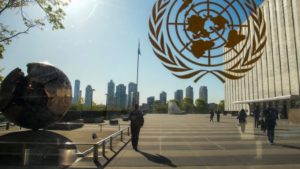
A core delegation of Iranian regime officials will be allowed to enter the US to attend the United Nations General Assembly (UNGA) summit in New York this month, a US State Department spokesperson said on Thursday.

According to the spokesperson, the Iranian officials will face travel restrictions and will be barred from purchasing luxury goods during their visit to the US.

This year’s delegation is expected to be smaller than last year’s delegation, which was headed by Iranian President Masoud Pezeshkian and faced similar shopping and travel restrictions.

On Wednesday, the US announced that it would extend sanctions that bar Palestinian Authority officials and Palestine Liberation Organization (PLO) members, including PA President Mahmoud Abbas, from obtaining visas necessary to attend the UNGA’s annual summit.

The State Department stated that the visa ban is intended to serve as a consequence for the PA and PLO’s “ongoing activities that undermine the prospects for peace” and glorification of terrorism.

Abbas was also denied a visa ahead of last year’s meeting, where he addressed the UN through video rather than making an in-person speech.

Idan Kweller contributed to this report.

US investigating Iran ties to cyberattack on energy tankers bound for American ports – report

The United States is investigating whether Iran was behind cyberattacks on two energy tankers bound for American ports that were struck while transiting the Strait of Gibraltar in August, The Wall Street Journal reported on Thursday, citing US officials familiar with the investigation.

The incidents have raised concerns among US officials that Tehran or an Iran-aligned actor could be seeking new ways to expand attacks on global energy shipping beyond the Middle East's existing maritime flashpoints.

The ships, an oil tanker and a liquefied petroleum gas carrier, were traveling toward ports in Texas when they were targeted in early August, according to vessel-tracking data and officials cited by the WSJ.

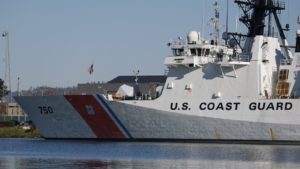
A specialized US Coast Guard team, joined by FBI agents, boarded both vessels after they arrived in the Gulf of Mexico later that month. Investigators examined their information technology and operational systems after authorities found indications that the ships' networks had been compromised.

Rear Adm. Amy Grable, commander of the Coast Guard’s Cyber Command, declined to discuss the specific vessels but told the WSJ that cyber response teams spent three to four days aboard the ships assessing the incidents and ensuring that they could continue operating safely.

“Unfortunately, many ships’ IT systems are interconnected with other systems on a ship, the systems that control the engineering plant, propulsion, navigation, et cetera,” Grable said. “So if those systems can be breached and controlled, then the crews could lose control of the vessel, and it could cause a mishap or a collision. And that’s what we’re looking for.”

One of the vessels, the VL Prosperity, was carrying more than two million barrels of oil from Egypt to Galveston, Texas, when it was targeted in the Strait of Gibraltar, according to Lloyd’s List Intelligence tracking data and a US official cited by the WSJ.

Iran’s semiofficial Mehr News reported in August that hackers had infiltrated the VL Prosperity’s engine-room systems, reduced engine cooling flow, increased the engine’s speed, and interfered with fuel and engine-oil systems. No organization claimed responsibility for the attack, and the WSJ said it could not independently verify the account.

The VL Prosperity's manager confirmed that US authorities conducted a cybersecurity inspection aboard the vessel and said it was subsequently cleared for normal operations.

The second vessel, the Kohaku, was passing through the Strait of Gibraltar on its way to another Texas port, where it was scheduled to load liquefied petroleum gas. Tracking data showed that it was approached by the same Coast Guard vessel involved in the response to the VL Prosperity.

The Coast Guard has said there were no reports of operational disruptions, vessel instability, physical danger to crew members, or environmental damage following the incidents. US authorities have not publicly attributed the cyberattacks to Iran.

The investigation comes as maritime routes have become a central arena in the conflict between Washington and Tehran. Shipping through the Strait of Hormuz has faced repeated attacks and severe disruption during the fighting, with commercial vessels reducing transit through the strategically important waterway.

Earlier this week, an oil tanker was attacked in the Strait of Hormuz, with US Central Command saying the vessel had recently been struck by an Iranian drone. Iranian authorities offered a different account of the incident.

The Iran-backed Houthis have meanwhile intensified pressure on shipping around the Red Sea. The group has sought greater control around the Bab al-Mandab Strait and Yemen’s western coast, another major chokepoint for global commerce and energy shipments.

US officials' concern over the tanker incidents reflects the potential consequences of moving such attacks into the cyber domain. Modern ships rely on interconnected digital systems to control propulsion, navigation, engineering and cargo operations, meaning that a successful intrusion could potentially cause a collision, fire, explosion or environmental disaster.

The threat comes amid broader concerns over Iranian cyber activity. The US, UK and Netherlands this week issued a joint warning over Iranian state-linked cyber operations targeting journalists, activists and other individuals.

Rear Adm. Jason Tama, head of Coast Guard Cyber Command, previously warned that cyber interference aboard oil tankers could pose particularly serious risks because of the nature of their cargo.

“For a vessel that’s carrying tens of millions of gallons of crude oil, which is highly volatile, there’s always a risk of fire or explosion,” Tama told the WSJ in June. “The atmosphere in the tanks has to be very carefully managed to ensure that you’re not going to get a situation where there’s a fire or explosion. And then there’s always a risk of an oil spill.”

US authorities have not disclosed how many suspected maritime cyberattacks they have investigated since the war with Iran began or whether investigators have established a connection between the attacks on the two tankers.

Get help now

Send a message with a description of your problem and possible ways of assistance and we will contact you as soon as we consider your problem.