• English
  • Русский

Secretive US court meant to deport alleged terrorists hears first case

A secretive US court created 30 years ago to deport suspected terrorists convened for the first time on Thursday, opening a new front in the Trump administration’s effort to remove non-citizens accused of national security threats and expand the president’s immigration agenda.

The hearing, before the Alien Terrorist Removal Court, was open to the public and centered on Nazira Haji Zada, a 47-year-old lawful permanent resident accused of supporting Islamic State and helping conceal a failed Election Day 2024 mass shooting plot. Prosecutors say much of the evidence against the Texas woman cannot be publicly disclosed.

Established by Congress in 1996, the court allows the government to rely on classified evidence in deportation cases, a process Haji Zada's lawyer argued violates due process protections.

Haji Zada, who was in the Washington federal courtroom, has not been charged with any crimes, court documents show, but her son and son-in-law pleaded guilty to related charges last year.

“This entire scheme is in violation of due process and unconstitutional,” Matthew Farley, the defendant's attorney, said during the hearing. "This is a runaround to bringing a criminal case."

Farley quickly asked the court's chief judge, Joan Ericksen, to dismiss the case and immediately release his client. Ericksen, a federal district judge appointed to oversee the court, denied the request.

Created to handle deportation cases involving classified national security information, the court went unused until Justice Department officials sought Haji Zada's removal this month. The FBI arrested her at her Fort Worth home on Tuesday.

“The allegations in this case show the matriarch of an ISIS-sympathizing family aiding in a plot to launch a mass casualty attack on American voters on Election Day,” acting Attorney General Todd Blanche said in a statement before the hearing.

Prosecutors have deemed much of the evidence classified and not safe for public release.

In a short unclassified summary of the case, the Justice Department alleged that Haji Zada had indoctrinated her children “with ISIS ideology” and had concealed the radicalization of her family and a planned move to ISIS territory from her husband.

"The underlying information is classified because disclosure would enable terrorists and terrorist organizations to avoid preventative or detection measures or would reveal FBI or other US Intelligence Community sources," the FBI wrote in a July 15 memo.

The court's lack of prior cases was evident as the judge, prosecutors and defense lawyers spent part of the proceeding resolving basic procedural questions, including how documents would be handled and who could access classified evidence.

It was unclear when the next hearing would take place.

Migrants breach border from Morocco into Spain’s Ceuta enclave in mass crossing

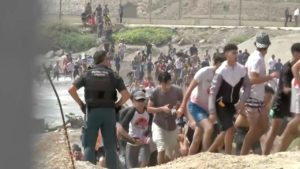
Migrants broke through the fences into Spain’s North African enclave of Ceuta from Morocco on Thursday after overwhelming police at the city’s breakwater, Spain’s Guardia Civil said.

Video footage showed hundreds of migrants swimming over from the Moroccan side using inflatable inner tubes and other flotation devices, and others breaking through a gate in the fence and running into the city.

The scene was reminiscent of the crossing that occurred in May 2021, when some 10,000 people from Morocco and sub-Saharan Africa, many of them minors, entered the enclave of 85,000 people in days.

A Guardia Civil spokesperson said the migrants were "massively entering from the sea" through the Tarajal breakwater, but could not provide any estimates for the numbers.

State television TVE reported that 2,000 to 3,000 people had crossed. Reuters was not immediately able to confirm that report.

The White House on Thursday linked the migration crisis in Ceuta to policies pursued by the Spanish government, after thousands of people crossed irregularly from Morocco into Spanish territory through the border breakwater.

“President Trump has long warned Europe about the consequences of continuing to implement far-left globalist policies, such as enabling mass migration. Spain and other countries that have embraced this destructive philosophy should reverse course immediately or risk their own disappearance,” White House spokesperson Anna Kelly said in an email.

Many local shops were shuttered. Enrique Serrano, who runs a women’s clothing store in central Ceuta, told Reuters business owners were organizing themselves to protect their property and families in case of possible disturbances as they believed police resources would be insufficient.

"I'm not opening this afternoon because the situation is extremely tense … The first thing I have to do is protect my business and my family," he said, adding that when the fence was breached after midnight, hundreds of migrants rushed through in a matter of minutes.

Ceuta, together with Melilla, another Spanish autonomous city located in North Africa, represents the European Union’s only land border with Africa. Both cities periodically experience surges in attempted crossings by migrants seeking to reach Europe.

Images showed some of the migrants shouting "Long live Spain" as they entered the territory.

Spain's Socialist government stands out in Europe for its pro-migrant stance, and has recently launched a program to provide legal status for some 500,000 undocumented migrants, creating an influx of applications double that number.

Right-wing parties criticized the drive, arguing it would attract more migrants to Spain, and were quick to blame Prime Minister Pedro Sanchez for allowing the situation in Ceuta to reach crisis proportions.

Conservative opposition People's Party leader Alberto Nuñez Feijoo said in a post on X: "The situation in Ceuta is desperate. The government cannot look the other way… because we are facing a national security crisis."

In a post on X, Sanchez said he had told the leader of Ceuta, Juan Jesus Vivas, that his government was "fully focused" on delivering an immediate response and preparing measures to restore normality as soon as possible, without providing further details.

Earlier on Thursday, Vivas had urged the national government to declare an emergency over the mass arrivals. The regional government wants Madrid to deploy the army to guarantee safety and close the border with Morocco.

Spain's Defense Ministry said there were no immediate plans to deploy the army.

Earlier this month, Spain's Supreme Court ruled that migrants intercepted at sea while attempting to reach Ceuta or Melilla cannot be summarily returned under the enclaves' special border-rejection regime.

"It has been a slow trickle since the Supreme Court's ruling, but today has been an explosion," the Guardia Civil spokesperson told Reuters.

The Interior Ministry said it was working closely with Morocco to address the surge in irregular arrivals, having prevented thousands of migrants from illegally entering Ceuta in recent days.

It vowed to immediately deport those entering illegally, blaming people-smuggling networks for exploiting the Supreme Court's ruling to encourage undocumented migration.

Morocco's Interior Ministry did not immediately respond to a request for comment.

Migrant rights activist Zakaria Zarroqui said people were still flocking to the Moroccan city of Fnideq in an attempt to cross into Ceuta and the situation was still out of control.

Mauricio Valiente, director of the Spanish Commission for Refugees, which has lawyers working in Ceuta, said the migrants crossing into the enclave were of Moroccan and sub-Saharan origin, including families with people of different ages.

While acknowledging that the situation was chaotic, he said it "can be perfectly addressed by the Spanish state," which has sufficient capacity to receive those who may be seeking asylum.

UEFA boycotts World Cup over FIFA plan to sell tournament stakes to investors

UEFA’s member associations have unanimously voted to boycott the World Cup and other FIFA competitions in protest at FIFA’s plan to sell stakes to external investors in a subsidiary that will run the global governing body’s tournaments, European soccer’s governing body said following a virtual meeting on Thursday.

World soccer’s ruling body said on Tuesday it plans to create a $20 billion subsidiary to run the World Cup and its other events and will offer stakes of up to 20% in it to external investors.

“No UEFA national teams will participate in any FIFA competition for so long as these proposals remain alive, unless this proposal has been abandoned in its entirety and binding assurances have been given that FIFA will never again open its governance or competitions to private ownership,” UEFA said in a statement.

"The World Cup cannot be treated as an investment product. It is one of football’s greatest sporting legacies. It has been built over generations by players, national teams and supporters across every continent," UEFA added.

“No part of it should ever be surrendered to private investors. The World Cup is not for sale.”

A spokesperson for the English FA backed the decision, saying the organization "stands shoulder to shoulder with our European colleagues."

The Asian Football Confederation (AFC) and CONCACAF also strongly criticized FIFA earlier, saying they were not consulted in the process.

The Women's World Cup is set to be held in Brazil next year. FIFA is set to stage its inaugural Under-15 World Cup in Azerbaijan in October.

Russian missile lands in Poland as NATO monitors risk of Ukraine war spillover

An object that came down in eastern Poland overnight appears to be a Russian missile, Polish Prime Minister Donald Tusk said on Thursday, after authorities found a crater and scattered debris in a field following reports of an explosion.

It was the latest in a series of airspace incursions in countries on NATO’s eastern flank, including Romania and the Baltic states, that have fueled fears of the war in Ukraine spilling over the alliance’s borders.

Poland scrambled fighter jets to secure its airspace after Russian airstrikes killed at least eight people in neighboring Ukraine, in attacks that extended as far as the western city of Lviv.

“All the indications are that it was a Russian Kh-101 ballistic missile, but we want to be 100% certain about the type of missile and who launched it,” Tusk told an emergency meeting.

"There was no direct threat because the missile landed in an uninhabited area; we were ready to shoot it down had it continued its flight," he added.

Tusk later visited the site where the object fell, near the village of Tarnawa-Kolonia, just over 100 kilometers from the Ukrainian border.

"There is no reason to think the target was Poland," he said, adding that Ukrainian fighter pilots had attempted to shoot down missiles approaching the Polish border.

Tusk vowed to maintain support for Ukraine, saying his government would consider providing further aid, including additional Patriot systems. Bilateral relations have recently been strained by disputes over history.

Ukraine's Foreign Minister Andrii Sybiha said earlier in a post on X that a Russian Kh-101 cruise missile crossed into Poland.

The Russian embassy in Warsaw did not immediately respond to an emailed request for comment.

A NATO spokesperson said Supreme Allied Commander General Alexus G. Grynkewich spoke with Poland's Chief of Defense General Wieslaw Kukulan on Thursday to discuss the response to the incident.

Grynkewich "underlined that NATO will continue to take all necessary measures to defend NATO territory," the spokesperson said.

The object left a crater about 10 m (33 ft) wide, the interior ministry added on X. According to local authorities, it was located in farmland about 2 km from residential buildings.

Local resident Roman Bartoszek, who lives around four kilometers from where the object fell, said he had heard aircraft overhead and his windows had shaken.

The operational command of Poland's armed forces said an object had been detected in Polish airspace at 3:40 a.m. local time and disappeared from radars soon afterward.

An Mi-24 helicopter later went to the crash site. Police had received reports of a large bang and went to the site, where they found the crater.

European Commission President Ursula von der Leyen called the incident an "unacceptable violation" of the EU's airspace.

"To put an end to this, we are helping Ukraine win this war in every way we can. And we are building a robust European security architecture on land, at sea and in the air," she wrote on X.

German Chancellor Friedrich Merz said that the "strike in Poland also testifies to Russian recklessness and willingness to escalate. We stand unswervingly at the side of our partners."

US strikes $58.6 billion Patriot missile deal amid rising stockpile concerns

The US Department of Defense has signed one of the largest procurement contracts in its history with Lockheed Martin, agreeing to purchase Patriot interceptors in a deal worth $58.6 billion.

The contract is expected to dramatically increase the United States’ interceptor inventory, which has been depleted by the wars involving Iran and Ukraine, as well as preparations for a possible future conflict with China. 

The US has already delayed interceptor deliveries to Ukraine and postponed deliveries to Switzerland until 2032 in order to prioritize the protection of US forces in the Gulf and Gulf states that have purchased Patriot systems.

The multiyear contract governs an accelerated production schedule for the 2026-2032 period. Lockheed Martin currently manufactures about 600 interceptors annually, and the agreement is intended to raise production to 2,000 per year.

Achieving that target will require Lockheed Martin, along with suppliers of rocket motors, guidance systems, and warheads, to expand their production lines. The company has already announced plans to invest up to $9 billion in its manufacturing facilities in Alabama and Arkansas by 2030 and hire more than 1,000 additional employees.

Although the Pentagon did not disclose specific quantities in its announcement, the contract includes more than 10,000 interceptors and is also expected to reduce their high unit cost slightly, to at least $4 million each. By comparison, the comparable David’s Sling interceptor produced by Israel’s Rafael costs about $1 million per unit.

The pace of US defense production has declined significantly since the end of the Cold War, and the Pentagon has been pressing American defense companies to invest more heavily in expanding production capacity. The effort comes at the expense of share buyback programs designed to boost stock prices and generate stronger returns for investors, as well as executives whose compensation includes stock options.

Ukraine is already struggling to defend itself against Russian ballistic missile attacks after the United States halted deliveries of Patriot interceptors because of the need to support the war with Iran. In another effort to ease the shortage, the Pentagon recently ordered older PAC-2 Patriot interceptors from Raytheon, the first such purchase in 30 years.

The $441 million deal will supply interceptors that were not designed to counter missiles but can intercept aircraft and drones. These interceptors are less expensive and faster to produce, and returning them to US inventories will help preserve the more advanced PAC-3 interceptors for defending against ballistic missiles.

30 killed in Pakistan-administered Kashmir as election protests turn deadly

Protests during regional elections in Pakistan-administered Kashmir have turned deadly, with leaders of a banned Kashmiri group saying on Wednesday more than 30 people had been killed around one town in clashes with security forces ahead of the second round.

Pakistan's primary governing party, the PML-N, won nine out of the 13 seats that were up for election in the districts of Mirpur, Kotli and Bhimber on Monday.

The election was originally scheduled to be held in one round on July 27, but was split into three separate votes by districts, with officials citing security concerns. The second and third rounds are scheduled for August 2 and August 10.

The party that won the elections in 2021, the Imran Khan-founded Pakistan Tehreek-e-Insaf (PTI), has boycotted the vote over electoral fraud concerns.

The region's primary protest movement, the Joint Awami Action Committee (JAAC), was banned by the regional government in June, prompting deadly protests last month.

Banking, roads and internet services have largely been disrupted since then, hindering the flow of information, meaning Reuters could not independently verify the figure of over 30 dead given by the JAAC about the clashes around Rawalakot.

Authorities said a member of the security personnel was killed and five more were injured in clashes on Monday.

Meanwhile, an official, who asked to speak on condition of anonymity, said he was aware of at least three fatalities among protesters in Mirpur this week.

Pakistani officials have justified the crackdown by alleging that armed and India-backed militants joined the Kashmiri protesters. India has rejected similar accusations in the past.

"The entire election was a fraud," said Fazal Mahmood Baig, a resident in Muzaffarabad, the regional capital, on Wednesday.

“We want this issue to be resolved peacefully,” Sardar Mazhar said at a protest in the Pakistani capital Islamabad.

Tensions in the self-governing and Pakistan-administered part of Kashmir have roots that are decades old, but have recently gained new momentum.

Supporters of greater regional autonomy have accused the national government in Islamabad of interference in their political affairs and of economic neglect.

Discontent has often erupted into protests over economic issues. In 2022, demonstrators rallied against high electricity prices in the region, which supplies other parts of Pakistan with cheap hydroelectric power.

The JAAC channeled that anger after it was founded in 2023, and focused on calls for electoral reform. Twelve of the 45 directly elected seats in the local legislative assembly are reserved for constituencies representing what the regional constitution defines as refugees from Indian-administered Kashmir.

But these seats have often been filled by people living outside the region, and the JAAC has accused Islamabad of using them to manipulate local politics – accusations Pakistani government officials have rejected.

To form a regional government, the PML-N would likely need the support of some of the 12 representatives, said Hasan Askari, a political analyst.

“But when their government is dependent on those 12 controversial seats, how would it be able to find a solution for this issue?” Askari said.

Even among the candidates that did not boycott the vote on Monday, the results were contested. Parties accused each other of ballot box stealing and vote rigging.

Government officials confirmed that one person died and several were injured in clashes between supporters of Pakistan's two main governing parties, the PML-N and PPP, in incidents that were separate from the JAAC's protests.

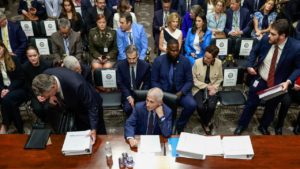
Fauci invokes Fifth Amendment at Rand Paul-led US Senate COVID hearing

Anthony Fauci, the former top US infectious disease expert, declined to answer questions at a Senate hearing on Wednesday, invoking his constitutional right against self-incrimination and accusing Republican Senator Rand Paul of an "unhinged" campaign to see him imprisoned.

Fauci, who is 85 and retired in 2022, was subpoenaed by Paul of Kentucky, the chair of the Senate Homeland Security and Governmental Affairs Committee and a longtime adversary. Fauci accused Paul of an “unhinged” campaign to see him imprisoned, and refused to answer more than 100 questions.

Paul said Fauci was not allowed to plead the Fifth Amendment right to refrain from answering senators’ questions, that a pardon from former President Joe Biden would not protect him, and that there would be consequences for refusing to answer. He said the committee had scheduled a vote for next week to hold Fauci in contempt.

Fauci, who led the National Institute of Allergy and Infectious Diseases for 38 years, serving under multiple Republican and Democratic presidents, and became the face of the US pandemic response, has long been criticized by US President Donald Trump and many American conservatives. Trump, before the hearing, wrote of Fauci on social media: “His ideas were CRAZY!”

More than 1.1 million people died of COVID-19 in the United States, and the pandemic touched off a long-running effort by conservatives to assign blame for the toll of actions taken to stem the global health crisis. Fauci became the primary target of that anger, criticized for lockdown directives, guidance on mask-wearing and social distancing, and his promotion of vaccines, which became heavily politicized during the pandemic, despite being shown to be safe and effective.

He and many public health officials globally recommended such measures based on scientific evidence available at the time as best practices to slow the spread of a novel and deadly virus for which there was no immunity, until a vaccine became available.

Biden preemptively pardoned Fauci on January 19, 2025, to guard against "unjustified and politically motivated prosecutions" for allegations related to COVID or his role in the response. The pardon does not cover subsequent conduct.

Federal law makes it a crime to knowingly and willfully make a "materially false, fictitious, or fraudulent statement or representation" to Congress, potentially exposing Fauci to prison if prosecutors decided he lied after being pardoned.

Republicans criticized Fauci for refusing to answer and claimed federal law and a 19th-century US Supreme Court decision required him to testify.

The 1896 decision lets Congress compel testimony from witnesses by immunizing them from criminal prosecution for what they say, without violating the witnesses' Fifth Amendment right against self-incrimination.

Fauci even invoked the Fifth when Senator Josh Hawley, a Republican from Missouri, asked him what day it was and what color his tie and the carpet were. Ohio Republican Senator Bernie Moreno repeatedly asked if Fauci would apologize to various groups Moreno claimed were harmed by pandemic-era policies for which he blamed Fauci.

Paul had David Schertler, one of Fauci's lawyers, removed from the hearing after refusing to recognize his attempts to speak.

In a statement, Schertler called Paul's pursuit "an obsessive vendetta" and said the accusations "are false and disgraceful, and we will examine all options to hold him accountable."

Paul has for years called for Fauci's indictment and accused him of lying to Congress about whether the National Institutes of Health funded virus research in Wuhan, China, and of helping cover up COVID's origins.

Fauci denies both claims and says he has testified truthfully multiple times before Congress on these issues, with Paul often his chief antagonist.

Fauci said Paul's "obsession" with prosecuting him, his "slanderous comments" and his release of Fauci's unredacted personal diary showed the hearing's sole reason was to make him "say something that could vindicate" Paul's public pledges to see him behind bars.

Michigan US Senator Gary Peters, the committee's top Democrat, called the hearing biased and one-sided, describing it as an effort "to legitimize a predetermined conclusion that was reached years ago."

Claims of so-called gain-of-function research in China have been behind many COVID origin conspiracy theory accusations. It broadly means modifying a pathogen in ways that could make it more transmissible or dangerous.

Paul had long suggested that the US National Institutes of Health funded such work in Wuhan and that Fauci lied when he denied it, while Fauci says the research did not meet the government's formal regulatory definition.

COVID's origins remain unresolved. The FBI said in 2023 that a leak from a Wuhan laboratory likely caused the pandemic, a claim China said had "no credibility whatsoever." The CIA said in January 2025 a lab leak was likely, but with "low confidence," while four other US intelligence agencies and the National Intelligence Council believe the virus most likely emerged via natural transmission from some animal.

Paul this week published a 1,141-page tranche of Fauci's pandemic-era diary entries, from December 2019 through December 2022, saying they "completely undermine the official narrative that Fauci and other public health officials espoused."

A review provided by a representative of Fauci said the entries matched what he said publicly at the time. Fauci has maintained since 2021 that he kept an "open mind" that COVID could have leaked from a lab, and spoke publicly in early 2020 about asymptomatic transmission and China's lack of transparency, the very matters Paul says the diary reveals.

The entries largely chronicle Fauci's media appearances and rising fame.

The Trump administration issued a policy on Tuesday barring federal funding for "dangerous gain-of-function" research.

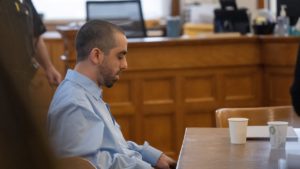
Convicted assailant of author Salman Rushdie found guilty of federal terrorism charges

The man who stabbed and partially blinded author Salman Rushdie on stage at a New York arts institute in 2022 was found guilty on Wednesday of federal terrorism charges stemming from the attack.

Hadi Matar, 28, was convicted of attempting to provide material support to Lebanon’s Iran-backed militant group Hezbollah, a US-designated terrorist organization, as well as engaging in transnational terrorism and providing material support to terrorists.

A US District Court jury in Buffalo, New York, returned its guilty verdict on all charges after deliberations of just two hours, capping a trial that began last Tuesday, according to a spokesperson for federal prosecutors.

Rushdie, 79, had faced threats on his life since the 1988 publication of his novel “The Satanic Verses.” Ayatollah Ruhollah Khomeini, then Iran’s supreme leader, denounced the book as blasphemous, leading to a call for Rushdie’s death, an edict known as a fatwa.

According to evidence presented at his trial, Matar spent more than a year researching the fatwa before deciding to try fulfilling the edict with an attack on Rushdie while the author was speaking at the Chautauqua Institution in Mayville, New York.

Rushdie was stabbed with a knife multiple times in the head, neck, torso and left hand, blinding his right eye and damaging internal organs, requiring emergency surgery and months of recovery.

Matar, a US citizen from Fairview, New Jersey, was found guilty of attempted murder in New York state court in 2025, and was sentenced to 25 years in prison.

His conviction on federal terrorism charges carries a maximum penalty of life in prison. Sentencing was scheduled for November 3.

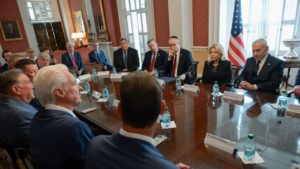
Netanyahu meets with Evangelical community leaders to discuss Iran war, standing up to hatred

Prime Minister Benjamin Netanyahu discussed the Iran war with the leaders of the Evangelical community, who he met on Wednesday during his trip to Washington.

The community leaders welcomed Netanyahu to the US and thanked him for Israeli involvement in the Iran war, supporting him in "his struggle against the Iranian axis of evil," a statement from the Prime Minister's office said.

The Prime Minister told the leaders that both Jews and Evangelical Christians are "descendants from the original Hebrews of the Holy Land, and we are the first part of that Judeo-Christian heritage, which we cherish and which has given the world, the civilization, freedom, and faith."

The world is "under attack from the rising tide of antisemitism and anti-Evangelicalism," he added. "It’s not accidental that the two are coming under a joint attack, because we are one."

The Prime Minister continued his speech with a call for the leaders to actively fight against antisemitism and anti-Evangelicalism, telling them, "Stand up. Stand up and don't cower."

He went on to pose a question to them, asking "When you're faced with an attack, what do you do? Attack back."

Both the Evangelical leaders and Netanyahu emphasized the importance of unity and support between the two communities.

The Prime Minister ended his address by thanking the community leaders, "I'm very grateful to you for your consistent support, for the constancy of you friendship."

"Now it's time to fight, fight, fight, that's it," he concluded.

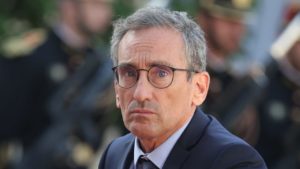
US weighs delaying France’s Washington ambassador pick over human rights spat

The United States is considering delaying, or even blocking, French President Emmanuel Macron’s choice for France’s next ambassador to Washington following public French criticism of the country’s human rights record, according to four sources.

While the sources said no decision has yet been taken, two said France’s criticism – delivered in a social media post by France’s mission to the United Nations in Geneva – had sparked genuine anger among some senior officials in US President Donald Trump’s administration. Two other sources said officials were hoping to de-escalate tensions with France.

"The United States is very disappointed in the irresponsible and disrespectful rhetoric from the French," a State Department official said. "We are responding appropriately to their comments."

A US move to delay or reject Macron’s nominee would be highly unusual and could widen the fissure between the allies, who have recently clashed over tariffs and the Iran war.

Macron has filed the relevant paperwork for Aurelien Lechevallier, a former Elysee aide who is currently Foreign Minister Jean-Noël Barrot's chief of staff, to become France's next ambassador to Washington. France had hoped to have him installed by September, one of the sources said.

But the process has run into difficulties since a post on X/Twitter by France's mission to the United Nations in Geneva.

In the post on Saturday, the mission criticized Washington for joining Russia, North Korea and seven other countries in voting against a proposal to extend the mandate of Volker Turk, the UN human rights chief, for another four years.

"The US used to be a beacon of human rights. Not anymore," the French mission wrote. "The world no longer listens to it."

One of the sources said the post had been reviewed and approved through official channels, dismissing suggestions that it was the work of a junior staffer acting independently.

Tensions flared further on Monday when the US delegation walked out as France addressed a United Nations Security Council meeting on Ukraine, accusing its ally of "disingenuous grandstanding."

France's support for the renewal of Turk's mandate "does not preclude close dialogue with the United States," a French diplomatic official said.

"Differences of opinion regarding a vote do not call into question the quality of our relationship or our ability to work together," the official added.

France has been a longstanding US ally, but relations have soured during Trump's second term. While Trump and Macron speak regularly, that hasn't stopped the US president from targeting France with tariffs, accusing European governments of suppressing right-wing voices, and threatening NATO allies over defense spending and Greenland.

Even before the latest spat, Washington had been riled by Barrot's public comments about the US government, one of the sources said.

Earlier this month, Barrot posted on X/Twitter about a State Department program that offered funding of up to $3 million to groups promoting "civilizational self-confidence" in Europe.

The funding was offered by the State Department's Bureau of Democracy, Human Rights, and Labor (DRL), whose officials offered to support far-right leader Marine Le Pen last year during her embezzlement trial.

"France and the Europeans will not tolerate any attempt at foreign interference in their electoral processes, regardless of where it comes from," Barrot wrote.

French officials have also been irked by US Ambassador to Paris Charles Kushner, who is emblematic of a brash new breed of America-first diplomats causing consternation across Europe. Kushner, whose son Jared is married to Trump’s daughter Ivanka, has twice failed to appear to summonses in Paris following diplomatic incidents.

The process of installing an ambassador in Washington is carefully prescribed. Before a foreign government can appoint its envoy, it must first secure the confidential consent of the US government.

Washington rarely slow-walks or rejects nominees publicly, diplomatic sources said, with concerns typically resolved privately before a formal decision is made.

Critics allege that a wave of recent Macron nominations and appointments to key jobs is part of an effort to install loyalists who can ensure his legacy and hedge against a potential victory by the far-right in next year's election.

Macron, whose approval ratings remain low, cannot run again in 2027.

In recent months, he has appointed his former chief of staff, Emmanuel Moulin, as head of France's central bank, while Richard Ferrand was chosen to lead the Constitutional Council and Amélie de Montchalin to head the Cour des Comptes, which certifies the public accounts. All are key Macron allies.

The Elysee had no immediate comment on that criticism.

Get help now

Send a message with a description of your problem and possible ways of assistance and we will contact you as soon as we consider your problem.