• English
  • Русский

Trump wants FIFA President Gianni Infantino to become next UN Secretary-General – report

US President Trump reportedly wants FIFA President Gianni Infantino to be the next Secretary-General of the United Nations, The New York Post reported on Tuesday.

Swiss-born Infantino has developed a close relationship with Trump as they worked together to organize this year’s World Cup, in which the United States was one of the host countries. Infantino gave the president the first-ever FIFA Peace Prize in December, and the two attended the World Cup Final on Sunday in New Jersey together, where they jointly presented the trophy to the champions, Spain.

Trump believes that everyone in the world respects Infantino and understands that “he has a special ability to bring people together.” Therefore, he reportedly wants the FIFA president to replace António Guterres, the current secretary-general, who is retiring at the end of the year. 

Paolo Zampolli, Trump’s special envoy for global partnerships, echoed that sentiment, noting that there are some similarities between FIFA and the UN: “At the United Nations, you have to deal with 193 member states. In FIFA, there are over 200 members [and] Gianni’s great record shows he knows how to manage.”

Trump has been antagonistic toward the UN since he retook office in January 2025. He thinks that the body does not do enough to mediate global conflicts and instead merely issues statements, which is part of what pushed him to create the Board of Peace, a body that has been a key part of the peace plan in the Gaza Strip.

Trump has also withdrawn the United States from over 30 UN organizations, including the World Health Organization (WHO), UNESCO, and the UN Human Rights Council, citing ineffectiveness and waste of taxpayer money. 

It is unclear whether Infantino, who has already declared his candidacy for re-election as FIFA president next year, wants the job or has discussed it with Trump. Either way, being chosen for the secretary-general position is a complex process.

Infantino would need the endorsement of nine of the 15 members of the UN Security Council without any vetoes from the five permanent member nations: China, France, Russia, the United Kingdom, and the United States. In addition, he would need confirmation by a majority of the 193-member UN General Assembly.

Infantino, however, has recently received backlash surrounding the reversal of USMNT striker Folarin Balogun’s one-game suspension. Balogun had been given a red card and suspended during the US victory over Bosnia and Herzegovina in the Round of 32, but before the Round of 16 match against Belgium, Trump called Infantino about the situation. Shortly after, Balogun’s suspension was overturned, raising questions about the integrity of FIFA’s disciplinary process and Infantino’s susceptibility to political pressure.

The decision enraged several European countries, though it ultimately proved irrelevant as Belgium defeated the United States even with Balogun playing. However, there are still people who believe Infantino should be ousted as FIFA President over the controversy.

There are other candidates for the position aside from Infantino, most of whom are from Latin America or the Caribbean, a region that has not been represented in the role since 1991 when Javier Pérez de Cuéllar of Peru held the position. However, none of those candidates has stood out yet.

Chile’s former socialist president Michelle Bachelet is being considered, though she could face opposition from the United States. Argentina’s Rafael Grossi, the director of the International Atomic Energy Agency, is also an option, though the UK may not approve of him, as it has a dispute with Argentina over the Falkland Islands.

It is possible that if Infantino were to become the organization’s next secretary-general over alternative candidates, Trump’s relationship with the UN could be repaired.

Why Ukraine is targeting Russia’s Wildberries warehouses? – analysis

Over the last few weeks, it appears Ukraine has increased the types of targets of its drone strikes in Russia. Among the recent targets have been massive warehouses and facilities of the Wildberries retailer. “Ukrainian drones have hit warehouses belonging to Russia’s biggest online retailer again, injuring 10 people, according to Russian media and the region’s governor,” BBC noted on July 22.

This is the latest strike. “Logistics hubs belonging to Wildberries in Krasnodar and Stavropol were struck during overnight strikes, forcing workers to be evacuated, the company's owner said.” Other facilities have been struck as well. Warehouses in Tambov and Elektrostal were also struck days ago. This is important and shows how Ukraine is systematically expanding the list of target types it is striking. It comes during a shakeup at the top of Ukraine’s military. This has ramifications for the war effort. Ukraine is appearing to try to pick apart Russia’s economy systematically, targeting pieces of it bit-by-bit. This is like the proverb that says one eats an elephant, “one piece at a time.”

The war against the warehouses is being carried out by Ukrainian drones. Ukraine has become increasingly proficient in using tens of thousands of drones a week in its war with Russia. Some are small drones used on the frontline. Some are used for deep strikes. In addition, Ukraine has been striking at dozens of Russian ships in the Black Sea and Sea of Azov.

Meanwhile, the US is increasingly interested in the drone war in Ukraine. America wants to learn the right lessons. The Wall Street Journal reported that “an American manufacturer will for the first time begin producing drone boats designed and battle-tested by Ukraine.” RBC Ukraine noted that “the agreement was signed between Portland-based ReconCraft, which manufactures boats for special operations forces, and Ukraine’s Uforce, the developer of the Magura drones. The memorandum of understanding was signed last week at the Ukrainian Embassy in Washington.” It adds that “the agreement is described as a partnership agreement, under which both companies will provide materials, equipment, and personnel. According to ReconCraft co-founder Joe Silkovski, the goal is to produce hundreds or even thousands of Magura drones annually at facilities in Oregon and South Carolina.”

Ryan Evans, CEO and Founder of War on the Rocks, wrote on X, after news broke about the Ukraine drone exports, that “It's not unfair to say that some American drone companies are worried that Ukrainian companies will wipe the floor with them because of better product. I've heard some US companies were actively lobbying against exactly this.”

Meanwhile, there is other news on the Ukraine front. General Dan Caine, Chairman of the US Joint Chiefs of Staff, said that a Ukrainian F-16 had downed a Russian warplane. He said this during a hearing at the US Senate Appropriations Committee in Washington. “I’ll note that recently we had the first air-to-air kill where a Ukrainian F-16 shot down a Russian fighter,” Caine said, the website Defense Blog noted.

Ukraine was also reported to be replacing its Commander-in-Chief of the armed forces on July 21. The new leader is 42-year-old Mykhailo Drapatyi. He is known as a fighting general and supporter of tech innovation. He was well known for a decade for his prowess, and in 2014 he became known for driving an armored vehicle through a barricade in Mariupol. President Volodymyr Zelenskyy appointed him to replace General Oleksandr Syrskyi. The appointment of the popular Drapatyi comes after Ukraine removed Defense Minister Mykhailo Fedorov. It’s unclear what this shakeup will mean for the drone war on Russian vessels at sea and on the Wildberries facilities.

What matters is that Russia is taking increased losses. Moscow has no easy way out. Moscow likely welcomed the October 7 war and the US war on Iran as a way to distract from its Ukraine war. It hoped that US munitions would flow elsewhere. It believed it could “bleed Ukraine white,” as in the Battle of Verdun during the First World War. However, now the tables may be turning. Russia may be at risk of overstretch and weakening by a long war it can’t seem to resolve. The burning Wildberries is one example of how Moscow can’t seem to even control its own airspace.

US Joint Chiefs of Staff Chair Gen. Dan Caine warned the Senators on July 21 that the US needs to invest in the military. He quoted General George C. Marshall, who said on July 22, 1940, “for almost twenty years we had all of the time and almost none of the money; today we have all of the money and no time.” With adversaries aligning, the US has many challenges on multiple fronts and domains. The character of war is changing, he said, noting how AI and drones are at the forefront. With a “low barrier to entry of affordable unmanned systems,” the threats are multiplying. Russia learned this the hard way. Caine was warning that the US needs to invest and learn quickly. 

Hitler’s birthplace begins new life as a police station

The building Adolf Hitler was born in near the Austrian border with Germany officially begins a new life as a police station on Wednesday, a conversion Austria’s government hopes will prevent it serving as a place of pilgrimage for neo-Nazis.

After years of debate about the large, traditional terraced house in the town of Braunau am Inn, which was privately owned and had housed a charity for people with disabilities, Austria made a compulsory purchase in 2017 and announced in 2019 that it would be remodeled and turned into a police station.

Even before the conversion, the only sign of its historical significance was a rock on the pavement from the Mauthausen concentration camp with the inscription “Never again fascism” that does not mention Hitler. The rock remains in place. The only sign added to the white facade reads “Police.”

“The aim was to prevent any association with Adolf Hitler, so as to strip it of that mystique,” the head of the Austrian interior ministry’s history department, Stephan Mlczoch, told reporters on a tour of the building.

That mystique was encouraged by the Nazis' cult of personality around Hitler, under whose rule the "Fuehrer birth house" was an art museum. Hitler only lived there for a few weeks in 1889 before his family moved out, Mlczoch said.

Passers-by often stop to take pictures, but their views on Hitler are usually not known. Local officials said there are now only "isolated incidents" involving visitors, fewer than before.

While they did not elaborate, the Hitler salute and other Nazi symbols are banned in Austria.

Asked about the public response to the project, Mayor Johannes Waidbacher told Reuters: “I think on the whole the people of Braunau have accepted it and can live with it.”

Waidbacher was on a commission that recommended the building be used either for a charitable or official administrative purpose. In the end, having a charity based there would have made it too accessible to the public, he said.

"I think it isn't a bad approach, but whether it works as we all hope and expect, we'll have to wait and see," he said.

There has been some opposition, including from the Mauthausen Committee, Austria's main Holocaust survivors' group, which has argued both that a police station is inappropriate and that more should be done to draw attention to Hitler's crimes.

"Every year at the Mauthausen concentration camp memorial there's a ceremony to say: never again. And in Braunau they're saying: let's forget as soon as possible," said Robert Eiter of the Mauthausen Committee and the Network Against Racism and Right-Wing Extremism.

For decades, Austria argued it was the first victim of National Socialism, having been annexed by Hitler's Germany in 1938. It now says Austrians were also perpetrators but rarely elaborates beyond that.

“The world won’t forget where the worst mass murderer in history was born. Wikipedia won’t change its entries,” Eiter said, adding there will be no reduction in the number of neo-Nazis making “the pilgrimage to Braunau.”

Some local residents questioned the house's conversion.

"I would have preferred if they had done something else, but it is what it is," said Irene, 74, adding that she would have wanted the charity to stay there.

Female Afghan Christian convert flees Taliban, only to risk deportation in Qatar

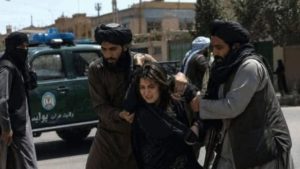
Afghan Christian convert and former government official Ziba Mastoor says she fled to Qatar earlier this month after Taliban intelligence operatives pursued her from Afghanistan into Pakistan, leaving her dependent on a temporary visa and fearful that deportation could place her life in danger. 

For more stories from The Media Line go to themedialine.org

Her case reflects the risks confronting Afghan women and members of religious minorities who fled to neighboring countries after the Taliban seized power in August 2021. Pakistan and Iran have accelerated the expulsion of Afghans over the past year, raising concerns that vulnerable refugees and asylum seekers could be returned to Afghanistan to face further persecution.

Since retaking power, the Taliban has largely excluded women from public life. Girls are barred from secondary schools and universities, while women have faced sweeping restrictions on employment, travel and access to public spaces. Women who protest have reported arbitrary arrest and imprisonment.

The Organization of Islamic Cooperation and prominent Islamic scholars have rejected the Taliban’s restrictions on women as lacking a basis in Islamic law. Rights advocates accuse the Taliban of using a rigid interpretation of Islam to enforce its rule while persecuting religious minorities.

Reports of intimidation, arbitrary detention, violence and discrimination have prompted members of minority communities to flee or conceal their identities.

Mastoor says she held a senior government position during the administration of former President Ashraf Ghani. She told The Media Line that Taliban intelligence operatives targeted her because of her faith and attempted to arrest her during a nighttime raid on her home, but she escaped.

Mastoor alleged that Taliban authorities later issued what she described as a sentence of “stoning to death” because she had converted to Christianity. She said officials also harassed and intimidated her parents while searching for her. The Media Line could not independently verify the existence of such a sentence. 

Responding to a question from The Media Line, Mastoor said, “I converted to Christianity in 2019. My faith guided me to make this genuine and personal choice.”

Her parents, who are ethnic Tajik Muslims, opposed her decision, she said.

Persistent harassment by Taliban intelligence operatives eventually forced Mastoor to flee Afghanistan for Pakistan, according to her account. Yet she said she found no lasting safety there and lived alone under the constant threat of forced return.

A trusted contact in Kabul later warned her that Taliban operatives were attempting to locate her in Pakistan, Mastoor said, prompting her to flee again.

She arrived in Qatar on a temporary visitor visa only days ago. Mastoor fears that she could be deported to Afghanistan when the visa expires, which she said would place her life at grave risk.

Afghanistan’s Christian population is believed to be extremely small, and it is difficult to document because believers generally practice in secret. Mastoor estimated that only a few hundred Christians remain in the country.

She has appealed to Christian organizations worldwide for help in preventing her return to Afghanistan.

Fazal Ur Rehman Zadran, a Kabul-based political analyst, told The Media Line that determining the size of Afghanistan’s Christian population was difficult because openly practicing or promoting Christianity is prohibited.

Zadran said that dozens of families from the Hazara Shiite community had converted to Christianity in previous years. Hazaras have long faced persecution, including attacks by the Islamic State group, and he suggested that such experiences may have contributed to some conversions.

After the Taliban returned to power, many Christian families were forced to conceal their religious identities, Zadran said. According to the information available to him, some fled to Pakistan and Iran in disguise.

Stricter deportation policies in both countries have left those families living in hardship and uncertainty, fearful that they could be returned to Afghanistan at any time, he explained.

Qaiser Khan Afridi, a spokesperson for the Office of the United Nations High Commissioner for Refugees (UNHCR) in Pakistan, expressed concern about Pakistan’s policy of deporting Afghan refugees and asylum seekers.

He told The Media Line that while the UNHCR appreciates the people and government of Pakistan for “hosting millions of Afghan refugees with generosity for more than 45 years, despite facing their own economic and social challenges,” refugees should not be compelled to return to a country where their lives or freedom could be endangered.

The UNHCR is particularly concerned about the risks facing women, girls and other vulnerable groups if they are sent back to Afghanistan, he said, and urged Pakistani authorities to ensure that any repatriation is voluntary, safe and dignified.

The Media Line also spoke with Zabihullah Mujahid, the Taliban’s chief spokesperson, who categorically denied that a Christian community exists in Afghanistan.

Because there is no Christian community, Mujahid said, Christians have no official status in the country, and no churches are available for worship. He did not address Mastoor’s allegations concerning her attempted arrest or reported sentence.

Rebecca Trotter, a St. Paul, Minnesota-based human rights activist, is the co-founder and co-director of Food for Thought Afghanistan, a US and Switzerland-based nongovernmental organization supporting Afghan civil society.

She told The Media Line that “the international response to Afghanistan's crisis has been marked by half-measures, symbolic gestures, and rhetorical condemnations rather than meaningful action.”

She said that even measures imposed during the Taliban's first rule have largely not been reinstated, arguing that “the global community's commitment to defending fundamental human rights stands in stark contrast to the Taliban's determination to enforce its own agenda.”

Trotter added that she believes the international community would have already openly normalized relations with Afghanistan's de facto authorities “had it not been for the relentless efforts of Afghan civil society, both inside the country and abroad, to resist such a course.” Genuine international support for those efforts could fundamentally alter Afghanistan’s future, she argued.

According to Trotter, “Food for Thought Afghanistan is working to relocate 60 at-risk Afghan women's rights activists from Pakistan to safe third countries.” The organization successfully resettled 31 families last year, she said, while the remaining families continue to live in safe houses it established.

She said the organization had also pressed Pakistan to recognize the women’s protection claims under international, Pakistani and Islamic law.

Hadia Sahibzada, the Tehran-based founder of the Afghanistan Women’s Voice Movement and an advocate for Afghan refugees in Iran, told The Media Line that “women's rights in Afghanistan have become one of the world's gravest human rights crises.”

She described the Taliban’s policies as gender apartheid and a blatant violation of fundamental human rights. Forced deportation places Afghan women at immediate risk of persecution, arbitrary detention, retaliation and severe punishment after their return, she said.

Repeated condemnations by the United Nations and foreign governments have failed to curb the Taliban’s abuses, Sahibzada argued, while the absence of accountability has allowed violations to continue. She called for those responsible to be prosecuted under international law.

Sahibzada also urged governments not to normalize relations with the Taliban. Instead, she called for stronger diplomatic pressure, accountability measures, protection for Afghan women and the immediate reopening of schools and universities to girls.

For Mastoor, those debates are no longer abstract. Her immediate future depends on whether she can secure protection in Qatar or another country before her temporary visa expires. Without a safe destination, she fears that the long journey from Afghanistan through Pakistan may end where it began—under the authority of the Taliban.

Ukraine recaptured 700 sq km of territory this year, outgoing commander-in-chief says

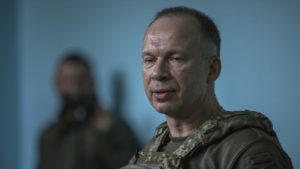
Ukraine has recaptured 700 sq km (270 sq miles) of its territory this year, outgoing Commander in Chief Oleksandr Syrskyi said on Wednesday, confirming he was leaving the top military job.

"I am handing over to my successor an army that is not only holding the defense but is also on the offensive," Syrskyi said in a statement on Telegram.

President Volodymyr Zelensky said on Tuesday that a young major general, Mykhailo Drapatyi, would replace Syrskyi after days of street protests.

The move followed the ousting, in a wider government reshuffle last week, of tech-savvy reformist defense minister Mykhailo Fedorov, which brought the deep divisions in the Ukrainian defense leadership into the open.

Syrskyi has held the commander-in-chief position since early 2024, after playing key roles in Kyiv’s defense in the early days of the war and in a lightning counteroffensive to retake swathes of the northeastern Kharkiv region in 2022.

But he has faced harsh criticism for a rigid command style which some service members have said resulted in unjustifiably high troop losses.

In his statement, he highlighted his track record, including stopping a Russian offensive in the Kharkiv region and an operation in Russia’s Kursk region in 2024.

Thirteen dead, seven missing in Chile following heavy rains, flooding, authorities say

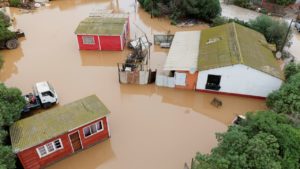
Thirteen people are dead and seven missing after heavy rains hit much of Chile, authorities said on Tuesday, while the government said it would seek sanctions on electricity distributors for sustained power outages.

Storms have struck from the country’s central region down to the south, causing widespread flooding, road closures, and damage to homes.

“Waterways, streams, and riverbanks have been weakened by the rainfall over the past few days; there is still a risk of rising water levels in some of them,” said Alicia Cebrian, head of Chile’s Senapred emergency office.

Cebrian added that, in addition to the casualties, 2,281 people have been displaced, 81 homes have been destroyed, and 2,761 have sustained major damage, while 87,000 people remain without electricity.

The minister of the interior, Claudio Alvarado, said the government plans to initiate disciplinary proceedings against electricity distribution companies for delays in restoring service.

Lessons were suspended in schools across several municipalities in four regions.

Although most of the major copper and lithium mining companies are located in the northernmost part of the country, which has not been affected by the bad weather, some operations in the region have had to temporarily scale back their activities due to the conditions.

Gates Foundation says no payments were made towards Epstein, following internal investigation

An external review conducted by the Gates Foundation has found no evidence of payments made or participation in criminal activities linked to late financier and convicted sex offender Jeffrey Epstein, the philanthropic group said on Tuesday.

The foundation's investigation was conducted by the law firm WilmerHale and commissioned by CEO Mark Suzman, with the support of the foundation’s Chair, Bill Gates, and the independent members of the Board, the foundation said in a statement.

Some 50 interviews were conducted in total, with both former and current employees, while extensive written materials were also reviewed during the investigation.

According to the investigation, the foundation only had contacted Epstein in two instances between 2011 and 2014. The first time was through a “proposed donor-advised fund (DAF) that would pool contributions from high-net-worth individuals to support global public health.”

The foundation finally rejected the proposal, according to the statement.

The second instance involved the International Peace Institute (IPI), a nonprofit Epstein introduced to the Chair. 

"The foundation subsequently provided grant funding to IPI, following internal diligence and review, for polio eradication support," the statement read.

This is a developing story.

US appeals court overturns release of pro-Palestinian advocate Mahdawi, citing lack of jurisdiction

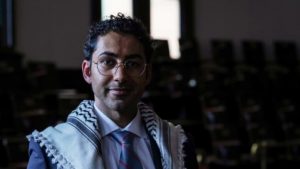
A US appeals court on Tuesday overturned a 2025 ruling that ordered the Trump administration to release pro-Palestinian advocate Mohsen Mahdawi from immigration detention, finding that the lower court lacked jurisdiction to hear the case.

Mahdawi, 35, was one of several non-citizen students who were placed in deportation proceedings last year after taking part in demonstrations against Israel’s military campaign in Gaza. The arrests prompted court challenges that placed US President Donald Trump’s crackdown on immigration against the right to free speech as guaranteed by the First Amendment to the US Constitution.

Tuesday's decision from a three-judge panel of the Manhattan-based 2nd US Circuit Court of Appeals stopped short of backing the Trump administration's push to deport non-citizens in the US lawfully on the basis that their presence in the country runs counter to US foreign policy – a practice that rights groups say infringes on free speech.

But taken together with another decision earlier this year in the case of pro-Palestinian advocate Mahmoud Khalil, the ruling could make it more difficult for non-citizens detained in immigration jails to quickly seek their release on the grounds of an alleged violation of their First Amendment rights.

Mahdawi, a West Bank-born Columbia University student, was arrested in April 2025 upon arriving for an interview for his US citizenship petition. Vermont-based US District Judge Geoffrey Crawford ordered him released on bond two weeks later, ruling that he enjoyed the same First Amendment free speech rights as US citizens.

In overturning that ruling, the 2nd Circuit panel said Crawford lacked jurisdiction over the case because it should have been resolved in immigration court first. The judges did not order Mahdawi's re-arrest.

US immigration courts, which conduct deportation proceedings, are overseen by the Justice Department. District courts like Crawford's, by contrast, weigh constitutional issues and are independent of the executive branch.

The panel included two judges appointed by Trump in his first term and a third appointed by former President George W. Bush.

Neither the Justice Department, which represents the federal government in court, nor the Department of Homeland Security, which handles immigration enforcement, immediately responded to requests for comment.

A spokesperson for the American Civil Liberties Union, which is representing Mahdawi, had no immediate comment.

Earlier this year, the Philadelphia-based 3rd US Circuit Court of Appeals reached a similar conclusion in the case of Khalil, a Columbia University graduate who spent more than 100 days in immigration detention before his release on bond by a federal judge in New Jersey.

Khalil has asked the US Supreme Court to review the divided 3rd Circuit’s conclusion that his claims should have been heard through an appeal of a removal order from an immigration court.

Both Khalil and Mahdawi were authorized to be in the United States, and neither has been charged with a crime.

About freedom and rules

Everyone has the right to freedom of thought and action within the framework of ethical and moral principles, and the mission of Our team is to provide this right to all who need it.

Everyone can express their free opinion, tell Us about injustice, about all cases when no one can help. We will help. We will not allow the free-thinking person to be driven into the framework and vice of the system. Be it a state apparatus or private structures, no one has the right to act outside the laws of conscience.

All people have the right to a free and happy life without borders. If You have something to share with other people, You want to tell something that You can not tell in person or something has happened with You — know that We are not indifferent to all the problems connected with violation of moral rights. You can always write to Us and share Your story, We will never disclose Your identity to anyone, sometimes We don`t know it ourselves, but We will help.

We are not a commercial, religious or political organization. Our goal is to unite free people for the sake of peace and mutual assistance.

We are Anonymous, We are Free, We are for Justice.

“Corruption — Engine of Any Kind of Crime”

Get help now

Send a message with a description of your problem and possible ways of assistance and we will contact you as soon as we consider your problem.