• English
  • Русский

UK lawmakers to make fresh attempt to legalize assisted dying as public support for move rises

British lawmakers will make a fresh push on Friday to legalize assisted dying for terminally ill people, hoping a groundswell of public support will help drive through a change in the law six months after a previous effort failed.

Opinion polls have long shown that a majority of people in the UK back the legalization of assisted dying, and supporters hoped a parliamentary vote in 2025 in favor of it would pave the way for the country’s biggest social change in a generation.

But that bill failed in March in the unelected upper chamber, the House of Lords, after members ran out of time to debate hundreds of amendments proposed during that parliamentary session.

Lauren Edwards, a lawmaker in British Prime Minister Andy Burnham’s Labour Party, is now bringing back the legislation to the House of Commons, the lower chamber, through a mechanism known as a Private Member’s Bill whereby an individual lawmaker selected in a ballot can try to pass a law independently of the government.

The government is neutral on the legislation, meaning politicians can vote according to their conscience rather than along party lines. In 2025, the legislation passed in the Commons by 314 votes to 291 against.

Under the proposed bill, mentally competent, terminally ill adults in England and Wales with six months or fewer to live would be given the right to end their lives with medical help, after approval from a panel of professionals.

Concerns over how to protect vulnerable ill people from coercion derailed the last attempt to legalize assisted dying. Parliament had rejected a similar bill 10 years ago.

Edwards said that if the law was finally passed it would represent "the most pressing, progressive reform" of this parliament.

“It is time to… give terminally ill people the choice to exercise some control over the manner of their deaths,” she wrote in the Guardian newspaper.

"We owe it to them, and to the vast majority of voters who support them, not to sit back and allow a minority of unelected peers to stand in their way."

A poll published by Ipsos on Monday showed two in three Britons support the legalization of assisted dying in principle, though in some cases that backing hinges on additional funding being provided for palliative care.

Burnham has previously said the debate over legalizing assisted dying should wait until the country's palliative and adult social care systems have been fixed. He has said he will not vote on Friday.

Trump administration to sanction unnamed ‘large’ bank on Monday, Bessent says

US Treasury Secretary Scott Bessent said on Thursday the Trump administration will sanction a large bank next week as it continues to apply economic pressure on Tehran to end a more than six-month US conflict with Iran.

He named neither the financial institution nor its country during his appearance on "Real America's Voice," but said the move would happen on Monday.

Bessent said the move was originally scheduled for Friday but was postponed because of the ceremonies marking the 25th anniversary of the September 11, 2001, attacks, the deadliest assault on US soil.

"We are just going to continue with this process until everyone stops dealing with this regime," he said.

"We will make it so unprofitable that if you want to risk an extinction-level event for your company or for your person, your personal finances, then have at it. But we are coming for you."

The United States has imposed a range of economic measures against Iran since the conflict began in February, targeting oil exports, shipping networks, weapons procurement channels, financial intermediaries, digital asset exchanges and aviation links.

The Trump administration escalated its campaign last month with what Bessent called “Operation Economic Outcast,” imposing sanctions on nearly 60 entities, individuals and vessels and expanding the scope of secondary sanctions on those doing business with Iran in sectors including shipping, aviation, technology, gold and digital assets.

Despite the increasing pressure on Iran, US President Donald Trump predicted on Wednesday that the war will not end until after November’s US midterm elections.

Several people killed in bus crash near Alpine village in Switzerland, medical teams responding

Several people have been killed and several others injured in a bus crash near the Alpine village of Susch in eastern Switzerland, police said on Thursday.

Emergency response teams were dispatched to the site of the accident involving a travel coach, police in the canton of Graubuenden said in a post on X.

"A hotline is available for relatives and consulates regarding the coach accident in Susch," police added in an additional X post. "Please contact the operations center of the Graubuenden Cantonal Police at 081 256 56 56."

A spokeswoman for the General Dutch Association of Travel Companies (ANVR), acting as spokesperson for tour operator OAD, said that a serious accident had taken place involving an OAD bus and that 48 passengers were on board, all Dutch nationals.

Pictures from the scene published by Swiss newspaper Blick showed a bus on its side surrounded by helicopters and emergency response vehicles.

Bronze Age hoard, Egyptian diamonds: String of museum heists throughout August shake Europe

Nearly a year after the infamous Louvre heist shocked the world, a new series of museum thefts across Europe has raised concerns in the art and antiquities world about the rising phenomenon.

On Tuesday, four paintings were stolen from the Renoir Museum in Cagnes-sur-Mer on the French Riviera, and in mid-August, four paintings by Renaissance master Antonello da Messina were stolen from the Museo Regionale di Messina in the painter’s hometown.

Last month, the pan-European police body Europol said that art thieves in Europe are committing more violent robberies and specialist gangs have been replaced by ad hoc ​opportunists recruited through social media.

But the recent heists have not only been of priceless paintings, but of artifacts as well.

On August 27, thieves in Spain entered the Villena Museum (MUVI) and stole the majority of the Treasure of Villena, a collection of Bronze Age artifacts often described as one of the most significant prehistoric European finds.

The collection is made up of 66 artifacts of gold, silver, iron and amber. The gold artifacts including 11 bowls, three bottles and 28 bracelets.

It was originally discovered in 1963 by Spanish archaeologist José María Soler.

The theft happened “in a matter of minutes,” Villena Mayor Fulgencio Cerdán said during a press conference following the robbery.

He explained that the robbery took place around 5:20 a.m., with the thieves believed to have left the museum approximately four minutes later.

While most of the treasure had been taken, Cerdán noted that three silver vessels, a bracelet, some ornamentation of the bastón del reyezuelo, and the “Kingfisher staff.”

The stolen gold pieces are estimated to be worth €1.7 million, according to media reports.

“We are absolutely devastated,” Cerdán said. “I am shaking. The truth is that, for those of us from Villena, this destroys us. It is part of our heritage and part of our wealth and of what we feel proud of.”

Following the theft, MUVI stated in a social media post that it has temporarily closed its doors to the public, but will announce a reopening date as soon as possible.

“The MUVI's pieces and collections are not just heritage: they are shared memory, part of everyone's history,” the museum wrote. “We have full confidence in the ongoing investigations and the professionalism of the State Security Forces.”

That same day, two unmasked men smashed a display case at Vienna's Museum of Applied Arts (MAK) and stolen a diamond necklace worth over $4 million.

It had been featured at the MAK as part of an exhibition titled “GLANZSTÜCKE: Van Cleef & Arpels High Jewelry × Masterpieces from the MAK Collection.”

According to Austrian state broadcaster ORT, the unmasked thieves bought tickets to the exhibit prior to the robbery and commited the theft during the museum’s opening hours.

Police added that the two then “fled with the piece of jewelry in an unknown direction.”

Photographs and CCTV footage of the suspects have been shared by police, and has since been added to INTERPOL’s Stolen Works of Art database.

The museum noted in an August statement that it would not be sharing information regarding the investigation into the robbery.

Belonging once to Queen Nazli of Egypt (1913-1936), the second wife of King Fuad I, the necklace is adorned with 673 diamonds and weighs about 200 carats.

It, and a matching tiara, had been commissioned by Nazli for the wedding of her daughter Fawzia to, the at the time Iranian Crown Prince and later Shah, Mohammed Reza Pahlavi.

Reuters contributed to this report.

UK man charged with aiding Russian intelligence, planning drone factory sabotage

A British man appeared in a London court on Thursday accused of providing information about factories that manufacture drones and offering to sabotage them on behalf of Russian intelligence.

Joshua Cammidge, 31, has been charged with assisting a foreign intelligence service and preparing an act of sabotage after contact with the GRU Volunteer Corps, which prosecutors said was controlled by Russia's GRU military intelligence agency.

Appearing at Westminster Magistrates' Court, prosecutor Warren Stanier said Cammidge was accused of providing details of four drone factories near his home in Swindon, west England, and volunteering to commit an act of sabotage.

Prosecutors say he also conducted research about a Wi-Fi jamming device and undertook reconnaissance.

Cammidge did not enter a plea, but Stanier said that in a police interview he had strenuously denied the charges and said he had had no intention of carrying out any sabotage.

Russia's embassy in London has not commented on the case.

Stanier told the court that Cammidge, who was arrested in Swindon last week by counterterrorism officers, had been communicating between August 28 and September 3 with a British national who had gone to Russia to fight against Ukraine.

"The essence of those conversations was the location of factories in the UK which manufacture drones and the sabotage of those factories," Stanier said.

Stanier said other conversations Cammidge had had with an ex-partner and a trusted work colleague showed he was being requested to do so by the Russian intelligence services.

Cammidge was remanded in custody and will appear at London's Old Bailey court on September 25.

Relations between Britain and Russia have deteriorated sharply since Moscow’s invasion of Ukraine in 2022, with British authorities increasingly warning about possible Russian espionage, sabotage and other hostile state activity.

Russia warned last month it could strike British military targets in response to Ukrainian attacks that use British-supplied long-range missiles.

"Russia is constantly probing us and testing us," British defense minister Wes Streeting told lawmakers on Thursday.

Two years ago, the UK's domestic spy chief said the GRU was seeking to cause "mayhem" across Europe, and there have been warnings from other European countries in recent weeks that Russia was stepping up a 'hybrid' war against allies of Ukraine.

Germany has blamed Russia for an attempted drone attack on a Ukrainian cargo plane at Leipzig/Halle airport last month, though Moscow's embassy in Berlin said the Leipzig incident was just another example of unsubstantiated accusations.

"I know people will be concerned about recent incidents across Europe, intended to sow fear, create disruption and undermine support for Ukraine. They will not succeed," British security minister Dan Jarvis said on Wednesday.

In a separate case, Russia's FSB internal security agency said on Thursday that it had detained a former guard at the British Embassy in Moscow who it said had collected personal data on British diplomats on behalf of Ukrainian intelligence.

Two arrested in London over suspected Iran-linked national security offenses

Two people have been arrested in London as part of an investigation into suspected National Security Act offenses linked to Iran, British police said on Thursday.

London's Metropolitan Police said in a statement: "The investigation is not connected to any of the incidents or attacks earlier this year that have been targeted at various venues and buildings linked to Jewish and Iranian communities across London."

This is a developing story.

NATO allies foil Russian subsea cable sabotage plot in Arctic waters

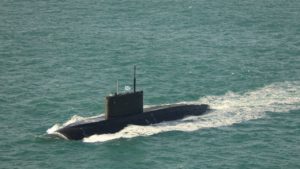
Deep in Arctic waters near the remote Svalbard archipelago this spring, NATO allies caught Russian subs training to unleash a secret weapon designed to disable critical undersea cables without leaving any fingerprints.

The clandestine Russian operation, described to Reuters by two Western officials, was carried out by Moscow’s GUGI undersea warfare directorate, which used deep-sea submersibles to simulate the deployment of the sophisticated and destructive technology. 

A joint operation involving Britain, Norway and the United States tracked and confronted the Russian vessels at sea, said the two officials, speaking on condition of anonymity. The vessels were prevented from completing their exercise and eventually left the area.

Britain and Norway disclosed in April that they had uncovered a covert Russian operation in Arctic waters. But the discovery of the new weapon, the location of the operation and the US involvement have not been reported.

The deep-sea face-off comes at a time when some Western intelligence officials fear the Kremlin is ramping up sabotage operations in Europe and preparing for a conflict with NATO.

Some US intelligence analysts are increasingly concerned Russia may test NATO's mutual defense pact, known as Article 5, three US officials said. If it does, destroying subsea cables could be a critical part of that effort, the Western officials said.

Cables no thicker than a garden hose, lying on the seabed or buried just below, are critical to global internet connectivity and financial transactions. Their economic and strategic importance has made them targets in past conflicts, including in the First and Second World Wars, when they were critical to delivering orders by telegraph or telephone.

Two 1,400 km subsea fiber-optic cables linking Svalbard to mainland Norway lie as deep as 2,700 meters below the sea's surface. They carry vast amounts of satellite data downloaded at the SvalSat satellite ground station, the world's largest and part of NASA's Near Space Network.

Russia's Defence Ministry didn't respond to a request for comment on the incident. The Kremlin consistently denies conducting sabotage operations in NATO countries or plotting any confrontation.

Some Western officials argue that Moscow's targeting of European states has increased in recent months as the front line in Ukraine has become largely static.

Countries including Poland, Lithuania, and Romania have confirmed various violations. Most recently, an attempted drone attack on the Leipzig/Halle Airport in August triggered a series of responses from Germany, including the closure of a Russian consulate in Bonn and a cultural center in Berlin.

In August, Central Intelligence Agency Director John Ratcliffe visited intelligence counterparts in Moscow, in part to warn Russia against escalating sabotage operations in Europe, said two people familiar with the matter.

Reuters couldn't determine if Ratcliffe raised Russia's covert subsea operations. The Kremlin declined to say what had been discussed or to provide any further details.

At the same time as the confrontations at sea, British and Norwegian officials took their findings to Moscow to show they were aware of the new technology – hoping it might make Russia hesitate to use it, the two Western officials said.

Russia didn't damage any cables. The exercise focused on simulating the deployment of the technology in the event of a conflict with NATO, the officials said. They declined to detail how the technology works.

Asked for comment, NATO referred Reuters to Norwegian and UK authorities.

"Through our joint operation, we sent a clear message to Russia that they cannot operate covertly," Norway's Defence Minister Tore ⁠Sandvik said in a statement.

"We have made it unequivocally clear to Russian authorities that any attempt to target our critical infrastructure will be detected and met with consequences," he said. "It is in no one's interest to escalate tensions in the High North."

Britain's Defense Ministry pointed to April 9 statements acknowledging attempted covert activities in and near Norwegian and British waters by Russia's Main Directorate of Deep-Sea Research, known by its Russian acronym GUGI. Washington and London have both imposed sanctions on the secretive directorate.

The White House didn't respond to a comment request. The CIA declined to comment.

Any escalation between Russia and NATO could quickly underscore the strategic importance of an icy expanse of water between the southern tip of the Svalbard archipelago and mainland Norway known as the Bear Gap, one of the Western officials said.

To reach the Atlantic, Russian nuclear submarines based in the Kola Peninsula would cross the 400-mile-wide stretch of water before passing Norway's remote volcanic island Jan Mayen.

Britain said this week it deployed forces to Jan Mayen in August alongside Norwegian and US allies for an exercise to demonstrate NATO's ability to operate jointly in the High North.

Norway plans to have new fiber-optic cable linking Svalbard and Jan Mayen to the mainland by 2028.

NATO allies have focused on subsea infrastructure security since the 2022 destruction of three of the four Nord Stream subsea pipelines supplying Germany with Russian gas. German prosecutors have indicted a Ukrainian man who was a special forces officer at the time of the attack. Ukraine denies any role in the sabotage.

And since 2023, more ships have sailed slowly over or near sensitive subsea infrastructure, including pipelines, power cables and telecoms cables, to map their location, an activity known as drifting.

Last year, drifting in the North Sea rose 52% to 13,079 vessels from the previous year, data from maritime risk analytics firm Windward showed, while activity in the South China Sea region jumped 88% to 18,401 vessels.

It's not illegal to survey infrastructure in international waters, but security experts see such extensive mapping as preparation for sabotage.

The activity and suspected interference with some cables prompted new initiatives launched in January last year, including NATO's Baltic Sentry monitoring system and the UK-led Nordic Warden, bringing navies together for increased patrols of critical infrastructure.

In the Baltic Sea – one focus area for monitoring – 2025 drifting activity was down 5% to 526 vessels from a year earlier, Windward data showed. It said at least 11 subsea cables had been damaged or cut in the Baltic from October 2023 through the end of last year.

"The current thinking is that Russia and China are probably the most active and critical underwater threats," said Windward Chief Executive Ami Daniel.

The global network of power and telecoms cables running across seabeds is expanding each year, supported by increases in demand for data and electricity, partly driven by artificial intelligence, and some analysts say Europe remains vulnerable.

"In the last 25 years, Europe did two things simultaneously. It dramatically expanded the extent to which it relies on seabed infrastructure, and it dramatically shrunk its capacity to protect that infrastructure," said Bruce Jones, a senior fellow with the Brookings Institution. "It's belatedly rebuilding now, in the face of a burgeoning Russian threat."

Russia says it detained a man who spied on British diplomats in Moscow for Ukraine

Russia's FSB internal security agency said on Thursday that it had detained a former guard at the British Embassy in Moscow who collected personal data on British diplomats, alleging that he had been working for Ukrainian intelligence.

The agency said the data collection was part of preparations for a Ukrainian false-flag operation against British diplomatic staff in Russia, aimed at accusing Russia of hostile actions at a later stage.

Relations between Britain and Russia have deteriorated sharply since Moscow launched its military action in Ukraine in 2022. Moscow sees Britain as Ukraine's main backer in the four-and-a-half-year conflict.

This is a developing story. 

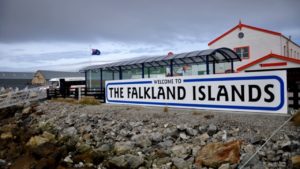
Argentina to file criminal complaint against Israeli drilling company for operating in Falklands

Argentina’s government announced on Monday that it will file a criminal complaint against Navitas Petroleum, an Israeli oil company, for operating in the Falklands.

The announcement came from Argentine President Javier Milei’s office and included complaints against several petroleum companies operating in the area.

According to the announcement, Navitas has been operating under the license of the United Kingdom's "illegitimate government," with the complaint aiming to "protect natural resources and safeguard the sovereignty of the Argentine Republic over the Malvinas Islands, South Georgia and the South Sandwich Islands, and the corresponding maritime and insular spaces, as they are an integral part of the national territory."

The status of the Falkland Islands is disputed between Argentina and the UK, with both claiming sovereignty over the territory.

The complaint follows a January report by N12 News that Argentina reportedly delayed moving its embassy to Jerusalem because of bilateral tensions over Navitas’s plans to drill oil from a field near the Falkland Islands.

The Argentine Foreign Ministry said in December that Navitas, along with partner British company Rockhopper Exploration, had not obtained the proper permits and that their plans were “unilateral and illegitimate.”

The ministry warned of “potentially irreversible future consequences” if the plan proceeds, with both companies banned from drilling in Argentina for drilling without a permit.

Argentine sources told N12 at the time that they considered the plan to be “the theft of a natural resource that belongs to them.”

Mathilda Heller contributed to this report.

Trump claims Tehran trying to influence midterms, says war will end after election

US President Donald Trump said Wednesday that he expects the war with Iran to end “immediately after” the US midterm elections, arguing that Tehran is attempting to influence the vote in hopes of facing a weaker Congress.

Speaking to reporters before departing for Dallas, Trump was asked about the continued conflict with Iran and the sharp rise in oil prices.

“I think the war will end immediately after the election,” Trump said. “I think the war will end immediately after the election because they can’t hold out any longer.”

Trump then accused Iran of attempting to influence the November vote: “They’re desperate to try and affect the election so that we can get a nice weak group of people in there and leave them alone and let them have their nuclear weapon,” he said. “All they want is a nuclear weapon, and if they had a nuclear weapon, the whole world is in deep trouble.”

Trump’s remarks came as oil prices climbed above $100 a barrel amid renewed US-Iran military action. He acknowledged that Americans are paying higher prices but again framed the conflict around preventing Iran from obtaining a nuclear weapon. 

“All you have to do is say, ‘Will you let Iran have a nuclear weapon?’ And the answer is no,” Trump said. He claimed Iran’s economy was in severe distress, citing high inflation, a weakened currency and difficulties paying its military.

“We control the strait and lots of other things,” he added.

Trump predicted that energy prices would begin falling after the midterms. “Right after the election, oil prices are going to be tumbling downward,” he said. “They’re going to be tumbling down, and we’ll get them down. I think for gasoline, we’ll get them below $2 a gallon.”

He cautioned, however, that the decline would not come before the vote. “But not until after the midterms,” Trump said. “I think it’s going to take a little bit longer than the midterm.”

Asked about the latest US attacks on Iranian assets, Trump said Washington was responsible for the strikes and signaled that more could follow. “The attacks are made by us,” Trump said. “We’ve knocked out nine of their ships. I would say that the attacks are caused by us. Yeah, and you’re going to see a lot more.”

He later said the United States had “taken out about nine of their tankers.” Trump was also asked whether a nuclear agreement with Tehran remained possible after Energy Secretary Chris Wright reportedly suggested such a deal might no longer be on the table.

“I’m doing much more than a nuclear deal,” Trump replied. “There’s a lot more than nuclear. We’re going to have nuclear. That’s 99.9, but there’s going to be a lot of other things on the table that wouldn’t have been on the table three months ago.”

Trump also addressed for the first time the sanctions announced by Britain, France and Canada targeting Israeli settlements in the West Bank. The measures have prompted a sharp response from Israel, including a demand that Britain close its East Jerusalem consulate within 30 days.

Asked for his reaction and whether he opposed the measures, Trump said he had only just learned of them. “Well, I’ve just seen it, and I’ll be speaking to Israel,” Trump said. “I’ll be speaking to them, and I’ll find out what their thinking is. I understand, you know, I understand exactly what’s going on, but I want to find out why all of a sudden that has happened.”

The comments were more cautious than those of US Ambassador to Israel Mike Huckabee, who has publicly condemned the sanctions. Secretary of State Marco Rubio had also previously declined to directly endorse or condemn the British move, while saying Washington did not want to see “anything destabilizing” in the West Bank.

Get help now

Send a message with a description of your problem and possible ways of assistance and we will contact you as soon as we consider your problem.