• English
  • Русский

Bus crash kills 25, mostly students in Cape Verde

Some 25 people died in a bus crash on Cape Verde's Fogo Island, with most of the victims being young people and teenagers, students from the Curral Grande and Ponta Verde areas on Saturday, according to local reports and officials.

The trip was not organized by the schools, according to Education Ministry delegate José Pedro Gonçalves in São Filipe, but was one the driver regularly organized each year with students he transported during the school year.

The driver was one of the victims who died in the crash.

The cause of the crash is unknown, but initial reports indicate the bus veered off the road, fell down a roughly 30-meter cliff in a rocky area, and landed in a ravine that was difficult to access, complicating rescue efforts.

According to local reports, 20 of the fatalities died at the scene and five died in the hospital overnight.

Seven of the victims were buried overnight.

This is a developing story. 

AfD nears first far-right victory in Germany since World War II as Saxony-Anhalt votes

Voting in the eastern German state of Saxony-Anhalt began on Sunday in a closely watched election that could see the Alternative for Germany (AfD) become the first far-right party to take power at a state level since World War Two.

Under its 35-year-old lead candidate Ulrich Siegmund, the party has been polling ahead for months, and there is a genuine chance the AfD could take an absolute majority on Sunday evening, particularly if several smaller parties fail to clear Germany’s 5% threshold to enter parliament.

The vote is seen as a barometer for the government of Chancellor Friedrich Merz, who has attempted to chip away at the AfD’s popularity by taking a tougher line on migration and security.

About 1.7 million voters have until 6 p.m. (1600 GMT) to cast their ballot before polls close, with initial results expected shortly after. State election officials will release their first turnout estimates starting at noon.

Recent surveys place the AfD at just over 40%, followed by Merz’s Christian Democrats (CDU) at 23%.

An absolute majority would allow the AfD to bypass mainstream parties' efforts to keep the party blocked out of power by refusing to work with it under a longstanding "firewall" policy.

Achieving an absolute majority is a high bar to clear in Germany's proportional electoral system, which was designed in part to encourage coalition governments and make it difficult for one party to rule alone.

If the AfD falls short of an outright majority, a CDU-led administration under incumbent state premier Sven Schulze is the most likely outcome, though the exact shape of any coalition would depend on which parties enter.

Weeks of coalition talks could follow Sunday's vote.

For the AfD, the Saxony-Anhalt election is a stepping stone towards its larger ambitions of securing national power in the next federal election scheduled for 2029.

"No matter the outcome of tomorrow's election, we have already made history," said Siegmund at a final rally on Saturday evening.

"Because what we have started here in Saxony-Anhalt – that is currently sweeping across all of Germany – can no longer be stopped," he told the crowd in the state capital, Magdeburg.

Should it win, the AfD plans to shift schools and cultural institutions towards more traditional values, marginalize immigrants and deeply reform the public broadcasting system.

However, without an absolute majority, the AfD, which has been classified as "far-right extremist" by the state security service, would struggle to enter government due to the firewall.

Siegmund, who arrived to cast his vote in his hometown of Tangermuende on a blue Simson moped, greeted by throngs of excited fans, has ruled out entering a coalition with other parties.

He argues that it is impossible for the AfD to govern with the mainstream politicians who have been driving Germany into the ground over the past three decades and instead is aiming to win 45% or more of the vote.

Falling short of that opens the prospect of complex coalition negotiations, dependent on which parties can hit the 5% hurdle.

Polls show one of the CDU's current coalition partners, the Free Democratic Party, falling short, while the other, the Social Democratic Party (SPD), is under 10%.

The small far-left Sahra Wagenknecht Alliance (BSW), the only party that has not ruled out a coalition with the AfD, is also likely to miss out.

For Schulze, who is favored in polls as voters' top choice for leader, combining with the SPD and Greens might not be enough for a majority, but the CDU has ruled out a coalition with the far-left Left Party that could help it reach that threshold.

One option could be a minority government led by Schulze that would depend on passive tolerance from the Left – a model used in the neighboring eastern German state of Thuringia.

Mount Anak Krakatau eruption grounds over 200 flights at Jakarta airport

An eruption of Indonesia’s Mount Anak Krakatau caused the suspension of hundreds of flights at Jakarta’s main airport on Sunday after some school activities and fishing were halted.

Soekarno-Hatta International Airport posted on Instagram that it had suspended flight operations until 9:30 a.m. local time due to volcanic ash.

The suspension, extending a halt that had been scheduled until 5:30 a.m., has affected 209 flights, including several international flights, Indonesia's transportation ministry said.

Anak Krakatau has erupted since late on Friday, with volcanic ash detected at the airport early on Sunday, the ministry said in a statement.

Ash was identified as high as 20,000 feet (6,000 meters) on the Java side of the volcano and a plume of up to 50,000 feet (15,000 meters) on the Sumatra side and in some parts of Banten province in Java, the meteorological agency BMKG posted on its website.

Anak Krakatau is roughly halfway between Java and Sumatra in Indonesia’s vast island chain, which sits on the Pacific “Ring of Fire,” where earthquakes and volcanic eruptions are frequent.

Indonesia's disaster mitigation agency, BNPB, "urges the public to remain calm while increasing vigilance. In the event of ashfall, people are advised to wear masks and eye protection, reduce outdoor activities, cover water sources, and exercise caution when driving, as volcanic ash can reduce visibility," said spokesperson Berton Panjaitan.

Several schools canceled activities on Saturday, with students and residents suffering eye irritation from the ash, while fishermen canceled their fishing trips due to the eruption, local media outlet Kompas reported.

The disaster mitigation agency said on Saturday there was no imminent risk of a tsunami from the volcano.

A tsunami in 2018 caused by Anak Krakatau eruptions killed hundreds and injured hundreds more on Java and Sumatra.

Anak Krakatau, which means child of Krakatau, emerged a century ago from the area once occupied by Krakatau, then known as Krakatoa. Krakatoa was destroyed in 1883, when its massive eruptions killed more than 36,000 people in a series of tsunamis.

UN approves resolution in support of map that shows Africa’s true size

The United Nations on Friday voted to shift away from the 16th-century Mercator global map toward one that more accurately reflects countries' true sizes, a resolution sponsored by African states to counter perceptions that the continent is peripheral.

Togo led the initiative to further the African Union campaign to limit use of the Mercator map, which distorts the relative size of land masses by expanding those nearer the poles. It makes Greenland appear roughly the same size as Africa, though Africa is about 14 times larger.

“A fair world begins with a fair map,” Togo’s Foreign Minister Robert Dussey told Reuters ahead of Friday’s vote.

The resolution promotes the Equal Earth projection, which more accurately portrays the size of the continents.

It is not legally binding and it "in no way challenges the use of the Mercator projection for maritime and aerial navigation, for which it remains fully suited," the Togolese ministry said in a statement.

The resolution passed in the UN General Assembly by a vote of 164 to 1 with 6 abstentions.

The United States, the only country to vote against the resolution, said it promoted an “ideological agenda” and was a distraction from the “genuine problems of international peace, prosperity or good relations.” 

The Mercator map remains widely used in classrooms, but Togo hopes to change its school geography materials by the end of the year, Dussey told Reuters.

"Togo will be the first country to change our own geography books," Dussey said.

"In the classroom, we need to change it to give an example to all the countries in the world."

Togo will press other governments, schools, international organizations and technology companies to move away from the centuries-old Mercator projection, Dussey said, adding that Equal Earth offers "the best perception" of the world.

Togo plans to meet African Union member states and supporters from other regions within the next six months to agree on how to promote wider adoption, Dussey said.

Dussey said the discussion about next steps would need to include companies operating mapping, GPS and other location-based technologies.

Dussey linked the campaign to adopt the map to wider African efforts to confront colonial-era legacies, while saying it was not an attack on Europe or any other civilization.

The Mercator map's widespread use is a consequence of colonization, he said.

"The world is changing. Africa also is changing."

Kremlin-Washington talks conclude after reportedly productive meeting between US, Russian diplomats

Russian President Vladimir Putin held more than three hours of “highly useful” talks on Saturday with two US envoys seeking a deal to end the Ukraine war, a Kremlin aide said, but he gave no indication of any breakthrough.

The aide, Yuri Ushakov, said Americans Steve Witkoff and Jared Kushner "outlined a number of ideas regarding possible avenues for a settlement." Ushakov did not say what these ideas were.

He said Putin had told the pair that Russia was making “real progress” on the battlefield, was confident of achieving its goals, and stressed the necessity of addressing “all the root causes of the conflict.”

All these are statements that Moscow has made repeatedly in the course of the war, which has dragged on for more than four and a half years and has seen both sides intensify long-range air strikes in recent weeks while the front lines remain largely static.

There was no comment from Witkoff and Kushner, who were visiting Moscow for the first time since January on behalf of President Donald Trump. They flew out of Moscow soon after the talks and are due to meet Ukrainian President Volodymyr Zelenskiy in Kyiv on Sunday.

"The talks went beyond a mere exchange of views on resolving the Ukrainian crisis. Economic issues and potential major, mutually beneficial Russian-American projects were discussed in some detail," Ushakov said.

"Overall, one can say that the negotiations were timely and highly useful for both sides."

Putin's investment envoy Kirill Dmitriev posted afterward on X/Twitter that it had been an "important peacemaking visit." He and Ushakov were both present at the meeting.

In televised remarks at the start of the talks, Putin praised Trump's efforts to end the war. Trump suggested on Friday the US had a fresh proposal aimed at ending the war, but did not elaborate.

"Understanding that he is entering a difficult situation, he nevertheless does not stop his efforts to help bring about a settlement and to make his contribution to resolving the Russian-Ukrainian conflict," Putin said.

He promised to ensure the safety of the US negotiators. Kremlin spokesman Dmitry Peskov said earlier that Putin had ordered the Russian military not to strike Kyiv for three days because of their trip.

Over the previous 10 days, Russia had pounded the Ukrainian capital day and night with missiles and drones, including an attack on Friday on the headquarters of the SBU security service.

Ukraine has inflicted damaging hits throughout the summer on Russian refineries, oil terminals and warehouses of online retailer Wildberries, in a bid to raise the cost to Moscow of continuing the war. Zelenskiy said Kyiv was prepared to refrain from strikes on Moscow through Monday.

A vast gulf remains between Russia and Ukraine on how to end the war, the deadliest in Europe since World War Two.

A source close to the Kremlin, speaking before reports emerged of the trip by Trump's envoys, said Putin was still intent on capturing more territory.

“There is no chance of reaching an agreement regarding the front line until Putin finishes securing the remaining part of the Donetsk region,” the source told Reuters, adding that the Kremlin leader was confident – based on reports from his commanders – that this would happen by the end of the year.

Western military analysts see such a possibility as remote, given Moscow's slow rate of progress. Ukraine has refused to surrender land it has successfully defended at huge cost, and rejects such terms as tantamount to surrender.

The Kremlin said on Friday the position that Putin set out in a speech two years ago – that Ukraine should cede the entire territory of four regions claimed by Russia and abandon its plan to join NATO – was “unshakeable.”

Since the last US-mediated peace talks between Russia and Ukraine in February, each side has intensified long-range air attacks deep inside the other's territory, while the war at sea has also escalated.

German startup makes history with first orbital space flight launched from European soil

German startup Isar Aerospace launched a space rocket from a site in Arctic Norway on Saturday, bringing Europe closer to offering satellite flights from its own soil.

The uncrewed Spectrum rocket reached orbit shortly after launch, thus becoming the first orbital flight to originate from Europe, with several nations, including Sweden and Britain, saying they want a share of a growing market for commercial space missions.

The company declared the launch a success, while continuing to monitor developments as the flight continued, officials said.

"Access to space remains one of the biggest constraints for the space industry and national security architecture," Isar Aerospace co-founder and CEO Daniel Metzler said in a statement ahead of Saturday's launch.

Chancellor Friedrich Merz visited Isar’s launch site in March, underscoring Europe’s efforts to establish greater autonomy as the global order once championed by the United States is being upended by US President Donald Trump.

Blasting off from Norway's Arctic Andoeya Spaceport, the uncrewed Spectrum, designed for small and medium-sized payloads, carried five small satellites as well as an in-flight technological experiment, according to Isar.

It was Isar's second launch, coming 18 months after the company's first rocket plunged to the ground and exploded in a fiery spectacle shortly after takeoff from the same site. No one was injured at the time.

The March 2025 launch was nonetheless deemed a success by the company for generating large amounts of data for its developers, it said then.

Saturday's launch was intended as "both the vehicle's qualification mission and its first flight carrying payload," the Bavarian company has said.

Global players in the satellite launch market include Elon Musk’s SpaceX, which launches from the United States, and French ArianeGroup, a joint venture between Airbus and Safran that uses a spaceport in South America’s French Guiana.

SpaceX, a sprawling empire spanning rockets, satellites and AI, listed on the Nasdaq exchange in June in a record initial public offering.

Sweden, with its Esrange launch site, and Britain, with its SaxaVord Spaceport in the Scottish Shetland Islands, are the nearest rivals to the Norwegian site, all of which aim to give Europe greater autonomy in space flights.

Isar last week said it had secured about €200 million from the European Space Agency (ESA) to help fund development of new rockets and expand its testing and launch infrastructure.

The German company is also developing a second launch site in Canada.

Palestinian journalist sparks controversy after referring to Hakeem Jeffries as ‘AIPAC monkey’

Palestinian journalist and author Rula Jebreal received backlash after calling House Minority Leader Hakeem Jeffries an “AIPAC monkey,” while criticizing Jeffries’ support for Israel on a podcast on Friday. 

“He is a bought-and-paid-for AIPAC monkey,” she said of the black lawmaker. “With all due respect – and I don’t mean it in a racist way. He is just basically an errand boy, and we’re done and tired.”

Additionally, the podcast host stepped in to clarify that the term "monkey" has "terrible racial connotations, but I think you caught yourself and said you didn’t mean it with any racial animosity.”

Jabreal responded that she had been referring to the image of three monkeys, one who cannot see, one who cannot hear, and one who cannot speak.

"It reminds me of these three monkeys," she said.

The Congressional Black Caucus rejected Jebreal's defense in a post on X/Twitter.

"To be clear, there isn’t a non-racist way to call Leader Jeffries–a Black man–a 'monkey' or 'errand boy,'" the caucus wrote.

New York Representative Richie Torres echoed the sentiment on X, writing that "calling a Black man a 'monkey' is racist. Full stop."

Jabreal wrote her own post on X, writing first that she was “disgusted and horrified that Hakeem Jeffries is taking money from AIPAC amidst Israel’s genocide in Palestine,” before adding “that said, a term that I used to describe him was inappropriate and offensive and should never have been used.”

"I apologize unconditionally," she wrote.

ICE agent re-arrested after being charged with lying over Minnesota shooting

An immigration officer was back in custody in Texas on Thursday night after he was indicted by a federal grand jury on charges of making false statements about the shooting of a Venezuelan man in Minnesota during a deportation surge there last winter, officials said.

Immigration and Customs Enforcement agent Christian Castro was indicted on six counts of lying to investigators, according to a person familiar with the matter, speaking on condition of anonymity because they were not authorized to publicly discuss the case.

The Minneapolis-based prosecutor who brought state charges against Castro, Hennepin County Attorney Mary Moriarty, confirmed he had been arrested in Texas after being released from jail a week earlier.

"We expect he will appear in federal court in Texas, and a date will be set for him to appear in federal court in Minnesota," Moriarty said.

The indictment marks an extraordinary step by a Justice Department that has generally refrained from prosecuting federal law enforcement officers. It was the first known criminal case the Justice Department has pursued against a US immigration agent over alleged wrongdoing in the Minneapolis ICE operation, part of US President Donald Trump’s wider immigration crackdown.

Castro faces state assault charges in Minnesota for shooting and wounding Julio Cesar Sosa-Celis in the leg on January 14, at the height of Trump's deportation campaign in Minnesota, which drew weeks of protest.

A Minnesota state arrest warrant remained in effect for Castro, who spent 90 days in a Texas county jail before he was released. Governor Greg Abbott, a Republican, said he was refusing to sign extradition papers sent by Minnesota Governor Tim Walz, a Democrat, and a federal judge in Texas denied a request from Minnesota to compel Castro’s extradition.

The state charges also include falsely reporting a crime after Castro allegedly wrongly told superiors at the Department of Homeland Security that Sosa-Celis and others attacked him with a snow shovel and broom, which was disproved by video evidence.

DHS has suspended Castro, and the person familiar with the case said a civil rights investigation is ongoing and no decision has been reached yet in that matter.

Matt Evans, a federal prosecutor who had been working on the case, was fired this week after ProPublica reported he sent an email to Sosa-Celis’ lawyers saying DOJ attorneys had stopped his efforts to bring federal charges, according to the person familiar with the case. Evans is now being investigated for obstruction of a grand jury investigation, the person said.

Castro has not publicly addressed the state charges against him since his release from the Cameron County jail last week, and he could not immediately be reached for comment on Thursday.

The Trump administration has largely defended the conduct of ICE agents, saying incorrectly that they have absolute immunity from state prosecutions.

Robin Wolpert, a lawyer for Sosa-Celis, said in a statement her client wants Castro to be held "fully accountable" with stronger civil rights charges. "Mr. Castro has been indicted for making false statements," she said. "But he made them to cover up the fact that he shot my client through the door of an occupied house without a self-defense justification."

The ACLU of Minnesota announced on Thursday that it will represent Sosa-Celis as he sues the Trump administration.

Nazi-looted ‘Portrait of a Lady’ to return to Jewish heir after 80 years in Argentina

An Argentine court on Friday approved the return of the painting Portrait of a Lady, looted during the Holocaust from Dutch-Jewish art dealer Jacques Goudstikker, to his sole heir, Marei von Saher, more than 80 years after it disappeared.

The decision was made as part of an agreement with Patricia Kadgien, daughter of fugitive senior Nazi official Friedrich Kadgien, and her husband, Juan Carlos Cortegoso. The two were charged last year with aggravated concealment after authorities alleged that they had hidden the painting despite knowing that investigators in Argentina and abroad were searching for it.

According to a statement issued by Argentina's Justice Ministry on Friday, the couple will relinquish any claim of ownership over the work and agree to hand it over to von Saher. In return, they will not face a criminal trial, but will remain under court supervision for two years, must keep authorities informed of their whereabouts, and make payments to a children's hospital in Mar del Plata, the city where they live.

If they violate the terms of the agreement during the next two years, authorities may reopen proceedings against them. According to reports in Argentina, however, each spouse agreed to pay 2.4 million pesos to the hospital, only about $1,600 each, or roughly NIS 9,600 combined.

A statement from the Argentine government stressed that von Saher's legal representatives had conveyed her wish for the work to remain temporarily in Argentina and be displayed to the public.

"The goal is to contribute to the dissemination and raising of awareness of the looting of cultural property during the Nazi regime," the Justice Ministry said.

The case came to light almost by chance in August 2025. Journalists from the Dutch newspaper Algemeen Dagblad, who were investigating the past of the elder Kadgien, noticed the painting hanging above a green velvet sofa in photographs accompanying a real estate advertisement for the sale of his daughter’s home in the Parque Luro neighborhood of the resort city of Mar del Plata.

Within hours of the investigation's publication, the advertisement disappeared from the internet. Police raided the home several times, but the painting was no longer hanging there and could not be found. More than a week later, Kadgien's lawyer handed the work over to the authorities.

The elder Kadgien served as financial adviser to Hermann Göring and handled foreign currency, precious metals, and the sale of confiscated property for the Nazi regime. Following Germany's defeat, he initially fled to Switzerland and later to Argentina, where he died in 1978 without ever being arrested or put on trial for war crimes.

The painting had been part of Goudstikker's renowned collection. Goudstikker was one of Europe's leading art dealers before World War II. After Germany invaded the Netherlands in May 1940, Goudstikker fled with his family but was killed in an accident aboard the ship.

About 1,100 works from his collection were subsequently sold unlawfully and under duress to senior Nazi officials, a large portion of them to Göring.

For decades, “Portrait of a Lady” was attributed to the Italian Baroque painter Giuseppe Vittore Ghislandi, and it was initially reported as such when the painting was discovered. However, an examination ordered by the court and carried out by Argentina’s National Academy of Fine Arts determined that the Italian artist Giacomo Antonio Melchiorre Ceruti had actually painted the work.

Experts confirmed that it was the painting that had belonged to Goudstikker's collection and estimated its value at approximately €250,000, or about $290,000.

Von Saher, who lives in Connecticut and has spent decades working to recover artworks looted from her family, agreed that the painting would first be exhibited in Argentina and only afterward transferred to her possession.

Meanwhile, authorities are continuing to examine two 19th-century works, as well as engravings and prints seized from homes belonging to the Kadgien family, in an effort to determine whether they too were looted during the Holocaust.

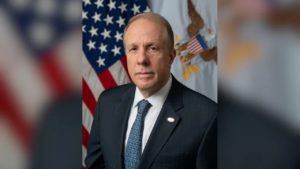
White House reviews candidates to replace Hegseth deputy Feinberg, sources say

The White House has reviewed candidates to replace US Deputy Defense Secretary Steve Feinberg, three people familiar with the discussions told Reuters, signaling that more leadership change could come for a Pentagon already facing unusually high staff turnover.

The effort, which was under way in June, has included conversations with senior lawmakers in the Senate about whether the administration’s picks would have enough support to be confirmed, said two of the people, one of whom added that the review was still going on as of late August. Reuters could not determine when the White House began considering candidates.

The three sources said no decision had been made to remove Feinberg from his post. They did not say why the White House was reviewing potential replacements and did not specify which candidates the White House was considering.

"These so-called anonymous 'sources' have no idea what they are talking about," said White House spokeswoman Anna Kelly.

"[US] President [Donald] Trump appreciates the work of [US Defense] Secretary [Pete] Hegseth, Deputy Secretary Feinberg, and the entire Department of War, whose record of success in Operation Epic Fury, Operation Absolute Resolve, and Operation Midnight Hammer speaks for itself," she said, referring to US military operations in Iran and Venezuela.

The Pentagon denied that it was pursuing a process to replace Feinberg. Asked for comment by Reuters, Hegseth said in a statement that Feinberg has his full support and “isn’t going anywhere.”

The Pentagon did not provide a comment from Feinberg and declined to make him available for an interview.

Feinberg's departure, the billionaire co-founder of private equity firm Cerberus Capital Management, would be the most senior staff change in a department that has already seen a string of high-profile departures under Hegseth.

US Army Secretary Dan Driscoll resigned this week following months of tension with Hegseth, according to a source familiar with the matter. The US Army has declined to comment on the reasons for his departure. US Navy Secretary John Phelan and several senior army leaders have also departed in recent months.

Feinberg, who vowed to accelerate US munitions production, has not yet met that goal, according to analysts who say that the US industrial base cannot ramp up quickly. Some defense industry executives say his task has been complicated by the slow pace of Congress appropriating funds despite immense pressure from the administration.

Feinberg “has worked tirelessly to rebuild our Defense Industrial Base and ensure our military has everything it needs to win, and I look forward to continuing to work with him,” Hegseth said in his statement to Reuters, adding, “He’s doing a tremendous job for President Trump, for the Department, and for our warfighters.”

Trump has increasingly expressed frustration with the lack of progress in the conflict with Iran, which has settled into a costly standoff between the US and Iran.

One of the costs has been a drawdown of US weapons stockpiles. Reuters has reported that the US military faces significant shortages of certain munitions, alarming Congress and military leaders.

Trump has dismissed the concerns, saying the US has “far more munitions than anyone in the world.”

But in an exchange with Trump at Camp David earlier this month, Hegseth blamed Feinberg for letting stockpiles of long-range guided missiles and air-defense interceptors shrink, according to the Washington Post.

The White House has called the report “fake news.” In a statement to Reuters, chief Pentagon spokesman Sean Parnell said: “Secretary Hegseth did not mislead anyone about our munitions posture, and he did not blame Deputy Secretary Feinberg.”

Appointed by Trump last year, Feinberg has attempted to reshape the Pentagon by ramping up the US military's direct investments in companies and delivering loans to military contractors through multiple offices inside the department, including the Office of Strategic Capital and the newly created Economic Defense Unit.

In an August 18 memo he sent to defense firms, which Reuters saw, Feinberg called on contractors to speed up production and provide more transparency around pricing. The Pentagon did not respond to a question about the memo.

Feinberg has also come under scrutiny on Capitol Hill, where Democratic US Senator Elizabeth Warren has raised concerns about whether his former firm Cerberus could benefit from the Pentagon's spending on its Golden Dome missile defense program.

“There are no conflicts of interest between Deputy Secretary of War Steve Feinberg and Cerberus," said Parnell. "He has completely divested from Cerberus and has recused himself from any conversations or business relationships between the Executive Branch and Cerberus."

Cerberus did not respond to a request for comment.

Get help now

Send a message with a description of your problem and possible ways of assistance and we will contact you as soon as we consider your problem.