• English
  • Русский

Single holdout juror blocking verdict in Lindsay Clancy murder trial, defense bids removal of juror

A single juror in Lindsay Clancy’s murder trial is preventing the jury from reaching a unanimous verdict, her lawyer said in court on Thursday, after deliberations stretched into a sixth day over whether to convict the Massachusetts woman of killing her three young children.

Defense attorney Kevin Reddington made that statement shortly after the jury sent Judge William Sullivan in Plymouth, Massachusetts, a note that prompted him to re-instruct jurors on what would constitute “reasonable doubt.”

After the jury was sent back to continue deliberating, Reddington moved to have a holdout juror removed, saying a note from the jury's foreperson indicated "there's one juror who refuses to listen to the law that you've given him or her on reasonable doubt."

"If we come back here in half an hour with a mistrial because of a juror that has just spurned the instructions of this court, it's a shame," Reddington told the judge, who declined to remove the juror.

The jury sent Sullivan a note a day earlier that said, "After much deliberation, we are still unable to come to a unanimous decision." They sent a similar note on Tuesday. But on both days, the judge instructed them to continue deliberating.

If the jury does not reach a verdict and Sullivan declares a mistrial, prosecutors would need to decide whether to retry the case, which has included more than 80 witnesses and more than 300 exhibits.

Asked during a lunch break about his thoughts on the state of the deliberations, Plymouth County District Attorney Timothy Cruz told reporters outside the courthouse that "we'll hang on and find out."

On the question of whether prosecutors in his office would retry the case if it ended in a mistrial, Cruz said only: "I'll talk when this is all over."

Clancy, 36, faces life in prison without parole if convicted of first-degree murder. If found not guilty by reason of lack of criminal responsibility, or reason of insanity, she could be committed to a state psychiatric hospital for evaluation.

She has admitted to strangling her three children to death on January 24, 2023, with exercise bands in the basement of their home in the Boston suburb of Duxbury. She then cut herself with a knife and jumped from a second-story window in an attempt to take ​her own life, which left her paralyzed.

During the six-week trial, defense attorney Kevin Reddington sought to convince jurors that Clancy was in the midst of a psychotic episode when she killed Cora, 5; ​Dawson, 3; and 8-month-old Callan.

Testimony from family members, including Clancy's now ex-husband, Patrick, showed how she had struggled with her mental health in the months after the birth of her third child, repeatedly seeking treatment from healthcare providers ​who prescribed her a myriad of drugs.

Prosecutors do not dispute that Clancy, a former labor and delivery nurse at Massachusetts General Hospital, had been dealing with mental health issues.

But they argued she was able to appreciate the wrongfulness of killing her children and intentionally chose to do so anyway, opting to kill them because she had decided to kill herself and was convinced they would suffer without her.
Syria’s oil corridor plans take shape as Trump looks beyond Hormuz – analysis

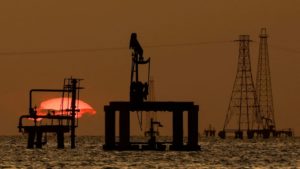
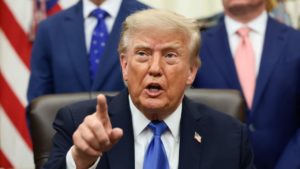
US President Donald Trump posted on Truth Social that Syria acting as an alternative to the Strait of Hormuz would be “great.” He commented after a headline at The Washington Post noted that Syria was “eyeing role as Middle East hub, offers options to bypass Hormuz.” This comes as US and Iran tensions grew this week with the US carrying out airstrikes and Iran attacking Jordan, the Kurdistan Region of Iraq, the UAE, Kuwait and other countries.

The White House has been signaling that it is not interested in a deal and doesn’t trust Iran. However, reports also say the US prefers the conflict to remain contained and not escalate too much. This means that the US has to walk a narrow line between appeasing Iran and not carrying out massive strikes again. Meanwhile, in Israel, officials are warning of possible escalation and warning Iran not to attack Israel. As such, the region continues to sit atop a potential volcano, with many sensitive issues relating to Iran remaining unresolved.

There are increasing plans for Syria to serve as a way to transfer oil to the Mediterranean. However, a recent report from Reuters noted that “Iraq’s plans to export oil via a pipeline through Syria to avert future disruptions in the Strait of Hormuz will likely require four years of construction and cost at least $15 billion, sources with knowledge of the project told Reuters.” The report added that the idea was receiving “initial support for feasibility studies from a consortium including Chevron.”

In June, Syria’s Syrian Petroleum Company signed a deal with ConocoPhillips and energy firm Novaterra to rehabilitate gas fields in Syria. The deal also covers developing a new gas field. In July, ConocoPhillips posted that it had “announced it has agreed to terms with BP to acquire a 42% interest in BP Energy Company of Kirkuk Limited (BP ECKL), supporting the ongoing redevelopment of four large-scale, currently producing oil fields in the Kirkuk area of northern Iraq. The agreement is expected to be signed as part of Iraqi Prime Minister Ali al-Zaidi’s official visit to Washington, D.C.”

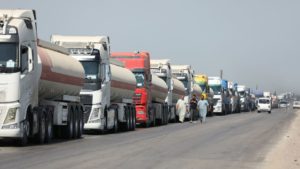
There is an old pipeline from 1952 that links Iraq’s Kirkuk with Baniyas in Syria on the coast of the Mediterranean. However, it will take time to repair it and make it relevant. Until then, Iraq and other countries need to ship energy supplies overland via truck. The Washington Post noted that “day and night, 5,000 hulking trucks carrying oil from the Persian Gulf rumble across this stretch of barren desert as if in a caravan snaking its way toward the Mediterranean Sea.”

This week, Syria focused on economic advancement and continued outreach to other countries. For instance, around fifty companies from Saudi Arabia participated in a fair in Damascus. “Around 1,000 entities and companies from 60 countries are participating in this year’s Damascus International Fair, which runs through Sept. 4,” Syrian state media noted.

In addition, Syria met with delegations from Denmark and Germany. “Minister of Foreign Affairs and Expatriates Asaad Hassan al-Shaibani met Wednesday with a delegation from Germany’s Federal Ministry for Economic Cooperation and Development, headed by State Secretary Niels Annen, to discuss ways to strengthen economic and development cooperation between Syria and Germany and support national recovery and reconstruction priorities,” SANA state media added.

Syria’s President also met the German delegation. “President Ahmad al-Sharaa held a roundtable meeting at the People’s Palace in Damascus with Niels Annen, State Secretary at Germany’s Federal Ministry for Economic Cooperation and Development, and a number of heads and managers of German companies and members of the Syrian-German Business Council,” SANA added.

Syria is also working to rehabilitate Mezzeh airport and use it for civilian aircraft. Mezzeh had been used by the Assad regime’s military in the past.

Regarding the energy trade, the article in The Washington Post added that “the trucks began shuttling between the refineries of southern Iraq and the Syrian port of Baniyas in April, initially as an experiment by Iraqi oil exporters seeking to circumvent the Strait of Hormuz after cargo traffic in the waterway was stopped by the US-Israeli war with Iran.”

The article quoted Ahmad Qubbaji, the deputy chief executive of Syrian state-owned Syrian Petroleum Corporation. It notes that this company will operate the new pipeline and that Qubbaji noted that the “final contract is expected to be signed in September by a consortium that includes Houston-based Chevron, TotalEnergies of France, and Syrian and Qatari investors. The group is discussing security measures, including using drones and other advanced surveillance technology, to monitor the pipeline, which will also have security backing from the United States, Qubbaji said.”

US President Trump’s support for Syria as an oil transfer hub comes in the wake of a major deal in Venezuela. The White House posted on August 31 that “in the biggest oil deal in world history, President Donald J. Trump has secured US majority control of more than 65 billion barrels of proven oil reserves in Venezuela – vastly expanding our current US territorial proven reserves of roughly 46 billion barrels. This deal secures our energy dominance for the next century – all at zero cost to the United States.” The White House added that “the deal, signed by Secretary of State Marco Rubio and Secretary of War Pete Hegseth, gives the US government powerful governance rights, economic ownership, and guaranteed low-cost off-take from a new private Venezuelan oil champion, which will be the second-largest private oil company by reserves in the world.”

This comes as the US is also involved in helping tankers move through the Strait of Hormuz. US Central Command is trying to keep the straits open despite Iran’s threats. Gulf News reported on September 3 that 40 ships had been able to move through the Strait. “CentCom escorts record 18 million barrels of oil through Hormuz as US-Iran strikes flare.”

This illustrates how the White House is focused on enabling trade through the Strait of Hormuz while securing energy deals in Venezuela and potentially in Syria that could pave the way for the future.

UK Green Party leader Polanski announces intention to run for Starmer’s MP seat in London

UK Green Party leader Zack Polanski has announced his intention to stand as a candidate for MP of Holborn and St Pancras following Sir Keir Starmer’s resignation on Tuesday.

Polanski told the Camden New Journal on Thursday that he will stand in a by-election for the London constituency, which he said “represents so many of the things that make London so special.”

"I am so excited by the prospect of representing this place in Parliament," he said. "Holborn and St Pancras has everything that’s the best of our country and so much potential."

To become the official Green candidate for the seat, Polanski has to be selected by local party members. Polanski’s party currently has 5 MPs, but has never won a parliamentary seat in the capital.

Additionally, Holborn and St Pancras has been a Labour seat since the 1980s, first under Frank Dobson and then Starmer.

Polanski acknowledged this, telling the Camden New Journal, “It’s a clear fight between Labour and the Green Party.”

"We know that people are struggling – that the things we used to afford are increasingly out of reach – and this is a chance to send a very clear message that we won’t sit by as we get poorer and extreme wealth is concentrated at the very top.

“What voters in Holborn and St Pancras will get with me as their MP is someone totally dedicated to standing up for them. Put simply, I will use my place in Parliament to force the current Labour government into making life more affordable for the people who live here.”

Polanski is the first Jewish leader of the Green Party. He is a vocal critic of Israel, identifies as anti-Zionist, and frequently participates in pro-Palestinian events.

Vietnam court sentences 11 to death in major drug trafficking case, state media reports

A court in Vietnam sentenced 11 people to death in one of the country's largest drug trafficking cases after an investigation that began when four flight attendants were caught carrying narcotics hidden in toothpaste tubes in 2023, state media reported on Thursday.

The Ho Chi Minh City People’s Court handed down the death sentences to 11 defendants convicted of drug trafficking in a case that involved 227 accused people in total, online newspaper VnExpress reported.

The case stemmed from the discovery in March 2023 of more than 10 kg (22 lb) of drugs concealed in 157 toothpaste tubes carried by four Vietnam Airlines flight attendants arriving from Paris at Ho Chi Minh City’s Tan Son Nhat airport, VnExpress reported.

Authorities later determined the women had unknowingly transported the drugs, according to the report. Investigators subsequently uncovered what prosecutors described as a transnational trafficking network that smuggled narcotics disguised as consumer goods from France into Vietnam.

Prosecutors said members of the network used encrypted messaging platforms, bank accounts registered under other people's names, and delivery services to distribute drugs across southern Vietnam, VnExpress reported.

Details of the lawyers representing the 11 sentenced to death were not immediately available.

At least 20 other defendants have been sentenced to life imprisonment in the case, according to the report.

The verdicts come as Vietnam considers some changes to its use of capital punishment. Last month, the government proposed abolishing the death penalty for six offenses, including drug trafficking, as part of a revision to the criminal code. However, the proposed changes have yet to take effect.

Venezuela’s heavy crude could be swapped for American oil to fill emergency reserve, Wright says

US President Donald Trump said on Sunday that oil from a recently struck deal with Venezuela will be used to replenish the Strategic Petroleum Reserve, adding that the "topping out" process will begin shortly. But it's not that easy, and Energy Secretary Chris Wright hinted as much on Wednesday while visiting Venezuela.

“We’ll swap you a barrel of heavy crude for a barrel of light or medium United States crude,” Wright said during an interview on CNBC, calling oil markets fluid.

Venezuelan crude's high sulfur content and dense nature are largely unsuitable for the US emergency stash, traders and analysts said. A swap, however, may be the best option for helping refill the reserve.

Refilling the emergency stash is crucial to the Trump administration’s energy dominance agenda after Washington recently began releasing millions of barrels of oil from the Strategic Petroleum Reserve as part of a global effort to calm markets during the war with Iran. The major release – up to 172 million barrels from the United States – and low levels of inventory now have raised concerns about cavern damage and how quickly the US can respond in a supply crisis.

With the reserve now at a 44-year low and Washington set to gain access to billions of barrels of Venezuelan crude, one solution would be to pump those barrels back into the stash. But stark quality differences between Venezuelan crude and the current specification for SPR crude make that idea unlikely, traders and analysts said.

Instead, the US government may swap Venezuela’s dense, high-sulfur crude for light- or medium-density American oil to fill the reserves, Wright said on Wednesday, a move that would help it circumvent quality challenges and replenish the key supplies.

The US SPR is the world's largest emergency oil stockpile, and the crude is held in a series of underground caverns on the Texas and Louisiana coasts.

While the reserve contains a number of domestic and foreign crude grades, they typically contain a maximum of 1.99 mass percent total sulfur, according to the DOE. Venezuela's popular oil grades, Merey-16 and Boscan, both contain higher amounts of sulfur than limits defined by the SPR, according to the US Energy Information Administration.

The two grades of oil are also denser than the oil largely contained in the reserve.

This would pose a challenge as refiners are typically configured to process oil with density and sulfur falling within set ranges. Levels above or below that range can impact operations, the yield of refined products and margins.

"The majority of the crude grades Venezuela exports would be incompatible from a quality perspective with SPR caverns," said Jeremy Irwin, global crude lead for analytics firm Energy Aspects.

The SPR does not contain heavy crude oil, and the DOE found that heavy oil storage costs outweigh the benefits, according to a report by the department to Congress in 2016.

Storing heavy oil would present considerable operational difficulties, the report said, adding that the current inventory mix provides the department with fungible crudes that maximize the flexibility of the reserve during a crisis.

Exchanges have been used in the past by the government to release and acquire oil. Currently, oil from the SPR is being released in loans ​that companies will return with a premium of extra barrels. A swap of Venezuelan crude for domestic barrels could be similar.

Typically in an exchange, an oil refiner borrows SPR crude oil for a short time period, due to events such as hurricanes or temporary supply disruptions, and later replaces it in full, along with a premium of an additional quantity of oil.

However, while US refiners could take some more barrels of Venezuelan heavy crude, the appetite may be limited as processing heavy oil requires specialized units that have a set capacity, experts have said. Building new units can be expensive and time-consuming.

The US government had in January denied a Reuters report that the Trump administration was exploring a plan that would deliver Venezuelan oil to US refineries in exchange for US-produced crude. 

DHS chief’s plane forced to make emergency landing after engine failure

A US Coast Guard-operated Gulfstream V jet carrying Homeland Security Secretary Markwayne Mullin safely diverted to Reagan Washington National Airport on Wednesday after suffering an engine failure.

The pilot declared an emergency after the aircraft’s right engine failed during a flight from Atlanta to the Washington, DC, area, according to Mullin and air traffic control audio.

The C-37A aircraft was carrying 14 people and landed at Reagan National Airport at around 1:35 p.m. ET.

"The United States Coast Guard pilots made the single-engine landing feel routine," Mullin said on X/Twitter. "No panic, just straight professionalism."

"After we landed, the pilots told me that was a first for them! We could not have been in better hands," he added.

The Federal Aviation Administration declined to comment on the incident and referred questions to the Coast Guard, which did not immediately respond.

The aircraft has been in service since 2002 and is based at Air Station Washington.

The emergency landing comes days after the National Transportation Safety Board said the crew of a military helicopter carrying US President Donald Trump had failed to contact air traffic controllers before an August safety incident involving a passenger jet near Reagan National Airport.

The FAA imposed permanent restrictions on helicopter operations around the airport following the January 2025 midair collision between an American Airlines regional jet and a US Army helicopter that killed 67 people.

This is a developing story.

Hundreds of thousands of X users targeted in cyberattack, DOJ investigating

The US Justice Department is working with Elon Musk’s X/Twitter to identify those behind an attempted password-recovery attack that targeted hundreds of thousands of users this week, US Attorney General Todd Blanche said on Wednesday.

Blanche said in a statement on X that "sophisticated cyber criminals" attempted the attack, but the platform was able to disrupt it.

He did not provide further details about the incident.

A password-recovery attack generally involves attempts to gain access to online accounts by exploiting the "forgot password" or account-recovery process.

X did not immediately respond to a request for comment.

Companies around the world have been grappling with an increase in AI-driven cyberattacks and ransomware operations that can steal sensitive information and disrupt their operations.

The incident comes days after the US Justice Department announced an operation targeting QTFY, a Chinese cyberespionage platform.

The department said the US Senate, Federal Reserve, NASA, and other organizations were among those targeted by the platform.

The White House said in July that it was launching a coordination group bringing together AI developers and critical infrastructure operators to share information about cybersecurity vulnerabilities identified by AI systems.

This is a developing story.

US prepared to launch new wave of strikes against Iran at any time, Trump warns

US President Donald Trump warned that the US is prepared to strike Iran again at any time it wants after destroying newly rebuilt radar equipment along the Strait of Hormuz, during a White House press conference on Wednesday. 

“They were trying to rebuild their radar systems and a missile system,” he told reporters.

“It was a very heavy attack last night, and we’re prepared to do another one anytime we want,” Trump continued, adding that the US “blew up much more than their radars” in Monday night’s strikes.

When asked how long the renewed campaign of strikes will go on for, Trump said that he does not think it will continue for “too long.”

The latest back-and-forth began on Sunday when US Central Command (CENTCOM) struck and destroyed two rocket launchers on Iran’s Larak Island after Islamic Revolutionary Guard Corps (IRGC) forces were seen preparing to fire towards the Strait of Hormuz.

Trump claimed that Iran had been trying to build a rocket that could drop sea mines into the waterway.

“We took out all of the new equipment that they tried to build along the Strait of Hormuz. Some defensive, some offensive,” he said of the strikes.

“We saw that they were building it,” he said of Tehran’s efforts to rearm. “We see everything they’re doing. They can't go to the bathroom without us seeing it.”

Monday’s strikes were ordered after Iran retaliated for the destruction of the launchers by attempting to strike American troops stationed in Jordan. 

Trump warned that Iran would be “totally wiped out as a country” if Tehran responded with further attacks, telling Fox News correspondent Trey Yingst that “If they do respond, they’ll be hit much harder.”

In regard to seeking peace-making opportunities with Tehran, Trump told Yingst that he already “gave them a lot of chances” and believes “an agreement with them isn't worth the paper it's written on.”

Brussels Airlines workers threaten strike over flights to Israel, union cites ethical objections

A Belgian union has threatened to strike against Brussels Airlines for compelling staff to work on flights to Israel, saying that anyone with “safety or conscientious objections” should be able to refuse. 

ACV Puls, Belgium’s largest trade union, said on Tuesday that the company was breaking previous agreements to rely on volunteers for flights to Tel Aviv. The airline resumed flights to Tel Aviv on August 3, following a five-month pause because of the US-Israeli war in Iran, and its first flights were operated with volunteers.

“Serious concerns exist among the staff regarding both physical safety and the mental and ethical impact of these flights,” ACV Puls spokesperson Jolinde Defieuw said in a statement. She added that making staffing mandatory was “particularly serious in the context of the ongoing war and the genocide in Gaza.”

The notice launched by cabin crew representatives said that a strike could follow if Brussels Airlines does not reverse its decision to resume regular staffing.

They argued that flying to Israel could not be deemed sufficiently safe, citing Belgium’s Ministry of Foreign Affairs, which advises against “all non-essential travel to Israel and Jerusalem.” 

ACV Puls, one of three unions active at Brussels Airlines, also said that workers should be able to decline the flights for ethical reasons. Those who have “safety or conscientious objections must be able to refuse these flights without financial, professional, or disciplinary consequences,” said the union.

Nico Cardone, a spokesperson for Brussels Airlines, told the Jewish Telegraphic Agency that safety was the company’s “highest priority, whether we operate with volunteers or not.”

He added that the airline was “not a political party” and made decisions about flight operations based on safety and demand. The company currently operates three flights a week to Tel Aviv.

“We do not engage in political discussions about the governments of certain destinations, and we ask our staff to uphold this same professional standard,” said Cardone.

ACV Puls said the airline was compelling crews to work because it had not found enough volunteers. Cardone disputed that, saying the airline always aimed to return to regular crew scheduling over time.

Along with threatening a strike, the union called on the Belgian government to weigh in. ACV Puls said the government should take a stance on the availability of commercial flights to Israel “despite the ongoing war, the massive civilian casualties, and the serious accusations of war crimes and human rights violations against the Palestinian population.”

Belgium has grown increasingly critical of Israel’s conduct in Gaza and Israeli settlements in the West Bank since 2023. Earlier this year, Belgium barred aircraft carrying military equipment bound for Israel from crossing its airspace. The government in July approved a ban on goods imported from Israeli settlements in the Palestinian territories.

EU’s Kallas says Leipzig attack had hallmarks of state-sponsored terrorism

The attempted attack in Leipzig had all the hallmarks of state-sponsored terrorism, the European Union’s foreign policy chief Kaja Kallas said on Wednesday, adding that Europe needs to coordinate on what more can be done given the escalation of Russia’s attacks on Ukraine.

The German government said on Tuesday that it had concluded that Russia was responsible for the attempted drone attack last month.

Speaking ahead of an informal gathering of European foreign ministers in Ireland, Kallas also said that work is ongoing on 1,600 sanctions listings related to Russia's military complex and "maybe there are more to be added."

Ministers arriving at the meeting said the bloc needs to look for more ways to put pressure on Moscow.

“I think we need to now really explore all the options on the table in terms of tightening the sanctions,” Finnish Foreign Minister Elina Valtonen told reporters.

Lithuania's Foreign Minister Kestutis Budrys said Europeans need to consider their options and respond.

"It is obvious Russia does not see the political cost of its hybrid activities against us. So for them, this is the cheap way to make tensions in our society," he said, adding that "our goal is to show that these activities will neither intimidate us nor prevent us from supporting Ukraine and maintaining our pressure on Russia."

German Foreign Minister Johann Wadephul said the EU will work on imposing further sanctions on Russian individuals in the coming weeks.

"Pressure on Russia is being stepped up, and support for Ukraine also remains at a high level. That is the unity we are demonstrating at this time," he said.

Ukrainian Foreign Minister Andrii Sybiha told reporters that Ukrainians are suffering daily attacks and that Kyiv is working with European countries who have interceptors in storage.

"I hope that we will have additional strong decisions to close the Ukrainian sky," he said.

Some European ministers pointed to risks stemming from Russia's activities following the Leipzig incident.

"We are lucky that nothing happened, but we see what happened in Romania, what happened in so many countries," Luxembourg's Foreign Minister Xavier Bettel said when arriving for the talks.

"We see that there is no will from the Russian side to de-escalate. It’s my neighboring country, so the danger is coming closer," he added.

Romania has reported repeated ​breaches of its airspace by Russian drones over the past four years, as well as mines floating in the Black Sea across key trade and energy routes.

The Netherlands, Poland, Spain and Sweden ​called last week for the EU to reopen discussion on using Russia's frozen ‌assets, an idea some ministers reiterated on Wednesday.

But it remained unclear whether Europe would once again seriously consider using the frozen assets.

EU countries immobilized some €210 billion of Russian central bank assets after Moscow invaded Ukraine in February 2022. Around €185 billion of this is held in Brussels-based central securities depository Euroclear.

The European Commission proposed last year to use Russian cash for a ​loan to Ukraine, but Belgium rejected the plan, ‌saying it ⁠did not provide sufficient guarantees that it would not be left alone to deal with potential lawsuits and demands of damages from Russia.

Get help now

Send a message with a description of your problem and possible ways of assistance and we will contact you as soon as we consider your problem.