• English
  • Русский

Iranian delegation to be allowed to attend UNGA meeting in New York

A core delegation of Iranian regime officials will be allowed to enter the US to attend the United Nations General Assembly (UNGA) summit in New York this month, a US State Department spokesperson said on Thursday.

According to the spokesperson, the Iranian officials will face travel restrictions and will be barred from purchasing luxury goods during their visit to the US.

This year’s delegation is expected to be smaller than last year’s delegation, which was headed by Iranian President Masoud Pezeshkian and faced similar shopping and travel restrictions.

On Wednesday, the US announced that it would extend sanctions that bar Palestinian Authority officials and Palestine Liberation Organization (PLO) members, including PA President Mahmoud Abbas, from obtaining visas necessary to attend the UNGA’s annual summit.

The State Department stated that the visa ban is intended to serve as a consequence for the PA and PLO’s “ongoing activities that undermine the prospects for peace” and glorification of terrorism.

Abbas was also denied a visa ahead of last year’s meeting, where he addressed the UN through video rather than making an in-person speech.

Idan Kweller contributed to this report.

US investigating Iran ties to cyberattack on energy tankers bound for American ports – report

The United States is investigating whether Iran was behind cyberattacks on two energy tankers bound for American ports that were struck while transiting the Strait of Gibraltar in August, The Wall Street Journal reported on Thursday, citing US officials familiar with the investigation.

The incidents have raised concerns among US officials that Tehran or an Iran-aligned actor could be seeking new ways to expand attacks on global energy shipping beyond the Middle East's existing maritime flashpoints.

The ships, an oil tanker and a liquefied petroleum gas carrier, were traveling toward ports in Texas when they were targeted in early August, according to vessel-tracking data and officials cited by the WSJ.

A specialized US Coast Guard team, joined by FBI agents, boarded both vessels after they arrived in the Gulf of Mexico later that month. Investigators examined their information technology and operational systems after authorities found indications that the ships' networks had been compromised.

Rear Adm. Amy Grable, commander of the Coast Guard’s Cyber Command, declined to discuss the specific vessels but told the WSJ that cyber response teams spent three to four days aboard the ships assessing the incidents and ensuring that they could continue operating safely.

“Unfortunately, many ships’ IT systems are interconnected with other systems on a ship, the systems that control the engineering plant, propulsion, navigation, et cetera,” Grable said. “So if those systems can be breached and controlled, then the crews could lose control of the vessel, and it could cause a mishap or a collision. And that’s what we’re looking for.”

One of the vessels, the VL Prosperity, was carrying more than two million barrels of oil from Egypt to Galveston, Texas, when it was targeted in the Strait of Gibraltar, according to Lloyd’s List Intelligence tracking data and a US official cited by the WSJ.

Iran’s semiofficial Mehr News reported in August that hackers had infiltrated the VL Prosperity’s engine-room systems, reduced engine cooling flow, increased the engine’s speed, and interfered with fuel and engine-oil systems. No organization claimed responsibility for the attack, and the WSJ said it could not independently verify the account.

The VL Prosperity's manager confirmed that US authorities conducted a cybersecurity inspection aboard the vessel and said it was subsequently cleared for normal operations.

The second vessel, the Kohaku, was passing through the Strait of Gibraltar on its way to another Texas port, where it was scheduled to load liquefied petroleum gas. Tracking data showed that it was approached by the same Coast Guard vessel involved in the response to the VL Prosperity.

The Coast Guard has said there were no reports of operational disruptions, vessel instability, physical danger to crew members, or environmental damage following the incidents. US authorities have not publicly attributed the cyberattacks to Iran.

The investigation comes as maritime routes have become a central arena in the conflict between Washington and Tehran. Shipping through the Strait of Hormuz has faced repeated attacks and severe disruption during the fighting, with commercial vessels reducing transit through the strategically important waterway.

Earlier this week, an oil tanker was attacked in the Strait of Hormuz, with US Central Command saying the vessel had recently been struck by an Iranian drone. Iranian authorities offered a different account of the incident.

The Iran-backed Houthis have meanwhile intensified pressure on shipping around the Red Sea. The group has sought greater control around the Bab al-Mandab Strait and Yemen’s western coast, another major chokepoint for global commerce and energy shipments.

US officials' concern over the tanker incidents reflects the potential consequences of moving such attacks into the cyber domain. Modern ships rely on interconnected digital systems to control propulsion, navigation, engineering and cargo operations, meaning that a successful intrusion could potentially cause a collision, fire, explosion or environmental disaster.

The threat comes amid broader concerns over Iranian cyber activity. The US, UK and Netherlands this week issued a joint warning over Iranian state-linked cyber operations targeting journalists, activists and other individuals.

Rear Adm. Jason Tama, head of Coast Guard Cyber Command, previously warned that cyber interference aboard oil tankers could pose particularly serious risks because of the nature of their cargo.

“For a vessel that’s carrying tens of millions of gallons of crude oil, which is highly volatile, there’s always a risk of fire or explosion,” Tama told the WSJ in June. “The atmosphere in the tanks has to be very carefully managed to ensure that you’re not going to get a situation where there’s a fire or explosion. And then there’s always a risk of an oil spill.”

US authorities have not disclosed how many suspected maritime cyberattacks they have investigated since the war with Iran began or whether investigators have established a connection between the attacks on the two tankers.

Swedish PM Kristersson to resign after losing election

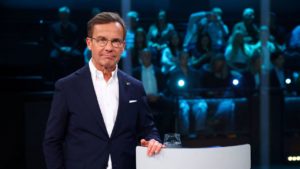
Sweden’s Prime Minister Ulf Kristersson will resign after losing the country’s parliamentary election, he said on Thursday, following the announcement of a final vote count.

Center-left opposition parties won 176 seats in Sunday’s vote for parliament while Kristersson’s ruling right-wing bloc secured 173 seats, the election authority said earlier as the counting of ballots ended.

"Now it is the speaker who will lead the next stage of the way to a new government. I am herewith requesting that I be relieved of the office of prime minister to allow that work to start immediately," Kristersson said in a letter posted on X/Twitter.

The election result sets the stage for a change of government, with Social Democratic Party leader Magdalena Andersson expected to make a comeback as prime minister after four years in opposition.

All votes for the 349-seat parliament have now been counted, although the result remains subject to formal certification in the coming days.

For the center-left, victory may only be the first step in a long process to form a government.

Texas schools to teach Israel was founded in ‘ancestral homeland of the Jews’

Evangelical Christian group Proclaiming Justice to the Nations said Wednesday that the Texas State Board of Education had accepted several of its curriculum recommendations, following testimony in which its president, Laurie Cardoza-Moore, challenged the participation of the Council on American-Islamic Relations.

The organization, known as PJTN, said its proposals addressed civics, history, social studies and Holocaust education, with an emphasis on the influence of Judeo-Christian traditions on the United States. Its September 16 statement did not identify which recommendations had been incorporated into the adopted standards.

The Republican-controlled board approved revised high school social studies standards on September 4 by an 8-4 vote. The changes, scheduled for implementation in 2030, included teaching Christianity’s influence on American history and identifying 1948 as the year Israel was established “in the ancestral homeland of the Jews,” the Houston Chronicle reported.

“For decades I have fought to keep anti-American and anti-Semitic content out of our classrooms,” Cardoza-Moore said in remarks released by PJTN. “How can we let terrorists decide our children’s curriculum?”

During her testimony, according to the transcript provided by the organization, she questioned why CAIR representatives had been allowed to address the board, citing Texas Gov. Greg Abbott’s designation of the group as a foreign terrorist organization.

Abbott issued that designation in November 2025. It was a state action, distinct from designation under the federal government’s foreign terrorist organization process.

Cardoza-Moore also cited CAIR’s inclusion as an unindicted co-conspirator in the Holy Land Foundation terrorism-financing case. CAIR was never indicted in that case and denied the allegations. The group filed a federal lawsuit challenging Abbott’s designation as unconstitutional and defamatory.

CAIR has rejected allegations that it is affiliated with Hamas or the Muslim Brotherhood. In its published response to such accusations, the organization described itself as independent of foreign movements and said it condemned terrorism, including attacks carried out by Hamas.

Cardoza-Moore argued that understanding America’s religious and intellectual foundations should be central to the revised standards, formally known as the Texas Essential Knowledge and Skills, or TEKS.

“I am here to advocate for the incorporation of Judeo-Christian history and values within our standards,” she told the board. “It was upon Judeo-Christian values that this great nation was built.”

The curriculum overhaul drew opposition from Muslim advocates. In a separate statement Wednesday, CAIR’s Austin office called for the board to reconsider the standards, arguing that their treatment of Islam would encourage prejudice against Muslim students.

PJTN projected that the Texas changes could eventually influence instruction for as many as 25 million students nationwide, citing the state’s influence on educational materials. The statement provided no calculation or supporting evidence for that estimate.

Cardoza-Moore traced her textbook advocacy to 2012, when she challenged a passage in a Pearson human geography textbook used in Tennessee that she said legitimized the 2001 Hamas suicide bombing at Jerusalem’s Sbarro restaurant. PJTN said the disputed reference was subsequently removed.

“Students cannot fully understand America if they do not know and understand the laws, history, ideas, and traditions which shaped America,” she told the Texas board.

Epstein abuse victims sue estate over child abuse image archive, seeking $6 m. in damages

Two women whose images as girls were found in pornography seized from Jeffrey Epstein filed a class action lawsuit on Wednesday seeking damages from the late sex offender’s estate for individuals featured in his collection of thousands of pictures and videos of child sexual abuse material.

The lawsuit seeks at least $6 million on behalf of more than 40 people, some of whom were in Epstein’s so-called “modeling book,” a collection of sexualized images of children seized by federal investigators in 2019 from his New York home, according to the filing in Manhattan federal district court.

Others were shown in thousands of downloaded videos and images of child sexual abuse material and other pornography taken from the late financier's properties, according to the action.

The lawsuit aims to broaden legal reckoning against Epstein beyond women who have sued his estate over sexual assaults, to those he exploited as children through pictures he and his associates took of them or obtained. In some cases, the images were then distributed to others.

The lawsuit was filed against Epstein's former attorney Darren Indyke and his former accountant Richard Kahn, the co-executors of the Epstein estate. Daniel Weiner, a lawyer representing Indyke, declined to comment. An attorney for Kahn did not immediately respond to a request for comment.

One of the plaintiffs, identified as Jane Doe, alleges Epstein stole partially nude photographs of her taken when she was 12. The other, using the pseudonym "Amy," says she is featured in child sexual abuse material seized from Epstein's properties in 2019 that is still being traded today.

Hillary Nappi, a lawyer representing the plaintiffs, said the lawsuit could potentially involve thousands of class members. She said in an interview that most people pictured in Epstein’s collection had never been identified.

The lawsuit calls for Epstein’s estate and federal authorities to work with the National Center for Missing and Exploited Children to identify individuals in the collection and inform them. It asks for the estate to pay class action members $150,000 each, as well as other penalties.

Epstein was convicted of soliciting sex from a minor in 2008 and charged with sex trafficking of minors in 2019, months before he was found dead in a New York jail cell; his death was ruled a suicide. He was never ‌prosecuted ⁠for creating, obtaining or distributing child sexual abuse material.

ICE agent charged in Minneapolis shooting taken into custody after Texas extradition standoff

A federal immigration officer wanted on assault charges for shooting and wounding a Venezuelan man in Minneapolis was arrested there on Wednesday, eight months after a confrontation that became a flashpoint over US President Donald Trump’s deportation sweeps.

US Immigration and Customs Enforcement agent Christian Castro was taken into custody by agents of the Minnesota Bureau of Criminal Apprehension in downtown Minneapolis and was booked into the Hennepin County jail on his outstanding arrest warrant, the agency said.

Castro had been released on bond from federal custody earlier this month, after an initial appearance in US District Court in McAllen, Texas, on charges of lying to investigators about the circumstances of the January 14 shooting.

Under an agreement with Minnesota law enforcement, Castro voluntarily drove to Minneapolis from Texas to turn himself in to state authorities at his attorney’s office but ended up being arrested minutes before he was due to arrive, the lawyer, Daniel Gerdts, told Reuters.

Another lawyer representing the ICE agent, Rolando Cantu, said his client always had intended to answer the charges in Minneapolis. He disputed Hennepin County prosecutors' assertions that Castro might flee to Mexico, saying, "He wants his day in court."

The federal indictment charging Castro with making false statements marked the first US Justice Department prosecution of a federal law enforcement officer accused of wrongdoing arising from the massive Minneapolis ICE deployment dubbed Operation Metro Surge.

That operation, part of Trump's wider immigration crackdown, drew weeks of protests and clashes between ICE and demonstrators, leading to the fatal shootings of two US citizens by federal agents.

Castro already faced state assault charges in Minnesota stemming from the confrontation in which he shot Julio Cesar Sosa-Celis, a Venezuelan national, in the leg through the door of the man's apartment while children were present inside the home.

The state charges also include false reporting of a crime after Castro allegedly told superiors at the US Department of Homeland Security that Sosa-Celis and others attacked him with a snow shovel and broom, which was disproved by video evidence.

Initial efforts to arrest Castro were thwarted when the ICE agent returned to his home state of Texas, leading Minnesota officials to issue a warrant for his arrest.

Castro was apprehended by Texas Rangers, but Texas Governor Greg Abbott, a Republican and supporter of Trump's mass deportation sweeps, refused to sign extradition papers sent by Minnesota Governor Tim Walz, a Democrat.

Abbott questioned whether Castro could be considered a fugitive from justice, and thus subject to extradition, because DHS had reassigned him to his home state of Texas after the Minneapolis shooting.

The ICE agent ultimately spent 90 days in a Texas county jail and was released on August 27 after a federal judge in Texas denied a request from Minnesota to immediately order his extradition. Castro was re-arrested in Texas following his federal grand jury indictment in early September.

DHS has suspended Castro from ICE, and a person familiar with the case has said a civil rights investigation into the Sosa-Celis shooting had been opened.

Castro was expected to make his first state court appearance in Minneapolis on Thursday. He will then make an initial appearance in US District Court in neighboring St. Paul, the state capital, on Friday morning to face charges in the federal indictment.

“Governor Abbott’s attempt to shield Mr. Castro from accountability has failed. We look forward to commencing our prosecution,” Hennepin County Attorney Mary Moriarty, who brought the state case, said in a statement.

Trump to meet Gulf leaders for Iran war talks next week – report

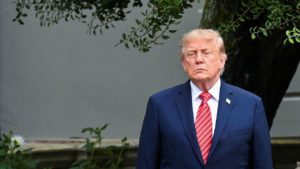
US President Donald Trump is expected to meet with Gulf leaders in New York next week to discuss the next steps in the war with Iran, Axios reported on Wednesday, citing three sources with direct knowledge.

Trump is scheduled to meet with leaders or foreign ministers from the six Gulf Cooperation Council countries – Saudi Arabia, the United Arab Emirates, Qatar, Bahrain, Kuwait, and Oman – on the sidelines of the UN General Assembly on Tuesday.

The talks are expected to focus on US proposals for a postwar strategy following the conflict with Iran, according to Axios.

Trump and his senior team are working on a "day-after" plan for the war, which is expected to be finalized after the upcoming US midterm elections, the report said.

The State Department sent initial invitations for the meeting on Wednesday, Axios added.

This is a developing story.

US Federal Reserve hikes rates, sees more tightening in search of ‘timelier’ drop in inflation

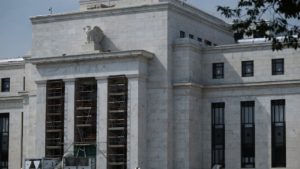
The US Federal Reserve (Fed) raised interest rates on Wednesday and flagged further increases in borrowing costs in the coming months, with new US central bank chief Kevin Warsh joining a unanimous decision that effectively acknowledges the Trump administration’s so-far inability to control inflation.

While US President Donald Trump had promised to lower prices on his watch, the combined impact of his global import tariffs, an energy shock following the start of the US-Israeli war with Iran, and capital spending from the artificial intelligence boom has kept price pressures intense enough that the Fed felt it needed to raise its benchmark overnight interest rate by a quarter of a percentage point to the 3.75%-4.00% range.

New policy projections showed 16 of 18 policymakers anticipate at least one more quarter-percentage-point hike by the end of this year, with only two seeing rates remain stable from here. Warsh apparently again did not submit a rate projection.

This is the first policy shift under the new Fed chief, who took office in late May after Trump selected him with the expectation that he would cut rates.

The US dollar rose against the euro after the Fed’s announcement, while US Treasury bond yields held largely steady, having already weakened in anticipation of the hike. After hitting a 19-year high above 5% on Monday, the benchmark 10-year Treasury yield was trading at 4.958%, compared to 4.946% just before the announcement.

The 30-year bond yield dipped to 5.312% after trading at 5.327% just before the announcement. Stocks were mostly higher, with the S&P 500 index up 0.3% and the Nasdaq Composite up 0.7%.

Market bets on a rate hike at the Fed's next meeting in late October ticked up to 56.5% from 54% before the hike, according to CME Group's FedWatch Tool.

"The Federal Reserve's decision today to raise interest rates by a quarter percentage point reflects its continued focus on addressing persistent inflation. While inflation has moderated from peak levels, it has remained elevated enough to prompt additional action from the Federal Open Market Committee," said Michele Raneri, head of US research and consulting at TransUnion in Chicago.

The Fed's new policy statement and economic projections, by contrast, show the central bank opening the door to tighter monetary policy through next year, with the policy rate rising to the 4.00%-4.25% range by the end of this year and ending 2027 at the same level.

"Today's policy action will support a timelier return to the Committee's 2% goal," the central bank said in its policy statement after the end of a two-day meeting.

While the statement withheld forward guidance on upcoming policy decisions, as is Warsh's preference, the decision is likely to ease doubts that the Fed chief would hold off on tighter policy out of deference to Trump, a lingering question during his first months in office.

The statement dropped a previous reference attributing current elevated inflation to "supply shocks," particularly in the energy sector, a nod to concerns among policymakers, including Warsh, that price pressures were too broad to be comfortable with.

Warsh is scheduled to hold a press conference beginning at 2:30 p.m. local time to elaborate on the decision.

The rate increase was announced less than two months ahead of midterm elections that will determine whether Trump's Republicans maintain control of Congress for the final two years of his presidency. The Republicans are facing an uphill battle with voters angry about gasoline prices that are about a third higher than a year ago and interest rates on home mortgages that have been rising steadily this year. The average rate on a 30-year fixed-rate mortgage is approaching 7%.

Policymakers' new quarterly economic projections raised inflation estimates, as measured by the Personal Consumption Expenditures Price Index, to 3.7% versus the 3.6% projected at the Fed's June meeting. Inflation is not projected to return to the 2% target until 2029, a year later than previously expected.

Economic growth was raised slightly from 2.2% to 2.3%, while the unemployment rate is expected to end the year at 4.1%, versus the 4.3% projected in June.

Warsh's characterization at his press conference of the logic behind the rate increase and the likelihood of further action will be important in shaping the reaction in financial markets that have been raising yields on long-term US Treasury bonds. The rate hike on Wednesday was widely expected, but investors will look to the Fed chief for more information on what might prompt further increases in borrowing costs.

Warsh has pledged to lower inflation back to 2% "clearly and at sufficient speed" by raising rates as needed.

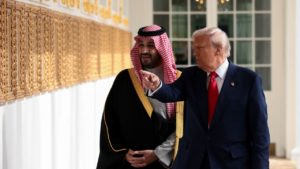
US senators seek more information on Trump’s Saudi nuclear proposal, letter says

Democratic and Republican US senators asked US President Donald Trump’s administration on Wednesday to declassify and release all information about a proposed agreement with Saudi Arabia on civil nuclear energy, including two classified “side letters” reached with Riyadh.

In a letter to US Secretary of State Marco Rubio and US Energy Secretary Christopher Wright, which Reuters saw, the senators noted that the government has reached dozens of these so-called 123 nuclear agreements with other countries without withholding such information.

"Access to the full text is required for the Senate and the public to have a clear understanding of the commitments being made on the nation's behalf and those being made by Saudi Arabia to the United States," the letter said.

The State and Energy departments did not immediately respond to requests for comment.

Democrats Jeff Merkley of Oregon and Ed Markey of Massachusetts led the letter, and 13 other Democratic senators, one independent who caucuses with Democrats, and two Republicans, Rand Paul of Kentucky and John Kennedy of Louisiana, signed it.

Trump sent the proposed agreement with Saudi Arabia to Congress in August, opening a 90-day window for lawmakers to review it and an opportunity to pass a resolution of disapproval.

Lawmakers have since pushed to declassify the side letters, reached alongside the proposed deal, and release the related documents.

The nuclear agreement has also raised questions about whether Saudi Arabia would get the deal without normalizing relations with Israel. Trump has said it will only go into effect if Riyadh does, but congressional aides have said nothing in the pact addresses that issue.

The letter sent Wednesday did not mention the Israel issue.

The 30-year nuclear deal calls for the construction of AP1000 reactors, a project worth tens of billions of dollars that would benefit Westinghouse, jointly owned by Canada-based Cameco and Brookfield Asset Management.

Some Democratic lawmakers and nonproliferation advocates have criticized the nuclear pact for not barring ​Saudi Arabia from enriching uranium or reprocessing nuclear waste, two potential pathways for making a nuclear weapon. The United Arab Emirates agreed to such measures, known as the gold standard, in its 2009 civil nuclear deal with Washington.

The Trump administration says the deal has nonproliferation measures required by ⁠law.

Hashim Thaci convicted of murder, torture, and detention in Kosovo war crimes trial

Former Kosovo president Hashim Thaci was found guilty of war crimes, including murder, torture, and illegal detention, by the Kosovo war crimes tribunal in The Hague on Wednesday.

Thaci, 58, was sentenced to 25 years in prison for crimes committed as top commander of the ethnic Albanian Kosovo Liberation Army (KLA) during the territory's violent break from Serbia in the 1990s.

The tribunal said he was guilty of the murder of 96 political opponents and perceived collaborators with Serbian security forces by Kosovo Liberation Army forces during the conflict.

He was also convicted for the arbitrary illegal detention of 385 people, torture of 303 people and cruel treatment of around 50.

The court said Thaci had "actively participated in and encouraged crimes."

"The scale and nature of the crimes committed were very serious," presiding judge Charles Smith said.

"The so-called intelligence on which many of these victims were arrested, detained and killed was little more than unverified rumors. Based on that information, victims were called and described as spies and collaborators and violently treated."

Thaci, who stood in silence as the judge read out the conviction and the sentence, had denied all charges.

He can appeal the verdict.

The ruling was closely watched in Kosovo and Serbia, where the legacy of the 1998-99 conflict and Kosovo’s 2008 declaration of independence remain a source of tension between ethnic Kosovo Albanians and Serbs.

Thaci remains a revered figure for many Kosovo Albanians, while the tribunal itself is deeply unpopular in Kosovo.

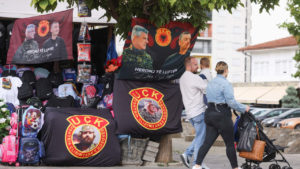
In Pristina, Kosovo's capital, thousands of people watching the verdict on a big screen booed the verdict and chanted "Thaci, Thaci" as some burst into tears.

One billboard showed the faces of the defendants and read: "In the name of the people, you are declared innocent"

"This verdict is shameful. From today, there will be no peace in Kosovo," said Raif Pllana, a former KLA fighter who came out in support of Thaci in central Pristina.

Police said preparations had been made with foreign peacekeeping forces in case protests turned violent. The United States advised citizens to avoid crowds.

Albania's Prime Minister criticized the verdict with a picture posted on social media of a circle of barbed wire across a map of Europe and one word: "Unbelievable"

Prosecutors had sought a 45-year sentence against Thaci and three other former top commanders of the KLA.

But the three-judge panel dismissed six charges of crimes against humanity. They said prosecutors had failed to show these happened as part of widespread or systematic attacks against the civilian population as a whole.

However, they ruled that Thaci and his co-accused were part of a joint criminal enterprise, with a common plan to take control of Kosovo politics following its independence by targeting political opponents.

Lawyers for Thaci had argued that the accusations were unfounded and amounted to an attempt to rewrite history. They said there was no evidence to directly link Thaci to any of the alleged crimes or to conclude that he controlled other KLA commanders.

The Hague-based Kosovo Specialist Chambers was established in 2015 under international pressure to try former KLA fighters for alleged wartime and post-war crimes.

Get help now

Send a message with a description of your problem and possible ways of assistance and we will contact you as soon as we consider your problem.