• English
  • Русский

US Gen. Dan Caine looking for ‘off-ramp’ to avoid further escalation in Iran war – report

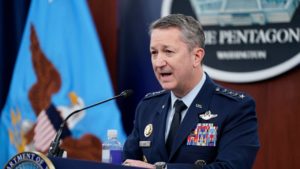
US Chairman of the Joint Chiefs of Staff, Gen. Dan Caine, has been privately looking for an off-ramp in the Iran war, according to a Saturday CNN report citing three sources familiar with the matter. 

According to the report, over the past few weeks, Caine has been making it clear to other Trump administration advisors that available military options may not be enough to achieve US President Donald Trump’s stated war objectives.

“Caine is looking for an off-ramp,” one of the sources told CNN.

Caine is reportedly not the only official who shares concerns regarding the potential escalation of military operations. He raised the idea of finding an off-ramp from the conflict with other officials, such as US Secretary of State Marco Rubio, US Vice President JD Vance, and CIA Director John Ratcliffe, according to two of CNN’s sources.

Like-minded administration officials have allegedly been engaged in discussions with Caine regarding interagency coordination regarding the matter, aiming to make clear to Trump in future meetings the limitations of available military options.

One source told CNN that they believe Caine’s attempts to get on the same page with other officials are his “way of protecting the military.”

The US has refrained from deploying ground troops in Iran, with Trump signaling that airstrikes alone would be enough to force Tehran into an agreement on Washington’s terms. 

For Caine and other officials, according to CNN sources, dwindling US stockpiles of key munitions are a key concern because the shortage could impact the military’s ability to combat Iranian retaliation if renewed airstrikes led to escalation in the conflict.

Trump has repeatedly denied reports regarding the alleged shortage of US munitions.

According to CNN, multiple sources familiar with recent discussions stated that Caine and other officials privately view Trump's claims as unlikely and are seeking other options that may still achieve Trump’s goals.

During a public hearing on the war last month, Caine told lawmakers that “airpower has its limits,” bolstering suspicion that top security officials believe that the conflict has reached a crossroads.

In late July, when Trump raised the possibility of launching renewed, increasingly aggressive strikes, Caine and other officials were reportedly wary of the potential fallout from such an operation.

One source told CNN that elements within US Central Command (CENTCOM) were the only ones in favor of the proposed strikes.

However, while Caine has privately shared his worries with other officials, he has reportedly remained careful in how he conveys his misgivings to Trump, the sources claimed.

Two sources told CNN that Caine was “doing his job” by delicately raising concerns and offering alternatives during a recent meeting with Trump and other White House officials.

In that discussion, Caine reportedly balanced his critiques of Trump’s strategy with making it clear that if further military operations were to proceed, stating that “we could absolutely wreck them,” one of the sources said.

Killing of Malta journalist related to gov’t corruption investigation, son says in court – report

The murder of Maltese journalist Daphne Caruana Galizia may be related to her investigation of the country’s government for suspected corruption, her son, Matthew Caruana Galizia, told a jury as he took the stand in court on Monday.

According to a report by The Guardian on Tuesday, Matthew, a software engineer, told the jury that his mother was murdered while her investigation into a company partially owned by the defendant, businessman Yorgen Fenech, was still ongoing.

Fenech, who is heir to one of the largest fortunes in Malta, is accused of ordering Daphne’s assassination in a 2017 car bombing, according to the Guardian.

"I was working on some software, and I heard an explosion," Matthew said, describing the day of the murder. "I opened the door, I felt the blood drain away… I started walking faster and faster towards the tower of smoke."

"First I saw fire on the road," he continued. "I saw pieces of metal and flesh. My eyes followed the smoke, and I saw a huge ball of fire. I ran towards it. The horn was going off; it wouldn’t stop. I saw a shadow in the car, and I remember saying, 'That’s my mom.'"

The company in question, “Electogas,” was being investigated by Daphne after her son discovered thousands of emails on its servers, including apparent evidence of Fenech intending to bribe the Maltese government to secure a project contract, the report said, with Fenech rejecting the allegations.

The Guardian noted that Matthew had previously worked on the Panama Papers leak before discovering the “Electogas” files, which he shared with his mother.

"I had to share what I was seeing with my mother," Matthew said. "I believed it was too important."

When asked by the prosecution, Matthew described the government's tendering process for the project as "corrupt," with the report noting that the judge interjected to insist that the description was only Matthew's opinion and not a statement of fact.

Matthew had contacted the Guardian prior to his mother’s murder to begin collaboration on the investigation, but instead began a project to bring to justice those responsible for her killing.

“We never got to do it," said Matthew, referring to the initial investigation. "In fact, when I see these emails, my heart beats fast because I’m taken back to that time when I was with my mother planning on what to do.”

The report emphasized Matthew’s commitment to his “mission,” having left his software engineering career to return to Malta and pursue justice for his mother.

"We had to make it our mission, which we did," he told the court. "It came at enormous personal cost."

Fenech denies the murder charges, the Guardian reported, with the trial still ongoing.

Spain to establish border controls on travelers from Italy amid migration dispute

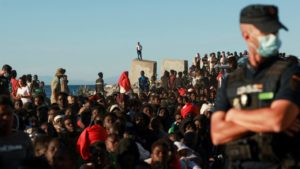
Spain's government said on Friday it would establish border controls for flights and ships from Italy from midnight on Saturday until September 7 in a dispute with the neighboring country over irregular migration.

Passport, nationality and visa checks would be conducted for Italian passengers and visitors from other countries arriving from Italy “amid the persistent irregular migratory pressure” from the country.

Spain said the measures would apply while Italy applied its own measures, which it said were motivated by the mass migration rush by 72,000 people on Spain’s African enclave of Ceuta on July 30.

Earlier on Friday, Italy said it would not bow to "ultimatums or impositions" from Spain and would maintain border controls on arrivals from the country until at least August 15.

Spain threatened earlier on Friday to impose reciprocal measures on travelers from Italy unless Rome lifted by Sunday the border controls it imposed last week, following a mass influx of migrants from Morocco into the Spanish enclave of Ceuta.

In a statement, the Italian government said it would only reconsider its decision once it was certain there were no security or terrorism risks, no new migration wave and no irregular migrants heading towards European territory.

US targets UAE-based crypto exchange over alleged Iran sanctions evasion scheme

The United States on Friday sanctioned an unlicensed multi-state cryptocurrency exchange, alleging it processed millions of dollars of crypto for Iran’s elite Islamic Revolutionary Guard Corps and other groups linked to the Iranian state.

The designation follows a Reuters investigation published on July 31 that identified the Dubai-based exchange, Shelbit, as the hub of a $4 billion Iranian sanctions evasion scheme. The investigation found that Shelbit moved crypto on behalf of Iran’s central bank, one of the world’s largest illegal online gambling networks, and to addresses linked by the Israeli government to the IRGC.

The US Treasury also sanctioned the expatriate Iranian who founded Shelbit and a network of other companies, Siavash Kayvanpour, for providing material support to the IRGC and Nobitex, Iran’s biggest cryptocurrency exchange. The US sanctioned Nobitex on June 2 for enabling the Iranian government to circumvent Western sanctions, also after a Reuters investigation.

“Treasury will hunt down and dismantle the illicit financial networks that keep the regime afloat,” Secretary of the Treasury Scott Bessent said in a statement.

Shelbit’s website had been down for months, with no way for customers to carry out transactions, but the exchange continued to process money, even during the US and Israeli war against Iran. The site reactivated the day after the Reuters investigation was published.

“Shelbit LLC categorically rejects any suggestion that the company knowingly participated in money laundering, terrorist financing, illegal gambling activity, sanctions evasion, or activity on behalf of any sanctioned, military, or governmental organization,” Shelbit said in a statement on its reactivated website on August 1. Shelbit also said it had ceased operations in January 2026.

Shelbit and Kayvanpour did not immediately respond to a request for comment.

Tens of millions of dollars of the crypto that passed through Shelbit came from a suspected Iranian bitcoin mining operation, which mints new digital coins. Many millions of dollars more was linked to the illegal gambling network operated by two high-profile Iranian social media influencers, Reuters reported.

“The Iranian regime’s willingness to allow this gambling network to operate highlights its hypocrisy and corruption,” Treasury said in the statement published on its website.

The OFAC designation comes soon after Dubai’s Virtual Assets Regulatory Authority, or VARA, issued a notice saying Shelbit was in violation of money-laundering and terrorism financing laws.

“The exposure identified by VARA extends beyond consumer protection to more egregious cross-border transactions with the propension to impact the integrity of the UAE financial system,” VARA said in a notice on its website on July 24, shortly after Reuters approached the authority for comment.

VARA did not respond to a request for comment.

US weapons shortages could leave America vulnerable to China, historian warns

Dr. Kobi Barda, a historian specializing in American politics, warned on Friday that strains on US military stockpiles could leave Washington vulnerable if another major power, particularly China, were to enter a conflict.

“If I were an American today, I would be very worried if tomorrow morning China decided to enter the conflict,” Barda told 103FM. He added, “There may currently be weakness in the United States.”

Barda pointed to reported shortages in US military stockpiles and the amount of time that could be required to replenish key weapons systems.

"It is possible, it has been done in previous wars, when a large part of production was mobilized for the war effort. At least four years, according to the American media, is the time required to replenish the stockpiles of Tomahawk missiles and all the defensive missiles."

"In principle, the feeling is that there is indeed some kind of shortage in the stockpiles, especially in light of the war, which is extremely intense in the Ukrainian arena, and this paints a fairly bleak picture of what is supposed to happen as the campaign continues at this time."

He also cited Germany as an example of how economic dependence on foreign countries could complicate efforts to expand defense production, particularly as European manufacturers face increasing competition from China.

“An interesting story in Germany reflects the challenge posed by China, where Volkswagen is dealing with Chinese vehicles flooding its market. The company wanted to convert some of its production lines to manufacture heavy trucks intended to carry missiles, but the move was blocked because Qatar holds enough shares in the company, and it is blocking the merger with Israeli technology companies.”

"The question arises as to what it means to be dependent on an Arab country like Qatar, which decides what the factories will produce and what they will not, while the market is flooded with Chinese products."

Barda also criticized Washington's approach to Iran, arguing that the US appears determined to avoid further complications at least until after the midterm elections.

“It appears that there is a desire at any cost to try to get through the coming period, at least until after the midterm elections. In this context, there is no other way to put it except ’embarrassing,’ Iran is demanding to negotiate the division of highway robbery in the Strait of Hormuz with Oman alone, without a third party, and the Americans are willing to swallow it.”

Spain hopes to transfer migrant minors to mainland within weeks

Spain’s leftist government expects to transfer some migrant minors from overcrowded reception centers in the North African enclave of Ceuta to the mainland within weeks, alleviating the migration crisis in the tiny territory after last week’s deadly border rush, Youth Minister Sira Rego said on Friday.

On July 30, as many as 72,000 migrants illegally crossed into Ceuta from Morocco by sea and land, with dozens dying in the rush, according to Spanish authorities, after weeks of smaller arrivals. Most have since returned, but hundreds of unaccompanied minors remained in Ceuta.

Rego said 1,342 minors had been registered so far and more staff would be drafted in to help the effort. She acknowledged the "painful images" of children sleeping rough on Ceuta's streets, and said two schools had been opened and more spaces would be evaluated as potential reception centers.

"I think it might only be a matter of a few weeks before we start seeing (minors) transferred to and welcomed on the mainland," Rego told reporters during a trip to Ceuta.

"We are prioritizing girls, and boys and girls who are under 13," she said, describing the situation in Ceuta as still challenging but "gradually returning to normal."

The far-right opposition has raised objections to transfers to the mainland, where regional authorities are in charge of reception.

Morocco has said it is ready to cooperate with Spain and other European partners on the return of unaccompanied minors who crossed into Ceuta last week.

Spain will evaluate Morocco's offer to repatriate the children on a case-by-case basis, Rego said. Spanish press agency EFE cited a Moroccan diplomatic source as saying Spanish administrative and judicial hurdles complicated the return of children.

"Spain has no hurdles," Rego said. "What Spain will do is safeguard children's rights," she added, explaining that specialized teams would assess each child to determine what was in their best interests and that family reunification would be facilitated whenever possible.

Rego said the profile of child migrants had changed in the past five years since the last major border rush on Ceuta in 2021, when 8,000 people crossed the border.

"More unaccompanied girls have arrived, as well as more very young children," she said.

Ceuta's local government head Juan Jesus Vivas said the modest local facilities could host up to 90 children, and were now saturated by roughly 1,100 unaccompanied minors who arrived before the border rush.

NGOs and resident groups say the total number of minors could be several thousand.

Spain's government threatened to impose countermeasures on travelers from Italy if it did not the lift by this Sunday the border controls it imposed on Spain after last week's influx of migrants into the North African enclave of Ceuta.

Italy’s measures were “unjust, contrary to European Union interests and discriminatory to the population of Spain,” the government argued in its statement on Friday, underscoring that no migrants who reached Ceuta in an irregular manner last week were able to enter freely into Schengen under the enclave’s migration rules.

Ebola outbreak in Congo tops 4,000 cases in world’s second-largest epidemic

Democratic Republic of Congo’s confirmed Ebola cases have risen above 4,000 for the first time in the current outbreak, government data showed.

The epidemic, the world’s second-largest, has been described as the fastest-spreading on record.

Experts believe infections started circulating months before the outbreak was declared on May 15 and that the true number of cases could be much higher than the official tally.

The Central African country's public health institute said in its latest report that the total number of infections had reached 4,053, including 1,850 deaths.

Cases have been recorded in five provinces in the country: Ituri, North Kivu, South Kivu, Haut-Uele and Tshopo.

A report published in the journal Science last month concluded that Congo’s outbreak had started in January, or even earlier, in Ituri. Researchers identified more than 500 suspected cases between mid-January and May 15.

Delayed detection, overwhelmed surveillance, military conflict, and a lack of vaccines and treatments for the species of the virus involved have allowed the disease to outrun containment efforts this time.

So far only West Africa's 2014-16 outbreak has been bigger, with over 28,000 cases recorded across Guinea, Liberia and Sierra Leone.

Trump opens investigation over leak of US’ lack of munitions at critical phase of conflict – report

US President Donald Trump has privately expressed frustration that information about shrinking US munitions stockpiles has become public, arguing that the disclosures make the United States appear weak as he threatens further military action to pressure Iran into reaching a deal, CNN reported, citing senior US officials.

Trump raised the issue during a cabinet meeting at Camp David last week, according to sources cited by the report, with the president focused on media coverage describing low US munitions stocks.

CNN also reported that Trump had known for months about possible shortages of key US missiles, with his anger instead centered on the timing of the disclosures and the increasingly public debate over the stockpiles while he sought to project US strength.

“The US has massive amounts of ‘munitions,’ especially of certain types,” Trump wrote on Truth Social shortly after midnight on Thursday. “Additionally, large amounts are being manufactured and shipped to the US as needed. Defense companies are building the largest number of plants and factories in our country’s history.”

Trump nevertheless appeared to confirm that supplies of some weapons were limited. He threatened “long-term jail sentences” for anyone found responsible for releasing the information.

Speaking later in the Oval Office, Trump said certain munitions were in “tighter” supply, while maintaining that the United States had a “virtual unlimited supply” of less advanced weapons.

White House officials said Trump had not directed his anger at Defense Secretary Pete Hegseth. In a separate Truth Social post on Thursday, the president said he was “extremely happy with the job that Pete Hegseth is doing.”

“He has never blamed Pete. This is all about the leakers,” one official told CNN.

Trump also reportedly instructed the Justice Department to identify individuals inside the administration who disclosed the information, as he described those responsible as “treasonous.”

On Tuesday, several people familiar with the data regarding US missile stockpiles revealed that America had used up much of its stockpile of highly accurate long-range missiles during its five-month war with Iran.

The missiles are principally the Army's surface-to-surface weapons, known as Army Tactical Missile Systems (ATACMS) and Precision Strike Missiles (PrSM). The US has used “virtually all” of these weapons, according to two of the sources.

The degree to which the military is running out of ATACMS and Precision Strike Missiles has not been previously reported.

The long-range munitions, which cost more than $1 million each, are an important part of the military's arsenal, allowing accurate strikes from a safe distance. US-supplied ATACMS have played a key role in the war in Ukraine, allowing Ukrainian forces to attack targets inside Russia. The PrSM is a newer, more advanced generation that will replace the ATACMS, which have a shorter range.

The dramatic rundown in precision, long-range missiles means US President Donald Trump may have to rely more on riskier, piloted bombing missions if he relaunches large-scale attacks on Iran.

The sources declined to say how many of each munition the US had left.

Reuters contributed to this report.

Houthi attack on Saudi Arabia wounds 11, including a child, as kingdom warns of escalation

Eleven people were wounded in Houthi strikes on Saudi Arabia, the Saudi Press Agency reported early Friday morning, citing the Saudi-led coalition fighting the Yemeni terrorist group.

One Yemeni, two Egyptians, and one Pakistani were wounded alongside seven Saudis, the coalition said.

Among the wounded Saudis, one woman and a four-year-old child were counted.

On Tuesday, the Houthis claimed to have struck Najran Airport in response to Saudi drone incursions over Yemen. Saudi Arabia did not comment on the claims at the time.

On Thursday, the Houthis claimed to have struck Saudi troops in the border areas of Al Ruwayk, Al Abr and Al Thaniyah using ballistic missiles and drones. The group said hundreds of Saudi-aligned fighters were killed or wounded, and that military camps, weapons depots and vehicles were destroyed.

The Yemeni government sources, however, noted that 30 of its troops had been killed in attacks on military camps in Yemen's Marib and Hadramout provinces, adding that the death toll could rise.

In recent weeks, the Saudi-Houthi conflict has escalated rapidly, and on Friday, morning, a Saudi official said the country is anticipating attacks from Iran-backed militias in Iraq in coordination with the Houthis. The attack, they said, could target civilian and economic sites including energy infrastructure, ports and airports.

This reveal came about as a result of intelligence from Saudi Arabia, the US, and other countries, the official said. Moreover, Saudi Arabia had observed drone and missile movement, the official noted.

The official added that an attack could be meant to derail diplomatic negotiations, and that the Saudi Arabia remains prepared in the event of a strike.

On July 29, Saudi Arabia said it had struck Iran-backed groups in Iraq following alleged attacks on Saudi oil facilities. The militias vowed to respond in turn.

Saudi Arabia, Turkey, and Pakistan are also expected to sign a joint defense agreement on Friday.

Mexico arrests ex-governor over alleged destruction of evidence in 2014 student case

The former governor of Mexico’s southern Guerrero state has been arrested for allegedly ordering the destruction of evidence that could have helped shed light on the whereabouts of 43 students who disappeared in 2014, authorities said on Thursday.

Angel Aguirre, who has previously denied wrongdoing, was arrested on charges of obstruction of justice and forced disappearance, Attorney General Ernestina Godoy told reporters.

The case, considered one of the country's worst human-rights atrocities, has been marred by missteps and interference.

International probes have determined that the students from Ayotzinapa Rural Teachers College were killed by organized crime members in cahoots with police, while on their way to a protest in Mexico City.

The ​remains of three victims have since been positively ​identified, but the others have yet to be found.

Godoy said new testimony from two people in January and May, one a protected witness, helped establish that Aguirre may have ordered the destruction of evidence related to the night of the students' disappearance in a meeting with senior officials in his administration.

She did not specify when the meeting took place or the details of the evidence.

"An analysis, based on new evidence and in accordance with due process, confirmed the possible involvement of Angel 'N,' former governor of Guerrero, in the destruction of evidence that could have revealed the students' whereabouts," Godoy said. The letter "N" is used as a placeholder for a suspect's last name.

Godoy said that state authorities had initially claimed that security camera footage of the students traveling by bus near government offices in Guerrero did not exist.

However, a witness who had previously kept quiet due to threats came forward this year, she said.

Angela Buitrago, a member of the Interdisciplinary Group of Independent Experts, an independent international rights team that has investigated the case, said her team had opened the line of investigation into Aguirre in 2015.

She said the latest information reinforced the team's conclusion that the state was responsible, and had the footage Aguirre reportedly ordered to be destroyed come to light sooner, it could have helped find the students.

"It is a state crime, regardless of whether it was committed by state or federal authorities," she said.

A spokesperson for Enrique Pena Nieto, who was president from 2012 to 2018, did not immediately respond to a request for comment.

Get help now

Send a message with a description of your problem and possible ways of assistance and we will contact you as soon as we consider your problem.