• English
  • Русский

Trump says he is happy with Hegseth after ‘treasonous’ reports of fight over munitions shortages

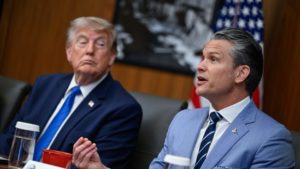
US President Donald Trump said that he is “extremely happy” with the work of US Defense Secretary Pete Hegseth in a post to Truth Social on Thursday, disputing a Washington Post report that the two had clashed at Camp David. 

“In actuality, I really believe their fake ‘reporting’ is treasonous!” Trump wrote, calling Hegseth’s work extraordinary, and pointing to the US operation in Venezuela which took down Nicolas Maduro and the US attacks on Iranian nuclear and military infrastructure. 

The report, which cited a source as saying that Trump did not know about the extreme munitions shortage that is threatening to limit US military options in Iran, was also rejected by White House Press Secretary Karoline Leavitt in a post on X/Twitter shortly after it was published on Wednesday. 

"This literally never happened," she wrote.

He also wrote that long-term jail sentences would be sought for those who had made the statements about the US's diminishing stockpile.

White House officials confirmed to CNN that Trump had been aware of any potential problems for months and was not blindsided, but rather was upset that the information had been released to the public while the US is in negotiations with Iran. 

“He has never blamed Pete. This is all about the leakers,” CNN cited one official as saying.

Plane near explosive drone found at German airport was carrying ammunition, media reports say

 A Ukrainian cargo aircraft parked near an explosive-laden drone found at Germany’s Leipzig/Halle airport on Tuesday night was carrying a payload of military ammunition, a group of news outlets including Sueddeutsche Zeitung reported on Thursday.

Forensic experts found that the explosives attached to the drone were of a high military grade, reported the outlets, which also included broadcasters NDR and WDR, citing a confidential police report.

Newspaper Bild, meanwhile, cited unnamed investigators as saying that a technical defect prevented the drone-mounted device from exploding.

Those findings potentially raise the stakes in a widening counterterrorism investigation of the incident at an airport serving as a major cargo and NATO military logistics hub that the German government has designated as critical infrastructure.

German Interior Minister Alexander Dobrindt said late on Wednesday that the drone incident constituted a hybrid attack and signaled an elevated level of danger.

Dobrindt is due to host his counterparts from the Baltic states, Poland, Sweden, Norway and Denmark, among other nations, for a special summit on anti-drone defense in the northern German town of Flensburg at the end of August.

Police in the state of Saxony, where Leipzig/Halle is located, did not immediately respond to a request for comment on the media reports of the aircraft's payload. The state's public prosecutors' office could not immediately be reached for comment.

German authorities, meanwhile, said on Thursday they were continuing the search for debris from an unidentified object that damaged another freight jet mid-air near the airport on the same night.

The drone was found close to several Ukrainian Antonov An-124 cargo airplanes, among the world’s biggest freighters, according to earlier media reports. A Reuters journalist saw police collecting evidence in the vicinity of one of the planes early on Wednesday.

Leipzig/Halle is the main base for NATO’s Strategic Airlift International Solution, known as SALIS, which is helping to deliver equipment to strengthen the defense pact’s eastern flank using a small fleet of Antonov cargo planes.

The cargo jet that struck the unidentified object, meanwhile, had been performing a go-around due to the closure of one of the airport's runways. It was lightly damaged in the collision and eventually landed in Hanover in northern Germany. Flights were suspended and several aircraft, including some operated by German logistics group DHL DHLn.DE, ​were diverted late on Tuesday. A spokesperson for Leipzig/Halle airport, which is also used by companies like Lufthansa Cargo LHAG.DE and Amazon.com AMZN.O, said on Thursday that operations were back to normal and no additional security measures had been implemented.

While German authorities have said the perpetrators of the incidents at the airport had not yet been identified, Roderich Kiesewetter, a lawmaker and a member of the parliamentary intelligence committee, blamed Russia.

The Russian Embassy in Berlin did not respond to an emailed request for comment from Reuters.

Shipping traffic slows in Hormuz, Bab el-Mandeb after Houthis say they attacked Saudi tanker

Shipping traffic through the Strait of Hormuz and the Bab-el-Mandeb Strait, the key maritime chokepoints in the Gulf, reduced significantly on Wednesday from the previous day, shipping data showed.

Just two vessels transited the Strait of Hormuz, including a Panama-flagged coal-laden carrier entering the waterway and another commodity Marshall Islands-flagged vessel exiting, shipping data from Kpler showed, down from eight vessels a day earlier.

Roughly 130 to 140 ships would typically transit the waterway before the US-Israeli war with Iran began on February 28, and Iran responded by closing the strait.

In the Bab el-Mandeb, only one commodity vessel, a Bahamas-flagged dry bulk carrier, crossed the strait on Wednesday, Kpler data showed, down from 20 the previous day.

Yemen's Iran-aligned Houthis said on Wednesday they had launched a missile attack on a Saudi oil tanker off the coast of the kingdom's Red Sea port city of Yanbu and another missile attack on a Saudi oil tanker in the Gulf of Aden.

There was no confirmation from Saudi Arabia on either incident.

The Houthis have imposed a naval blockade on Saudi Arabia in the Red Sea since last month in response to what they described as a Saudi siege on Yemen, an allegation Riyadh has denied.

Abdul El-Sayed’s narrow Michigan win sets up a reckoning among Jewish Democrats

When Spencer Lucker saw the notification that Michigan’s Democratic Senate primary had been called for Abdul El-Sayed, a progressive who spent much of his campaign attacking AIPAC and Israel, it felt like a gut punch.

“I have a really hard time grasping that this is the Democratic Party that I’ve always supported and been a part of,” said Lucker, a 38-year-old Huntington Woods, Michigan, resident who backed US Rep. Haley Stevens in the primary.

As Lucker absorbed the results Wednesday following an election night that saw Sayed eke out a win against Stevens by 48.5% to 47.5%, he said the narrow margin offered a small measure of assurance even as it did little to ease his concerns about the nominee.

“There is some relief and hope in however many people voted for her,” Lucker said. “But the margin doesn’t matter in the end.”

Sayed’s unexpectedly narrow margin – polls had shown him with a commanding lead in the days before the primary – has allowed some of his critics to tout a silver lining, with Jewish leaders saying the close result proves that many Michigan voters do not embrace his anti-Israel politics.

“The lesson from Tuesday’s results is twofold: There is clearly strong anti-establishment energy this cycle, but no one should count pro-Israel Democrats out,” said Brian Romick, the president of the Democratic Majority for Israel PAC. “While Sayed’s razor-thin victory in Michigan is disappointing, it was hardly the sweeping triumph he predicted or a mandate for his views.”

Halie Soifer, the CEO of the Jewish Democratic Council of America, which backed Stevens, said in a statement, “While we are disappointed in the final result of the Michigan Senate race, the razor-thin margin isn’t the resounding win for the far-left that was predicted.”

Now, as Sayed is set to face off against Republican Mike Rogers, a former congressman, in November, the debate has turned to whether his narrow margin of victory on Tuesday portends a Democratic loss in a crucial battleground state.

While recent polling conducted prior to Tuesday’s primary showed Rogers with a slight lead over Sayed, Josh Pasek, a professor of communication and media and political science at the University of Michigan, cautioned against reading the primary margin as a measure of Sayed’s general election prospects.

“I mean, disappointment matters. It hits enthusiasm for people who support one candidate versus another,” said Pasek, who is Jewish and has previously been involved in Democratic politics. “But the real question is how does the party, how do the candidates, and how do the supporters, respond to whatever happens next?”

Since his victory, Sayed has drawn endorsements from Stevens as well as Senate Minority Leader Chuck Schumer, who had backed her in the primary. Former Vice President Kamala Harris also sent a plea to donors on Wednesday asking them to help fund Sayed’s general election campaign.

Throughout the race, Sayed drew criticism from many Jewish Democrats over his attacks on AIPAC spending, his relationship with the anti-Israel streamer Hasan Piker and his remarks following the attack on Temple Israel in the Detroit suburb of West Bloomfield in March. While Sayed condemned the attack, his statement also discussed Israel’s war in Lebanon, where the attacker’s brother was killed.

Now, the new Democratic nominee is signaling that he is looking to build bridges with Jewish Democrats in the state. In his victory speech, Sayed made a direct appeal to Jewish voters, saying that his “commitment to Jewish safety is the same commitment that I have to the safety of my own daughters.”

For Jessica “Decky” Alexander, the Michigan Jewish Democratic Caucus chair, the strong showing for Stevens underscored that Sayed would need to build a “much more diverse coalition” ahead of November, including with Jewish constituents.

“I was more worried that we wouldn’t be at the table, so I think we’re at the table,” Alexander said. “I know that feels strange, but I feel in some ways we’re part of this story and part of this narrative. So I actually feel kind of relieved.”

Michigan’s Jewish Democrats now face a question that has loomed throughout the bitter primary: whether those who were deeply alienated by Sayed’s rhetoric can ultimately support him in November.

Lucker said he knows he won’t be able to bring himself to cast a vote for Sayed. But he said he was unsure if he would be prepared to vote for Rogers instead given his stances on social issues.

“I am a firm believer that we should not vote against our own interests, and I feel like a vote for him is a vote against the interests of me as a Jewish community leader as well as a Jewish father,” Lucker said of the Democratic nominee. “At the same time, I don’t know if I can vote for Mike Rogers either, again, as a father of a young girl, as a husband, as the son of gay moms.”

Elizabeth Dizik, a 42-year-old Jewish voter from Lathrup Village, a suburb of Detroit, is eyeing a different path.

Dizik said Sayed disqualified himself from her vote with his response to the attack on Temple Israel.

“As a Jewish Democrat with small children, I feel like our Democratic candidate does not value the safety of my children, which means that he is not a candidate that is representative of all of Michigan,” Dizik said. “I think his rhetoric is really dangerous, and I’m incredibly disappointed and sad that that rhetoric is being normalized amongst the party.”

At this point, Dizik said she was “more likely to cast a vote for Rogers than I am to abstain from voting.”

But while Jewish Democrats mull their choices in November, Pasek said he did not believe most Jewish Democrats who were alienated by Sayed would ultimately vote Republican, though some might instead sit out the general election.

“There are people who definitely decide not to vote. That’s much more common than crossing the aisle in practice,” he said, later adding, “Voters who have voted for the same party for a long time have a really hard time leaving that party.”

But Pasek said the Michigan Senate race was unusual in ways that could break the mold. “This got more heated than a lot of primaries on some issues that are going to be a little harder to reconcile, particularly when we’re talking about the Jewish and Arab communities,” he said, adding that Sayed’s next moves on the campaign trail are crucial.

“If Sayed wants to not alienate a bunch of people who are going to end up not voting, I think he’s got to do some serious outreach and to figure out how to build bridges,” Pasek said. “It’s going to be a bit of a challenge because what has come up so far seems like a pretty big gap.”

Some Jewish Democratic leaders are already calling for Sayed to take that step.

“He absolutely needs to do some outreach in the Jewish community,” said Adam Duberstein, a Jewish City Councilmember in Clawson, Michigan, and the co-chair of outreach for the Michigan Democratic Jewish Caucus, which backed Stevens.

The Michigan Democratic Jewish Caucus has not yet decided whether it will back Sayed for the general election, Duberstein said, citing a “diversity of opinion” within the group.

Alexander said the group was far off from making any determination.

“My sense is he’d seek it for sure. He sought our endorsement for the primary, but for us as a caucus, I think we’d have to figure out: What would we need to hear from him and his campaign?” Alexander said.

Duberstein said he had heard a wide range of reactions since Sayed’s victory, including from Jewish Democrats considering abstaining, voting for Rogers or supporting a third-party candidate. But he said those reactions also offered an opportunity for Sayed.

“People are trying to understand, how do we forge forward and work together so that Jewish Democrats can help to keep a Democrat in the seat,” Duberstein said. “I’m hoping that he takes an opportunity to get to know our community.”

Alexander said that, despite the “harmful” rhetoric employed during the primary, she hoped Jewish Democrats would resist retreating from the party.

“I am nervous that a lot of people are either going to not vote or vote for Rogers,” Alexander said. “Those are easy things. The harder thing for us all to do would be to actually talk and connect and converse, and it’s going to be harder, but that’s what we have to do.”

As his caucus decides how it will move forward, Duberstein said he believed the results of the primary, and the near-tie between Sayed and Stevens, reflected a wider question facing Democrats.

“What it means is that there’s still some questions about the direction of the Democratic Party, not just in the state of Michigan, but nationally. What direction should we go, and how big of a tent are we?” Duberstein said. “How do the Sayed fans and fans of Congresswoman Stevens sit down at the end of the day and make some calls about how they want the party to move forward and how they want it to look.”

For Jewish voters like Lucker, the question is whether they can still find a place in that tent.

“I am not a single-issue voter, or never have been, and so that is where I really feel politically homeless,” Lucker said. “Does either party really care about me, my family, and my community? I’m not convinced either do.”

US removes counter-terrorism designation from IRGC-linked company

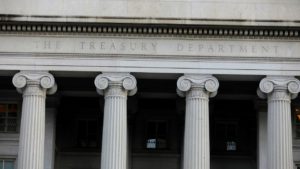
The US Treasury Department removed an Iraqi IRGC-linked airline from its Office of Foreign Assets Control (OFAC) list of Specially Designated Nationals (SDN) on Wednesday.

Two aircraft operated by the airline were also covered by the sanctions, and were delisted Wednesday. CEO Basheer Abdulkadhim Alwan Al-Shabbani, however, remains sanctioned, with the State Department claiming he still has ties to the IRGC.

A Treasury Department official said that the removal of sanctions was not indicative of a shift in US policy towards Iran or the IRGC, or negotiations to end the conflict in the Middle East.

The removal of Fly Baghdad Airlines Co. (FBA), Iraq Express and two Boeing 737 aircraft from the Treasury's Specially Designated Nationals list was part of the Office of Foreign Assets Control's process to reconsider sanctions after behavior changes, the official said.

The official stressed that the US could reimpose sanctions on the airline at any time.

Separately Fly Baghdad remains banned from the EU, placed on the EU Air Safety List by the European Commission placed it.

The airline, Fly Baghdad, along with its CEO had been under US sanctions since 2024. At the time, the department said the airline supported IRGC operations through transporting weapons and personnel. These weapons included ballistic missiles, rifles, and other tools of war, according to a press release.

OFAC maintains enforces sanctions against several categories of foreign individuals and entities. The SDN list covers "individuals and companies owned or controlled by, or acting for or on behalf of, targeted countries" as well as "individuals, groups and entities… designated under programs that are not country-specific," according to OFAC.

Targeted individuals or groups have their assets blocked and US entities are banned from doing business with them. Those sanctioned as part of the SDN list can petition for removal.

The Treasury Department has listed IRGC-related groups as recently as late July.

Dr. Erica Schwartz confirmed as new CDC director by US Senate

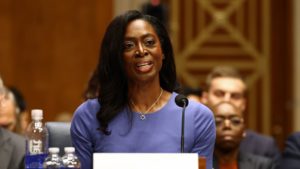
The US Senate on Wednesday confirmed Dr. Erica Schwartz as director of the US Centers for Disease Control and Prevention (CDC), handing the Trump administration a rare win after repeated failed attempts to fill top health posts.

Schwartz, US President Donald Trump’s third pick to run the Centers for Disease Control and Prevention, was confirmed 51-44. She will be the first permanent CDC director since Susan Monarez, Trump’s second pick, was fired by Health Secretary Robert F. Kennedy Jr. last year after less than a month over a clash on vaccine policy.

Her confirmation follows months of leadership turmoil at the CDC, which has lacked a permanent leader for all but a month of Trump’s second term.

Schwartz inherits an agency confronting the worst US measles resurgence in three decades, driven by falling childhood immunization rates, an international Ebola outbreak in the Democratic Republic of the Congo and Uganda, and the largest US foodborne illness outbreak in recent years.

Trump nominated Schwartz, his first-term deputy surgeon general, in April.

The 54-year-old is a board-certified preventive medicine physician who served as the US Coast Guard's chief medical officer from 2015 to 2019. She holds a medical degree from Brown University and a law degree from the University of Maryland.

Four people injured in London stabbing attack, female suspect arrested, UK police say

Four people were stabbed in London’s Covent Garden district on Wednesday, according to the Metropolitan Police, who said the attack is “believed to be a mental health-related incident.”

A 47-year-old female suspect was arrested at the scene and charged with possession of an offensive weapon and assault, police added.

A Metropolitan Police spokesperson told Sky News that the stabbing, which occured on London’s Endell Street, was first reported to police at around 12:27 p.m. local time.

"Officers seized a pair of scissors at the scene," the spokesperson added.

The victims, all men aged 34-52, have been transported to a hospital, Sky News reported, citing the London Ambulance Service.

“We sent an ambulance crew, a paramedic in a fast response car and an incident response officer,” the spokesperson told Sky News. “We also dispatched London’s Air Ambulance.”

US to join Russia, China in war on crime, Kash Patel says, as former FBI director warns of risks

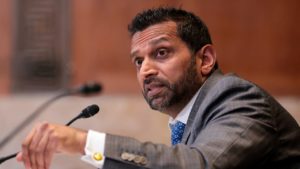
US FBI Director Kash Patel says he has forged new law enforcement partnerships with China and Russia, two longtime US rivals, over the past year in hopes of gaining allies in combating transnational crime, including fentanyl, cyber fraud, and child sexual exploitation.

The partnerships have involved personnel exchanges in which Chinese law enforcement officials have visited the United States and FBI agents have traveled to China to work on cases together and share intelligence. Separately, FBI and Chinese officers have carried out joint raids and arrests under the arrangement.

Patel returned from a trip to Beijing in late July, and a similar trip to Russia has been tentatively planned for October, according to FBI officials.

In exclusive interviews with Reuters, Patel described the FBI’s initiatives with what he called “non-traditional partners” as selective and limited to specific types of transnational crimes such as global child pornography networks and cyber scam centers that prey on Americans.

The partnerships, known internally as "working groups," represent a major break with the past and have raised concerns within the broader counterintelligence community about the risks posed by sharing sensitive domestic security information with authoritarian regimes working to undermine the United States economically and militarily around the world.

In May, the FBI, China's Ministry of Public Security, and Dubai police worked together in "Operation Sand Dollar," a major raid on a cyber scam center in Dubai that led to 300 arrests, $300 million seized, and thousands of trafficked workers freed, the FBI said. In at least one case, a suspect inside China who was accused of "serious violent crimes" was repatriated to the United States, according to Chinese state media.

US officials have long portrayed Russia and China as exporters of crime instead of potential allies in combating it, not to mention sources of espionage aimed at American interests worldwide.

Patel, appointed by US President Donald Trump, said such risks can be managed.

"They are both new and dynamic relationships, and we are extremely mindful of their adversarial approach on many matters," Patel said. "They are not going to stop, but if we can go and have wins for America, then we must engage."

The current relationship began with Trump's visit to China in May 2025 and was followed by two trips by Patel to China. Patel said the cooperation has expanded across four working groups: cyber fraud, violent crimes against children, counternarcotics, and a fugitive task force.

As part of the partnership, Patel has brought officials from China's Ministry of Public Security, or MPS, to multiple FBI facilities in the United States to share intelligence and investigative information.

"Every month, they send their working-level MPS officers here, and the following month we go there," Patel said. "They are speaking with us daily, which has also never happened before."

Asked about joint law enforcement operations, a spokesperson for the Chinese Embassy in Washington said, "We have always believed that dialogue and negotiation are the right way forward, and that military means offer no solution."

Patel said information exchanges are narrow in scope and limited to the four types of transnational crime where intelligence sharing is reciprocal. Patel said these new FBI partners would not replace longtime US allies such as the "Five Eyes" intelligence partnership with Canada, Australia, Britain, and New Zealand.

"Five Eyes will always be our most important intelligence relationship. No one is trying to replace that," Patel said. "Unlike military and traditional intelligence agencies, we have a unique lane to drive this dynamic change with law enforcement, which is an apolitical mission."

During his trip to Asia last month, Patel met with Chinese Minister of Public Security Wang Xiaohong and Vice Minister Xu Datong to deepen what Chinese state media described as "practical cooperation" on a range of criminal activities.

The cooperation between US law enforcement and leading global adversaries is a major break from the past, and reflects Trump's personal approach to diplomacy with Chinese President Xi Jinping and Russian President Vladimir Putin.

“China and Russia are our enemies, period,” said Jeff Crocker, a former FBI supervisory agent who retired in 2024. “They are actively trying to harm our country physically, economically and militarily.”

Crocker said there are enormous risks related to giving Chinese officials access to the American intelligence community, diplomatic personnel and US government facilities and contractors. Chinese and Russian agents would use any access to US facilities as an opportunity to infiltrate them, Crocker said.

"So this is great cover for them," Crocker said.

Patel said counterintelligence operations and countermeasures are deployed for any foreign visitor to FBI facilities. Three former FBI employees told Reuters this usually involves electronic and physical surveillance, particularly for people from countries considered the most dangerous US adversaries.

"We know exactly who is coming here, and we vet them," Patel said.

The Kremlin and the Russian Embassy in Washington did not immediately respond to requests for comment.

Patel said there have been months of behind-the-scenes law enforcement collaboration with Russia targeting violent criminal networks.

"This stuff doesn't happen overnight," Patel said. "We've been at this for 15 months."

An internal memo viewed by Reuters credited the FBI’s cooperation with China’s Ministry of Public Security in multiple operations against Chinese pharmaceutical companies this year.

The memo said this led to the arrests of nine people, the shutdown of two chemical production facilities and three associated websites, and the seizure of fentanyl precursor chemicals "likely otherwise destined for the United States." The memo did not specify where these arrests and seizures occurred.

Vanda Felbab-Brown, a senior fellow in foreign policy at the Brookings Institution think tank in Washington, said fentanyl overdoses have been declining rapidly in the United States since the winter of 2022, likely due to cooperation with China and other factors such as the wide availability of the life-saving drug Naloxone.

"It could be that the people who were already vulnerable had already died," Felbab-Brown said.

"I think that the cooperation is useful, should be fostered, and that it contributed to some extent," Felbab-Brown said, referring to the decline in US overdoses. "But how much is really hard to know, and there are a lot of complexities to it."

Chinese law enforcement worked with the FBI's field office in Omaha, Nebraska, to take down a multinational child sexual abuse materials network in June, an operation that included the arrests of 16 suspects, according to the FBI memo.

The expanding cooperation comes after years of deep suspicion between the United States, which has accused China of turning a blind eye to its production of the precursor chemicals required to manufacture fentanyl, and Chinese authorities, who ended cooperation due to political disagreements such as former US House of Representatives Speaker Nancy Pelosi's 2022 visit to Taiwan.

US Secretary of State Marco Rubio offered a cautious assessment of Chinese cooperation. During a visit to the Philippines last month, Rubio called cooperation with China on fentanyl precursors “a work in progress.”

"I think we've made some progress on that front, but not entirely where we need to be," Rubio told reporters.

Patel said the playbook that is used to work with China and Russia could be applied to other non-traditional intelligence-sharing partnerships tailored to each country.

"The fact that we did it with China," Patel said, "when everyone said, 'Don't do it,' and, 'You can't do it,' shows what we can do with almost anyone."

Seven months after Trump intervention, US senators seek Venezuela elections

A group of Republican and Democratic US senators on Tuesday called for elections in Venezuela, seven months after President Donald Trump’s administration removed then-President Nicolas Maduro and installed his vice president as acting president.

Republican Senator Ted Cruz of Texas and Democratic Senator Jeanne Shaheen of New Hampshire introduced a resolution reaffirming US support for elections in Venezuela, calling for the release of political prisoners and saying that anyone – including senior government figures – should be punished if they are responsible for harming anyone seeking public office.

The bipartisan resolution comes amid increased frustration over what critics see as the Trump administration’s failure to effect real change in Venezuela by pushing Venezuela’s government, now led by acting President Delcy Rodriguez, toward free and fair elections.

Talks between Venezuela’s interim government and a faction of the opposition are set to begin in the coming days, but without Maria Corina Machado, the country’s most popular opposition leader.

"The people of Venezuela deserve free, fair, and transparent elections, and it is vital to the national security interests of the United States that those elections occur expeditiously," Cruz, a senior member of the Foreign Relations Committee, said in a statement.

Shaheen, the committee's top Democrat, said authorities in Caracas must release all political prisoners and allow all political actors, including Machado, to safely return and participate in political activity.

The resolution has five other co-sponsors, four Democrats and one Republican.

Nobel Peace Prize winner Machado left Venezuela late last year to receive her Nobel after living mostly in hiding since a contested 2024 presidential election. She has vowed to return to help with the response to June's devastating twin earthquakes, frustrating US officials who believe it is not the right time.

Trump has denied media reports that his administration told Machado not to return. Machado has repeatedly been publicly sidelined by Washington since Maduro's removal, with US officials saying she does not have enough support to lead the country.

Get help now

Send a message with a description of your problem and possible ways of assistance and we will contact you as soon as we consider your problem.