• English
  • Русский

Brazil downgrades diplomatic ties with Argentina after Milei insults President Lula

Brazil has told Argentina its relations will be handled at the chargé d’affaires level after Argentine President Javier Milei again insulted Brazilian President Luiz Inacio Lula da Silva, a Brazilian government source said on Tuesday.

Brazil’s ambassador to Argentina, Julio Bitelli, will not return to Buenos Aires, the source said, after Milei referred to Lula in an interview with Argentine TV channel LN+ as an “ex-convict,” a “thief” and “corrupt.”

The move formalizes a sharp deterioration in ties between two of Latin America's largest economies, whose presidents have not held an official bilateral meeting since Milei took office.

Bitelli had already been recalled from Buenos Aires late last month after Milei criticized Lula while appearing alongside opposition presidential candidate Flavio Bolsonaro at the formal launch of his campaign to unseat the incumbent, who has been leading polls ahead of October’s election.

Argentina’s ambassador in Brasilia, Daniel Raimondi, was informed of the decision to downgrade diplomatic ties, the source said. Argentina’s foreign ministry did not immediately respond to a request for comment.

Israeli agricultural non-profit CultivAid helps support Tanzania’s growing wine industry

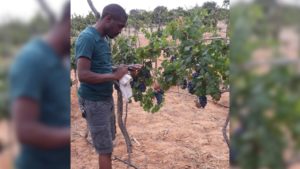
On the rolling hills outside Dodoma, Tanzania’s wine capital, an agricultural partnership is taking root. Israeli non-profit CultivAid is working with local growers, researchers, and young agricultural professionals to modernize grape cultivation and winemaking through hands-on training, using Israeli cultivation techniques to improve yields, grape quality, and long-term sustainability.

For more stories from The Media Line go to themedialine.org

For local experts, the collaboration is providing something they say has been missing, practical experience, mentorship, and a roadmap for training the next generation of viticulturists.

For Tanzanian viticulturist Jacob Timothy Mwavika, Israeli agriculture is a source of inspiration. “I have followed Israeli agriculture for many years because of its innovation and technology, especially irrigation techniques, desert agriculture and greenhouse technology,” Mwavika told The Media Line. “Israel also stands out because of the amount of agricultural research and development it invests in.” 

While familiar with Israel’s agricultural achievements, he admitted he knew little about the country’s wine industry before working with CultivAid. “To be honest, I had heard very little about Israeli wine compared to what I knew about table grape production,” Mwavika said. 

Tanzania's commercial wine industry is relatively young by global standards, dating back to the early 1960s when Catholic missionaries introduced modern viticulture around Dodoma in the country's semi-arid central region.

Today, Dodoma remains the heart of Tanzania's wine production, accounting for the vast majority of the country's vineyards. Unlike many African nations, Tanzania has developed a commercial wine sector built largely around locally grown grapes rather than imported bulk wine.

Despite decades of production, much of the industry continues to rely on traditional farming and winemaking practices. Industry experts say improvements in vineyard management, irrigation, modern equipment and technical training could significantly raise both grape yields and wine quality, while helping the sector capitalize on growing domestic demand, tourism and export opportunities across East Africa.

Israel is internationally recognized for developing agricultural technologies that enable farming in some of the world's most challenging environments. Faced with scarce water resources and arid conditions, Israeli researchers and farmers pioneered innovations including drip irrigation, advanced greenhouse cultivation, precision agriculture and water recycling.

The country invests heavily in agricultural research, with close cooperation among universities, government research institutes, and farmers, enabling new technologies to move quickly from the laboratory to the field.

This is where CultivAid has stepped in.

“We saw that there was a lot to do,” Dr. Tomer Malchi, co-founder and CEO of CultivAid, told The Media Line. “There are many difficulties. They have low crop outputs, low quality, and pesticide issues. We have a lot of know-how and agronomy that can jump-start the crops.” 

According to Malchi, the vineyards in the Dodoma region are not yet close to their maximum capacity and could potentially double their crop output.

Israel's expertise is rooted not only in agricultural innovation but also in the rapid development of its own modern wine industry.

In the past four decades, Israel's wine industry has also undergone a dramatic transformation. Although winemaking in the region dates back thousands of years, the contemporary industry emerged in the 1980s and 1990s as wineries adopted modern vineyard management, international grape varieties, and advanced production techniques.

Today, Israel is home to more than 300 commercial wineries, producing internationally recognized wines from regions including the Golan Heights, Galilee, the Judean Hills, and the Negev Desert, demonstrating how high-quality viticulture can flourish even in challenging climates.

According to the Israel Wine Grapes Board, Israeli wine exports totaled roughly $66 million in 2024, with the US as the main market.

Through CultivAid training programs, Mwavika has been able to put into practice many of the techniques he had previously encountered only in books or research papers.

"CultivAid introduced me to many experts and gave me the opportunity to physically see and practice methods that I had only learned about through reading," Mwavika said.

The organization has established a six-acre farm in Dodoma where research and experiments are conducted. “We are training local residents to be the best agronomists in Tanzania,” said Malchi.

Recently, CultivAid launched a vineyard management course for 60 local participants and established a vineyard nursery as part of its long-term training program.

As a professional viticulturist, Mwavika said that much of his knowledge came from years of field experience with limited guidance. "It has always been my dream to raise a new generation of grape specialists," Mwavika said. "The challenge was that there was no platform to train them. CultivAid has provided that solution, and now they are helping develop young professionals with specialized skills in viticulture."

The initiative comes as Tanzania's wine sector remains relatively small but shows considerable potential for growth. The country is East Africa's only commercial wine producer and has favorable conditions for expanding grape cultivation.

"The Tanzanian wine industry has significant opportunities for growth because there is still land suitable for grape production," said Mwavika. "We also have a strong tourism market, where wine consumption is high, and with improvements in quality, Tanzania can become much more competitive."

Malchi also believes that there is significant potential. “When we began our activity, the local wine industry was producing between 4 to 5 million liters a year, and now we are at 20 million liters,” he said. The goal is to expand the supply of high-quality grapevines to meet demand from growers and wineries.

Mwavika noted that Tanzania has an advantage in supplying the wider East African market. "Only Tanzania is able to commercially grow grapes and produce wine in the region," he said. "The wine industry has the potential to generate significant national income and create many jobs."

At the same time, he pointed out that much of the sector still relies on traditional production methods.

"There is still limited innovation and technology in the industry," he said. "Modern equipment and improved techniques can transform both production and wine quality."

Beyond agriculture, the partnership has also shaped Mwavika’s perception of Israel. "I have learned that Israelis have a genuine willingness to help transform agriculture through practical training, working directly with farmers and openly sharing the results of their research," he said. "I have not yet visited Israel, but it is something I very much hope to do."

For Ayelet Levin-Karp, CEO of SID Israel, an umbrella organization for Israel’s humanitarian aid and international development community, the significance of these projects lies in their practical, long-term impact. "Projects like CultivAid reflect a different side of Israel's engagement with the world, one built on partnership, knowledge-sharing and long-term economic development," she said.

"At a time when Israel faces significant international challenges, the work of Israeli development organizations across Africa demonstrates that Israeli expertise continues to be valued because it delivers measurable results and creates lasting opportunities for local communities,” she noted.

Nigeria’s Tinubu approves military pay rise as security challenges persist

Nigerian President Bola Tinubu has approved pay rises of up to 80% for members of the armed forces, the presidency said on Tuesday, in a move aimed at boosting troop welfare as the country battles insurgency, banditry and kidnappings.

The salary increase comes as Nigeria grapples with multiple security challenges across different regions.

Islamist insurgents, including Boko Haram and Islamic State West Africa Province (ISWAP), continue to stage attacks in the northeast, while heavily armed criminal gangs, known locally as bandits, operate across parts of the northwest. 

Kidnappings for ransom have become widespread in parts of north-central Nigeria, while security forces also face periodic separatist-linked violence in the southeast.

Under the new pay structure, effective Sept. 1, officers above the rank of colonel, including generals, will receive a 30% salary increase. Personnel from colonel to warrant officer will receive a 50% raise, while soldiers from private to staff sergeant rank will see salaries rise by 80%, according to a statement by presidential adviser Bayo Onanuga.

The new package will increase the annual wage bill for the armed forces to 924 billion naira ($678.68 million) from 660 billion naira.

Successive governments have struggled to contain insecurity despite increased military deployments and spending, with attacks by armed groups continuing to strain security forces and communities.

Tinubu said his administration would continue to prioritize troop welfare and modernize the armed forces with the weapons and technology needed to tackle security threats.

At least 12 hurt due to unusual turbulence on Air India flight from Thailand to Delhi

At least 12 people on board an Air India flight from Phuket, Thailand, to New Delhi, India, were wounded on Tuesday following a turbulence-related event that caused a momentary change in altitude, Air India confirmed.

The 12 people included 10 passengers and two members of the crew.

In addition, there was some damage to the aircraft, according to local media reports.

Initial reports indicate that the plane dropped approximately 300 feet (91 meters) in altitude due to turbulence.

An investigation into the incident is ongoing.

The flight in question was AI2379, which was operated by an Airbus A320 and carried 134 passengers.

The flight continued on its journey and landed at Indira Gandhi International Airport, Delhi, shortly after 11 a.m. local time.

Medical support was arranged for the wounded, who were reportedly taken to the airport's medical center for further evaluation and treatment.

An Air India spokesperson said no one was seriously injured. “There have been no serious injuries as of now. A small number of passengers and crew members with minor injuries requiring medical assessment have been taken to a medical facility at the airport for precautionary examination and care by Air India’s airport team and medical personnel,” the airline stated.

"The safety and well-being of our passengers and crew remain Air India's highest priority. We are extending every possible support to those affected and are fully cooperating with the relevant authorities in the investigation," an Air India spokesperson said.

US has used ‘virtually all’ of its long-range precision missiles during Iran war, sources say

The US Army has used up much of its stockpile of highly accurate long-range missiles during its five-month war with Iran, according to three people familiar with the data, raising concerns about the military’s readiness for future conflicts.

The missiles are principally the Army's surface-to-surface weapons, known as Army Tactical Missile Systems (ATACMS) and Precision Strike Missiles (PrSM). The US has used "virtually all" of these weapons, according to two of the sources.

The degree to which the military is running out of ATACMS and Precision Strike Missiles has not been previously reported.

The long-range munitions – which cost more than $1 million each – are an important part of the military's arsenal, allowing accurate strikes from a safe distance. US-supplied ATACMS have played a key role in the war in Ukraine, allowing Ukrainian forces to attack targets inside Russia. The PrSM is a newer, more advanced generation that will replace the ATACMS, which have a shorter range.

The dramatic rundown in precision, long-range missiles means US President Donald Trump may have to rely more on riskier, piloted bombing missions if he relaunches large-scale attacks on Iran.

The sources declined to say how many of each munition the US had left.

Trump launched the Iran war jointly with Israel in February, predicting that the conflict would last a short time.

But as the war drags on, the three people familiar with the matter expressed worry that the falling missile supplies could limit the US ability to deter adversaries, including Russia and China.

A fourth person familiar with the matter said that while US Central Command (CENTCOM) – which oversees US forces in the Middle East – has nearly used up the land-based missiles it had before the war began, it has been able to reload from US military supplies elsewhere in the world.

The sources interviewed for this story spoke on the condition of anonymity.

Asked for comment on the stockpile data, the White House issued a statement from Trump, saying the US had “far more munitions than anyone in the world” and “far more than we need.”

"Our defense companies are, at this moment, making more munitions than they have ever made before, in addition to expanding their plants and equipment at record levels," Trump said.

Analysts agree that certain munitions, including artillery shells and several types of missiles, are being produced at record levels but caution that supplies might fall short of what is needed for a prolonged war.

Lockheed Martin, which makes the ATACMS and PrSMs, along with the anti-ballistic missile THAAD system, did not immediately respond to questions about Trump’s statements or about supply levels. Raytheon, which makes Tomahawk missiles and Patriot interceptors, two important US weapons, also did not immediately respond.

Responding to a request for comment, chief Pentagon spokesperson Sean Parnell said: “America’s military is the most powerful in the world and has everything it needs to execute at the time and place of the President’s choosing. We have executed multiple successful operations across combatant commands while ensuring the US military possesses a deep arsenal of capabilities to protect our people and our interests.”

The supply figures have circulated inside the federal government over the last week during tense conversations inside the Trump administration about how much longer the US can continue striking Iran without drawing down the stockpile to levels that would limit the military's ability to respond to crises elsewhere.

One of the sources said the drawdown of the ATACMS and PrSM stockpiles reflected a decision by the Trump administration to avoid riskier ways of attacking Iranian targets, such as by using piloted aircraft to drop bombs.

Because these weapons allow the military to attack targets from a distance, analysts say they would be valuable in a war against an adversary with strong air defenses, such as China. They have been used to strike targets inside Iran, according to a March report by the Center for Strategic and International Studies (CSIS).

According to the report, PrSM stockpiles were low to start with, since it is a relatively new munition, but the US military has ordered a large number of them for 2027. The Army has said that ATACMS are being phased out and that production is shifting to the newer PrSM missiles.

Military leaders have for weeks warned the president that stockpiles of defensive weapons – including Patriot interceptors, which are effective against ballistic missiles – were dwindling, said two of the sources. Last week, several media outlets reported Trump had decided not to launch another massive offensive inside Iran in part because his military advisers had warned about the US stockpile.

A US official disputed those accounts, saying Trump chose not to move forward with another attack because of pressure from Gulf states.

The Middle East conflict has sparked intense debate about Trump's authority to prosecute hostilities against Iran without congressional authorization. No request for a declaration of war or an authorization to use military force has been submitted to Congress.

Last week, CSIS published a report estimating that between February and July about 65% of Patriot interceptors had been expended and that the number of THAAD ballistic missile interceptors in US stockpiles was at least 38% lower than at the start of the war. Patriots and THAADs are systems that detect and destroy incoming missiles and are among the most effective in the country's arsenal.

While Reuters has not seen the supply figures, those numbers match internal US data, two of the sources said.

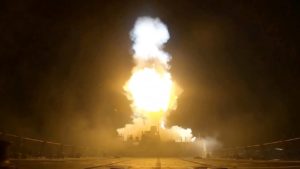
The US also burned through a little less than half of its global supply of Tomahawk cruise missiles, which are generally launched from ships, since the start of the war, one of the sources said.

Reuters could not independently verify that number.

The Tomahawk is a Navy weapon, launched from destroyers, cruisers and submarines, and has long served as the sea service's principal means of striking heavily defended targets without risking pilots.

Raytheon, a unit of RTX, has reached a tentative multi-year agreement with the Pentagon aimed at boosting Tomahawk production, alongside increases in other munitions, as Washington races to rebuild stockpiles.

Spokane wildfires destroy over 700 structures as 64,000 flee fast-moving Washington blazes

Wildfires raging on the outskirts of Spokane, Washington, for a third day have destroyed at least 700 buildings and forced tens of thousands of people to flee their homes in and around the state’s second-most populous city, officials said on Monday.

The cluster of three blazes ranks as the top firefighting priority in the US as a whole, including the drought-parched Pacific Northwest, where dozens of major wildfires have been burning for weeks, degrading air quality across a wide region.

The Spokane-area fires have scorched more than 8,000 acres since erupting on Saturday in and around suburbs on the northern fringe of the city, home to about 230,000 residents west of the Rocky Mountain foothills near the Idaho border.

As of Monday, some 64,000 people were under immediate evacuation orders, up from 4,000 a day earlier, according to Benjamin Cossel, a spokesperson for the incident command center.

At least 700 structures have gone up in flames, most of them in residential areas, and aerial infrared surveys showed that possibly another 400 buildings, including homes, had been damaged or destroyed, Cossel said.

The cause of the blazes was under investigation.

No injuries or fatalities have been reported so far, he said, adding, "There's a high probability that will change in the coming days" as flames subside and search teams are able to reach devastated communities still inaccessible due to extreme fire activity.

An unspecified number of people have been reported missing as flames spread out of wooded areas into neighborhoods and commercially developed areas, "turning from a wildfire to an urban conflagration," he said.

Roughly 1,100 firefighters were battling the Spokane blazes as of Monday, Cossel said, a fraction of the more than 29,200 personnel assigned to wildfires nationwide, most heavily concentrated in Oregon, Washington state and Idaho, according to the National Interagency Fire Center in Boise.

The agency reported more than 100 large new wildfires on Sunday across 15 states, the bulk of them in the Northwest, stretching resources thin across the region.

North of the US-Canadian border, flames continued to rage across British Columbia, where record drought conditions have led to what officials over the weekend called "explosive" fire behavior in the southern part of that province.

Aerial firefighting assets in Spokane were so far limited to four fixed-wing tanker aircraft, with no water-dropping helicopters currently available, Cossel said.

Fire managers hoped their crews could make greater headway during a narrow window of cooler, less windy weather expected to prevail on Monday and Tuesday, before extremely high temperatures, low humidity and gusty conditions are forecast to return at midweek, Cossel said.

Even though fire activity in some spots has eased in comparison with Sunday, authorities were reluctant to lift evacuations in most of the fire zone.

"The worst thing in the world is to let people go home only to have to evacuate them again 24 to 48 hours later," Cossel said.

As of Monday, firefighters had yet to contain any of the three Spokane-area blazes, officials said.

The Interagency Fire Center has documented a total of 44,722 wildfires year to date nationwide, the highest number for this time of the year in at least a decade, with nearly 5.2 million acres consumed, the most from January to early August since 2022.

The conditions driving the increase in wildfire activity in North America, Europe, and elsewhere in recent years, especially periods of prolonged drought and extreme heat, are largely a function of human-caused climate change, according to scientists.

Morocco says Spain should have foreseen impact of court ruling following Ceuta migrant rush

Spanish authorities should have anticipated the consequences of a court ruling that weakened a key deterrent against illegal migration and contributed to last week’s mass crossings into the enclave of Ceuta in northern Morocco, a senior Moroccan official said on Monday.

Spain estimates that about 69,500 migrants have returned from Ceuta to Morocco since last week’s crossing, while Moroccan authorities say about 40,000 people entered the enclave.

The death toll stands at 72 on the Spanish side of the border and 11 on the Moroccan side.

Ceuta Regional President Juan Jesus Vivas accused Rabat of having "encouraged and permitted" the influx, while European Commission President Ursula von der Leyen warned against any attempt to use irregular migration to pressure an EU member state.

The local authorities in Ceuta should have anticipated the consequences of a ruling that deactivated illegal migration deterrence, the senior government official told reporters in a first briefing since the crisis unfolded.

The Spanish ruling on July 8 limited the immediate return of migrants who reach the Spanish enclaves by sea.

Morocco had not relaxed border controls or reduced security deployments before the mass crossing on Thursday, he said.

Morocco's migration-control approach rests on prevention through the deployment of around 24,000 security personnel along its northern coast and deterrence through rapid readmissions for migrants who enter Spanish territory illegally.

The July ruling was quickly used by trafficking networks, he said.

"The message became just cross and you will be protected," he said. "Europe asks us to stop migrants from crossing, but on the other side they roll the red carpet when they cross!"

Rabat stopped 79,000 attempted crossings in 2024 and 74,000 last year, according to official figures.

He described Moroccan-Spanish cooperation on border control as "exemplary" until the ruling disrupted years of consistency.

"It is up to Spain to find a solution to restore deterrence," he said.

"Morocco will never be complicit in a purely security-based approach to migration," he said.

Cuba’s electric grid collapses again as government tries to resolve previous day’s blackout

Cuba’s national electrical grid collapsed again on Monday, state-run media reported, as the government was trying to reestablish the system following a country-wide blackout on Sunday night.

Cuba’s aging power generation system is under severe strain from fuel shortages, deteriorating infrastructure and a US-imposed oil blockade.

Blackouts affecting the entire island, home to about 10 million people, have become increasingly frequent in recent months.

Three outages hit Cuba over the course of nine days in July, followed by the outage on Sunday just before 11 p.m. local time.

"Despite the progress made today, an oscillation triggered the collapse," said Lazaro Manuel Alonso, news director of Cuba's state-run television, in a post shared via social media.

A US-imposed oil blockade, after Trump’s administration deposed Venezuelan President Nicolas Maduro in January, has crippled the island’s already aging energy infrastructure.

Venezuela was Cuba's primary fuel supplier, and subsequent US pressure also led Mexico to halt oil shipments to the island.Havana blames a decades-old US trade embargo for its failing infrastructure, while Washington says the blackouts are due to the mismanagement of Cuba's state-run economy.

Morocco names longest highway after Donald Trump

Morocco has named its 1,055-km. Tiznit-Dakhla expressway the “Donald J. Trump Highway” in recognition of the US president’s support for Rabat’s sovereignty claim over Western Sahara, the Moroccan state news agency MAP reported on Saturday.

King Mohammed VI informed US President Donald Trump of the decision in a letter dated July 2, saying relations between Morocco and the United States had become particularly strong and productive during Trump’s two presidential terms.

“Your historic recognition, in 2020, of Morocco’s sovereignty over its Sahara will forever be etched in the memory of Moroccans,” the king wrote.

Mohammed VI said the route was one of Morocco’s most important road projects and described it as the longest road infrastructure in Africa. The expressway connects northern and southern Morocco and forms part of an Atlantic transport corridor linking Europe with West Africa.

The roughly $1 billion route begins in Tiznit and passes through Guelmim, Tan-Tan and Laayoune before reaching Dakhla. Much of the southern section runs through Western Sahara, which Morocco considers part of its southern provinces.

Moroccan authorities say the road will shorten travel times, reduce disruptions caused by flooding and shifting sand, and improve the movement of people and goods between the country’s economic centers and its southern regions.

Trump publicly thanked the Moroccan monarch in a July 26 post on Truth Social.

“Such a Great Honor! I look forward to traveling the entire length of this Great Highway someday, hopefully soon!” Trump wrote.

The naming reflects the diplomatic relationship that developed during Trump’s first administration. In December 2020, Washington recognized Moroccan sovereignty over Western Sahara alongside a US-brokered agreement under which Morocco agreed to normalize relations with Israel.

Morocco subsequently became a member of the Abraham Accords framework, expanding diplomatic, economic and security ties with Israel.

Western Sahara has been disputed since Spain withdrew from the territory in 1975. Morocco controls most of the region, while the Algeria-backed Polisario Front seeks the establishment of an independent Sahrawi state.

Israel formally recognized Moroccan sovereignty over Western Sahara in 2023 and reaffirmed that position the following year.

The UN Security Council adopted a resolution in October 2025 that supported negotiations based on Morocco’s autonomy proposal, under which Western Sahara would receive limited self-government while remaining under Moroccan sovereignty.

In his letter to Trump, Mohammed VI presented the expressway as both an infrastructure project and a symbol of the two countries’ strategic partnership, saying it would strengthen Morocco’s position as a commercial link between Europe and Africa.

Capital One says it closed Trump-affiliated accounts over money-laundering probe, not Jan. 6 riots

Capital One said that it closed some 300 bank accounts held by companies affiliated with US President Donald Trump for anti-money laundering (AML) reasons, according to a new motion filed by the bank on Friday. 

Further, Capital One argued that the complaint should be dismissed with prejudice as the plaintiffs have yet to bring forth a plausible, legally binding claim.

Capital One explained that it had notified the account owners by letter in March 2021 of its decision to close the accounts by June of the same year, giving them three months' notice to handle opening new accounts elsewhere.

It added that when requested, it granted extensions past that date as well.

The lawsuit was filed four years later, in March 2025, alleging that Capital One closed the bank accounts in an attempt to distance itself from Trump following the January 6 riots.

The bank rejected the claim in a newly filed motion, arguing that the companies’ theory is based on cherry-picked quotations unsupported by the full context of the bank's own records.

According to the motion, the decision to close the accounts followed "months of analysis and a careful review" by Capital One’s financial-crimes unit, which has “decades of law enforcement experience."

It added that it did not “impair[ed] Plaintiffs’ ability to obtain accounts with other banks,” and due to this, the decision to close the accounts only became public with the lawsuit. 

The court has already, in March, dismissed an earlier version of the lawsuit on similar grounds as the bank’s reason for closing an account under such a contract cannot generally be questioned in court.

Further, Capital One argued against a new claim added by the plaintiffs, that the bank had “defrauded” them by staying silent with its reasoning.

It noted that the “harm” alleged by the plaintiffs, including the loss of banking services, inconvenience, and difficulty obtaining new accounts, would have occurred even if the bank had notified them of the reason behind the closure.

However, Capital One’s lawyers have said that the bank was under no obligation to give the reason behind the accounts’ closure.

“Where (as here) a contract specifically provides that no explanation is required for termination, a party cannot simultaneously claim that the other party’s silence regarding its reasons for closure constitutes concealment,” the bank’s lawyers wrote in the motion.

Secondly, the bank’s lawyers note that the Bank Secrecy Act would have limited the information it was allowed to disclose about its internal anti-money-laundering process.

Further, Capital One noted that the “harm” alleged by the plaintiffs, including the loss of banking services, inconvenience, and difficulty obtaining new accounts, would have occurred even if the bank had notified them of the reason behind the closure.

The lawsuit with Capital One is one of several Trump-affiliated entities have filed against major banks, accusing them of “debanking,” a practice that allows them to terminate accounts with “with accounts they deem reputational risks and is solely based on perceived bias,” according to CBS News.

In January 2026, separate $5 billion lawsuit was filed by Trump against JP Morgan Chase and its CEO Jamie Dimon, for allegedly following similar conduct as Capital One and closing accounts due to political reasoning, though JP Morgan has denied any wrongdoing, according to CBS.

The case remains pending in the US District Court for the Southern District of Florida, CBS said.

Get help now

Send a message with a description of your problem and possible ways of assistance and we will contact you as soon as we consider your problem.