• English
  • Русский

EU demands AI companies prove safety compliance in order to operate in region

The European Union is in favor of developing innovation in artificial intelligence, but companies have to prove their services are safe for citizens to operate in the bloc, EU Commission spokesperson Thomas Regnier said on Monday.

The debate about AI was thrust back into the spotlight after the chief executive of Anthropic, Dario Amodei, said on Saturday that companies must slow the pace of advancement of AI models.

 This is a developing story.

At least 21 killed, four seriously injured in crash between two minibuses, car in South Africa

At least 21 people were killed, and four people were seriously injured in a massive traffic accident between two minibus taxis and a car on the N1 Highway in South Africa’s Western Cape on Monday, the South African Road Traffic Management (RTMC) announced in a post on X/Twitter.

The two minibuses reportedly had a head-on collision, authorities say, with an SUV hitting them shortly after the initial crash.

Three of the victims were rushed to the hospital but were declared dead on arrival, local police said.

RTMC added that the N1 is closed in both directions and urged drivers to avoid the area, expect significant delays, and follow instructions given by authorities operating at the scene.

The RTMC added that the death toll “may change as emergency services and authorities in the Western Cape continue their assessment of the scene.”

Kennedy Center on brink of bankruptcy, could close as early as Tuesday, Washington Post reports

Leaders of the John F. Kennedy Center for the Performing Arts say it is on the brink of bankruptcy and could close as early as Tuesday, the Washington Post reported on Sunday.

The leaders, installed by US President Donald Trump, argue that putting the president’s name on its facade may be the only way to avoid imminent and “certain fiscal collapse,” according to the newspaper, citing documents it obtained.

The paper said a report, prepared by the institution's trustees, claims that within a few weeks the institution won't be able to pay employees or meet maintenance costs.

The report was prepared in advance of a meeting that is scheduled for Tuesday.

The Washington Post also said that Trump will help the Kennedy Center if his involvement is acknowledged. The trustees’ report represents “a remarkable new phase in Trump’s takeover of the Kennedy Center, which has been engulfed by financial turmoil, leadership upheaval and litigation since he installed himself as chairman last year,” the paper said.

The Washington Post also noted that Trump’s involvement with the Kennedy Center, which included the addition of his name to the building, impaired fundraising work and ticket sales.

The Kennedy Center did not immediately respond to a request for comment.

Indonesian rescuers race to fine 129 missing passengers of capsized ship in Java Sea

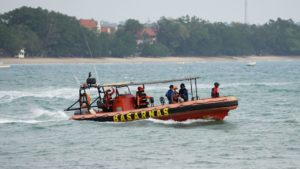
Hundreds of Indonesian rescuers, including the coastguard and the navy, raced on Monday to board a passenger ship that capsized in the Java Sea over the weekend as they searched for the 129 people still missing, officials said, with the confirmed death toll at six.

The Virgo Transport 8 ship carrying 243 people went missing in bad weather early on Sunday, the rescue agency said. Authorities have since rescued 108 people from the ship, which was traveling from Surabaya in East Java to Banjarmasin in South Kalimantan.

Choppy waters with high waves and strong winds were impeding the search on Monday, said Mohammad Syafii, head of the national rescue agency.

The agency has deployed at least 622 personnel, 17 ships, five helicopters, and aircraft to find the missing passengers, Syafii added. Some of the ships have arrived at the location, but it was difficult for rescuers to make their way into the capsized ship, he said.

"We would also deploy personnel with underwater rescue skills, but the current conditions do not allow us to," he said.

“While waiting for the weather conditions to improve, we are identifying more personnel with special skills,” he said, adding that the death toll remained at six.

In a video shared by the rescue agency, a large red-and-black ship was capsized and partially submerged in choppy blue water, with its red-painted underside visible above the surface.

Two small boats, each carrying people, were seen floating in rough waters near the capsized ship.

The location of the capsized boat is around 80 nautical miles (nearly 150 kilometers) from the command center at Trisakti Port in Banjarmasin, another official at the rescue agency told Reuters.

"The conditions there are quite windy, making it difficult for the vessel to dock," the official, Arianto Ardi, said.

The weather was very poor when the incident happened, with waves as high as three meters crashing into the ship, Syafii said.

It takes around five hours to reach the location from Trisakti Port in good weather but requires up to nine hours in rough conditions.

On Sunday, Edy Prakoso, another official at the agency, said the ship leaned heavily to one side after strong waves hit its starboard side.

Transport Minister Dudy Purwagandhi said the capsized boat had the capacity to contain 500 passengers, so it was not overloaded.

Indonesia relies on ferries across its 17,000 islands, with sea travel cheaper and more accessible than flying, but there have been numerous accidents.

In separate incidents last month, two ferries carrying hundreds of passengers caught fire in the water. Five people died when a ferry caught fire off Madura Island, while one person died in a fire on a ferry traveling from the tourist island of Bali.

‘Senseless attack’: Ex UK PM Johnson narrowly misses Russian attack on Ukraine-Poland railway

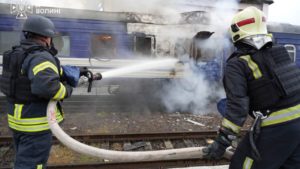
A Russian drone hit a passenger train on Ukraine’s border with NATO member Poland on Sunday, shortly after former British prime minister Boris Johnson and other European diplomats had used the same line.

The train, on a route frequently used by foreign delegations returning from Kyiv, was attacked just 2 kilometers from the Polish border, Ukraine’s railway operator said.

No casualties were reported.

Johnson blamed Russian President Vladimir Putin in a statement after the attack.

"I don’t know what warped logic drove Putin to blow up a stationary Ukrainian locomotive on the Polish border this morning," he wrote.

"So far Putin has been responsible for the deaths of 1700 staff of Ukrzaliznytsia – Ukrainian Railways. They and their daily passengers are absolutely heroic. When are we going to give them the air defenses they need? Why won’t we unfreeze Putin’s cash and give it to Ukraine?"

"We will get this dreadful war over much faster if we all get serious and give them what they need and deserve," he finished.

"This wasn’t our train, but the one just minutes after us by the border crossing. It was evacuated as the drone approached and no one was hurt," Carl Bildt, former Swedish prime minister, said on X/Twitter.

Bildt, Boris Johnson, and other European politicians were returning to Poland by train after attending a security conference in Kyiv when they were awoken at 5 a.m. and prepared to evacuate.

"It is entirely possible that the Russian drone's intended target was the diplomatic train, which departed the station earlier than scheduled after train timetables were adjusted in real time because of the constant threat of Russian strikes," Ukraine's railway operator, Ukrzaliznytsia, said on Telegram.

Johnson left the station shortly before the strike and condemned the attack as "random and senseless" in a post on Instagram.

With the front line largely static, both Moscow and Kyiv have intensified long-distance strikes in recent weeks to try to shift momentum in the war.

Polish foreign minister Radoslaw Sikorski described Russia’s increasing attacks on NATO’s doorstep as “an escalation.”

Earlier on Sunday, a truck less than 1 km. from Ukraine's border with Poland was also hit, prompting the Dorohusk-Yahodyn crossing point to briefly halt operations, according to border guards.

Russia's Defense Ministry said it had targeted infrastructure facilitating military cargoes from Europe in Western Ukraine.

Russia has begun targeting Ukraine's border crossings with its Western allies in recent weeks, part of a growing campaign by both sides to erode the other's economic infrastructure more than four years into Russia's invasion.

The former prime minister of the UK was in Ukraine alongside advisors from several other European nations for the 2026 annual meeting of the Yalta European Strategy, a defense conference where specialists discussed potential ceasefire negotiations with Russia with Volodymyr Zelensky’s government.

“ These drone attacks are blind terror against Ukrainian civilians and a dangerous escalation in Putin’s war," said Robin Wagener, a Green Party member of the German Parliament, who was also on board the train.

The Polish Air Force mobilized after the strikes occurred within two kilometers of Polish territory, a NATO member.

“Due to the activity of the Russian Federation’s jet-powered unmanned aerial vehicles conducting strikes on Ukrainian territory, military aviation operations have commenced in Polish airspace,” Polish military personnel said in a statement to social media.

Volodymyr Zelensky condemned the attacks afterward.

“It is precisely to prevent these strikes from spreading further into Europe that Ukrainian men and women fight every day, give their lives, and do not allow the aggression to expand.”

US Air Force pilots lack sufficient sortie experience for combat operations – report

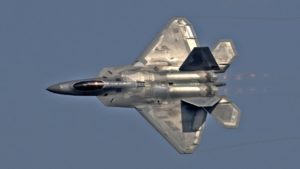
Many US Air Force (USAF) pilots lack sufficient sortie experience to remain combat-ready, the Military Times reported Sunday.

The report cited John Venable, an expert at the Mitchell Institute for Aerospace Studies (MIAS), who said the average USAF pilot currently performs only one sortie a month, down from 5.5 a month in 2023, with the latter still only 60% of the required level.

To be considered combat-ready, USAF pilots need at minimum 9 sorties per month, the Military Times said, citing past service statements.

Venable noted that during Operations Midnight Hammer and Epic Fury, US operations “came on the backs” of the Israel Air Force, whose pilots fly an average of 20 sorties per month.

The report said that, during Operation Epic Fury, the USAF had 25 squadrons with about 325 aircraft, according to the MIAS, out of 1,084 active aircraft, including 634 mission-capable jets as of 2024.

“If you look schematically at the whole picture, 325 aircraft, combat-coded fighter aircraft, is half of what we had in Desert Storm," said Venable. "It’s about all we can muster today.”

According to Venable, the USAF has not released information on pilot sortie rates since 2023.

He added that the pilot shortage facing the US military stands anecdotally at 4,000 open slots, despite the official number being 2,000.

The Military Times cited the expert as at least partially attributing the issue to the actions of former US Air Force secretary Frank Kendall, who in 2025 reallocated funds away from thousands of aviation maintenance positions while serving under then-US president Joe Biden.

Israel’s survival story inspires vision for Republika Srpska’s future, Milorad Dodik tells ‘Post’

BANJA LUKA, Bosnia and Herzegovina – Sitting in Banja Luka last week, there was little ambiguity about where Milorad Dodik would like the future to lead.

Eight months after we first met in Jerusalem, the longtime dominant figure in Republika Srpska spoke with The Jerusalem Post about Israel, Europe, Islam, the breakup of Yugoslavia, the Bosnian War, and the grievances that have shaped Serbian politics for more than three decades.

Dodik has been around the block in the great game of geopolitics, and in a region where borders, identities, and nationalities have shifted repeatedly within living memory, he has learned to think less in terms of permanence than opportunity.

If the people of Republika Srpska were one day given the opportunity to vote in a referendum on leaving Bosnia and Herzegovina and ultimately joining Serbia, was that a future he thought about, the longtime leader was asked.

“Do I think about it?” Dodik replied. “I dream about it. Absolutely.”

To understand his answer, it helps to first understand the unusual country in which he gave it.

Before the Bosnian War, Bosnia and Herzegovina was one of six republics within socialist Yugoslavia, a federation that for decades held together Serbs, Croats, Slovenes, Bosnian Muslims, and others under Josip Broz Tito.

For nearly four decades, Tito was the only man who could hold the system together, suppressing any scent of nationalism among the constituent republics for the good of Yugoslavia.

But after his death in 1980 and the collapse of Communism later that decade, Yugoslavia began to unravel, as each of the republics sought independence.

Slovenia and Croatia declared independence in 1991, nationalism surged across the federation, and Bosnia – where Bosniak Muslim, Serb, and Croat communities were far more geographically intertwined – became the most dangerous piece of the Yugoslav puzzle.

When Bosnia held an independence referendum in 1992, Bosnian Serbs overwhelmingly boycotted it. Independence nevertheless passed, and within weeks the country descended into war.

Bosnian Serb leaders, backed militarily and financially by Belgrade, established their own republic and army (Republika Srpska), while the Bosnian government fought to preserve an independent state and Bosnian Croat forces pursued their own territorial ambitions.

What followed between 1992 and 1995 devastated the country. More than 100,000 people were killed, and around two million were driven from their homes on all sides of the conflict. Cities were besieged, communities that had lived alongside one another for generations were torn apart, and ethnic cleansing changed the demographic map of Bosnia.

Crimes were committed by all sides, although international courts subsequently established that extensive campaigns of persecution and ethnic cleansing were carried out by Bosnian Serb forces.

The Dayton Peace Agreement ended the war in late 1995, keeping Bosnia and Herzegovina intact while dividing it internally. Republika Srpska received just under half the country’s territory, with most of the remainder forming the predominantly Bosniak-Croat Federation of Bosnia and Herzegovina. To this day, Bosnia still has three members of its presidency to give all factions representation.

Three decades later, Republika Srpska has its own president, government, parliament, police, and public institutions. Serbian flags are ubiquitous, and many of its residents regard Serbia as their national homeland.

It is not, however, a sovereign state. For Dodik, that remains unfinished business, and that is where Israel enters his thinking.

The immediate reason for the Post’s visit was considerably less dramatic than the future of Bosnia.

Israeli and Republika Srpska officials had gathered in Banja Luka to inaugurate the representative office of the Israel Chamber of Commerce, intended to turn a relationship that has grown increasingly warm in recent years into economic cooperation.

Diaspora Affairs and Combating Antisemitism Minister Amichai Chikli traveled from Israel for the occasion. Galit Peleg, completing her term as Israel’s nonresident ambassador to Bosnia and Herzegovina, was also there, along with Zeljka Cvijanovic, the Serb representative of the Bosnian Presidency, and local political and business leaders.

Amir Gross Kabiri, one of the initiative’s driving forces, will head the office.

While it is intended to boost trade, technology and investment, its opening also showcased the increasingly close political relationship between Israel and Republika Srpska – one that has reached unprecedented levels in recent years.

Dodik has deliberately cultivated ties with Jerusalem and told the Post that the idea of establishing the chamber office emerged during his meeting with Prime Minister Benjamin Netanyahu earlier this year, when the Balkan politician was in town for Chikli’s “Generation Truth” conference.

“We maintain a high degree of understanding and support for Israel and, of course, for the Jewish people as a whole,” Dodik told the Post. “We wholeheartedly want to raise those relations to the highest possible level.”

Yet something deeper lies behind Dodik’s attachment to Israel. He sees parallels between Jewish and Serbian history – peoples repeatedly subjected to persecution and both, in his interpretation, learning the consequences of being unable to defend themselves.

That history is particularly powerful in this part of the Balkans. During World War II, much of modern-day Croatia and Bosnia fell under the fascist Ustaše-run Independent State of Croatia, an Axis puppet state that murdered Serbs, Jews, Roma, and political opponents. Jasenovac, its largest concentration camp complex, remains central to Serbian national memory. Of all the nations to suffer during World War II in the Balkans, the Serbs lost the largest percentage of their population.

Dodik believes Israel understands that history and the instinct it created better than most. He visited Kibbutz Be’eri following the October 7 massacre and said the destruction he witnessed there resonated with Serbian historical experience.

“We stood in solidarity over the suffering that occurred in October,” he said, reminding the Post that after October 7, the presidential palace in Banja Luka was emblazoned with the Israeli flag.

“Israel is waging a decisive struggle for its status and for a peaceful and stable environment,” he added. “And, to the extent that we are able, we will support all the efforts Israel undertakes in that regard.

“Israel is fighting to preserve its state and its people,” he told the Post. “Republika Srpska is doing the same.”

The comparison is not without contentious points, however.

Israel is a sovereign state. Republika Srpska is an autonomous entity created within the internationally recognized borders of Bosnia and Herzegovina.

Moreover, the history surrounding Republika Srpska’s creation cannot be separated from the crimes that were committed in establishing and consolidating Bosnian Serb-controlled territory, which are a matter of legal history. International courts found that Bosnian Serb forces carried out systematic campaigns to remove Bosniaks and Croats from areas claimed for a Serbian state through killings, imprisonment, deportation, sexual violence, and the destruction of homes and religious buildings.

For many Bosniaks, therefore, Republika Srpska cannot be viewed simply as the realization of Serbian self-determination. Its territory also carries the memory of those expelled or killed during its creation.

Many Serbs tell the story from the opposite viewpoint. They remember Serbian civilians killed, villages attacked, and families displaced, and point to atrocities committed by Bosniak and Croat forces. There is no doubt crimes were committed by Bosniak and Croat forces, and many Serbs in Bosnia believe international institutions subsequently allowed Serbian crimes to define the war while reducing Serbian victims to an afterthought.

More than 30 years after Dayton, Bosnia has peace, but reconciliation remains another question, and Dodik’s language shows how wide that divide is.

He accused Bosniaks in Sarajevo of harboring a “systemic hatred” toward Jews and Israel, as well as toward Serbs, and his argument widened into a broader criticism of Muslim immigration into Western Europe and what he considers liberal Europe’s failure to defend its own civilization.

His characterization of Muslims is sweeping and, for Bosniaks who themselves suffered mass killing and ethnic cleansing during the war, deeply inflammatory. Yet it offers one of the clearest explanations Dodik gave for why he rejects Bosnia in its present form.
“Bosnia and Herzegovina does not work,” he said. “It would be the same as if you took Israel now and put it into a common state with Iraq, Syria, and Egypt and told [everyone] that you were all one country.

“Is that possible? Of course it isn’t. So why are you doing it to us?”

During the Post’s days in Banja Luka, those arguments about history were impossible to separate from something happening around us. Gen. Ratko Mladic, one of the Bosnian Serbs’ most identifiable figures, had only recently died.

As commander of the Army of Republika Srpska during the Bosnian War, Mladic oversaw the forces that captured the UN-declared safe area of Srebrenica in July 1995. In the days that followed, more than 8,000 Bosniak Muslim men and boys were killed.

Judges at the International Criminal Tribunal for Yugoslavia based in The Hague convicted Mladic of genocide over the 1995 Srebrenica massacre, as well as persecution, extermination, murder, deportation, and forcible transfer.

Alongside political leader Radovan Karadzic, Mladic became the international face of the Bosnian Serbs during the ’90s.

Mladić was also convicted of crimes connected to the campaign of sniping and shelling against civilians during the siege of Sarajevo and the taking hostage of UN personnel. His life sentence was upheld on appeal in 2021. He died in The Hague on August 27 while serving a life sentence for genocide, crimes against humanity, and war crimes.

But walk through Banja Luka after his death, and another Mladic is visible.

At a makeshift memorial in the city, candles and flowers sat beside his photograph. Residents who spoke to the Post described not the commander portrayed in the judgments from The Hague, but a soldier who had defended them.

“Mladic defended us when we were under attack,” one resident said. “He fought for Serb rights.”
Some of those honoring him were not even alive during the war.

“Today, these people – young people born after the war – are going into the streets and paying tribute to Gen. Mladic,” Dodik said. “Excuse me, how am I supposed to prohibit that?”

He argues that international condemnation and attempts to criminalize the glorification of convicted war criminals have instead strengthened Mladic’s symbolic importance.

“What the West and the Muslims have done is turn Gen. Mladic into an icon of identification for the Serbs, whatever anyone may think about him,” he said.

The gulf is extraordinary.

The international judicial record describes a commander convicted of genocide and of participating in campaigns of terror and persecution. In Banja Luka, the Post encountered people mourning a general they believed had protected them.

Mladic’s funeral in Belgrade this week demonstrated the power of that competing memory, with thousands turning out for his burial, and the honors afforded him producing outrage in Bosnia and across Europe.

More than three decades after the wars of the Balkans, the dead are still shaping the politics of the living.

Against that historical backdrop, the warmth toward Israel visible in Republika Srpska takes on greater significance.

Peleg, speaking at the opening of the chamber of commerce, recalled that after October 7, the Israeli Embassy wanted to hold a memorial for the massacre victims in Sarajevo but was unable to find a venue willing to host it. Republika Srpska officials stepped in and offered a theater in East Sarajevo.

“From that moment we knew that we could commemorate our loved ones and get all the respect,” she told those gathered.

Here, yet again, is where the intricacies of Balkan politics come into play. Israel maintains diplomatic relations with Bosnia and Herzegovina as a sovereign state. Yet some of its warmest political relationships within Bosnia are increasingly found among leaders in an entity whose dominant political movement has spent years questioning whether that state should continue to exist in its current form.

For Dodik, there is no contradiction.

For Dodik, Israel is a strong example of the kind of relationship he wants Republika Srpska to build abroad – that of close political ties, stronger economic links, and direct engagement with countries he regards as natural partners.

Which brings the conversation back to Serbia.

The people of Republika Srpska are overwhelmingly Serb. They share their language, Orthodox Christianity, cultural traditions, and much of their national history with Serbia. Serbian television is watched, Serbian politics followed, and Serbian sporting victories celebrated. One Banja Luka resident told the Post how Bosnian Serbs always support Serbia over Bosnia in any sporting event where the two may meet.

Yet an international border separates Bosnian Serbs from Serbia. Dodik would like that to change.

His argument, and that of the Bosnian Serbs, rests partly on Kosovo, the southern region, which declared independence from Serbia in 2008. For Serbian nationalists, it created an obvious question: if self-determination permitted Kosovo Albanians to separate from Serbia, why could Bosnian Serbs not choose to separate from Bosnia?

Western governments reject the equivalence, arguing that Kosovo emerged from a different legal and historical process and that Dayton established Republika Srpska as an entity within sovereign Bosnia rather than a state possessing a unilateral right to secession.

For Dodik, this amounts to different rules for different peoples.

“Why can’t we do it if Kosovo can, according to your rules?” he asked.

And then came perhaps the most consequential part of his answer.

“Serbs are aware that if even a small opportunity arose, they would take advantage of it,” Dodik said. “We are preparing for that because nobody knows what will happen.”

For now, no internationally accepted route exists by which such a referendum could produce an independent Republika Srpska, much less union with Serbia, but the aspiration has not disappeared.

After several days in Banja Luka, it became easier to understand why.

Republika Srpska is simultaneously a product of war, a component of a peace agreement and, for many of the Serbs who live there, the closest thing they have had in modern Bosnia to a state of their own.

Its creation is inseparable from some of the darkest crimes of the Yugoslav wars. Its people also carry their own memories of Serbian suffering and displacement. Its institutions emerged from Dayton, but the national aspirations that preceded Dayton did not simply vanish when the agreement was signed.

That is the world in which Dodik’s admiration for Israel makes sense.

He looks at the Jewish state and sees a people that learned through catastrophe that survival cannot be entrusted to others. He looks at Republika Srpska and believes Serbs learned the same lesson.

His critics see nationalism that threatens the peace settlement that ended Europe’s bloodiest conflict since 1945, historical revisionism surrounding the crimes committed by Bosnian Serb forces, and rhetoric toward Muslims that makes reconciliation more difficult with every generation. Dodik sees a people whose statehood remains incomplete.

The chamber of commerce office inaugurated in Banja Luka last week is a small institution against that enormous historical backdrop. It may bring Israeli businesses, investment, tourists and technology to Republika Srpska, but it also gives Banja Luka another tangible connection with the country Dodik repeatedly invokes as an example of national survival.

The question that has followed Republika Srpska from the battlefield to Dayton and through the three decades since is whether Bosnia’s Serbs ultimately see their future inside Bosnia – or whether, given the opportunity, they would choose another one.

For Dodik, at least, there is no uncertainty. He is just waiting for the opportunity

Carney pushes idea of making Canada ‘associate member’ of EU, WSJ reports

Canada’s Prime Minister Mark Carney wants closer links with the European Union and is exploring whether his country could become an “associate member” of the bloc, The Wall Street Journal reported on Sunday.

The EU, which has not been flexible about membership rules in the past, is open to the idea of granting Canada a yet-to-be-created status of associate membership, the newspaper reported, citing unnamed officials both from the EU and Canada.

The Canadian embassy in Brussels and spokespeople at the European Commission did not respond to separate requests for comment.

Canada's escalating trade war with the United States has added urgency to its strategic pivot towards other trading partners.

Canada’s relations with Washington have deteriorated sharply since President Donald Trump returned to the White House in early 2025, with disagreements on trade and other issues. The trade spat has led to tariffs on tens of billions of dollars in cross-border trade.

Canada and the EU are discussing ways to let Canada’s goods, services, and workers involved in strategic supply chains such as energy, AI, defense, and critical minerals move freely, effectively shifting the EU border, The Wall Street Journal said.

Canada and the EU are also talking about laying underwater cables, jointly constructing data centers, cloud storage and new satellite networks and infrastructure to ship Canadian energy to the EU, the newspaper said.

Carney has spoken regularly with several EU leaders, most notably French President Emmanuel Macron, about the possibility of letting Canadians live and work visa-free in the EU, WSJ said, citing two unnamed officials familiar with the matter.

Both leaders are set to meet later this month.

Macron's press office did not respond to a request for comment.

The project to closely tie Canada and the EU together is not such an easy feat, as fierce opposition to a more modest trade deal showed.

More than a decade after the deal was struck and nine years since it provisionally entered into force, several EU countries still have not ratified it.

Rescuers searching for 140 people after missing Indonesian passenger ship sinks

Indonesian rescuers were searching on Sunday for 140 people from a passenger ship that sank in the Java Sea after 103 others were evacuated, one of whom died, a search and rescue agency official said.

An Indonesian passenger ship carrying 243 people had been reported missing after losing contact early on Sunday during bad weather, the search and rescue agency said.

The Virgo Transport 8 ship had set sail on Saturday from the East Java city of Surabaya to the South Kalimantan city of Banjarmasin, it said.

The agency said later on Sunday the ship had sunk, without providing further details.

I Putu Sudayana, the head of the agency's Banjarmasin office, said in a video statement that 103 people had been evacuated using different ships and some of them would be taken to an East Java port.

Rescuers launched a search, deploying a team, ships, and a helicopter toward the passenger vessel’s last known position, he said.

Indonesia, an archipelago of 17,000 islands, relies heavily on ferries as a key mode of transportation, with sea routes ⁠more ​affordable and readily available than air travel.

However, ​safety standards are not always rigorously enforced, resulting in a relatively high accident rate.

One dead, more than 30 missing after Vanuatu ferry sinks, Prime Minister Jotham Napat’s office says

At least one person was confirmed dead, and more than 30 were missing on Sunday after a ferry sank off Vanuatu’s coast, Vanuatu Prime Minister Jotham Napat’s office ⁠said in a statement.

Search and rescue operations continued in the Pacific Island nation located about 1,750 km east of Australia after the MV Matui went down with dozens of crew and passengers on board, the statement posted on Facebook said.

Fifteen of those have been accounted for alive, it added.

Search efforts had been underway since the inter-island ferry sank in bad weather on Friday between the islands of Ambae and Santo, according to New Zealand public broadcaster RNZ.

Napat's office said the search "in open waters is being eased off whilst efforts move toward a search along the south-east coast, where currents may have carried survivors."

“This loss appears to be the result of strong winds and marine warnings not being heeded, and possibly of negligence including overloading of the vessel,” the statement said.

"To the survivors, we pray for your strength and recovery. To the families of those missing and those we have lost, please know that the nation stands with you in this time of grief," it added.

Vanuatu police, the Vanuatu Maritime Safety Authority and the ferry's operator, Tui Shipping Agency, did not immediately respond to requests for comment.

Get help now

Send a message with a description of your problem and possible ways of assistance and we will contact you as soon as we consider your problem.