• English
  • Русский

While Karim Khan’s dismissal rocks ICC, Israel’s international legal battle remains – analysis

International Criminal Court Prosecutor Karim Khan’s dismissal after around two years of scandal for alleged sex and sexual harassment crimes is a seminal event.

There are large impacts, which can be called good news, bad news, and just a plain ugly mess. Among the pro-Israel coalition, there are generally two views about the ICC, both defining it as unfairly biased toward Jerusalem.

The first view is that the ICC should not exist, that it is an unsalvageable institution, and anything that can be done to bring it down should be pursued.

This crowd is on a high right now and views Khan’s fall as brilliant news. For them, it seems to prove everything they have argued about the ICC: that it is an alternately anti-Israel and anti-US or ivory-tower-style institution divorced from the realities of having to fight asymmetric warfare against terrorists and that it is filled with hypocrites.

The punchline is that Khan unfairly accused Israel of war crimes while he was perpetrating sex crimes himself.

This camp also believes that the entire ICC case against Israel rested on Khan trying to cover up his alleged crimes, and so they are hoping his fall will make it go away.

Then there is the second camp, which views the ICC as a reality that the Jewish state must deal with, like it or not, and believes that dialogue with the court, even if aggressive, is the best – albeit imperfect – strategy to handle the problem.

According to this view, it makes sense to attack Khan and the ICC for allegedly targeting Israel in order to cover up Khan’s alleged sexual crimes, but that is only a secondary defense.

The primary defense remains going after the substantive charges themselves.

These arguments break down into multiple tracks.

One is attacking the idea that the ICC can have jurisdiction when the UN Security Council does not recognize a state of Palestine as a full-fledged voting member and when the Oslo Accords explicitly prohibit outside interference in the parties resolving their decades-long dispute.

Another is claiming the ICC must stay out of the issue because Israel has its own legal system and rule of law, which is in the midst of around 100 criminal probes and over 3,000 disciplinary probes of its own soldiers for alleged violations.

Such arguments delayed the ICC from going after Israel in a criminal probe from 2009 until 2021 and delayed arrest warrants until spring to fall 2024.

There is still hope that such arguments will prevent indictments and any trial, and there is even stronger hope that it would be nearly impossible to convict under the criminal law standard of “beyond a reasonable doubt” in such a trial.

This second camp is ready to fight this fight, knowing that much of the world is relatively ignorant about the arguments for and against the ICC and will generally accept it as an important moral body with which to contend.

Both camps believe that Khan, at minimum, rushed his final decision on Israel, at least partially to try to cover for the sexual allegations probe against him at the time, which bought him several additional months in office before the story burst forward fully.

This is because Khan was due to visit Israel to discuss its counterarguments to his allegations but canceled at the last minute, jumping on CNN instead, like a political campaigner, rather than filing a legal brief with the ICC like a standard apolitical prosecutor.

Also, both camps reject the false defense by Khan claiming that the sexual charges were trumped up by Israel to get rid of him.

His accuser is a Malaysian woman who is strongly in favor of prosecuting Israel and who herself tried to suppress the allegations from leading to a criminal investigation until the controversy leaked.

It definitely seems that Israel worked hard to raise scrutiny on the charges once they emerged, but Khan ultimately made his own bed here.

However, the two camps then split somewhat over the next question: if Khan had been pushed to the side in May for the sexual allegations probe, would the ICC have still gone after Israel?

The first camp probably thinks no, whereas the second camp probably thinks yes.

Whether the first or second camp is right about how best to handle the ICC as a challenge will continue to be hotly debated, but all evidence The Jerusalem Post gathered at the relevant times from both ICC and Israeli legal sources indicated that Israel would have faced war crimes charges or arrest warrants anyway.

Look at what has happened since Khan took indefinite leave in mid-May 2025.

When the ICC Prosecution filed its first brief after Khan’s suspension, responding to Israel on May 21, 2025, his deputy, Shameen Khan (no relation), signed the papers, meaning there was little internal debate.

If his subordinates had disagreed with his call, this would have been their moment to roll it back.

Also, the ICC Pre-Trial Chamber itself endorsed Khan’s arrest warrants, albeit in a 2-1 split vote, making the warrants even less dependent on Khan as an individual.

One perplexing aspect of Shameen Khan’s role in all of this is that she comes from Fiji, which has an awful human rights record.

In fact, Shameen Khan, according to local coverage of Fiji developments, was fired from the country’s High Court in a dispute over political coups.

She was then out of public service for some years until she was plucked up again to serve on the UN Human Rights Council and from there to the ICC office.

Without getting deeply into which side Shameen Khan is on, the point is that she is no stranger to politics mixing in with law and comes from a country with a problematic version of democracy, all of which raises questions about how she will understand Israel’s complex context versus the Palestinians.

In any event, her decision to continue pursuing the Israeli arrest warrants showed that Khan’s extended leave from his position, and now his dismissal, did not free Israel from the ICC’s ongoing scrutiny.

After all of this, there was  – and might still – one way to freeze the ICC arrest warrants.

To date, the ICC has only issued public warrants against Prime Minister Benjamin Netanyahu, former defense minister Yoav Gallant, and three secret (leaked) warrants against Betzalel Smotrich, Itamar Ben-Gvir, and one still unnamed IDF official.

The ICC was able to issue these warrants because all of Israel’s 100 criminal probes and 3,000 disciplinary probes are against lower and mid-ranked soldiers.

On May 4, 2024, weeks before Khan made his fateful decision, former deputy attorney-general for international affairs Roy Schondorf said that the best way for Israel to mitigate the potential threat of war crimes allegations from the ICC would be to establish an independent state inquiry led by a former judge.

Schondorf led Israel’s efforts to defend itself against war crimes and the ICC for about 13 years, until mid-2022, and is still viewed as one of Israel’s top experts on the issue, having also served for over a decade as an IDF lawyer.

Essentially, Schondorf’s suggestion was to adopt the Turkel Commission model, which Israel used to successfully ward off ICC scrutiny after the 2008 to 2009 Gaza conflict, as well as the UN Goldstone Commission Inquiry, which subsequently examined alleged war crimes related to that conflict.

The Turkel Commission, led by former Supreme Court justice Jacob Turkel, evaluated Israel’s system for probing alleged war crimes and made several recommendations that eventually fundamentally altered the system, making it more aggressive, faster, and transparent in handling such probes.

Much of the Israeli legal community backed Schondorf’s recommendation, but Netanyahu disregarded it.

Many Israeli lawyers have also pressed for Israel to publish more of its probe results and do so more rapidly, as it did after past wars, but the Post has reported that various government parties have repeatedly delayed such publication.

The ICC has already damaged Israel’s reputation substantially. But opening such an inquiry before indictments are filed could still block such indictments permanently or delay them for years.

Until then, all of this is just plain ugly. The ICC has tarnished its reputation because of Khan’s alleged sexual violations and how the court handled them.

Israel’s reputation has been tarred and feathered, whether the prosecutor is Karim Khan or Shameen Khan.

And while Israel may have a one-up for a few news cycles due to Karim Khan’s scandal, the battle over the war crimes charges is ugly and is not likely to go away if Israel does not alter its strategies.

Congressional ‘BRRRRT Act’ seeks to keep the A-10 flying, but veteran pilot warns of capability gap

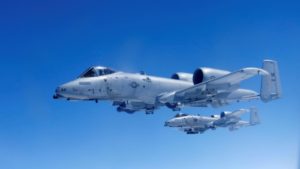
A bipartisan group of lawmakers is seeking to keep the US Air Force’s A-10 Thunderbolt II flying through 2033. This is important because the iconic close air support platform does not have a unique replacement for some of the missions it performs.

A-10s played a role in supporting the rescue of the crew of an American F-15 that was downed over Iran in April. It has played a role in many major conflicts in the Middle East as an essential element of US Central Command’s arsenal.

US Congressman Abe Hamadeh introduced the Bolstering Recognition, Resurgence, Retention, and Remembrance of the Thunderbolt Act, known as the BRRRRT Act, on July 20. The bill is co-led by Representative Don Davis and has several cosponsors. Its name is a reference to the distinctive sound of the A-10’s cannon.

The legislation comes amid a long-running debate over the future of the A-10 and whether newer aircraft can adequately replace its close air support and combat search and rescue capabilities.

Lt. Col. Joel Bier, a retired US Air Force Weapons School instructor pilot with more than 2,500 hours in the A-10, argues that keeping at least 126 of the aircraft flying is important. The Air Force must also preserve the training, maintenance, and institutional knowledge that enable the A-10 community to perform its missions.

Bier was qualified as a Forward Air Controller (Airborne) and as a Rescue Mission Commander (Sandy 1) Instructor Pilot until his recent retirement, and he commanded at the squadron level. He now works as a contract pilot, independent consultant, and freelance author.

Bier served 21 years in the Air Force and began flying the A-10 in 2007 after graduating from the US Air Force Academy and completing his pilot training. He said efforts to reduce or retire the A-10 fleet repeatedly surfaced during his career.

The importance of the A-10 gained renewed attention after an American F-15 was lost during Operation Epic Fury. A-10 pilots took part in the effort surrounding the recovery of the aircrew. “When DUDE44 went down, there were A-10 pilots there at the beginning when they picked up the pilot and then A-10s led the second mission,” he said.

“The A-10 is a unique combination of man and machine,” he said. A-10 squadrons specialize in close air support and combat search and rescue, meaning their pilots develop deep expertise in missions that may receive less emphasis in other fighter communities.

After originally moving to fully retire the A-10 in 2026, the Air Force announced in April that it plans to keep A-10s flying through 2030. Current plans envision an active-duty squadron at Moody Air Force Base in Georgia and a reserve squadron at Whiteman Air Force Base in Missouri. The BRRRRT Act would go further by requiring the Air Force to maintain the aircraft through 2033.

However, Bier argues that simply extending the retirement date does not solve the problem. He compared maintaining aircraft without the infrastructure behind them to keeping something alive without its vital organs. Training new pilots, maintaining depot-level support, producing spare parts, and preserving the Air Force Weapons School pipeline are all necessary if the remaining aircraft, around 100 of them, are expected to remain operational in numbers that matter and can contribute to overseas operations.

The A-10 depot at Hill Air Force Base, for instance, was shut down in January, Bier said. The Weapons School has also been affected as the Air Force moves toward retirement of the fleet. In April, the pilot training unit in Arizona graduated its last class, just weeks before the Air Force announced A-10s would fly through 2030. The BRRRRT Act seeks to preserve or restore some of this institutional backbone.

The numbers also matter. Previous legislation established a minimum inventory of 103 A-10s. Bier said supporters are now seeking 126 aircraft, enough to sustain operational squadrons while providing aircraft for testing, training and the Weapons School.

Without such numbers, the remaining force could face a punishing deployment schedule. Bier said Air Force plans could otherwise leave roughly 54 aircraft, insufficient to reasonably maintain deployments and training.

This debate is not new. The A-10 was developed after the Vietnam War as a dedicated close air support aircraft, designed around its powerful cannon and intended to operate close to ground forces. Its relatively low speed, maneuverability, survivability, and ability to operate from austere locations were designed for a potential confrontation with Soviet armored legions in Europe.

The US Air Force has considered retiring or replacing the aircraft for decades, as early as 1984 when A-10 production ended. Even after its excellent performance during the 1991 Gulf War showed it was still relevant, the Air Force increasingly favored multirole fighters that could conduct air superiority missions while also carrying out other tasks.

The A-10 nevertheless remained heavily involved in the post-September 11 wars. Bier deployed to Afghanistan in 2009, where he flew close air support missions from Kandahar.

He recalled one mission in which he scrambled after a helicopter was downed during fighting involving a US Army convoy. Without a Joint Terminal Attack Controller on the ground immediately available to direct fire, Bier worked directly with the convoy commander while coordinating with Apache helicopters. The A-10s remained overhead until a quick reaction force arrived.

Experiences such as these underpin the argument for retaining specialized close air support aircraft.

The larger question is what eventually replaces the A-10. The Air Force is investing heavily in advanced aircraft such as the F-35 and future F-47. However, Bier argues that an F-35 or another sophisticated fighter cannot simply become equally proficient at every mission the A-10s do without dedicated training.

There is also a cost calculation. Using an expensive new fighter for missions that can be performed by an existing A-10 may not always make sense. Bier compared buying high-end fighters for close air support to “using a Ferrari to mow your lawn.”

The BRRRRT Act therefore represents more than an attempt to preserve a historic and well-known aircraft that has performed well for fifty years. It raises a broader question about how the US military manages the transition from proven systems to future capabilities.

The A-10 will eventually leave service. The question is whether the close air support and rescue expertise built around it is maintained in a new platform and, if not, how these key roles will be performed by F-15s or F-35s.

Bier argues that the Air Force should maintain the aircraft and the ecosystem behind it until a replacement can actually perform those missions. The bill’s proposed 2033 deadline, he said, provides more time for industry to sustain production and maintenance while the military determines what comes next.

Families of 9/11 victims launch petition to bar Zohran Mamdani from 25th anniversary memorial

Family members of those murdered on 9/11 have launched a petition calling for New York City Mayor Zohran Mamdani to be excluded from the 25th-year memorial events on account of his association with extremism and refusal to condemn antisemitism.

The petition was launched by Florida relator Giovanni Galante, whose girlfriend was among those killed by al-Qaeda terrorists on 11 September, 2001. It has now gathered over 5,000 signatures.

The petition says that concerns have been raised about Mamdani’s public positions, associations, and responses to rhetoric that many perceive as hostile to shared American values.

These positions include a perceived reluctance to "clearly and unequivocally condemn phrases such as 'globalize the intifada,' which many interpret as endorsing or normalizing violence," the petition reads.

It also cited Mamdani's support for, or associations with, individuals whose public statements or records are viewed by family members as dismissive of American institutions or insufficiently critical of extremist ideologies.

The petition notes that Mamdani’s own father penned a book shortly after 9/11 in which he argued that suicide bombers should be “understood as a feature of modern political violence rather than stigmatized as a mark of barbarism.” Mamdani has previously said that his father has been influential in shaping his views.

Mamdani has also praised Brooklyn Imam Siraj Wahhaj, who was named as an alleged co-conspirator in the 1993 World Trade Center bombing, and served as a character witness for the “Blind Sheikh,” who was convicted in 1995 of plotting terror attacks against the United States.

More recently, Mamdani appointed Ramzi Kassem, who previously represented Ahmed al-Darbi (convicted in an al-Qaeda tanker bombing plot), as New York City’s chief counsel.

The NYC mayor also endorsed candidates such as Aber Kawas, who described 9/11 as an attack “a couple of people did in the context of US capitalism, racism, white supremacy, and Islamophobia,” and who also expressed sympathy for Ahmed Ferhani, who pleaded guilty to plotting to blow up a Manhattan synagogue.

"For 9/11 families, this is not simply a public ceremony, it is a deeply personal day of mourning," wrote Galante. "The presence of individuals whose words or associations are perceived as conflicting with the solemn purpose of the event risks detracting from that focus and causing additional pain."

Given the concerns expressed, the families in the petition respectfully asked the organizers to "carefully consider whether Mr. Mamdani’s participation would align with the intention of the ceremony and the expectations of the families most directly affected by the tragedy."

"The 25th anniversary should remain centered on remembrance, unity, and an unambiguous rejection of the violence and extremism that defined that day. Ensuring that all participants reflect these principles is essential to preserving the integrity of the commemoration."

Several 9/11 survivors have commented on the petition.

"As a survivor of the WTC attack on 9/11 I believe that based on Mayor Mamdani's past performance in regard to Israel and radical Islamic terrorism that he should be barred from all WTC memorial ceremonies," wrote Craig.

Silverio wrote, "Many tears had shed on that day, but why was Mayor Mamdani’s own reason he cried? [Because] his aunt stopped taking the subway after September 11th because she did not feel safe in her hijab."

"Seeing 9/11 Live on the news while at my first Active Duty Duty Station, and subsequently deploying ISO OER in Afghanistan during rotation one, it is an affront to the memory of all who perished that day and in the following days while hunting the vile Islamic perpetrators that anyone who has voiced support for those despicable death cultists would be given a voice of any kind at that event," wrote Justin. "Shame on all who would put the relatives of those fallen in a position wherein they have to tell anyone they do not want these individuals at that ceremony."

Brian wrote that his brother David was murdered on 9/11 and that he is "incensed that a terrorist excuser is now Mayor, and outspoken sympathizer for terrorist perpetrators."

"He is disqualified from attending the 9/11 remembrance ceremony and ought be barred."

The Post reached out to Galante for comment.

Flavio Bolsonaro launches Brazil presidential campaign, touts support from Milei, Netanyahu

Brazilian Senator Flavio Bolsonaro, eldest son of former president Jair Bolsonaro, on Saturday formally launched his bid to challenge President Luiz Inacio Lula da Silva in October’s election, showcasing support from Argentine President Javier Milei, an AI-generated message from his jailed father, and a video address from Prime Minister Benjamin Netanyahu.

Bolsonaro pledged tax cuts and a tougher stance on crime, and stressed his commitment to carrying forward his father's political legacy.

"Here is Bolsonaro's blood," he said in an emotional tone to supporters who waved green and yellow flags. The arena in Sao Paulo where he spoke was nearly full, but not quite.

Former President Jair Bolsonaro is currently under house arrest for his role in an attempt to overturn the election where Lula defeated him.

Milei delivered a fiery speech criticizing Lula and declaring that Bolsonaro can “save” Brazil from socialism. The Argentine president flew to Brazil the night before the event and met on Saturday with Sao Paulo Governor Tarcisio de Freitas.

"We will continue offering our testimony everywhere against the lies of socialism," Milei said.

Brazil's presidency did not immediately respond to a request seeking comment.

Former first lady Michelle Bolsonaro, Flavio's stepmother, also appeared via video message to offer her endorsement, in a speech addressed to women voters. The two recently reconciled following a public dispute that played out in videos exchanged on social media.

"Flavio, may God bless and protect your candidacy," she said in the video message.

In December, the senator secured his father's endorsement to run in this year's election. But his campaign lost its early momentum in May, after leaked messages linked him to jailed banker Daniel Vorcaro, whom he later acknowledged had financed a film about his father's political career.

Bolsonaro’s popularity was also dented by the dispute with Michelle Bolsonaro and by his close ties to US President Donald Trump, who has imposed tariffs on Brazilian goods.

A Datafolha poll released on Friday showed Lula leading Bolsonaro 48% to 43% in a runoff, up from 47% to 43% in June.

Flavio Bolsonaro has struggled to forge political alliances. Center-right parties have so far decided to stay neutral rather than endorse his candidacy.

Supporters at the launch event remained optimistic about his prospects.

"Brazil has to change. There were no scandals linked to Flavio Bolsonaro. This is coming from the left," said Leandro Aguilar, 44, a São Paulo resident who attended the event with his family.

Janete Rubio, 68, appeared highly emotional throughout the gathering, at times crying or else dancing to music while draped in Brazilian and US flags.

“Brazil is very rich, but it is being underestimated. Together, with the strength of the United States and the strength of Trump, we will succeed,” she said.

At least 23 missing in South China Sea after Vietnamese vessel sinks, rescuers search for survivors

Rescuers were searching on Sunday for 23 people missing after a Vietnamese ship sank in the busy waterway of the South China Sea, while 39 were pulled from the waters, China’s state broadcaster CCTV said.

Authorities in the southern province of Hainan said the cargo vessel Khoi Nguyen 18, with 62 Vietnamese nationals aboard, ran into distress in waters near Fiery Cross Reef, CCTV added.

A distress flare from the vessel was first spotted by a Chinese rescue ship, the Nanhai Jiu 115, on Saturday evening, CCTV said.

Six Chinese vessels, a rescue helicopter, and a Vietnamese vessel joined the search and rescue effort at the site, it said.

The Vietnamese-registered vessel is nearly 70 m. long with a gross tonnage of 999 tons.

The area around the reef is part of the disputed Spratly Islands, which China calls the Nansha Islands, a group of highly contested reefs, islets, and atolls in the resource-rich South China Sea.

China claims sovereignty over almost the entire strategic waterway, including the Spratly Islands, where it has built runways and militarized artificial islands.

But Beijing’s sweeping claims overlap with those of Vietnam, the Philippines, Taiwan, Malaysia, and Brunei.

France returns 23 artifacts to Syria after 15 year-long loan amid Macron’s historic visit Damascus

The Arab World Institute (IMA) in Paris returned 23 artifacts to Syria earlier this month, during French President Emmanuel Macron’s visit to strengthen ties between the two countries.

Originally loaned in 2010 and 2011 to IMA from museums in Damascus, Aleppo, Latakia, and Palmyra, all 23 artifacts were transported back to Syria aboard the French presidential plane alongside Macron.

The artifacts include Roman bronzes, Byzantine and Islamic coins, funerary reliefs from the ancient city of Palmyra from the second and third centuries, a mosaic fragment from the Umayyad Mosque, reported the French magazine BeauxArts earlier in July.

Also returned as part of the collection was the statue of Ishqi-Mari, an ivory statuette discovered in a Temple of Ishtar in the ancient city of Mari by a French archaeological team in 1934.

Syria’s Foreign Ministry, in a July 7 statement, noted France as the first country to cooperate with Syria in its campaign to recover antiquities held worldwide since the Assad regime was overthrown.

Returning the artifacts comes as part of Syria’s “national and diplomatic efforts” to recover its cultural heritage, Syria’s Foreign Ministry explained.

Syria’s state media SANA, citing Syria’s Directorate-General of Antiquities and Museums (DGAM), added that the artifacts had originally been slated to return in 2014, but delayed due to the deterioration of Syria and France’s relations under Assad.

Further, SANA reported that French authorities at the time had also refused to return the artifacts due to the nature of the security situation in Syria and concern for the artifacts’ preservation.

Macron and Syrian President Ahmed Al-Sharaa presided over the official handover ceremony of the artifacts on July 7, which took place at the People's Palace in Damascus.

In its statement, the Syrian Foreign Ministry expressed its thanks and appreciation to French authorities for their cooperation in returning the artifacts.

“France has safeguarded Syrian archaeological treasures for years of war, to protect them from destruction and trafficking,” Macron shared in a post to X/Twitter, alongside a video of the ceremony. “They are back. Very proud to bring them back to Damascus.”

IMA President Anne-Claire Legendre echoed Macron’s sentiment in her own social media post, sharing the institute’s “great pride” in finally returning the artifacts to Syria.

“It is very moving to return these works to the Syrians and to see them return to the Damascus museum,” IMA said in its own X post, marking the occasion. “It is giving back to the Syrians elements of their history that have been threatened all these years.”

“After more than fifteen years of conservation at the Arab World Institute (IMA), these works, entrusted by the Directorate General of Antiquities and Museums of Syria (DGAM), are returning today to their country of origin. Presented as part of the permanent tour of the IMA museum, they have helped to reveal to a public from all over the world the richness of Syrian heritage.”

“This trip also marks the opening of a new chapter in cooperation between the Institut du monde arabe and Syria, with the preparation of a major exhibition dedicated to Syria in 2028 and the strengthening of partnerships between Syrian cultural institutions and the IMA,” IMA concluded.

Wildfires across region force Tour de France to reroute final stage

Wildfires in southwest France have forced organizers of the Tour de France to reconfigure the final stage, set for Sunday.

The change is necessary because multiple first responders have been diverted to the fires. The new route will leave a smaller race footprint for local officials to secure.

“As numerous wildfires are currently affecting France, particularly the Gironde region, emergency services are fully mobilized to combat the blazes, while internal security forces are working to secure the affected areas and protect the population,” the Amaury Sport Organisation said in a statement.

"In light of this, the Ministry of Interior has decided to redeploy a portion of the internal security forces initially mobilized to ensure security for the final stage of the Tour de France, in order to reinforce the response efforts in the areas affected by the wildfires."

The wildfires have led to the evacuations of about 200,000 people.

Stage 21 had been set as a 132.5-kilometer ride from Thoiry down the Champs-Elysees in Paris.

The re-imagined Stage 21 still will end along the famed road, just after a circuit on the Montmartre. But the run now will occur solely within the Paris boundaries and travel just 89 km. Cyclists will take two extra circuits along the Champs-Elysees before heading out for the Montmartre climb.

The Montmartre circuit has proven to be popular after it was used in the 2024 Paris Olympics and then added to the 2025 Tour de France. The area can accommodate large gatherings of fans, who turn the area into a party atmosphere.

Earlier in the Tour de France, fans were asked to stay away from the final 40 kilometers of Stage 3 because of wildfires and the need to deploy first responders to the area.

Romania says it shot down second drone breaching its airspace

Romania said on Saturday that it had shot down a second drone breaching national airspace in as many days over a sparsely populated area near the border with Ukraine.

The first drone, which Romanian prosecutors investigating the fragments said was Russian, was shot down by the NATO state on Friday, the first time it has done so after dozens of airspace breaches.

President Nicusor Dan took to social media to say the second drone had been shot down at 8:30 a.m. (0530 GMT), 10 km (6 miles) west of Sfantu Gheorghe in the Danube Delta.

The defense ministry said the airspace breach had been spotted by radar at 8:22 a.m., and two F-16 fighter jets had been scrambled.

It did not specify the origin of Saturday's drone; prosecutors said the drone downed on Friday had been Russian.

Romania, which shares a 650-km (400-mile) land border with Ukraine, said Russian drones had breached its airspace around 30 times since Moscow began attacking Ukrainian ports across the Danube River after its full-scale invasion of Ukraine in 2022.

In May, a Russian drone crashed into an apartment building in the southeast Romanian town of Galati, near the Ukrainian border, injuring two people. It was the first time a strike had hit a densely populated area in a NATO country and caused injuries during the Ukraine war.

On Friday, General Gheorghita Vlad, the Romanian army's chief of staff, said Russian attacks on the region around the Ukrainian port of Odesa had increased ahead of the harvest season, further pressuring key energy and trade routes in the Black Sea.

Zelensky: Ukrainian long-range strikes hit Russian warship, vessels transporting Iran-linked cargo

Ukraine’s forces struck a Russian warship and vessels used for transporting Iran-linked military cargo in the Caspian Sea, President Volodymyr Zelensky said on Saturday.

“We also achieved very strong results with long‑range strikes in the Caspian Sea – including vessels used in military cargo shipments involving Iran,” he said on X.

Zelensky did not provide additional details.

This report from Ukraine comes on the heels of a recent statement from US President Donald Trump to Truth Social on Friday, in which he claimed that Russian President Vladimir Putin assured him that Russia was not selling weapons to Iran. 

"If they did, it would be very bad for them – certainly not in their best interests," Trump emphasized in the post.

Despite Trump's confidence in Putin's claims regarding arms sales to Iran, recent reports from US intelligence sources indicated that Iranian drone attacks on CIA facilities in the Gulf might have received Russian assistance, potentially involving the provision of targeting information or advanced drone technology.

According to the Reuters report, at least two CIA facilities were struck in March, one of which was the CIA station in Saudi Arabia, located within the US embassy in Riyadh, while another was based in eastern Iraq.

These US intelligence sources informed Reuters that firm conclusions about Russian involvement in the attacks have not yet been reached.

However, they noted the strikes' effectiveness and precision, as well as Russia's broad technical support for Iran, as potential evidence of this involvement.

While Russian support for Iran is longstanding, the specific targeting of sensitive CIA sites would suggest that Moscow is willing to escalate its efforts to disrupt US operations as Washington continues to face challenges in trying to bring the conflict involving Iran to an end.

Four people, nine entities tied to Iran financial evasion network sanctioned by US Treasury

The US Treasury Department’s Office of Foreign Assets Control (OFAC) sanctioned four individuals and nine entities tied to an Iranian financial evasion network on Friday, according to a press release on the department’s website.

The network, run by Iran-linked financier Babak Zanjani, enabled the Islamic regime to evade sanctions and pursue actions that destabilize the region, OFAC stated.

In addition, the network also provided support to Iran’s Islamic Revolutionary Guard Corps (IRGC) through Zanjani’s digital asset companies, such as Zedcex and Zedxion, the department said.

Revenue methods used by Zanjani to finance the regime included financial services, gold and precious gem production, digital asset trading, and major transportation and infrastructure projects, the Treasury said.

Zanjani had previously been found guilty of embezzlement in an Iranian court in 2016, a charge for which he was sentenced to death, the statement noted, with his sentence commuted in 2024.

His 2025 reemergence as a financier for Tehran was described by the Treasury Department as a demonstration of "the lengths to which Iranian state-affiliated elites will go to preserve access to the international financial system so that they can enrich themselves, even as they mismanage the Iranian economy."

According to the department, the sanctions are part of a broader effort enacted through Executive Order 13902, which targets Iranian financial, petroleum, and petrochemical sectors to prevent the funding of the regime's nuclear, missile, and terror activities.

The department emphasized that the new sanctions would "further pressure" Iran following its recent drone and missile attacks on countries across the Middle East, as well as ships transiting the Strait of Hormuz.

“The Iranian regime continues to pay a steep economic price for its reckless behavior, with the rial plunging to another record low and inflation up massively,” said US Treasury Secretary Scott Bessent. “Under President Trump’s leadership, Treasury will continue cutting off economic access for corrupt Iranian regime elites, along with their financiers and facilitators.”

The statement included a call for governments and financial institutions worldwide to avoid engaging with Zanjani or his network, as well as other networks connected to Iran.

"The Iranian regime is the world’s leading state sponsor of terror, and for more than 40 years has used the IRGC to foment instability in the region and beyond. We will continue to expose and disrupt networks that provide the regime and its proxies with the resources they use to undermine US national security interests," the statement concluded.

Get help now

Send a message with a description of your problem and possible ways of assistance and we will contact you as soon as we consider your problem.