• English
  • Русский

Trump says Jewish Senator Chuck Schumer ‘turned Palestinian’ amid remarks at correspondents’ dinner

US President Donald Trump said US Senate Minority Leader Chuck Schumer has “turned Palestinian,” amid remarks at the White House Correspondents’ Association dinner on Saturday.

“This was a man who was 100% for Israel,” said Trump. “But now he’s a great, proud Palestinian.”

“I’m going to send him a beautiful Palestinian outfit tomorrow so he can greet Bibi Netanyahu when he comes to town next week,” he added. 

The president further poked fun at the press and honored the Secret Service for protecting him, returning to the event celebrating press freedom after a shooting forced the suspension of the original event in April.

Trump, whose administration has often been at odds with the press, started his speech by mostly going along with the warm and relaxed tenor of the evening, alternately mixing friendly jokes with pointed criticism of what he calls the “fake news media.”

But he also could not resist taking cracks at his political adversaries in the press and show business, singling out journalists such as Don Lemon and Lawrence O'Donnell, politicians like Chris Christie and Adam Schiff, and celebrities including Bruce Springsteen and Jane Fonda for personal attacks.

Trump suggested he was going easy on the press after he had planned fiercer criticism last time around. "This place is really the largest group of Trump derangement syndrome people ever put together at one time," he said. "I suspect some of you are lucky that our last dinner was cut short because… I was going to go after you."

This year's dual events marked Trump's first presidential appearance at the correspondents' dinner. He had boycotted the event during his previous years in office, though he promised to return next year.

Press freedom advocates have criticized the Trump administration over lawsuits it has filed against media organizations, restrictions on some journalists' access, and threats of action against broadcasters. He rejects the criticism, saying his administration is promoting accountability and addressing bias.

The black-tie gathering of journalists, politicians and administration officials at the Washington Hilton hotel was called off on April 25 after a man tried to force his way through a security checkpoint and fired a shotgun outside the ballroom where Trump and members of his cabinet were taking their seats.

The suspect, Cole Allen, pleaded not guilty in May to charges including attempting to assassinate the president.

The dinner was moved to a smaller venue at the Waldorf Astoria hotel under heightened security, and one of the first messages of the night was defiance in the face of the assault.

"Tonight, our message is this: We are back. We will not be intimidated. We refuse to let an act of violence have the final word," said the outgoing president of the White House Correspondents' Association, Weijia Jiang of CBS News.

Trump later said, "We do not yield to political violence… No deranged loser with a gun will ever change that."

The event also honored Secret Service officer Victor Gonzales, who was shot at a security checkpoint outside the ballroom in April and is credited with stopping the attack, and the Washington Hilton staff who assisted guests. Gonzales was wearing a protective vest and was the only person wounded that night.

The gala – an annual fixture on Washington's calendar for more than a century – raises money for journalism scholarships and celebrates press freedoms as guaranteed by the First Amendment of the US Constitution.

It normally features a comedian who pokes fun at the president and the press, but this year's entertainment came from mentalist Oz Pearlman.

Trump punctuated his speech with a few jokes, telling journalists, "I know it was not easy finding shoes to go along with your bulletproof vest, which many people didn't want to wear because they'd rather die than look 20 pounds heavier."

Jerusalem Post Staff contributed to this report.

In first, NATO fighters in Romania shoot down drone in airspace incursion

A Romanian F-16 fighter jet shot down a drone that had entered its airspace on Friday, authorities said, the first time the NATO member state has done so following dozens of such incursions.

Later that day, NATO Air Command confirmed that a drone was shot down by allied fighters under NATO command and control in Romanian airspace.

NATO said an investigation was ongoing and that the alliance is in close contact with Romanian authorities.

Airspace breaches on NATO's eastern flank have fueled concerns that the alliance's borders are at risk as war rages between Russia and Ukraine.

The Romanian army's chief of staff told a news conference that Bucharest had not yet identified the drone's origin or purpose and that an investigation was underway.

However, Chief of Staff General Gheorghita Vlad said it appeared to be a Shahed – the Iran-designed attack drones used by Russia against Ukraine.

"Visually, the pilots reported the drone looked to be a Shahed type," he said, adding it was too soon to draw conclusions.

Earlier in the day, an army source told Reuters: "There is an ongoing investigation to determine the origin of the drone. But in this part of the world it is Russia that is the attacker."

Earlier, President Nicusor Dan wrote on social media platform X that a Romanian pilot had shot down the drone at about 11 a.m. after it entered the country's airspace.

"The area was uninhabited, so the pilot was able to shoot without any risk. Currently, teams of the relevant institutions are investigating the area to come up with all the details about the incident," Dan wrote.

The Romanian Defense Ministry said the drone was shot down near the town of Padina in Buzau county in the east of the country.

It said two Romanian F-16 jets and two Italian Eurofighter Typhoons based in Romania had been scrambled in response to the incursion, adding the drone was first detected by radars at 9:30 a.m. around 20 km. east of Sulina on the Black Sea coast.

Fragments of the drone fell on a wheat field but caused no damage or injuries, the Buzau county prefect told reporters.

Romania, which shares a 650-km (400-mile) land border with Ukraine, has reported multiple breaches of its airspace by Russian drones since Moscow began attacking Ukrainian ports across the Danube River following its full-scale invasion in 2022.

General Vlad said Russian attacks against Ukraine’s Odesa region had increased ahead of the harvest season, further pressuring key energy and trade routes in the Black Sea.

In late May, a drone crashed into an apartment building in the town of Galati, near the Ukrainian border, injuring two people, the first time a strike had hit a densely populated area in a NATO country and caused injuries during the Ukraine war.

EU sanctions Iranian judges, leading cyber group figure, US sanctions Iranian financier

The European Union sanctioned five Iranian judges over alleged human rights violations, as well as a leading figure in a cyber group accused of helping the regime suppress information, the EU Council said on Friday.

The Council said it had sanctioned Nima Salehi, the Iranian founder of the Ashiyane cyber group, which it said cooperates closely with the EU-listed Cyber Police (FATA) and the Islamic Revolutionary Guard Corps.

The statement did not specify the names of the sanctioned judges.

“As Tehran intensifies its domestic crackdown, the EU will continue to hold those responsible to account,” the EU’s top diplomat, Kaja Kallas, said in a statement on social media platform X.

The European Union has so far sanctioned 269 individuals and 53 related entities.

The United States on Friday announced further sanctions against nine firms and four individuals associated with sanctioned Iranian financier Babak Zanjani for their efforts to evade US sanctions.

The US Treasury Department said the new designations target Zanjani’s Iran-based operations under his “Dot One” conglomerate and several firms based in Turkey and the United Arab Emirates that have supported his already designated digital asset exchanges, as well as top executives at those firms.

Treasury said Zanjani had leveraged a diverse portfolio that includes financial services, digital asset trading and gold and precious gem production, along with major infrastructure projects, to launder revenue and move funds covertly for Iran.

“The Iranian regime continues to pay a steep economic price for its reckless behavior, with the rial plunging to another record low and inflation up massively,” Treasury Secretary Scott Bessent said in a statement. "Treasury will continue cutting off economic access for corrupt Iranian regime elites, along with their financiers and facilitators.”

Treasury's Office of Foreign Assets Control first designated Zanjani and his two largest digital asset projects, Zedcex Exchange Limited (Zedcex) and Zedxion Exchange Limited (Zedxion) in January.

US, Ukraine pushing to bring Russia back to negotiating table, hopeful for partial ceasefire

Ukraine and the United States are pushing the Kremlin into a new round of peace talks, after Kyiv continued its long-range strikes on Russian infrastructure.

According to the Kyiv Independent, Ukraine and the US are hoping that the shift in the war could force Russia back to the negotiating table. 

One US official told the Kyiv Independent that the White House thinks that Russian President Vladimir Putin may now be more willing to accept at least a partial aerial ceasefire, after Russia has been bombarded with strikes near Moscow and St. Petersburg.

Ukrainian President Volodymyr Zelensky spoke with US envoys Steve Witkoff and Jared Kushner earlier this week.

A source with knowledge of the conversation told the Kyiv Independent that the pair told Zelensky that Washington is revising the framework for negotiations. Once that is completed, Kyiv and Washington will closely coordinate on proposals before they are presented to Moscow.

The two US envoys are expected to head to Moscow in late July or early August to continue discussions.

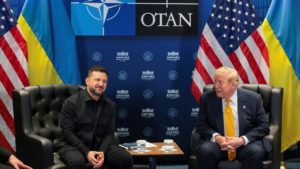
Notably, Zelensky is set to meet with US President Donald Trump next week to attend former US senator Lindsay Graham’s funeral. The pair of leaders are expected to discuss developments in peace talks as well as updates on the frontlines of the nearly four-year-old war.

Zelensky said on Thursday that a trilateral meeting between the US, Ukraine, and Zelensky could happen as early as the fall.

"I think there will be a trilateral meeting then. Of course, we need to do all this by the fall. I think we need to work hard on this. If it were up to us, it would be in July. But not everything depends on us," Zelensky said.

On Thursday, US Secretary of State Marco Rubio said that the US would need new ideas to begin peace talks between Russia and Ukraine.

"If, when peace comes, it'll be because of some new idea and some new concepts, and we're prepared to offer some of those in the right setting and form if the opportunity presents itself and the conditions are right," Rubio said. "We're prepared to play that role in a positive way."

"I think it is a very bloody war," he added. "I think both sides should have an incentive to bring it to an end. That's been the challenge: an end that both sides can accept, and we've tried, and we'll continue to try to see if we can find a middle ground that brings this about."

On Friday, the Kremlin doubled down and asserted that any new US proposals would need to be “acceptable” for Russia.

Moscow has repeatedly demanded that the US stop supplying weapons to Ukraine, and walk back its positions to be closer to the "Alaska Understandings."

The "Alaska Understandings" are what the Kremlin asserts is a series of agreements reached last summer during Putin's meeting with Trump in Alaska.

Notably, the "understandings" involve the US pressuring Ukraine to relinquish control of the Donbas region. Kyiv has repeatedly stated that would be a nonstarter.

Russia, for its part, has refused to participate in talks in countries it views as neutral.

The tides seem to be turning to a certain extent in the war, but officials who spoke to the Kyiv Independent believe both Kyiv and Moscow have reasons to pursue a partial ceasefire.

Although it can now produce Patriot missiles, Ukraine is still running low on interceptor munitions, and Russia’s threadbare air defenses have left it increasingly more open to attacks.

However, Ukrainian officials believe that Russia is unlikely to end the war full stop. As such, Ukrainian and US officials believe that a partial ceasefire, which has been floated before, seems like the most realistic option.

Reuters contributed to this report.

Germany’s Merz picks first woman chief of staff in shake-up before state elections

German Chancellor Friedrich Merz named German Health Minister Nina Warken as his new chief of staff on Friday, as part of a reshuffle intended to inject momentum into his unpopular government before difficult state elections in September.

Merz also said more changes were to come. Two sources familiar with the matter said he was set to replace his transport minister, but that will take longer as Merz's pick pulled out after initially agreeing to take the role.

Warken will be the first woman to hold her new post, an important position that serves as a node between the chancellery, ministries and lawmakers at a time when Merz is pushing reforms to revive Europe's largest economy.

The reset follows the abrupt resignation of conservative party heavyweight Jens Spahn as parliamentary faction chief, in a row over his decision to have a surrogate baby despite his party's staunch opposition to surrogacy.

Merz is under pressure to deliver after a testing first year in office. He trails in opinion polls to the far-right Alternative for Germany and faces the prospect of the AfD gaining power for the first time at state level in September.

Economic growth has struggled to revive, with Germany’s vaunted export-driven economy under threat from rising costs at home and competition abroad. Global tariff ructions and the energy shock from the Iran war are also hobbling growth.

"We are a reform-oriented government, and we intend to continue demonstrating that," Merz told reporters in Berlin, promising to "hit the ground running" when parliament reconvenes after a summer recess.

Merz had picked Warken, 47, to oversee health reforms to rein in soaring healthcare costs, a job that will now fall to another party heavyweight, Carsten Linnemann.

Warken is "assertive and well-versed in security policy" and "a tough negotiator," Merz said.

Merz is set to replace German Transport Minister Patrick Schnieder amid frustration over the state of Germany's rail network and crumbling infrastructure, two sources said, with train delays now a national topic of conversation.

Political analyst Oliver Lembcke said Merz, 70, was looking to project strength while making his government and party look younger and more female.

"However, he must be careful not to bungle the process," he added, saying Merz had to avoid drawing out the reshuffle for too long. "Anyone who wavers here quickly squanders their authority, and the chancellor cannot afford any further loss of authority," he said.

The train drivers' union cautioned against blaming the rail network's problems on an individual, saying policy makers had for years failed to provide clear goals, binding mandates or consistent management.

"Germany does not need further political reshuffles, but rather determination, expertise, and reliability," it said.

Merz's outgoing chief of staff, Thorsten Frei, will succeed Spahn as head of the CDU/CSU faction in parliament.

Merz said he would make further changes to his cabinet but declined to give further details, adding that these would take more time.

Merz's popularity is at an all-time low, according to a RTL/ntv Trendbarometer poll this week, with only 14% of respondents satisfied with his performance compared to 85% dissatisfied.

The AfD tops national polls at 26%, ahead of the conservatives at 22%, before elections in the eastern states of Saxony-Anhalt and Mecklenburg-Vorpommern in September that the AfD hopes will help pave the way for national success.

US Coast Guard rescues 11 people after seaplane crashes in Washington state, injuring four

The US Coast Guard said on Thursday that a Kenmore Air seaplane in Washington state with 11 people on board made an emergency landing near Sucia Island before catching fire, but everyone on the plane was accounted for after a rescue operation.

Kenmore Air, the largest US seaplane airline, said a de Havilland DHC-3 Otter plane that departed from Lake Union, Seattle, was involved in an accident in Shallow Bay near Sucia Island at about 5:15 p.m.

An image released by the Coast Guard showed the seaplane on fire in the water at the crash site.

Sucia Island is in Washington state’s San Juan Islands located north of Seattle near the Canadian border.

The Coast Guard and Canadian and local responders launched multiple assets to assist with the rescue, the Coast Guard said.

"Several patients are being transported to local hospitals for medical evaluation and treatment," it added.

Kenmore Air said there were 10 passengers and one pilot on board. Two injured passengers were transported to medical facilities in Bellingham and another two injured passengers were transported to Orcas Island for evaluation and treatment, the airline said.

"Kenmore Air is fully cooperating with the investigating authorities, and we will continue providing verified information as it becomes available," CEO David Gudgel said in a statement.

Founded in 1946, Kenmore Air flies more than 90,000 passengers annually on scheduled, scenic and charter flights, according to its website.

UN human rights chief Volker Turk faces pushback in bid for second term

United Nations Human Rights chief Volker Turk, an outspoken critic of Russia’s war in Ukraine and Israel’s conduct in Gaza, faces opposition from both countries to a second four-year term ahead of a potentially contentious vote on Friday, diplomats told Reuters.

Turk, a lawyer who has worked for the United Nations for decades in major offices such as Geneva and field locations including Kosovo, ends his first four-year term in October.

UN Secretary-General Antonio Guterres, who has worked closely with Turk in the past and who steps down in December, has proposed another term for the Austrian until 2030.

However, Russia has submitted a counter-proposal to extend his term by just over two months, until the end of 2026, according to a copy seen by Reuters. Three diplomats said Israel also opposed a four-year extension and that Washington had raised doubts, turning what had been expected to be a consensus-backed reappointment into a contentious vote.

Others have also privately questioned another full term, saying the matter should instead be determined by Guterres’ successor. “It’s up to the next SG,” one diplomat said.

Asked to comment, Russia's UN mission in New York agreed.

“Mr. Turk’s reappointment for four years deprives the new Secretary-General of the opportunity to make his/her own choice for such an important post for a long period,” it said. “It is an arbitrary idea given the sensitivity of the human rights architecture and its role in the United Nations in general.”

The mission said the view was shared by "many" UN states and added: "We'll see tomorrow how many of them will be ready to openly state their position without fear of reprisals."

Since the vote is in the UN General Assembly, the veto powers held by Russia and the other four permanent members of the UN Security Council, China, the United States, Britain and France, do not apply.

Israel's mission and the US State Department did not immediately respond to requests for comment.

When asked about his reappointment earlier this week, a spokesperson for Turk's office, Thameen Al-Kheetan, declined comment, adding: "I believe the High Commissioner is ready to serve."

The high commissioner, a post created in 1993, plays a critical role in speaking out against the backsliding of freedoms at a time when autocracies are gaining influence at the expense of democracy.

Some early critics of Turk's appointment had assumed he would adopt a quieter approach. Instead, he has repeatedly criticized governments ranging from Russia and Israel to the United States.

He has accused Russia of severe violations of human rights and international humanitarian law since its 2022 full-scale invasion of Ukraine, allegations Moscow denies.

He has called for investigations into deaths in US immigration custody and denounced hostilities between the United States and Iran. Washington has defended its standard of care in custody.

Turk has also condemned Israel’s “mass killing” in Gaza, although some, including his own staff, regret he did not denounce a genocide there, allegations Israel categorically denies.

The Russian mission rejected as "tunnel vision" suggestions that Moscow was opposing a four-year extension because of Turk's criticism of Russia's actions in Ukraine. It said its considerations included the wish to preserve the UN's institutional integrity and respect procedures.

Diplomats said Guterres has been consulting governments for months about the proposal – a process meant to garner consensus and ward off last-minute surprises, like Russia's motion.

Turk enjoys strong backing from European states and many Latin American ones, they said. A diplomatic memo from the African Union seen by Reuters showed "no objection" to the proposed four-year reappointment.

There are no other known candidates for the position being considered.

"The Secretary-General is following the resolution and following the rules," UN spokesperson Stephane Dujarric said in New York on Thursday.

"I will add, of course, that the Secretary-General has very much appreciated the work that Volker Turk has done in his term as High Commissioner for Human Rights."

How the IDF helped thousands of Venezuelans return to damaged homes after earthquakes – exclusive

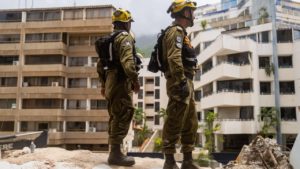
The IDF has helped tens of thousands of Venezuelans to return to their homes at structures that were partially damaged by the June 24 earthquake after Israeli experts have certified the structures as safe, Venezuela delegation leader IDF Brig. Gen. (res.) Yossi Pinto recently told The Jerusalem Post in an exclusive interview.

These tens of thousands of Venezuelans lived in some hundreds of buildings which initial checks by the combined Israeli-Venezuelan engineering teams have already established are safe enough – this out of many thousands of structures which still need to be evaluated, Pinto told the Post.

Speaking to the Post from Venezuela before a ceremony on Tuesday with Venezuelan Acting President Delcy Rodriguez, who thanked the Israeli delegation for their efforts, Pinto stated that the IDF presented their system on July 17 to Venezuela regarding the several thousand structures in question.

The system will map out which structures might be usable, or need to be demolished, how to carry out the demolition process, and how much time it will take until new structures can be built.

This system and the mapping-out process have been determined by a staff of around 35 professional Israeli experts in engineering, disaster operations, and related technologies, said Pinto.

Next, he stated that the system is designed for intake, tracking, and analysis of damaged structures both for the national government as well as the smaller district areas.

According to the IDF Venezuela delegation chief, part of the system categorizes the structures and then places them on different tracks according to the level of damage and the consequences of that damage.

The structures the IDF has evaluated and which the Venezuelans continue to evaluate include some houses, some 20-floor skyscrapers (some dozens), and some 10-floor buildings.

Regarding buildings which are too badly damaged for Venezuelans to return to, until there is a solution, they will be living in tents for an extended period, he said.

Part of what the IDF experts have tried to do, he noted, is hand over and train Venezuelan experts in smart technology professional resources and new disaster-oriented uses of artificial intelligence.

Given that the Israeli delegation was only meant to assist temporarily, Pinto said the IDF still has committed to assisting from a distance, with the new technologies making it easier for Israel to track Venezuela’s progress in disaster mapping.

Further, he said that the IDF carried out a similar disaster mapping assistance project in Thailand around a year ago, such that it feels very experienced in aiding foreign countries with such situations.

He warned that it would take “many years to rehabilitate” the area, and that the exact amount of time would also depend on how efficiently the Venezuelan government acted regarding the process.

ON JULY 6, the IDF had started mapping out and categorizing at the time what was believed to be around 1,300 (now the number has risen to several thousand) damaged Venezuelan buildings for demolition or potentially being salvageable following the tragic June 24 earthquakes, which killed at least 5,300 people, but potentially more.

Led originally by IDF Brig. Gen. Elad Edri, who was later replaced by Pinto, the Israeli delegation throughout has been much smaller and has a different focus than recent larger missions to Turkey and elsewhere.

If in some past missions, the IDF delegation had over 400 members to assist, Edri noted on July 6 would not rise much above 30-40 at the request of Venezuela.

Further, if in other instances, the IDF was used for immediate rescue missions, in Venezuela Edri said that the IDF’s focus has been providing engineering experts to assess the vulnerability of those buildings which are damaged, but still standing.

In addition, Edri explained that the IDF engineers have provided guidance to Venezuela about what to do with the debris from the damaged buildings.

According to multiple options which the IDF engineers offered to the Venezuelan government, he stated that Caracas decided on trying to reincorporate debris into later building efforts through a recycling process.

Another example of how this operation has been different is that IDF Col. Golan Vach, who is well-known in Israel having run the Turkey rescue mission in 2023 and also managed the mission to find the body of Israel’s final hostage, Ran Gvili in early 2026, has not been involved.

Had the mission been a regular rescue mission, it is possible that he might have been.

Despite this, both Pinto and Edri have said that Venezuela has received the smaller expert team with open arms, that the soldiers have kept their uniforms on with the symbol of Israel prominently displayed, that they have visited with the 5,000 Venezuelan Jewish community, and have been well protected by local Venezuelan security forces.

The Venezuelan government’s receipt of Israeli assistance contrasts with the complete cut-off in relations between the countries dating back to 2009.

During a visit to the Jewish community for multiple Friday night Shabbat prayer services and dinners, IDF officials have said that the Venezuelan-Jewish attendees had tears in their eyes from seeing the IDF uniforms up close.

A major accomplishment of the Israeli delegation was to develop and propose an initial multi-year plan for mapping and rebuilding the disaster areas, which Venezuela approved only in a matter of days, which would normally take weeks or months to come up with.

Edri said that the severity of the disaster warranted more rapid out-of-the-box thinking.

Pinto noted that the July 17 presentation was the culmination of the early and later weeks of work by the delegation.

Following the June 24 earthquake, the IDF delegation flew out of Israel on June 30, landing in Venezuela on July 1 after multiple complex stopovers, said Edri.

In addition, he said that other delegations who wanted to assist with the disaster had sometimes needed four to five days of travel and waiting in order to arrive at the disaster site given the current state of chaos in Venezuela.

Even the IDF could not fly directly into Caracas, instead flying into Valencia and then traveling to Caracas domestically.

Kremlin warns against optimism on peace after Rubio, Lavrov meet in Manila

US Secretary of State Marco Rubio said that the US would continue to play a “constructive role” in finding a solution to the war, but stressed that new ideas were needed to jumpstart peace accords between the two countries.

Russian Foreign Minister Sergei Lavrov and Rubio discussed Ukraine on the sidelines of an ASEAN gathering on Thursday, in a “frank” conversation.

"If, when peace comes, it'll be because of some new idea and some new concepts, and we're prepared to offer some of those in the right setting and form if the opportunity presents itself and the conditions are right," Rubio said. "We're prepared to play that role in a positive way."

"I think it is a very bloody war," he added. "I think both sides should have an incentive to bring it to an end. That's been the challenge: an end that both sides can accept, and we've tried, and we'll continue to try to see if we can find a middle ground that brings this about."

Notably, Moscow has repeatedly demanded that the US stop supplying weapons to Ukraine, and walk back its positions to be closer to the “Alaska Understandings.”

The "Alaska Understandings" are what the Kremlin asserts is a series of agreements reached last year in Putin's meeting with Trump in Alaska.

Notably, the "understandings" involve the US pressuring Ukraine to relinquish control of the Donbas region. Kyiv has repeatedly stated that would be a nonstarter.

While Zelensky said on Wednesday that "a good and important conversation about how to energize diplomacy and bring peace closer," Moscow stated again that, for its part, it was unsure that any progress was being made on peace talks.

After his meeting with Rubio, Lavrov "reaffirmed Russia's readiness for a political and diplomatic settlement of the conflict."

However, Kremlin spokesman Dmitry Peskov said that Moscow was not overly optimistic about making a peace deal any time soon. 

"In this situation, I wouldn’t be too optimistic. Communication is indeed ongoing. This is always a positive thing, but at this point, it wouldn’t be right to talk about any new trends or accelerated efforts," he told Russian state media.

He added that he hoped that US envoys Steve Witkoff and Jared Kushner would come to Moscow when they are available, and that Russia would continue dialogue with the US.

US considering military operations against Al-Qaeda affiliated terrorists in Mali – report

The United States government is considering military options in the West African nation of Mali over the presence of Al-Qaeda affiliated terrorists, The Washington Post reported on Wednesday.

According to the report, Mali would be the eighth nation struck by the US military since US President Donald Trump began his second term in January 2025, which as of now includes Yemen, Somalia, Syria, Iran, Iraq, Nigeria, and Venezuela.

The report cited several anonymous officials and former officials, who described National Security Council Senior Director for Counterterrorism Sebastian Gorka as supporting the potential strikes.

The group in question, Jama’at Nusrat al-Islam wal-Muslimin (JNIM), was designated a terrorist organization by the US in 2018, according to the Director of National Intelligence website. 

While primarily based in Mali, the over 6,000-strong group is also active in other West African nations, such as Niger and Nigeria, the website noted.

The report described Gorka as highly supportive of aggressive counterterrorism policies, having been involved in efforts to kill Al-Qaeda affiliate Abu Ubaydah Yusuf al-Anabi in Algeria.

The Washington Post reached out to Gorka and a spokesperson for the Mali government for comment, but did not receive a response.

Additionally, the Pentagon declined to comment, though a White House official noted that the Trump administration has been urging affected African states “to purchase US equipment and services to support their war efforts against the terrorists,” describing the issue as a “multinational problem.”

“We urge regional partners and NATO allies to support the Alliance of Sahel States in their war against JNIM and ISIS,” the official told The Washington Post.

The official further noted Russia's lack of assistance in the region, despite Russia's status as Mali's security partner.

“We hope that other African nations take note of Russia’s terrible performance in combating terrorism,” the official said.

The Russian Embassy in Washington did not respond to a Washington Post request for comment.

The State Department was also asked for comment on any potential military operation, responding that the US “unequivocally condemns the terrorist activity in Mali.”

An independent expert on the region, Corinne Dufka, told The Washington Post that any US action in Mali has the potential to backfire and lead to JNIM targeting of American citizens.

"They [the US] could be squandering an opportunity to de-radicalize and demobilize one of the world’s most sophisticated jihadist organizations,” said Dufka.

Get help now

Send a message with a description of your problem and possible ways of assistance and we will contact you as soon as we consider your problem.