• English
  • Русский

Trump: US ‘only semi-negotiating’ with Iran, observing impact of economic pressure – report

US President Donald Trump claimed that the US is “only semi-negotiating” with Iran as it watches Tehran struggle to overcome economic pressure, stating that Washington is “low-keying it” in their approach during a phone call with Axios on Sunday. 

"We are only semi-negotiating with them. We are just watching Iran with its huge inflation and the fact they have no money," he stated.

Trump emphasized that the US blockade on Iranian ports along the Strait of Hormuz has contributed to Iran being “in very bad shape.”

One US official told Axios that during active warfare, Tehran can temporarily avoid dealing with the economic consequences of the fighting, but as strikes have paused, it is forced to confront the reality of its economic situation, with no solution easily available. 

According to Axios, Trump did not express frustration with Iran regarding Tehran’s reluctance to finalize an agreement with Oman that would allow for the waterway to be reopened. 

"It will work out. It always works out. It's like a chess game," Trump said.

Iran’s Supreme National Security Council head, Mohammad Bagher Zolghadr, previously outlined a series of conditions it demanded the US abide by in order for the Oman-Iran agreement to proceed. 

The demands included the US refraining from threatening or insulting Iran, permanently ending all wars with Iran’s allies, lifting the naval blockade, and releasing all frozen Iranian funds.

Spain checks 200 Italian arrivals as countries clash over Morrocan migrant crisis at Ceuta border

Spain checked around 200 travelers arriving from Italy at the country’s six largest airports on the first day of border controls reintroduced following a dispute with Italy over irregular migration.

Spain's Interior Ministry carried out checks on a total of 199 people on 12 flights from Italy to airports in Madrid, Barcelona, Seville, Bilbao, Alicante and Valencia, it said late on Saturday.

Spain said on Friday border controls for flights and ships from Italy would remain in force until September 7 after Rome applied its own measures, which it said were motivated by the mass migration rush by 72,000 people to Spain’s North African enclave of Ceuta on July 30.

Italy has suspended the European Union’s border-free Schengen arrangements with Spain since August 1 and said it would maintain border controls until at least August 15.Spanish national police officers monitor as travellers arrive from Italy, after Spain's government said it would establish border controls for flights and ships from Italy, from midnight on Saturday until September 7, in a dispute over irregular migration, at Madrid-Barajas Airport in Madrid, Spain (credit: Spanish Police/Handout via REUTERS)

Rome said the measure would not affect Spanish or other EU citizens traveling to Italy and would instead involve targeted checks on non-EU nationals arriving from Spain by air or sea.

"We hope to be able to lift the suspension soon, as soon as there is no longer any risk," Foreign Minister Antonio Tajani told Italian daily Corriere della Sera in an interview published on Sunday.

The Schengen Area allows passport-free travel across 29 European countries, although member states can temporarily reintroduce border controls on security or public-order grounds.

Syria, Russia reach deal on future of Tartous, Hmeimim bases after 18 months of talks

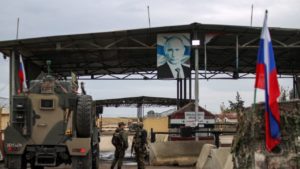
Syria and Russia reached a memorandum of understanding to settle the future of Russian bases at Tartous and Hmeimim following 18 months of intensive negotiations, the Syrian foreign ministry said on Sunday, according to the Syrian state news agency.

The ministry said the Syrian state would take over management of civilian facilities, including Hmeimim airport and the commercial berth at Tartous port, allowing them to be gradually integrated into the country's civilian administration.

It said military facilities would be repurposed as joint training and qualification centers under new arrangements preserving the interests of both sides, with the transition to be completed within three months.

Russia’s naval facility at Tartous and Hmeimim air base have long been Moscow’s principal military footholds in the Mediterranean and Middle East.

Their future has been the subject of negotiations with Syria's new leadership since former President Bashar al-Assad was ousted in December 2024.

In a separate statement, Syria's General Authority for Ports and Customs said Syria would take over the commercial sites previously operated by Russia at Tartous port, including Pier No. 4 and its associated warehouses and facilities.

Reuters reported last month that Russia was seeking to establish a commercial logistics hub at Tartous port using Pier No. 4, a restricted zone outside the naval base.

The two sides said at the time the hub would remain under Syrian control, with all operations subject to approval by Syria's General Authority for Ports and Customs.

Pentagon gives defense executives 21 days to present plan for rapid weapon development – report

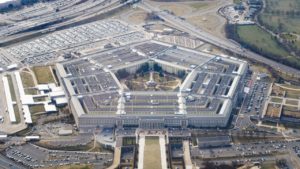
The Pentagon told US defense industry leaders to prepare plans to escalate production and delivery of weapons as reports of munitions shortages escalate, The Washington Post reported on Saturday, citing a Defense Department memo. 

Deputy Defense Secretary Steve Feinberg wrote that the leaders had no more than 21 days to present plans to “drive significantly faster, more aggressive delivery schedules and/or increased production for critical capabilities,” on Wednesday, according to the memo.

“Years-long development cycles are not acceptable. We must dramatically accelerate our program schedules and expand our production capacity now.”

Reports have emerged in recent weeks that the US had used up much of its stockpile of highly accurate long-range missiles.

The missiles are principally the Army's surface-to-surface weapons, known as Army Tactical Missile Systems (ATACMS) and Precision Strike Missiles (PrSM). The US has used "virtually all" of these weapons, according to two sources familiar with the data.

Additional reports emerged of a clash between US President Donald Trump and US Defense Secretary Pete Hegseth over the alleged shortage, with Trump unaware of the extent of the diminished stockpile. 

The White House strongly disputed reports of both shortages and the conflict.

"The US has massive amounts of 'munitions'" Trump wrote in a post on Truth Social on Thursday.

White House officials said Trump had not directed his anger at Hegseth. In a separate Truth Social post on Thursday, the president said he was “extremely happy with the job that Pete Hegseth is doing.”

“He has never blamed Pete. This is all about the leakers,” one official told CNN.

CNN also previously reported that Trump was well aware of any potential shortages but was frustrated that the information became public while the US wants to be able to negotiate from a place of strength.

The memo comes after the White House has attempted to enlist the defense industry to unlock military funding through extensive lobbying, The Washington Post wrote. 

Defense contractors were summoned to the White House to meet with Trump’s chief of staff, Susie Wiles, Defense Secretary Pete Hegseth, Office of Management and Budget Director Russell Vought, and White House Legislative Affairs Director James Braid in July, and were encouraged to use direct lobbying to increase defense spending, The Washington Post cited people familiar with the event as saying.

The Defense Department has announced several framework agreements with defense contractors and emerging startups to increase its supply of low-cost munitions, sophisticated air defense weapons, and patriot missiles. However, the arrangements are nonbinding contracts that rely on congressional funding to become final, The Washington Post wrote. 

“They are agreements to agree, and so they’re not contracts. Almost nothing has been contracted, and that’s the problem.” Tom Karako, director of the Missile Defense Project at the think-tank Center for Strategic and International Studies (CSIS) told The Washington Post

Pentagon chief spokesman Sean Parnell confirmed the veracity of the Feinberg memo, saying it "will inform the fiscal year 2028 budget submitted to Congress for funding, and it is entirely consistent with our ongoing push to rebuild the defense industrial base.”

“Working directly with industry leaders to accelerate production is not new. It has been the clear intent of the President and this Secretary from the start,” Parnell said in a statement.

Australia investigates near-miss collision of two planes on tarmac at Sydney airport

A Jetstar A320 and a Qatar Airways Boeing 777 narrowly avoided colliding on the tarmac at Sydney airport on Sunday, the Australian Transport Safety Bureau was told, it said, as it began an investigation into the incident.

The Jetstar plane was taxiing for take-off to Queensland state’s Gold Coast when its flight crew saw the Qatar Airways plane, which was being towed by an aircraft tug, very close on a crossing taxiway, the regulator said.

"Both aircraft were stopped abruptly," the transport safety bureau said in a statement.

A cabin crew member on the Jetstar plane was injured, and the connection between the Qatar Airways plane's nose gear and the aircraft tug was damaged, the regulator said.

Jetstar, the budget arm of Australia's national carrier Qantas, said it was investigating the incident, too.

“Our aircraft was following instructions by Air Traffic Control when the pilots were forced to brake firmly after another aircraft came in close proximity,” a Jetstar spokesperson said in a statement.

Qatar Airways did not immediately respond to a request for comment.

The incident comes a day after Sydney Airport was hit by widespread delays sparked by government agency Airservices Australia enacting "departure spacing" due to roster problems with air traffic controllers.

Airservices Australia did not immediately respond to a request for comment.

Germany faces daily ‘hybrid warfare’ attacks, minister warns after explosive drone found at airport

Germany faces daily hybrid warfare attacks from abroad, Interior Minister Alexander Dobrindt was quoted as saying on Sunday, following a suspected attack attempt involving an explosive-laden drone at Leipzig/Halle Airport.

Dobrindt told the newspaper Bild am Sonntag that foreign powers wanted to subdue Germany politically and socially by stirring up fear there.

“We’re not at war, but we are the daily target of hybrid warfare,” Dobrindt said. “Espionage, sabotage, cyberattacks, or covert operations by foreign powers aimed at destabilizing Germany or inflicting direct harm are a constant reality.”

The newspaper's advance release of the interview did not say whether he identified any countries in particular.

After the drone loaded with explosives was discovered at the airport in eastern Germany on Tuesday, some German lawmakers pointed the finger at Russia, which has been at war with Ukraine since its military invasion of the country in 2022.

The Russian embassy in Berlin on Friday dismissed the Leipzig event as a “fabricated provocation,” saying it was another example of accusations against Russia without evidence.

Dobrindt, a member of the conservative Christian Social Union, had called the Leipzig incident a "hybrid attack scenario," and left open possible involvement by foreign powers.

Germany’s armed forces on Saturday said two drones were spotted late on Thursday over a German military base site in Mechernich, in the western state of North Rhine-Westphalia.

Dobrindt highlighted the expansion of drone research in Germany as part of the response to the new threats.

British Columbia declares state of emergency as fast-growing wildfire forces evacuations

British Columbia declared a provincial state of emergency on Saturday as wildfires burned across western Canada, forcing thousands of residents to leave their homes as firefighters continued to fight the blazes.

“Homes have been lost, and properties have been destroyed. Some people became trapped as conditions changed very quickly, and needed to be rescued. It remains a very dynamic and threatening situation,” British Columbia’s Premier David Eby said in a press conference.

The Bald Range wildfire was burning out of control and grew to about 9,500 hectares (23,500 acres), prompting evacuation orders in Summerland, Peachland and other districts west of Okanagan Lake. The region produces most of BC's wine and is Canada's second-largest wine-producing area.

Summerland has a population of about 12,000 according to the 2021 census, and Peachland is home to about 6,500 residents.

"A lot of farms have been affected. We don't know how many structures have been lost. They're still busy fighting the fire," Summerland Mayor Doug Holmes said in a phone interview. "We have to brace ourselves for the worst."

Terry Fries of Summerland was watching a football game on Friday night when a neighbor advised him to get a bag ready as the fire grew. "At the time, it was still farther back, and you could see it behind the hills," he said. When BC authorities issued the evacuation order around midnight, he and his family drove north to Kelowna, a larger center.

The District of Summerland, about 45 km (28 miles) from Kelowna, lost power on Saturday due to the wildfire and issued a boil water notice for residents. The municipality said untreated water had entered the system after it bypassed the water treatment plant due to the wildfire.

Several Canadian provinces, including Ontario and Quebec, have battled blazes this year as hot, dry weather fueled wildfires in dense forest areas. Firefighters from Mexico, Australia, France and New Zealand have helped battle the fires.

In BC, where hot and dry conditions have increased the risk of more fires spreading, about 1,500 firefighting personnel are deployed. The province has issued 38 evacuation orders and 49 alerts related to over 100 fires.

Fires have burned through 4 million hectares (9.9 million acres) in Canada this year, according to the Canadian Interagency Forest Fire Centre.

Turkey says Saudi-Pakistan defense pact mirrors NATO’s Article 5, not aimed at Iran

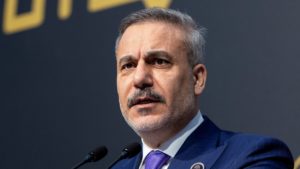
A defense pact signed between Turkey, Pakistan and Saudi Arabia is technically the same as NATO’s Article 5 mutual defense agreement, Turkish Foreign Minister Hakan Fidan said on Saturday, adding the accord was not targeting Iran.

Speaking to the state-run Anadolu news agency, Fidan said a committee of ministers similar to that within NATO would be formed as part of the alliance, as well as a general secretariat based in Saudi Arabia. Egypt could potentially join the pact once certain technical matters are resolved, he said.

Saudi Arabia, Pakistan and Turkey signed the agreement on Friday, bringing together the three countries’ leaders: Saudi Crown Prince Mohammed bin Salman, Turkish President Recep Tayyip Erdogan, and Pakistani Prime Minister Shehbaz Sharif.

The agreement says that any armed attack on any one of the three countries will be regarded as an attack against them all, according to a statement from Pakistan's foreign ministry.

A spokesperson for Pakistan's Foreign Ministry stressed that, despite tensions in the Gulf, the visit has "significance that goes beyond the immediate crisis and short-term considerations."

"This agreement, based on the principle of collective deterrence, will contribute to cooperation in the fields of security and defense, joint projects in the defense industries, and the fight against terrorism," stated Erdogan before the official signing.

The move marks a significant step in efforts by the three regional powers to deepen security cooperation amid growing tensions and the ongoing war between the United States and Iran.

Eli Leon contributed to this report

From Beirut to October 7, American victims of Iranian terrorism await justice that may never come

For many American victims of Iranian terrorism, surviving the attack was only the beginning of their ordeal. Decades later, some are still waiting for the compensation they were awarded in court, while others have died without ever seeing justice. 

The trauma continues through the long psychological and physical recovery, the financial burden of lost income, the costs of families traveling to care for loved ones, and the weight of mounting medical expenses. Everyday financial obligations do not disappear. Mortgage payments, rent, utility bills, and other household expenses continue to accumulate, even as victims and their families struggle to rebuild their lives.

The US Victims of State Sponsored Terrorism Fund (USVSST Fund) was established by Congress in December 2015 under the Justice for United States Victims of State Sponsored Terrorism Act. It compensates American survivors and their families who have obtained a final judgment in a US district court against a designated state sponsor of terrorism. The fund, initially capitalized with $1.025 billion, is funded by forfeited assets, civil and criminal penalties, and settlements with banks and companies that violated US sanctions laws.

Although the fund has distributed more than $10 billion to eligible victims, that amount is little more than a drop in the ocean compared with the tens of billions of dollars awarded in court judgments. Many families are still waiting to receive the full compensation they were awarded, even after more than 40 years. Some bereaved family members have died before ever seeing a single payment.

With the number of victims only growing as the Islamic Republic’s proxies continue to escalate attacks, Rep. Laura Gillen (D-NY) and Rep. Nicole Malliotakis (R-NY) introduced a bill in late July seeking a loan from the Treasury for $3 billion to ensure payouts are guaranteed for victims over the next three years. The loan would be repaid when the American government collects penalties from those breaching sanctions laws.

“American victims of Iran’s state-sponsored terrorism have waited far too long for the justice and restitution they are legally owed,” said Gillen. “This bipartisan legislation ensures that our promises to victims are backed by real action, delivering the long-overdue compensation they deserve while holding Iran accountable for decades of horrific violence against Americans.”

‘Never having the chance to see justice served’

Aryeh Portnoy, a lawyer from Crowell & Moring representing American victims against the Islamic regime for its role in the Hamas-led massacres of October 7, 2023, told The Jerusalem Post, “Victims of Iranian and other state-sponsored terrorism have been seeking justice for decades, and tragically the community of victims has only continued to grow. 

“Victims die every month, sometimes more frequently than that, never having the chance to see justice served. And as new victims see the painful journey of those who came before them, and are afraid that they will also still be fighting 10, 20, 30, 40 years down the road.

“The victims have come to the US government with the plea not to let another victim die without seeing justice.”

“The victims have come to the US government with the plea not to let another victim die without seeing justice. Congress and the president can make sure that doesn’t happen by prioritizing and supporting the victims. They can make a difference right now and fulfill the promises the United States made to the American victims of state-sponsored terrorism never to forget and to afford them the relief they desperately need,” Portnoy continued.

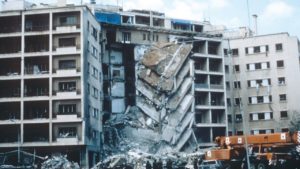
Estera Votaw was among the many bereaved family members who died without ever receiving a payment. A Hungarian Jewish Holocaust survivor who endured both Auschwitz and Bergen-Belsen, Estera had already experienced unimaginable suffering. Decades after surviving the Holocaust, she faced another devastating loss when her husband, Albert Nicholson Votaw, was killed in the bombing of the US Embassy in Beirut by Iran-backed Hezbollah.

Albert, a civilian employee with USAID, was helping Lebanese civilians find housing during the civil war when he was killed in the April 18, 1983, suicide truck bombing. He was one of 63 people killed in the attack, including 17 American citizens.

“He was always extremely funny, very bright, loved to poke fun at what you just said or how you said it or make puns, and he was generally the life of the party when he was in a group,” she shared.

A Quaker from Philadelphia, Albert was guided by strong values and devoted much of his career to public service. After joining USAID in 1966, he traveled the world with his wife and their four daughters, “doing good work.”

Only weeks before leaving his post in Bangkok for Beirut, Albert had reassured his family that “they wouldn’t send me somewhere dangerous,” recalled his daughter Cathy, who was 27 at the time of her father’s death. She said she remains angry that her civilian father was sent into what she believes was an active war zone.

“I have no idea what they were doing, sending civilians into what was basically a war zone…It’s like bombing Iran. You can’t make people do what you want them to do, just because you decide that it’s peaceful,” she said.

Albert had arrived in Lebanon just 10 days before the attack. Estera remained in Bangkok, packing up their belongings and preparing to join him.

It took 24 hours to recover Albert’s body. His remains were cremated in Beirut, and a young Quaker associated with the embassy scattered his ashes in the Mediterranean Sea in accordance with his and Estera’s wishes.

Though the entire family was devastated, Estera was particularly lost, Cathy said. Having spent years moving around the world for her husband’s work and having already lost her home in Eastern Europe during the Holocaust, Estera had no property or roots to return to. Eventually, she settled in Arlington, Virginia, where she lived until 2012, once again having to “remake her life.”

“After the war, after she survived Auschwitz and was liberated from Bergen-Belsen, she had to reinvent herself. She went home to northern Yugoslavia. Her father was still alive, although he didn’t last too long, and she and her brother had survived, and pretty much everyone in the parent generation had been killed, and so she reinvented herself, and eventually went to school in Paris, and then came to the United States, and then at the age of you know 53, she had to do a complete reinvention,” Cathy voiced. “Every single thing has to be reinvented, and it was kind of the same thing when my father was killed.”

Cathy’s own reaction was a slow dribble that eventually amounted to a “nervous breakdown” in the 1990s. “I couldn’t keep it together. I was crying at work. I was trying mainly to hold it together at home, but I couldn’t concentrate. I realized at one point that I was thinking about killing myself,” she said.

“I was thinking about how many of my kids had to die before I would give myself permission to jump out a window,” she recalled. “When I realized that’s what I was thinking, I was sort of fixated on: What if it was just two of them, or did it have to be all three?”

“And what about my husband? I was having these ridiculous thoughts, but when I realized what it was, which was that I was trying to give myself permission to kill myself, I sought professional help and went to a psychiatrist. She basically said, ‘You have something that is called a delayed grief reaction, that your feelings are so strong but so suppressed because you continue to carry on that they’re now sort of popping out here.’ And that made a lot of sense to me,” Cathy said.

Every attack, from the September 11 attacks to the bombing of the American embassies in Nairobi, “jolted all of us back to those raw feelings,” she shared, reflecting on how many grieving families experienced the same.

After years of silent memory, Cathy’s pain became more bearable, and she was finally able to say her father’s name again. Her first son was named Nicholas, after her father’s middle name, and her second son was named Albert. Naming her second son required a warning to family members who were still overwhelmed at the name. Eventually, however, the family was able to share stories about Albert, and how he would take his daughters sledding down hills and over frozen lakes.

Dammarell vs Islamic Republic of Iran

With traditional avenues of justice inaccessible for Iran’s American victims, Cathy said she viewed a lawsuit as the only avenue available to see some accountability. In 2001, a survivor of the attack and the families of victims initiated a lawsuit against Iran, Dammarell vs Islamic Republic of Iran, seeking $5 billion in damages.

Two of Cathy’s sisters immediately joined the lawsuit, though her third sister and her mother needed more convincing.

“My mom said, ‘I didn’t let the Nazis, the Germans, pay me for killing my parents. I’m not going to let Iran pay me for killing my husband,’” Cathy recollected, explaining that she persuaded her mother to join the action on the condition that the money would never be placed directly in her hands.

In 2003, Iran was found liable for orchestrating and funding the attack, and in 2005, 29 plaintiffs were awarded $126,061,657. In 2006, the court entered its final judgment order, consolidating the calculated compensatory damages for the victims and their families at $316,919,657. According to publicly available court documents, the estate of Albert Votaw was awarded $30 million.

Cathy estimated that there was only a 10% chance that her family would ever see even 10% of the money that they were awarded. Now 70, she is afraid that she will never be given what she is entitled to, and that the American government will destroy the mechanisms needed to collect the judgment “in order to be friendly to Iran.”

Under the Memorandum of Understanding signed by Washington and Tehran, which has since failed, the United States committed to ending sanctions against Iran. The lifting of such sanctions would mean an end to the fines and seizures that finance the USVSST Fund.

“The victims of terrorism should be in line for that money before the Iranian government gets it,” Cathy stressed.

“The memorandum of understanding indicated that the president was going to direct that sanctions be lifted, that Iran was going to be back in the fold of nations, and I had a very strong emotional and intellectual reaction to that, which was: no effing way,” Cathy said.

“The victims of terrorism should be in line for that money before the Iranian government gets it. But I think just sort of turning them loose, the way President Trump seems to want to do it, just like, ‘Okay, we’re done, we won, we’re leaving,’ is totally the wrong thing.”

She noted that Libya had been forced to pay compensation to its American victims before being allowed to escape sanctions and the label of a state sponsor of terrorism, and was critical of the fact that Iran nearly had that same opportunity without any conditions of ending its support for terrorism and without compensating those harmed over the past few decades.

In 2008, Libya paid $1.5 billion into a fund for victims of terrorism, including the families of the 270 people killed in the 1988 bombing of Pan Am flight 103, and the American families of those wounded and killed in the 1986 attack on a West Berlin disco.

Portnoy, the lawyer representing the plaintiffs, noted that “it is essential that the government not provide relief to terrorist regimes without first providing relief to the Americans and their families whose lives those terrorist regimes destroyed.

“Iran, in particular, has been sponsoring terrorism and destroying lives for more than four decades – targeting Americans and its allies around the world. It has left a trail of heartbreak and devastation,” he said.

“The victims are imploring their government to ensure accountability and justice for those who have suffered so grievously simply because they were Americans.”

The latest generation of Iran’s victims

While some victims have spent more than a decade waiting for justice, receiving only small, partial payments, new victims have continued to join their ranks. The latest are survivors and families of those killed on October 7, who are still waiting for their day in court.

E. and A., who are suing Iran over the trauma inflicted on their daughter, a survivor of the Supernova music festival, spoke with the Post on condition of anonymity, fearing that public attention surrounding their case could jeopardize their daughter’s slow progress in coming to terms with what she endured.

Both were careful to avoid words such as “recovery,” describing the concept as “obscure” in light of their daughter’s condition. “The idea is to teach her how to live with what she saw and how to handle it. I don’t think she can recover,” E. said.

The couple moved to the United States from Israel, becoming citizens in 2002 after years of bureaucratic wrangling. Their three children were born in New York, and the couple believed that they were giving their children a better, more secure future.

Despite being born in the United States, T., their middle child, decided to enlist in the IDF after high school. At 21, her military service was nearing its end, and she planned to attend college and begin the next chapter of her life. She had tickets to the desert rave that would become one of the deadliest targets of the Hamas-led October 7 attack on Israel. Over 1,200 people were killed that day throughout southern Israel, including more than 800 civilians; Hamas and affiliated Palestinians terror groups abducted 251 people to Gaza.

“She gave us a call, and then she said, ‘Dad, don’t panic. They are shooting all over. I just want to let you know that I love you guys.’ I didn’t understand the magnitude of what was going on over there because she woke me up in the middle of the night. I knew she was at a music festival, but I didn’t expect to have anything like that,” E. shared, explaining how he had told his daughter to find security or call the police. “She said, ‘Daddy, you don’t understand. There are so many bodies around me.’ I definitely didn’t understand.”

After telling her parents she loved them one final time, the phone dropped the call as her battery died. T. had already been running and hiding for two hours, and her family didn’t hear from her until she was rescued nine hours later.

“She was running for a life for about 11 hours until she was rescued,” E. recalled.

T.’s parents later learned that T. was in her boyfriend’s car shortly after the sirens started, planning to leave the festival to find shelter. The alarms had led to queues to leave the site. T. received a call from a friend a few cars ahead of her and told her to run, that the terrorists were shooting at those ahead of them. T. and her boyfriend were able to flee the car, but two of their friends in the backseat were shot dead.

For hours the pair hid together, running to new hiding spots when too many people accumulated where they were. At one point, the pair found themselves hiding in a ditch, T.’s boyfriend laying on top of her to try to make themselves as small as possible.

“Two terrorists came over, they thought he was raping her, and they asked T’s boyfriend if she was a Jew” E. continued, explaining how they initially mistook the boyfriend for one of the invading Palestinians. The boyfriend knocked one of the terrorists out, before he could get near T., though the other was able to stab the boyfriend and shock him with an electric rod during the scuffle. He yelled at T. to run, and by the thinnest stroke of luck he was able to escape and rejoin her.

The trauma of that day hasn’t left T. She struggles with severe depression, is unable to get out of bed on most days, and continues to deal with the guilt of surviving when so many did not.

“She saw a lot of girls being raped and killed and being shot. Friends, they were dead, and still being raped. Her friends there were killed, and whatever you see, it’s tough to get out of your mind,” A. explained. “She has survivor guilt. She feels that she doesn’t deserve to live. Everything that starts with depression, not being able to get out of bed, not brushing her teeth, not taking care of herself.”

Even on the days she can almost function, E. said T. described herself as “rotting from the inside.”

“She told me that waking up every day is more painful than dying. Our fear – that she commits suicide, or hurts herself, or something like that – is big,” he continued. “My wife spends a lot of time overseas to help her. I go when I can.” T.’s parents, who pay for their daughter’s living expenses, have spent around $15,000 a year on flights since the attack, at times leaving their work behind for months to support their daughter.

While A. and E. are willing and able to fly to Israel and help their daughter, they acknowledge that many families in their position do not have the same financial capability, and have been forced to make difficult decisions. Yet Iran is still able to fund the terrorist groups that scarred their loved ones.

E. noted that the need to beg US congressmen is a new trauma for the families, who are dealing with the frustration of empty promises and feeling that they are not being heard.

‘She just turned life off’

A. admitted that it would have been easier for the family if T. could return to America, but such a move would never work for her. In New York, T. would encounter marches where people openly scream in support of the group that traumatized her, and deny what she experienced and witnessed firsthand. In the US, she would constantly have to explain what happened to her. People would not understand why she might suddenly park her car in the middle of the street and run.

Israel, on the other hand, has a community of survivors for T. to lean on, as well as services with professionals trained to address this type of trauma. A. said nothing close to this exists for them in New York.

Still, the sound of sirens and news of terror attacks across Israel continue to re-trigger their daughter, forcing her mind back to the festival.

More recently, T. has found a group for survivors with PTSD. Her family said she is slowly beginning to function again, while her boyfriend and his family have continued to care for her. Still, she is not the same happy-go-lucky girl who flew to serve her country.

Her family is “treading on eggshells” and trying to figure things out as they go, but the very idea of accepting or needing help remains difficult for T.

“I walk on eggshells when I talk to her because I don’t want to say the wrong thing or do the wrong thing. She’ll be all over me. I don’t mind being her punching bag. I told her I’m her father. She can punch me as many times as she wants. I’ll still be her father at the end of the day, and I have to take it.

“I’ll be with her no matter what, no matter what comes out of her mouth, but she really rejects every offer of help,” E. said. “If I say, ‘I want to help you,’ just the word ‘help’ triggers her. [She says], ‘I don’t need any help. No one can help me. No one can.’ It’s tough to understand… The thing is that she lost all hope. She has no plans. She doesn’t see the future.

“My job as a parent is to show her how much I love her, how much we care for her, and if something will happen to her, God forbid, that my life will be destroyed. I don’t want to make her live a life of guilt, but I don’t mind if guilt will make her live,” E. shared.

A. said it was like “it’s like a switch with the lights. You turn it on, and you turn it off. She just turned life off.”

“How do you get out of this darkness, or how do you show the light? Because she did survive, and it’s just we don’t know what her future is going to be. Of course, nobody knows,” she continued. “But for now, I don’t care about the future at this point. I don’t care if she goes to college. I don’t care if she has a decent job or not decent job. If she progresses in life, she establishes a nice career or not.

“The only thing that I need at this point is to give her a reason to live.”

On October 6, everything in T.’s world made sense. After October 7, nothing did, A. observed. When the most fundamental rules of life change, it no longer makes sense for her daughter to brush her teeth, shower, eat, or maintain daily routines.

The hardest trigger is when people tell T. she should live life for the friends who could not, because it adds to the guilt she already carries over not being able to live normally on their behalf, A. explained.

Even small talk and everyday questions can leave her feeling low. When people ask what she does for a living, she feels the weight and judgment of saying that she is not employed, is not in school, is not traveling, and is not following what is typically expected of a woman in her early 20s.

Whether T. will ever be able to work or study again, become a wife or mother, remains unknown to her family. While E. is more than willing to support his daughter for as long as she needs him, the USVSST Fund would help safeguard her future and provide the financial security she may need.

Wars collide in the Caspian Sea: Ukraine strike exposes the Iran-Russia connection

Iran’s claim that it prepared, but ultimately canceled, strikes against three targets in Ukraine has brought renewed attention to the increasingly interconnected nature of Russia’s war against Kyiv and the continuing confrontation between Tehran and Washington. 

For more stories from The Media Line go to themedialine.org

Mohsen Rezaee, a former commander of Iran’s Islamic Revolutionary Guard Corps and a senior military adviser to the Iranian leadership, said Tehran had been ready to attack three unspecified locations in Ukraine in retaliation for a Ukrainian strike on an Iranian vessel in the Caspian Sea. According to Rezaee, the operation was canceled after what Tehran described as an apology from Kyiv. Iran did not identify the alleged targets or provide evidence showing that the attacks had reached an operational stage. 

Ukraine has not publicly confirmed that it issued a formal apology. Ukrainian Foreign Minister Andrii Sybiha instead told his Iranian counterpart, Abbas Araghchi, that the damage to the civilian vessel and its crew was unintentional. Sybiha also urged Tehran to avoid escalation and end its support for Russia’s war, while Araghchi demanded compensation for the incident.

The dispute began on July 25, when Ukrainian forces conducted strikes in the Caspian Sea. Ukrainian President Volodymyr Zelenskyy said the targets included a Russian warship and vessels used to transport military cargo connected to Iran. Iran said one of its commercial vessels was hit, killing one sailor and injuring another, and summoned Ukraine’s chargé d’affaires over what it described as a hostile and criminal act. 

Tehran accused Kyiv of attempting to expand the Russia–Ukraine war, while Ukraine maintained that its actions were directed against infrastructure sustaining Russian military operations and were not intended to harm civilian vessels or crews.

The incident may appear to mark a new convergence between two geographically separate wars. In reality, Iran’s involvement in Russia’s military campaign began years before the Caspian strike.

Since 2022, Russia has deployed Iranian-designed Shahed drones against Ukraine. Iran acknowledged in November 2022 that it had supplied drones to Russia, although Tehran maintained that the transfers occurred before Moscow launched its full-scale invasion. Kyiv disputed that timeline.

The European Union established a dedicated sanctions framework in July 2023, targeting Iran’s military support for Russia, and has since imposed measures on individuals and companies involved in developing, manufacturing and transferring unmanned aerial vehicles. In late January 2026, the EU imposed further sanctions targeting Iran’s state-backed drone and missile programs, describing the continued military support as a direct threat to European security.

For Jason Jay Smart, a geopolitical strategist and national security expert based between Kyiv and Washington, the current attention surrounding the Caspian Sea incident risks obscuring the duration of Iran’s role.

“I think that Iran has been helping fight the war against Ukraine for four years now. That’s not new. That’s a continuation of what they were doing,” Smart told The Media Line

“Unfortunately, I think people didn't realize that Iran was fighting a war with Ukraine. They think of it in the context of the Middle East. But no, it's North Korea and Iran are the only two countries actively working to support Russia in its war.”

Smart framed the overlap as part of a wider security confrontation involving states that he accused of using terrorism as an instrument of foreign policy.

“I'd say that they're intertwined. The root of the same issue, yes. Because Iran and Russia executed foreign policy of exporting terrorism globally,” he said.

From Kyiv’s perspective, a nominally commercial vessel can become part of the conflict when it is used to transport components, equipment, or ammunition that support Russia’s military campaign. Smart therefore rejected the argument that Ukraine had carried out the attack primarily to assist Washington in its confrontation with Tehran.

“Well, it's not the first time they've struck an Iranian-linked target. If you're carrying something that's part of a war, it makes a legitimate target,” he said.

Asked whether the strike had been conducted as a favor to the United States, Smart added: “No, it's not related. Why are they related? There's been lots of attacks by Ukraine on Iranian targets. Why is this special?”

Mohammed Ali Ghanamizadeh Fallahi, a Middle East analyst based in Iran, offered a more cautious interpretation. He argued that the wars have not formally merged but can no longer be understood as fully separate.

“The two wars have not yet become one single war. However, they have moved beyond simple political overlap and are becoming what can be called an interconnected conflict system. The actors, military commands, and final goals are different, but their weapons networks, intelligence systems, maritime routes, energy interests, and air-defense needs are increasingly connected,” Fallahi told The Media Line.

The Caspian attack was significant, he argued, because it showed that Ukraine was no longer limiting its response to destroying Iranian-designed weapons once they reached Ukrainian territory. Kyiv had demonstrated a willingness to strike what it regarded as a direct component of the Iran–Russia logistical relationship.

Fallahi nevertheless cautioned against treating Rezaee’s statement as proof that an Iranian attack was imminent.

“The claim that Iran was ready to carry out three attacks may have been partly a form of deterrence through public messaging. Iran showed that it had the ability and intention to respond, while Ukraine provided an explanation that allowed Tehran to step back without appearing weak. Both sides were therefore able to avoid escalation without testing whether Iran’s threat was real,” he said.

The military relationship is also no longer limited to Iran supplying complete drones. Russia has modified Iranian designs and developed domestic production capacity, while technical and operational lessons from Ukraine may potentially flow back to Iran. The relationship has therefore evolved from a simple buyer-supplier model into broader industrial and technological cooperation, according to Fallahi.

Another emerging issue is intelligence. Zelenskyy has alleged that Russia conducted satellite surveillance of US and Gulf military facilities and that the resulting images subsequently became available to Iran. He said Russian observation of installations in Bahrain, Jordan and Kuwait appeared to correlate with Iranian attacks. The Ukrainian allegations have not been publicly and independently substantiated.

Fallahi said this dimension could eventually prove more consequential than the weapons transfers themselves. “This development is very important because wars can become connected without a formal military alliance. One country may discover and monitor a target, while another country attacks it. When this happens, the difference between military support and direct participation becomes less clear,” he said.

Ukraine has meanwhile attempted to reverse the direction of this military exchange by offering the United States and Gulf countries its experience in intercepting Iranian-designed drones. Kyiv has presented its operational experience against Shahed attacks as relevant to protecting military facilities, infrastructure and civilian populations in the Middle East.

The two fronts are also connected through competition for a limited supply of interceptor missiles, radar systems and air-defense platforms. Intensified Russian attacks on Ukraine and simultaneous Iranian pressure against American forces and US partners in the Middle East can force Washington to divide high-value defensive resources between the two theatres. Reuters reported in late July that interceptor missiles previously earmarked for Ukraine had been redirected to US forces and allies in the Gulf amid the Iran conflict. 

“The most important connection may not be direct military cooperation. It may instead be competition over a limited number of interceptor missiles, radar systems, and American military resources,” Fallahi said.

“This is an area where Iran and Russia can produce the effects of coordination even without formal planning. Iranian pressure in the Middle East can indirectly create more operational

space for Russia in Ukraine,” he added.

Despite Rezaee’s threat, both analysts questioned the strategic logic of Iran launching an acknowledged direct attack from its own territory against Ukraine.

Smart said simply: “I don't think they have the capacity to do that.”

Fallahi argued that an Iranian strike would face obstacles involving distance, missile range, foreign airspace, and the risk of forcing Russia into a more direct role. A more plausible form of retaliation, he said, would be for Tehran to identify preferred targets and allow Russia to incorporate them into its continuing attacks against Ukraine.

“This could be described as reverse proxy warfare. Instead of using a non-state armed group, Iran could use the military capacity of a partner state that was already at war,” he said, stressing that there was no evidence such an operation had taken place following the ship incident.

This would reflect a broader division of pressure rather than a unified military command. Russia could intensify attacks against Ukraine as Iran increased pressure on American bases, shipping routes and regional infrastructure. The resulting strain on Western air defense, intelligence and ammunition stocks could benefit both governments even without an openly coordinated strategy.

Smart argued that Ukraine’s immediate priority should remain Russia, rather than entering a separate confrontation with Tehran.

“I think that strategically it's wisest for Ukraine to focus on Russia. The Iranians are busy fighting with the Americans and the Israelis. You let them to do that and they can focus on Russia. And so it's a division of labor,” he said.

For Smart, the value of the wider Iran-Russia relationship also lies in demonstrating that Moscow and its partners can withstand or constrain Western power, regardless of whether Iran or North Korea has a direct territorial interest in Ukraine. “There's a gain that globally it shows that the alliance that they have with Iran, with Russia, with North Korea is successful. And able to stop the European and North American powers,” he said.

The Iran–Russia relationship remains short of a conventional military alliance. Their strategic partnership does not contain an automatic mutual-defense commitment, and both governments retain separate regional priorities. Moscow benefits when Washington is distracted in the Middle East but has reasons to avoid direct war with the United States on Iran’s behalf. Tehran benefits from Russian pressure against the West but has traditionally resisted placing its military decision-making under another power.

“Both countries want cooperation, but both also want to avoid becoming trapped in the other country’s war,” Fallahi said.

The Caspian Sea strike did not create the connection between the wars; it made that connection more visible. Whether Iran’s claimed three-target operation was a genuine military plan or an exercise in deterrent messaging cannot be established from publicly available information. The more consequential development may be less dramatic. As Fallahi put it, “The main danger is therefore not necessarily a large and visible joint attack,” but the “slow and less visible integration of intelligence networks, military industries, cyber capabilities, and target-selection systems.”

Get help now

Send a message with a description of your problem and possible ways of assistance and we will contact you as soon as we consider your problem.