• English
  • Русский

Israel warned US about Iran’s plans to kill Trump on Air Force One, aided his escape – report

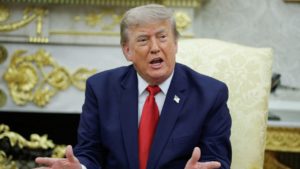
Israel provided the US administration with intelligence about the Iranian threat against US President Donald Trump, which included the possibility of using shoulder-fired missiles against Air Force One, The Wall Street Journal reported on Tuesday evening, citing a US official.

According to the report, following the threat, Trump initially boarded, in full view of the media, an aircraft that had previously served as Air Force One. Shortly afterward, however, a deception operation began: The president was placed inside an airport catering truck and driven out of sight of reporters to another aircraft, a smaller military C-32A parked nearby.

Trump then departed aboard the C-32A for a US base in the UK, under the pretext that troops stationed there wanted to take photographs with the Air Force One aircraft. From there, he flew back to Washington.

The report detailed that the operation was kept so secret that even some members of Trump’s staff did not know he was traveling aboard the third aircraft. For weeks, the impression was that Trump had returned from Turkey aboard the old Air Force One after the new presidential aircraft, which had been given to the US by Qatar, was flown separately to the UK.

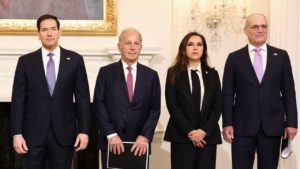
In fact, journalists and some White House officials, including US Secretary of State Marco Rubio, boarded the aircraft believing that Trump was traveling with them as usual. In reality, he had already been secretly transferred to another military aircraft and was flying separately.

The Iranian threat and the switch of aircraft were revealed last month, following initial denials, but the new report discloses for the first time the details of the deception operation carried out at the airport.

The White House declined to directly address most of the details in the report. White House Communications Director Steven Cheung said the new aircraft was equipped with "high-level security protocols" intended to ensure the safety of the president and his staff.
US Senators push to protect water systems after spate of Iranian cyberattacks, FBI warnings

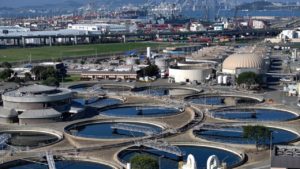
In the wake of a spate of cyberattacks against municipal water systems in multiple US states, suspected to have been perpetrated by Iran, US officials are pushing to pass legislation aimed at fixing security gaps that leave the infrastructure vulnerable to hacks. 

California Senator Adam Schiff, the top Democrat on the Environmental Protection Agency’s (EPA) water panel, and Minnesota Senator Amy Klobuchar on Monday unveiled the Water Cyber Shield Act, a bill intended to fortify drinking water and wastewater systems.

The proposed legislation follows numerous warnings from the EPA itself in addition to the US Federal Bureau of Investigation (FBI), Cybersecurity and Infrastructure Security Agency (CISA), and Government Accountability Office (GAO).

On July 22, days before a suspected Iranian cyberattack targeted over 30 municipal water systems in multiple states, US government agencies updated an April advisory emphasizing the growing threat of Iran-affiliated hacks on internet-connected systems.

In the advisory, the FBI, CISA, and US National Security Agency (NSA) noted previous incidents in which cyber threat actors linked to Iran’s Islamic Revolutionary Guard Corps (IRGC) similarly targeted US infrastructure, drawing a connection between the water systems hacks and earlier cyberattacks.

The FBI posited that Iran-affiliated cyberattacks increased, likely in response to ongoing hostilities between Washington and Tehran.

The consequences of a mass cyberattack on drinking and wastewater infrastructure could be significantly harmful to public health, according to a GAO report on the matter. If systems that monitor and control water treatment were tampered with by malicious actors, drinking water could be contaminated with unsafe levels of bacteria or chemicals.

Aging water infrastructure paired with a lack of federal cybersecurity oversight, according to Schiff and Klobuchar, exacerbate vulnerabilities in increasingly automated, internet-connected water systems.

The Water Cyber Shield Act, if passed, would expand the EPA’s authority to conduct cybersecurity assessments and mandate corrective action when cybersecurity gaps are found.

It would also allow the EPA to establish enforceable baseline standards for the cybersecurity of drinking water and wastewater systems, with $300 million in funding allocated to bringing vulnerable systems into compliance with the standards.

Under the proposed bill, large drinking water and wastewater systems would additionally be required to integrate cybersecurity threats into their already existing risk and resilience planning.

While the EPA is the federal body responsible for risk management in the water sector, it was previously prevented from mandating cybersecurity measures.

In 2023, the EPA was forced to withdraw a memorandum addressing cybersecurity issues after multiple US states sued the agency, arguing that the EPA did not have the authority to enforce the proposed guidelines.

Colombia continues search and rescue operations after earthquake, over 160 killed

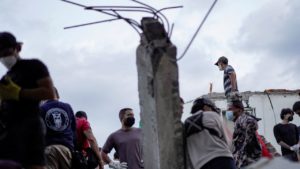
Rescue efforts across western Colombia carried into a second day on Tuesday as emergency workers dug through collapsed buildings and flattened homes, amid expectations that the death toll from the country’s most powerful earthquake in decades could rise.

The 7.4-magnitude earthquake tore through Colombia’s coffee-growing heartland early on Monday, killing at least 164 people.

The quake reduced multi-story buildings to rubble in cities such as Pereira and Cali, and cracked apart one of the towers of a historic cathedral in the city of Manizales.

Emergency teams aided by police, soldiers and volunteers worked through the night with excavators and, at times, their bare hands, hunting for survivors beneath debris.

In Cali, home to about 2.2 million people, at least 85 people were killed. Dozens of buildings were left leaning precariously or destroyed outright, forcing residents into the streets.

Several of the top floors of one of the city's hospitals – some dedicated to pediatric care – collapsed upon themselves, leaving some patients trapped and forcing some 600 others to be tended to on a street strewn with rubble, hospital director Irne Torres Castro told Caracol television.

Carmen Yasmin Garcia, 43, a Cali resident volunteering with rescue teams, said on Monday afternoon that her group had freed seven people from a collapsed building, but four others and a dog remained trapped.

"A moment ago there was scratching, but now we can't hear anything; we still have faith that the dog is alive and we can get these people out," Garcia said. "We need people with sticks and spades; the more people lending a hand, the better."

In Pereira, capital of the hard-hit state of Risaralda, authorities reported 66 dead.

The city also bore some of the most visible destruction, with entire residential blocks reduced to piles of concrete and twisted steel. Video posted on social media and verified by Reuters showed the city’s airport violently swaying during the quake, with large chunks of the ceiling collapsing as people sheltered.

Another 13 people died in Choco, the rural province closest to the quake's epicenter.

Colombian President Abelardo De La Espriella, who assumed power just days ago, said 35 people died in Cali alone, while 188 were missing. He said 1,000 members of the security forces would be deployed to the city by dawn, following reports of looting. Cali, as well as Pereira, implemented curfews on Monday night.

"Our intention is to cooperate in any way necessary. Here, there are no distinctions or ideological divisions when it comes to defending our people or showing solidarity," De La Espriella told journalists on Monday evening.

The disaster has drawn comparisons to a deadly 1999 earthquake that devastated the same coffee-growing region, killing more than 1,000 people, as well as to catastrophic quakes that killed more than 6,300 in neighboring Venezuela in June.

Australia to vaccinate vulnerable native birds against bird flu following New Zealand’s lead

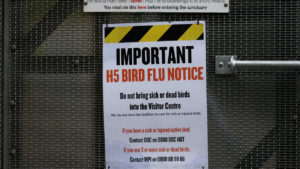
Australia will soon begin vaccinating its vulnerable native birds against the deadly H5N1 bird flu as the virus spreads more widely after first being detected in the country in June, the government said on Tuesday.

The vaccine rollout will begin in the "coming days and weeks," with an initial focus on priority species in captivity, Agriculture Minister Julie Collins told reporters in Canberra.

"The priority species will be identified based on vulnerability to the H5 bird flu and the potential conservation impact," Collins said.

"We've been very clear that we cannot stop the H5 bird flu from spreading amongst wild birds, but we can take action to protect the species most at risk, and the vaccination is now part of that response."

The move follows neighboring New Zealand's decision in July to begin a vaccination program for 300 core breeding birds from five of its most endangered species.

About 45% of Australia’s roughly 850 bird species are endemic, government data shows, meaning they are unique to Australia and found nowhere else on Earth.

Australia reported its first mass seabird deaths from avian influenza last week, marking an escalation of an outbreak that began after the virus was first detected in migratory seabirds before spreading to native species last month.

Australia was the last continent to report bird flu, although the virus was detected in late 2025 on the sub-Antarctic territory of Heard Island.

Trump warns FIFA against replacing President Gianni Infantino after his subsidiary proposal

FIFA would be making a “terrible mistake” by replacing President Gianni Infantino, US President Donald Trump said in a Monday post on Truth Social.

"He is fantastic, having just presided over the most successful World Cup, by four times, ever presented. If he is gone, it will never be as successful or profitable again!" Trump added.

Infantino has been under fire since FIFA proposed to sell stakes to external investors in a subsidiary that will run the global governing body’s tournaments.

Last month, the world soccer governing body said it plans to create a $20 billion subsidiary to run the World Cup and its other events and will offer stakes of up to 20% in it to external investors, causing a backlash from the influential European and South American soccer confederations.

However, Swiss-born Infantino has developed a close relationship with Trump as they worked together to organize this year’s World Cup, in which the United States was one of the host countries.

Trump has said that he believes that everyone in the world respects Infantino and understands that “he has a special ability to bring people together.” Last month, The New York Post reported that he wants the FIFA president to replace António Guterres, the current United Nations secretary-general, who is retiring at the end of the year.

Trump also asked Infantino to review a red-card foul against USA striker Folarin Balogun during the World Cup, saying that he did not think the foul called by the “horrible” referee was fair.

FIFA proceeded to reverse the foul, prompting European soccer body UEFA to say that the "unprecedented, incomprehensible and unjustifiable decision" crossed a "red line."

Additionally, in December, Infantino awarded Trump the inaugural FIFA Peace Prize.

Corinne Baum, Eitan Elias, and Reuters contributed to this report.

Israel, Lebanon to continue talks in September as Hezbollah seeks to disrupt process – report

The next round of Israel-Lebanon talks is set to be held at the beginning of September, a US official told Saudi state-owned Al-Arabiya English on Tuesday morning.

Hezbollah is still seeking to disrupt the peace process between the countries, said the official, adding that Washington remains optimistic about the talks.

The discussions between the countries have included talks on a third country demining certain areas, the official reportedly said.

Most recently, officials from the two countries met in Rome, with talks having concluded on August 6. There, representatives discussed Hezbollah's disarmament, the pilot program for Israeli withdrawal, and plans for a "comprehensive peace and security agreement," a State Department spokesperson said after the first day.

Hezbollah denounced those talks, with Secretary-General Naim Qassem saying that the talks would bring "nothing but shame, humiliation, and successive compromises" for Lebanon. Qassem also condemned Lebanese President Joseph Aoun, dubbing him a divisive figure.

Hezbollah has opposed the direct Israel-Lebanon talks since they began in April. Since then, the countries have met several times to discuss an end to the long-standing conflict between them.

In Rome, Israeli officials brought up the possibility of transferring buried Jewish bodies in Lebanon to Israel for burial in exchange for the release of Lebanese prisoners in Israel, Hezbollah-affiliated Al-Akhbar reported on Monday. 

These bodies lie buried in cemeteries in Beirut and Sidon, the report said. Both cities historically featured vibrant Jewish communities, though almost none remain there to this day.

James Genn, Idan Kweller, and Shir Perets contributed to this report.

Fire breaks out at diesel tank at Libya’s Zawiya oil depot – statement

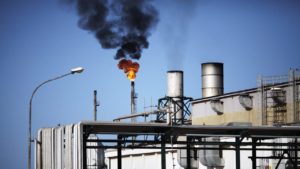
A fire, accompanied by heavy smoke, broke out on Monday in a diesel tank oil depot at Libya’s Zawiya refinery after the tank was struck under circumstances whose cause remains unknown, Brega Petroleum Marketing Company said in a statement.

Brega is owned by state oil firm NOC and is in charge of fuel supplies.

Zawiya refinery, the largest in the country as Ras Lanuf is out of operation, around 40 km (25 miles) west of Tripoli, has a capacity of 120,000 barrels per day. It is connected to the country's 300,000 ⁠bpd Sharara oilfield.

Firefighter brigades are working on containing the blaze, the company said, adding that it was assessing the damage and would provide updates once confirmed information became available.

The tank, with an estimated 4.5 million liters of gasoline, "was directly targeted," NOC said in a statement, declaring the extreme state of emergency in the area.

It demanded that competent authorities "immediately intervene" and launch investigations into the incident.

Unverified footage posted on the internet showed huge blazes and thick black smoke billowing in the sky in Zawiya city.

The refinery is still functioning without any suspension, two engineers working at the refinery said.

The incident came two days after a drone crashed into an untreated naphtha tank at the Zawiya refinery early on Saturday, causing a leak that staff managed to control.

Austria breaks up sanctions-evasion scheme supplying Russian arms industry

Austria has broken up a scheme in which a Vienna-based company supplied equipment used to make engines for Russian missiles and fighter jets, in breach of European Union sanctions, the interior ministry said on Monday.

The company falsified end-user certificates to supply the equipment under sanctions, including special metalworking tools and CNC machines, which can be used to make parts and tools, the ministry said in a statement. It added that the 28-year-old Belarusian head of the company was arrested in May.

The company, which the ministry did not name, concealed its shipments through a network of shell companies in Turkey, the United Arab Emirates, Hong Kong, Belarus, Kyrgyzstan, South Korea, Poland and Lithuania, the ministry said.

"It is unacceptable for high-precision European technology to be diverted towards the production of cruise missiles and air-defense systems," Austria's junior minister in charge of intelligence, Joerg Leichtfried, said.

"We will continue to take decisive action … against those actors who attempt to circumvent legal bans on supporting the Russian arms industry."

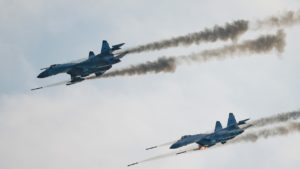
The equipment was supplied to companies affiliated with Russian state industrial conglomerate Rostec, the ministry said. Investigators’ latest findings indicate the goods were used to make military equipment, including engines for cruise missiles and fighter jets.

The Russian embassy in Vienna declined to comment. Rostec did not immediately respond to a request for comment.

On the same day the chief suspect was arrested, authorities seized CNC machines and specialized tools worth about €140,000 ($162,000), the ministry said. The suspect, who was not named, remains in custody while the investigation continues.

Evidence seized during four raids in August last year indicated that industrial goods worth more than €3.3 million had been delivered to Russian arms manufacturers since 2022, the ministry added.

Typhoon Dolphin causes severe flooding in Shanghai, grounds hundreds of flights across east China

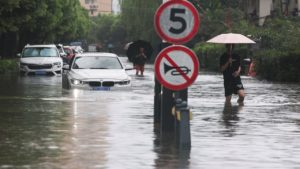
Torrential rain and storms in Typhoon Dolphin’s wake inundated several provinces in China’s east, drenching the coastal region and flooding streets in Shanghai, where around 40% of flights were grounded on Monday due to the weather.

Dolphin packed maximum sustained winds of 151 km/h near its center when it made landfall in Zhejiang, the province to the south and west of Shanghai, on Sunday evening before weakening to a tropical storm.

Its remaining rain clouds continued to soak the eastern provinces including Anhui, Jiangsu and Shandong on Monday.

Many streets in Shanghai, the country’s second most populated city, were flooded, including in the main commercial centers.

The city's two airports canceled a total of 943 flights due to the typhoon, reducing capacity by nearly 40%, state broadcaster CCTV said.

China Eastern Airlines said on Monday it was trying to resume flights to Shanghai, Zhejiang and other destinations in an "orderly manner."

Many streets in Shanghai’s suburban Jiading and Qingpu districts around the city center remained waterlogged, according to live-streams shared by residents on social media. The live videos, not verified by Reuters, showed people wading through knee-high murky water.

"It rained almost all night last night. When I woke up this morning, I found the neighborhood flooded, and the streets were severely flooded," said 39-year-old Hou Lina, who works in sales in Jiading in Shanghai.

"I've lived in Shanghai for 10 years, and this is the first time I've experienced such inconvenience from a typhoon. This is the first time I've encountered such widespread flooding," she told Reuters.

In Shanghai's Jinshan, the district authority said non-essential businesses and organizations could temporarily halt operations, classes, outdoor events and transit services, amid forecasts of continued strong winds and heavy rain on Monday.

Powerful winds and lashing rain flipped over a truck in Zhejiang’s Wenzhou, a video posted on TikTok on Sunday showed. It was not clear what happened to the driver.

The strongest typhoon to hit China this year, Dolphin, is forecast to move deeper inland to the central provinces of Hubei and Henan in the coming days while also pushing moisture north.

Authorities in the capital Beijing raised warnings for torrential rain and said the city was prepared to activate its flood control response on Tuesday morning.

Beijing is expected to experience "significant rainfall" from Tuesday until Thursday, with authorities warning of the risk of flash floods in the city and landslides in the surrounding mountainous areas.

The typhoon had already traveled 6,000 km (3,728 miles) before it made landfall, giving it a life-cycle three times longer than an ordinary typhoon, and bringing with it an ultra-large cloud system that enveloped China's east, CCTV said in another report.

Dolphin's impact was also being compared to Doksuri in 2022. That typhoon crossed the country after causing destruction in southeastern Fujian province, unleashing record-breaking rainfall in Beijing.

As the storm clouds meet colder air in the north, Beijing, Tianjin, and Hebei will need to brace for rains into Thursday, CCTV said.

Uganda approves deployment of army to Gaza as part of international peacekeeping force

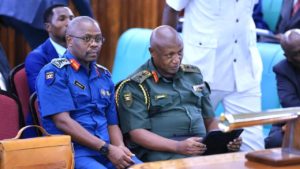
The Ugandan Parliament has approved the deployment of the Uganda People’s Defense Forces (UPDF) to Gaza as part of US President Donald Trump’s proposed international stabilization force.

The motion, tabled by Defense Minister Kiryowa Kiwanuka, sought Parliament’s approval under the Constitution and the UPDF Act to deploy Ugandan troops to support efforts to restore peace and facilitate humanitarian assistance in Gaza.

During a plenary sitting last Thursday, Minister Kiwanuka said the deployment was in line with Uganda’s constitutional obligations and international commitments, and stressed that the proposed mission would operate under strict humanitarian principles.

“The UPDF contingent will remain neutral, comply with International humanitarian law, protect civilians without taking sides in political disputes, and operate solely under the mandate of the Stabilization Mission,” he said.

Although Parliament eventually approved the deployment, several legislators questioned the manner in which the motion had been introduced, or argued that there was not enough risk assessment.

The Chief Opposition Whip, Paul Mwiru, representing the Leader of the Opposition, asked for more time to address the motion. He expressed concern that Parliament was being asked to make a decision with significant consequences.

Joseph Ssewungu similarly said the Opposition had not been given adequate opportunity to prepare: “I am not supporting your motion, because it is an ambush on us.”

John Baptist Nambeshe (NUP, Manjiya County) supported Uganda’s participation in peacekeeping operations but said Parliament should first receive reports on ongoing deployments in countries including the Central African Republic, the Democratic Republic of Congo, Somalia and South Sudan before approving another mission.

Nashembe also said that Gaza presented unique operational risks because “it is urban warfare and it becomes very difficult to distinguish between combatants and civilians.”

“The matter of deploying our soldiers to a very risky place like Gaza, where Israel strikes every now and again, cannot be just casually passed here. We have to prepare enough,” said Patrick Nsamba.

However, UPDF representative Maj. Gen. Henry Masiko dismissed suggestions that the force was unprepared for the mission and added that Uganda should take pride in the international recognition accorded to the UPDF.

“You should be very, very proud as Ugandans that Uganda People’s Defense Forces is viewed as the anchor of stability in a sea of turbulence regionally and now globally,” he said.

Maj. Gen. David Gonyi (UPDF) said Uganda had both a moral and diplomatic obligation to support the mission.

“We cannot be in this House… and want to live in a peaceful country, not to support the deployment of the UPDF to go and help members of the community that lives in the Gaza Strip to have at least some semblance of peace,” Gonyi said.

Get help now

Send a message with a description of your problem and possible ways of assistance and we will contact you as soon as we consider your problem.