• English
  • Русский

Millions of burnt books show how ‘war of endurance’ is hurting Ukraine, economy continues to slow

Viktor Kruhlov, director of Ranok, one of Ukraine's largest children's publishers, struggled to hold back tears as he watched pile after pile of his books turn to ash.

"It's a terrible sight to see books burning," he said.

A Russian drone strike on Ranok’s warehouse in the northeastern city of Kharkiv on August 1 destroyed about 8 million books, the biggest blow yet to Ukraine’s publishing industry during the four-year-old war.

Publishers say more than 10 million books have been destroyed in attacks on warehouses in recent months, threatening an industry that initially benefited from rising demand for Ukrainian-language literature at the start of the conflict.

As firefighters battled the blaze, Kruhlov said the first explosion at the warehouse was followed moments later by a second at the same spot.

"This was a deliberately planned attack against the book warehouse," said Kruhlov, whose company prints around one-third of the textbooks used in Ukrainian schools.

Russia's defense ministry did not respond to a request for comment.

The attacks on book warehouses and printing houses have resonated deeply in a country where many see the war as a fight for national survival and identity. Education Minister Andrii Butenko described them as an attempt to destroy the Ukrainian language, history and memory, "everything from which the identity of our children grows."

Russian President Vladimir Putin has repeatedly questioned Ukraine’s separate statehood and argued that Russians and Ukrainians are one people.

Beyond their symbolic impact, the strikes on the publishing industry illustrate the mounting economic costs of a war increasingly defined by endurance, economists and business leaders say.

"There are signs of a crisis in the market. We don't yet know how the situation will develop," said Yevhen Shyrynos, chief editor of publisher BookChef, which lost about 800,000 books – the majority of its inventory – in a Russian attack on Kyiv on July 2.

Another 100,000 books were lost when their backup warehouse was hit in a Russian attack this week.

"It depends on Ukraine's overall economic situation," Shyrynos said.

Ukraine's economy has proved resilient during the war, adapting to blackouts, labor shortages and repeated attacks on infrastructure while remaining afloat with support from Western allies. But annual economic output, at roughly $215 billion, remains about a fifth below its pre-invasion level.

In an effort to take the war back to Moscow, Ukraine has stepped up its own attacks on Russia's economy, targeting oil facilities and logistics warehouses as well as weapons production facilities.

Economists and executives say the conflict is becoming a test of economic endurance.

"Essentially, it's a struggle for survival – whoever can hold out the longest," said Olga Pindyuk from the Vienna Institute for International Economic Studies.

Most economists expect Ukraine’s growth to slow further in 2026 as Russia intensifies strikes on infrastructure and logistics.

A survey released on Wednesday by the Kyiv-based Centre for Economic Strategy cut the median growth forecast for next year to 1.1% from 2.4%. Ukraine's economy grew by about 1.8% in 2025.

"I meet businesses every day, and there has not been such despair over losses … since 2022," Danylo Hetmantsev, head of parliament's tax committee, told Ukrainian television.

"The economy is currently experiencing significant losses."

The defense sector is one of the few growth areas, due to the massive demand from the battlefield. About 60% of state spending this year is devoted to defense.

The central bank expects the defense industry to contribute about 1.4 percentage points to Ukraine’s total economic growth of 1.8% this year – meaning the rest of the economy is essentially stagnant.

In particular, the vital agricultural sector – which accounts for the majority of Ukraine's exports – is struggling. Agriculture Minister Taras Vysotskyi has said Russian attacks on Black Sea port infrastructure could cost the farm sector between $1.5 billion and $3 billion this year.

Publishing faces particular challenges because books can take six to 18 months to produce.

After an early wartime boom driven by demand for Ukrainian-language titles and bans on Russian imports, publishers now face rising costs, long replacement times and repeated losses from strikes.

BookChef has looked at reducing risks for its storage facilities and expanding its network of printers. But with printing costs up about 40% over the past two years, fewer Ukrainians can afford to buy books regularly.

Shyrynos expects the sector to stagnate.

"In fact, all our sectors will stagnate and decline until the war is over. The war is a vast, bottomless abyss that devours whatever funds you allocate to it."


How the hard reality of climate change hit Europe’s economy this summer – analysis

For anyone in Europe who still thought climate change was a problem for future generations, this summer’s sweltering heatwaves have brought home the reality that its costly and life-altering economic impacts have already arrived.

Record heat and droughts this summer – which scientists say are exacerbated by global warming – have wreaked havoc in power production, shipping and public health systems, while this wildfire season is on track to be Europe’s biggest ever.

Together, the hit to the region's economy can already be measured in the hundreds of billions of euros, economists and academics estimate. But they warn this is just the beginning, as costs are set to rise faster than temperatures.

Climate is changing more rapidly in Europe than on any other continent, and the damage is already stretching public finances, setting off wild swings in inflation, redrawing the tourism map, and forcing the bloc to rethink how power is produced and how goods are transported.

"What makes 2026 particularly worrying from an economic perspective is that there are multiple episodes of extreme events," said University of Mannheim economist Sehrish Usman.

“Take heatwaves, droughts, wildfires… these events are taking place at the same time and mostly in the same regions, compounding their impact,” she said.

Temperatures hit records in June and July, and the economic damage will likely exceed all previous marks, economists say.

Traffic on the Rhine and the Danube rivers, key cargo arteries, is severely limited because of low water levels, and more than a half dozen nuclear generators have shut or curtailed production due to cooling difficulties. Agricultural yield estimates have been cut, with crops harvested late, such as maize and sunflower, suffering a 6-7% loss already in July.

Heat curtails human productivity and has already claimed tens of thousands of lives, with Germany alone reporting more than 10,000 heat-related deaths.

Meanwhile, the costs of the emergency response, like fighting fires or curtailing power use, further stretch budgets.

ING estimates that the halt of traffic on the Rhine alone will lower the GDP of Germany, the world's third-largest economy, by 0.3 percentage points this year, while Hungary's MBH Bank sees a 0.1 percentage point GDP hit for every week the country's largest nuclear generator is offline.

Allianz, the German insurer, estimates the two-week June heatwave alone will cut the GDP of Europe by 0.3 percentage points, and climate change will shave 5-7% off growth by 2030 for the most exposed economies like Spain, France and Italy.

"The total bill for this year will be much larger," said Hazem Krichene, an economist at Allianz. "This figure doesn’t account for the fires, droughts, different flood events or the expected El Niño."

Given that the euro zone is expected to grow just 1% this year, the hit is sizable.

Yet Usman says the full extent of the economic damage will only be felt several years down the line.

"You'd expect the damage to be largest in the year an extreme event happens and then to fade but we find the opposite," Usman said. "The economic impact grows over the following years because the extreme weather set off a chain of slow economic consequences."

Southern Europe could take the biggest hit as temperature spikes are the largest there, cutting tourism income, exacerbating crop failures and inducing outward migration.

"Can you see tourists marching through southern Italy or Spain in 45 degrees? I can't. So, I think the nature of tourism will change," ING economist Carsten Brzeski said.

The south may get more year-round tourists, but summer peaks will drop as vacationers move north, hitting the southern hospitality industry, Brzeski argued.

The south will also take a bigger food price hit from extreme weather, complicating life for the European Central Bank, which is already struggling to keep inflation at target.

"You see bigger effects of extreme temperatures on food prices in places that are already hotter, so if you're in Southern Europe, you'll see a bigger effect," said Maximilian Kotz, a researcher at the Barcelona Supercomputing Center.

Extreme heat in 2022 lifted euro zone inflation by 0.34 percentage points via higher food prices, with the south taking a disproportionate hit, Kotz estimated.

Meanwhile, a halt in river transport is making it harder for fuel to reach parts of Europe, widening regional price differences.

"The fiscal consequences fall most heavily on the economies least able to absorb them," Allianz said in a research note.

Reductions in annual tax revenue from lost output could reach 1.8% in France, 1.3% in Italy and Spain as progressive tax systems mean revenues fall faster than output, it estimates.

Business profit margins will also decline, depressing investment and exacerbating the economic loss.

Costs meanwhile surge, both because governments have to fund the emergency response and must invest, such as in future-proofing power generation or transportation routes.

"A key concern is that countries still rely far too much on ad hoc emergency response, which is both expensive and also often quite inefficient," said Heather Grabbe, a senior fellow at the Bruegel think tank.

But investors may push back if governments try to spend more. Debt levels are already high – especially in France and Italy – and countries need to invest in defense and the green energy transition.

The dilemma could draw in the ECB, which bought up trillions of euros worth of countries' debt in the past decade to keep borrowing costs depressed when inflation was too low.

"With such a long list of spending needs, the trend will be towards higher government debt," ING's Brzeski said. "This will then mean pressure on the ECB to step in and do more quantitative easing, if there is a sudden selloff in bond markets."

Netanyahu willing to give Trump’s Gaza plan a chance, IDF retreating to Yellow Line – report

Prime Minister Benjamin Netanyahu spoke to Jared Kushner  last week and pledged to give US President Donald Trump’s 15-point disarmament plan a chance, Axios reported Sunday evening citing a US official. 

Previously, Netanyahu rejected Trump's plan for Hamas' disarmament in a Sunday cabinet meeting.

“The IDF will not carry out any withdrawal until Hamas is genuinely disarmed,” Netanyahu declared.

“When I say Hamas is disarmed, that means the heavy weapons, the less heavy weapons – all the weapons,” he said.

The US “is not bothered” by Netanyahu’s stance against Trump’s plan in Gaza, the same US official told Axios.

"We understand Bibi's political needs," they said.

"We have no problem with it as long as he continues to do what we ask, especially regarding restraining attacks in Gaza," they reportedly added.

Moreover, the IDF has began a gradual return to the Yellow Line in Gaza as well as stopped strikes on Gaza, the Axios report stated.

According to the report, the US and the mediators in talks are demanding that Hamas begin the process of disarmament.

Miriam Sela-Eitam, Danya Saperstein, and Tzvi Jasper contributed to this report.

NORAD intercepts two unauthorized aircraft as Trump watches LIV golf tourney in New Jersey

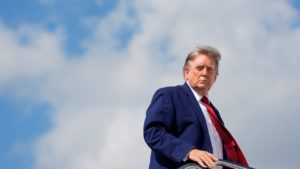
North American Aerospace Defense (NORAD) Command on Sunday intercepted two general aviation aircraft that violated temporary flight restrictions as President Donald Trump attended a tournament at his golf club in Bedminster, New Jersey.

"NORAD F-16s intercepted multiple general aviation aircraft today that violated temporary flight restrictions over Bedminster, NJ," according to a statement from NORAD on X/Twitter.

NORAD declined to say whether the pilots of the two aircraft had made a mistake, saying that it is up to the Federal Aviation Administration (FAA) to make that determination, Reuters reported.

Pilots are required to check with the FAA to stay up to date about temporary airspace restrictions, NORAD said.

The White House did not immediately return a request by Reuters for comment on the incident.

Trump is scheduled to fly back to Washington from Bedminster later Sunday after attending the LIV Golf event.

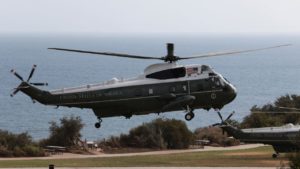
The US Federal Aviation Administration is also reviewing an air-traffic safety incident involving a military helicopter carrying US President Donald Trump, the agency said last Tuesday.

"The FAA is investigating a safety incident involving Marine One but it didn’t appear to be a dangerous close call and the aircraft weren’t apparently converging," the FAA said.

Trump’s Marine One helicopter took off from the White House on Tuesday afternoon, but air-traffic controllers had not halted commercial flights at nearby Ronald Reagan Washington National Airport as required under a policy set last year following a fatal collision, two sources told Reuters.

Trump: US ‘only semi-negotiating’ with Iran, observing impact of economic pressure – report

US President Donald Trump claimed that the US is “only semi-negotiating” with Iran as it watches Tehran struggle to overcome economic pressure, stating that Washington is “low-keying it” in their approach during a phone call with Axios on Sunday. 

"We are only semi-negotiating with them. We are just watching Iran with its huge inflation and the fact they have no money," he stated.

Trump emphasized that the US blockade on Iranian ports along the Strait of Hormuz has contributed to Iran being “in very bad shape.”

One US official told Axios that during active warfare, Tehran can temporarily avoid dealing with the economic consequences of the fighting, but as strikes have paused, it is forced to confront the reality of its economic situation, with no solution easily available. 

According to Axios, Trump did not express frustration with Iran regarding Tehran’s reluctance to finalize an agreement with Oman that would allow for the waterway to be reopened. 

"It will work out. It always works out. It's like a chess game," Trump said.

Iran’s Supreme National Security Council head, Mohammad Bagher Zolghadr, previously outlined a series of conditions it demanded the US abide by in order for the Oman-Iran agreement to proceed. 

The demands included the US refraining from threatening or insulting Iran, permanently ending all wars with Iran’s allies, lifting the naval blockade, and releasing all frozen Iranian funds.

Spain checks 200 Italian arrivals as countries clash over Morrocan migrant crisis at Ceuta border

Spain checked around 200 travelers arriving from Italy at the country’s six largest airports on the first day of border controls reintroduced following a dispute with Italy over irregular migration.

Spain's Interior Ministry carried out checks on a total of 199 people on 12 flights from Italy to airports in Madrid, Barcelona, Seville, Bilbao, Alicante and Valencia, it said late on Saturday.

Spain said on Friday border controls for flights and ships from Italy would remain in force until September 7 after Rome applied its own measures, which it said were motivated by the mass migration rush by 72,000 people to Spain’s North African enclave of Ceuta on July 30.

Italy has suspended the European Union’s border-free Schengen arrangements with Spain since August 1 and said it would maintain border controls until at least August 15.Spanish national police officers monitor as travellers arrive from Italy, after Spain's government said it would establish border controls for flights and ships from Italy, from midnight on Saturday until September 7, in a dispute over irregular migration, at Madrid-Barajas Airport in Madrid, Spain (credit: Spanish Police/Handout via REUTERS)

Rome said the measure would not affect Spanish or other EU citizens traveling to Italy and would instead involve targeted checks on non-EU nationals arriving from Spain by air or sea.

"We hope to be able to lift the suspension soon, as soon as there is no longer any risk," Foreign Minister Antonio Tajani told Italian daily Corriere della Sera in an interview published on Sunday.

The Schengen Area allows passport-free travel across 29 European countries, although member states can temporarily reintroduce border controls on security or public-order grounds.

Syria, Russia reach deal on future of Tartous, Hmeimim bases after 18 months of talks

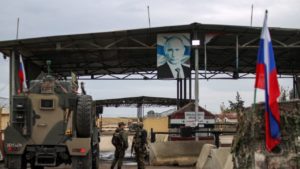
Syria and Russia reached a memorandum of understanding to settle the future of Russian bases at Tartous and Hmeimim following 18 months of intensive negotiations, the Syrian foreign ministry said on Sunday, according to the Syrian state news agency.

The ministry said the Syrian state would take over management of civilian facilities, including Hmeimim airport and the commercial berth at Tartous port, allowing them to be gradually integrated into the country's civilian administration.

It said military facilities would be repurposed as joint training and qualification centers under new arrangements preserving the interests of both sides, with the transition to be completed within three months.

Russia’s naval facility at Tartous and Hmeimim air base have long been Moscow’s principal military footholds in the Mediterranean and Middle East.

Their future has been the subject of negotiations with Syria's new leadership since former President Bashar al-Assad was ousted in December 2024.

In a separate statement, Syria's General Authority for Ports and Customs said Syria would take over the commercial sites previously operated by Russia at Tartous port, including Pier No. 4 and its associated warehouses and facilities.

Reuters reported last month that Russia was seeking to establish a commercial logistics hub at Tartous port using Pier No. 4, a restricted zone outside the naval base.

The two sides said at the time the hub would remain under Syrian control, with all operations subject to approval by Syria's General Authority for Ports and Customs.

Pentagon gives defense executives 21 days to present plan for rapid weapon development – report

The Pentagon told US defense industry leaders to prepare plans to escalate production and delivery of weapons as reports of munitions shortages escalate, The Washington Post reported on Saturday, citing a Defense Department memo. 

Deputy Defense Secretary Steve Feinberg wrote that the leaders had no more than 21 days to present plans to “drive significantly faster, more aggressive delivery schedules and/or increased production for critical capabilities,” on Wednesday, according to the memo.

“Years-long development cycles are not acceptable. We must dramatically accelerate our program schedules and expand our production capacity now.”

Reports have emerged in recent weeks that the US had used up much of its stockpile of highly accurate long-range missiles.

The missiles are principally the Army's surface-to-surface weapons, known as Army Tactical Missile Systems (ATACMS) and Precision Strike Missiles (PrSM). The US has used "virtually all" of these weapons, according to two sources familiar with the data.

Additional reports emerged of a clash between US President Donald Trump and US Defense Secretary Pete Hegseth over the alleged shortage, with Trump unaware of the extent of the diminished stockpile. 

The White House strongly disputed reports of both shortages and the conflict.

"The US has massive amounts of 'munitions'" Trump wrote in a post on Truth Social on Thursday.

White House officials said Trump had not directed his anger at Hegseth. In a separate Truth Social post on Thursday, the president said he was “extremely happy with the job that Pete Hegseth is doing.”

“He has never blamed Pete. This is all about the leakers,” one official told CNN.

CNN also previously reported that Trump was well aware of any potential shortages but was frustrated that the information became public while the US wants to be able to negotiate from a place of strength.

The memo comes after the White House has attempted to enlist the defense industry to unlock military funding through extensive lobbying, The Washington Post wrote. 

Defense contractors were summoned to the White House to meet with Trump’s chief of staff, Susie Wiles, Defense Secretary Pete Hegseth, Office of Management and Budget Director Russell Vought, and White House Legislative Affairs Director James Braid in July, and were encouraged to use direct lobbying to increase defense spending, The Washington Post cited people familiar with the event as saying.

The Defense Department has announced several framework agreements with defense contractors and emerging startups to increase its supply of low-cost munitions, sophisticated air defense weapons, and patriot missiles. However, the arrangements are nonbinding contracts that rely on congressional funding to become final, The Washington Post wrote. 

“They are agreements to agree, and so they’re not contracts. Almost nothing has been contracted, and that’s the problem.” Tom Karako, director of the Missile Defense Project at the think-tank Center for Strategic and International Studies (CSIS) told The Washington Post

Pentagon chief spokesman Sean Parnell confirmed the veracity of the Feinberg memo, saying it "will inform the fiscal year 2028 budget submitted to Congress for funding, and it is entirely consistent with our ongoing push to rebuild the defense industrial base.”

“Working directly with industry leaders to accelerate production is not new. It has been the clear intent of the President and this Secretary from the start,” Parnell said in a statement.

Australia investigates near-miss collision of two planes on tarmac at Sydney airport

A Jetstar A320 and a Qatar Airways Boeing 777 narrowly avoided colliding on the tarmac at Sydney airport on Sunday, the Australian Transport Safety Bureau was told, it said, as it began an investigation into the incident.

The Jetstar plane was taxiing for take-off to Queensland state’s Gold Coast when its flight crew saw the Qatar Airways plane, which was being towed by an aircraft tug, very close on a crossing taxiway, the regulator said.

"Both aircraft were stopped abruptly," the transport safety bureau said in a statement.

A cabin crew member on the Jetstar plane was injured, and the connection between the Qatar Airways plane's nose gear and the aircraft tug was damaged, the regulator said.

Jetstar, the budget arm of Australia's national carrier Qantas, said it was investigating the incident, too.

“Our aircraft was following instructions by Air Traffic Control when the pilots were forced to brake firmly after another aircraft came in close proximity,” a Jetstar spokesperson said in a statement.

Qatar Airways did not immediately respond to a request for comment.

The incident comes a day after Sydney Airport was hit by widespread delays sparked by government agency Airservices Australia enacting "departure spacing" due to roster problems with air traffic controllers.

Airservices Australia did not immediately respond to a request for comment.

Germany faces daily ‘hybrid warfare’ attacks, minister warns after explosive drone found at airport

Germany faces daily hybrid warfare attacks from abroad, Interior Minister Alexander Dobrindt was quoted as saying on Sunday, following a suspected attack attempt involving an explosive-laden drone at Leipzig/Halle Airport.

Dobrindt told the newspaper Bild am Sonntag that foreign powers wanted to subdue Germany politically and socially by stirring up fear there.

“We’re not at war, but we are the daily target of hybrid warfare,” Dobrindt said. “Espionage, sabotage, cyberattacks, or covert operations by foreign powers aimed at destabilizing Germany or inflicting direct harm are a constant reality.”

The newspaper's advance release of the interview did not say whether he identified any countries in particular.

After the drone loaded with explosives was discovered at the airport in eastern Germany on Tuesday, some German lawmakers pointed the finger at Russia, which has been at war with Ukraine since its military invasion of the country in 2022.

The Russian embassy in Berlin on Friday dismissed the Leipzig event as a “fabricated provocation,” saying it was another example of accusations against Russia without evidence.

Dobrindt, a member of the conservative Christian Social Union, had called the Leipzig incident a "hybrid attack scenario," and left open possible involvement by foreign powers.

Germany’s armed forces on Saturday said two drones were spotted late on Thursday over a German military base site in Mechernich, in the western state of North Rhine-Westphalia.

Dobrindt highlighted the expansion of drone research in Germany as part of the response to the new threats.

Get help now

Send a message with a description of your problem and possible ways of assistance and we will contact you as soon as we consider your problem.