• English
  • Русский

Zelensky halts drone strikes on Black Sea oil tankers in Russian port after demand from US VP Vance

Ukrainian President Volodymyr Zelensky halted Ukraine’s drone campaign against oil tankers in the Black Sea after a request from US Vice President JD Vance, The Financial Times reported, citing Ukrainian officials. 

According to the report, Washington was upset that Kyiv was harming US companies by targeting tankers hauling crude oil from Kazakhstan to a Caspian Pipeline Consortium terminal in Russia’s Novorossiysk port.

Ukrainian officials and other people familiar with the matter said that Vance asked Zelensky to stop the attacks during a call on July 31. Since that call, Ukraine has not struck tankers in the CPC terminal, officials told the FT

Ukraine agreed to not target non-Russian ships, so long as they were not sanctioned by Ukraine or carrying any Russian cargo.

“We very carefully listen to our American partners,” one senior Ukrainian official told the FT. The official added that Ukraine established “mechanisms” in response to Vance’s request.

Ukraine’s drone campaign on the port aimed to cut off revenue from the Kremlin and bring more of the war to Russia.

A US official confirmed the FT report and added that the administration views the CPC as a “vital conduit of Kazakhstan-origin energy for European markets that serves as an alternative to Russian energy supplies.”

Notably, US energy companies Chevron and ExxonMobil own stakes in CPC, which is Kazakhstan’s main oil route.

 The CPC terminal has reportedly been “a regular part of the conversation with the US and the Kazakh governments”, the Ukrainian official told the FT.

Notably, this is not the first time the US has requested that Ukraine refrain from hitting US industry interests in Russia.

In February, former Ukrainian ambassador to the US Olha Stefanishyna received a démarche from the US State Department noting its disapproval of Ukrainian strikes on Novorossiysk.

Ukrainian strikes on the CPC terminal caused turmoil for oil markets, leading Kazakhstan to stop piping oil to the port city and doubling shipping rates.

Notably, in a July 17 attack, a ship chartered by Exxon was hit in a Ukrainian strike as it was waiting to load.

The chaos in Novorossiysk came as the US has blockaded the Strait of Hormuz in Iran, which has affected oil markets worldwide and made Kazakh oil all the more vital.

Vance has notoriously been one of the most combative figures in the trump administration’s handling of the war. He repeatedly berated Zelensky in the Oval Office in 2025, implying that the Ukrainian president was not offering enough gratitude for “the president who is trying to save your country.”

Vance has gone so far as to say that stopping aid to Ukraine was one of his proudest achievements in his tenure as vice president.

"It's one of the things I'm proudest… we've told Europe that if you want to buy weapons, you can, but the US is not buying weapons and sending them to Ukraine anymore," Vance said in April.

People familiar with the call told the FT that Zelensky agreed to stopping the strikes on CPC because he is still seeking the license to produce Patriot missiles that US President Trump publicly pledged to give him earlier this summer. 

Zelensky reportedly stressed to Vance that Patriot missiles, along with other interceptors and air defense missiles, were “top priority” for Ukraine.

Elsewhere in Russia, Ukraine has stepped up its attacks on Moscow’s oil and shipping infrastructure.

In the month of August alone, Ukrainian drones have hit three Russian oil refineries, an airfield, and a warehouse for Russian shipping giant Wildberries.
Trump confirms Secret Service snuck him off Air Force One due to Iran threat, ‘I do what they say’

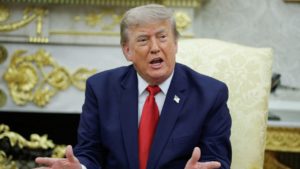
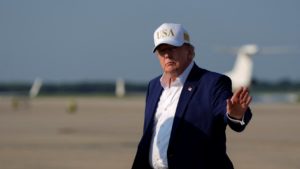
US President Donald Trump on Tuesday addressed the Iranian threat against him and the extraordinary security measures taken during his recent trip to Turkey.

Reporters at Joint Base Andrews pressed Trump about the security operation surrounding his departure from Turkey last month, when he was moved to a different military aircraft amid a threat against him.

The president said the decision had been made by the Secret Service and the military and that he simply followed their instructions.

“It’s only up to Secret Service. I just follow what they’d like to do,” Trump said. “They wanted me to go in a different flight, a different plane, equal safety, but they wanted me to do it, so I do it. I do what they say.”

Asked about the threat that prompted the unusual measures, Trump appeared to play down how much he knew about the details.

“I guess there was a threat out there. I didn’t really ask that much about it,” he said. “I get a lot of threats.”

Trump said the aircraft switch was made in England and maintained that the plane on which he ultimately traveled may actually have faced greater danger.

“I think actually the plane that I flew on was at greater risk,” he said. “I think it was at greater risk because that would be the plane… that they would be more likely to go for.”

Asked whether he was surprised by the threat, Trump replied that he was not.

“I have a lot of threats. I have a lot of threats that you don’t know about,” he said.

“Any consequential president has a lot of threats. Non-consequential presidents don’t get threatened, and I think that I’m maybe the most consequential president.”

Trump added that the threats did not worry him.

“I don’t worry about anything, to be honest,” he said. “Whatever it is, you know my attitude. Whatever.”

‘I’m the last person to trust Iran’

Trump then pushed back against a suggestion that he trusted Tehran, insisting that Iran had repeatedly deceived him.

“I don’t trust Iran. Why are you saying I trust Iran?” Trump said. “I’m the last person to trust Iran. They’ve lied to me constantly.”

He also repeated his assertion that the United States now has complete control of the Strait of Hormuz.

“We have total control over the Strait [of Hormuz] right now. They don’t have control. We have total control. We own it,” Trump said.

Earlier in the exchange, Trump said the situation with Iran was going “absolutely fine,” crediting the US Navy with establishing control over the strategic waterway.

“We totally control the Strait of Hormuz,” he said. “Nobody else, only us. Our Navy is unbelievable.”

Trump warned that any renewed Iranian action could be met with overwhelming force.

“At some point, maybe they’ll do something, and then they get blown away,” he said. “But we, right now, we’re in a very good position.”

The president concluded by arguing that decades of Iranian dominance in the region had come to an end.

“We have a country that has been the bully of the Middle East for 50 years,” Trump said. “They’re no longer the bully of the Middle East.”

He also praised Sen. Darline Graham Nordone on Tuesday night after she secured a place in the runoff for the Republican nomination for her late brother Lindsey Graham’s Senate seat.

Trump said Graham had called him shortly before to thank him for his endorsement.

“She just called me to thank me for the endorsement, and it’s great that she’s doing so well,” Trump said. “She’s a very good woman, and she’s got good genetics because she’s related to Lindsey, who is a real professional.”

Trump noted that he also likes Graham’s Republican rivals, describing them as supporters of his movement, but made clear that his endorsement remains with her.

“I like the other people in the race also. They’re all Trump. I mean, they’re all Trumpers, but, you know, I endorsed her. I think she’s great,” he said.

Trump also invoked his close relationship with the late South Carolina senator, saying Lindsey Graham frequently spoke to him about his sister.

“Lindsey loved his sister more than anything else,” Trump said. “He would tell me about his sister that she’s just outstanding. He actually said she’s better than him. That was hard for Lindsey to say.”

US military operations killed 153 civilians in 2025, official says, citing Pentagon assessment

US military operations in 2025 killed 153 civilians and wounded 243, a US official said on Tuesday, citing Pentagon assessments.

This compares with a Pentagon assessment that two civilians were killed and two were injured by US military operations in 2024.

A Pentagon report submitted to the US Congress and published by US media said that all the death and injury tolls against civilians recorded in 2025 were due to three US strikes in Yemen.

The Pentagon report said the US Central Command (CENTCOM) had assessed that the three strikes in April 2025 in Yemen "more likely than not" resulted in civilian harm.

The Pentagon report also said that as of February 2026, there were 15 other incidents in Yemen that CENTCOM was currently assessing in response to reports received through non-governmental organizations.

The US military says it aims to degrade the capabilities of Iran-backed Houthi militants in Yemen.

The Pentagon report did not include any casualties from US strikes in the Caribbean and Eastern Pacific.

The report said as of February 1, 2026, the US Southern Command (SOUTHCOM) assessed that "there were no incidents in which civilian casualties more likely than not resulted from US military operations in the US SOUTHCOM area of responsibility in 2025."

President Donald Trump’s administration has struck vessels that it accuses of transporting narcotics in the Eastern Pacific, casting its targets as “narco-terrorists.”

The ​US military's strikes on such vessels have killed more than ‌200 ⁠people since September 2025, according to a tally of death tolls published after each strike.

Human Rights Watch and Amnesty International consider such strikes unlawful extrajudicial killings. The American Civil Liberties ⁠Union ​casts the assertions by the ​Trump administration against those it targets as "unsubstantiated, fear-mongering claims."

North Korea fired a ballistic missile ahead of major US-South Korean military exercise, army says

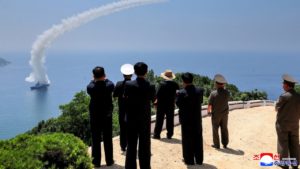
North Korea fired a ballistic missile on Wednesday toward the Sea of Japan off the Korean Peninsula’s east coast, South Korea’s military said.

The missile appeared to have landed outside Japan's exclusive economic zone (EEZ) in the sea, NHK reported.

Following the launch, South Korea's presidential office held a meeting to call for a stop to provocations, local media reported.

Japan’s Prime Minister Sanae Takaichi instructed authorities to “take all possible measures for precaution,” in a statement in response to the missile launch.

The launch was the second in under a week, according to the South Korean military.

North Korea fired the missile from the Wonsan area, South Korea's Joint Chiefs of Staff said.

South Korea's military had stepped up surveillance and was maintaining readiness for possible additional launches, while closely sharing information with the US and Japan, it said.

The launch comes as South Korea and the US plan to conduct major joint military drills from August 17 to 27 to counter North Korea's evolving nuclear and weapons capabilities. Pyongyang has denounced the annual drills as a provocation in previous years.

On Tuesday, North Korean state media condemned Japan's latest defense white paper as a document aimed at reviving militarism, saying Tokyo was using what it called an unfounded portrayal of Pyongyang as a security threat to justify an arms buildup.

North Korea has conducted ⁠a series of tests this year, including short-range ballistic missiles, artillery rockets and other tactical weapons.

Ukrainian President Volodymyr Zelensky said Moscow used a North Korean ballistic missile during a Russian attack on Tuesday that killed seven workers at a Ukrainian steel plant in the southeastern city of Zaporizhzhia.

"For the first time in its history, Russia cannot wage war without reinforcements from North Korea. It is now preparing to deploy an additional North Korean contingent on its territory. It has also received additional ballistic missiles from North Korea," Zelensky said.

North Korea’s ballistic missiles and other weapons are being improved through its collaboration with Russia."

"The more North Korean strikes there are here in Ukraine, in Europe, the more their missiles and soldiers are used, the more they correct their shortcomings and blind spots, the greater the danger will later be for Japan, the Republic of Korea, the Philippines, and other countries in the region," he explained.

Iran to become member of BRICS Bank, increasing economic cooperation, trade – report

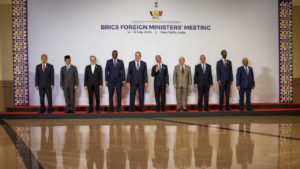
Iran is going to become a member of the BRICS Bank, Governor of the Central Bank of Iran Abdolnaser Hemmati said, according to reports from Iranian media on Tuesday evening.

BRICS is an organization made up of eleven countries: Brazil, China, Egypt, Ethiopia, India, Indonesia, Iran, Russia, Saudi Arabia, South Africa and the United Arab Emirates. It is an economic and geopolitical bloc that focuses on trade and development.

The New Development Bank (BRICS Bank) is a “multilateral development bank established by BRICS with the purpose of mobilizing resources for infrastructure and sustainable development projects in emerging markets and developing countries,” its website explains.

Hemmati announced that Iran was set to join the BRICS Bank in the near future, Iran’s semi-official Tasnim News Agency reported.

"Productive cooperation has commenced between our country and India in the areas of monetary affairs, banking, and the digital economy," Hemmati said.

The next BRICS Summit will take place in September. The Governor said “The BRICS summit offers a prime opportunity to meet with officials from member nations with whom our country maintains its most extensive monetary and banking exchanges and interactions,” Tasnim reported.

"We believe that BRICS member nations can conduct trade using their national currencies, and we are pursuing bilateral and trilateral monetary cooperation with these members."

Iran’s wartime economic crisis has triggered mass layoffs across multiple industries, with Iranian officials estimating that some two million people have lost work “directly or indirectly” due to the conflict and a prolonged nationwide internet blackout, according to a report by The New York Times.

Businesses across Iran have begun laying off workers as the country’s economy struggles under the combined pressure of war-related disruptions, sanctions, infrastructure damage, and the government-imposed internet blackout.

Iranian Deputy Labor Minister Gholamhossein Mohammadi said the conflict had already resulted in the loss of more than one million jobs and left another two million people “directly or indirectly unemployed,” according to statements given to Tasnim.

Asher Smith contributed to this report.

Drone targets fuel tank at Zawiya oil complex in latest attack, Libya’s NOC says

Libya’s National Oil Corporation (NOC) said a drone attacked the Zawiya oil refinery complex, the country’s largest operating refinery, on Tuesday, the fifth attack since Saturday.

The NOC said a diesel storage tank belonging to the Zawiya Oil Refining Company was hit, causing a small fire that has since been contained.

With a capacity of 120,000 barrels per day, Zawiya is the largest operational refinery in the country.

On Monday, a fire, accompanied by heavy smoke, broke out in a diesel tank oil depot at the refinery after the tank was struck, according to the Brega Petroleum Marketing Company.

Early Tuesday morning, Libya’s National Oil Corporation confirmed the facility had been struck by a drone, noting that the attack caused no casualties or damage.

Soon after, the refinery was again targeted by a drone, Saudi state-owned Al Arabiya reported.

Jerusalem Post Staff contributed to this report.

Israel warned US about Iran’s plans to kill Trump on Air Force One, aided his escape – report

Israel provided the US administration with intelligence about the Iranian threat against US President Donald Trump, which included the possibility of using shoulder-fired missiles against Air Force One, The Wall Street Journal reported on Tuesday evening, citing a US official.

According to the report, following the threat, Trump initially boarded, in full view of the media, an aircraft that had previously served as Air Force One. Shortly afterward, however, a deception operation began: The president was placed inside an airport catering truck and driven out of sight of reporters to another aircraft, a smaller military C-32A parked nearby.

Trump then departed aboard the C-32A for a US base in the UK, under the pretext that troops stationed there wanted to take photographs with the Air Force One aircraft. From there, he flew back to Washington.

The report detailed that the operation was kept so secret that even some members of Trump’s staff did not know he was traveling aboard the third aircraft. For weeks, the impression was that Trump had returned from Turkey aboard the old Air Force One after the new presidential aircraft, which had been given to the US by Qatar, was flown separately to the UK.

In fact, journalists and some White House officials, including US Secretary of State Marco Rubio, boarded the aircraft believing that Trump was traveling with them as usual. In reality, he had already been secretly transferred to another military aircraft and was flying separately.

The Iranian threat and the switch of aircraft were revealed last month, following initial denials, but the new report discloses for the first time the details of the deception operation carried out at the airport.

The White House declined to directly address most of the details in the report. White House Communications Director Steven Cheung said the new aircraft was equipped with "high-level security protocols" intended to ensure the safety of the president and his staff.

US Senators push to protect water systems after spate of Iranian cyberattacks, FBI warnings

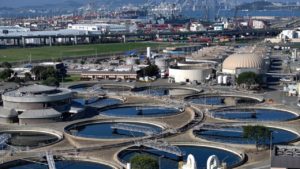
In the wake of a spate of cyberattacks against municipal water systems in multiple US states, suspected to have been perpetrated by Iran, US officials are pushing to pass legislation aimed at fixing security gaps that leave the infrastructure vulnerable to hacks. 

California Senator Adam Schiff, the top Democrat on the Environmental Protection Agency’s (EPA) water panel, and Minnesota Senator Amy Klobuchar on Monday unveiled the Water Cyber Shield Act, a bill intended to fortify drinking water and wastewater systems.

The proposed legislation follows numerous warnings from the EPA itself in addition to the US Federal Bureau of Investigation (FBI), Cybersecurity and Infrastructure Security Agency (CISA), and Government Accountability Office (GAO).

On July 22, days before a suspected Iranian cyberattack targeted over 30 municipal water systems in multiple states, US government agencies updated an April advisory emphasizing the growing threat of Iran-affiliated hacks on internet-connected systems.

In the advisory, the FBI, CISA, and US National Security Agency (NSA) noted previous incidents in which cyber threat actors linked to Iran’s Islamic Revolutionary Guard Corps (IRGC) similarly targeted US infrastructure, drawing a connection between the water systems hacks and earlier cyberattacks.

The FBI posited that Iran-affiliated cyberattacks increased, likely in response to ongoing hostilities between Washington and Tehran.

The consequences of a mass cyberattack on drinking and wastewater infrastructure could be significantly harmful to public health, according to a GAO report on the matter. If systems that monitor and control water treatment were tampered with by malicious actors, drinking water could be contaminated with unsafe levels of bacteria or chemicals.

Aging water infrastructure paired with a lack of federal cybersecurity oversight, according to Schiff and Klobuchar, exacerbate vulnerabilities in increasingly automated, internet-connected water systems.

The Water Cyber Shield Act, if passed, would expand the EPA’s authority to conduct cybersecurity assessments and mandate corrective action when cybersecurity gaps are found.

It would also allow the EPA to establish enforceable baseline standards for the cybersecurity of drinking water and wastewater systems, with $300 million in funding allocated to bringing vulnerable systems into compliance with the standards.

Under the proposed bill, large drinking water and wastewater systems would additionally be required to integrate cybersecurity threats into their already existing risk and resilience planning.

While the EPA is the federal body responsible for risk management in the water sector, it was previously prevented from mandating cybersecurity measures.

In 2023, the EPA was forced to withdraw a memorandum addressing cybersecurity issues after multiple US states sued the agency, arguing that the EPA did not have the authority to enforce the proposed guidelines.

Colombia continues search and rescue operations after earthquake, over 160 killed

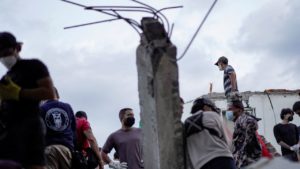
Rescue efforts across western Colombia carried into a second day on Tuesday as emergency workers dug through collapsed buildings and flattened homes, amid expectations that the death toll from the country’s most powerful earthquake in decades could rise.

The 7.4-magnitude earthquake tore through Colombia’s coffee-growing heartland early on Monday, killing at least 164 people.

The quake reduced multi-story buildings to rubble in cities such as Pereira and Cali, and cracked apart one of the towers of a historic cathedral in the city of Manizales.

Emergency teams aided by police, soldiers and volunteers worked through the night with excavators and, at times, their bare hands, hunting for survivors beneath debris.

In Cali, home to about 2.2 million people, at least 85 people were killed. Dozens of buildings were left leaning precariously or destroyed outright, forcing residents into the streets.

Several of the top floors of one of the city's hospitals – some dedicated to pediatric care – collapsed upon themselves, leaving some patients trapped and forcing some 600 others to be tended to on a street strewn with rubble, hospital director Irne Torres Castro told Caracol television.

Carmen Yasmin Garcia, 43, a Cali resident volunteering with rescue teams, said on Monday afternoon that her group had freed seven people from a collapsed building, but four others and a dog remained trapped.

"A moment ago there was scratching, but now we can't hear anything; we still have faith that the dog is alive and we can get these people out," Garcia said. "We need people with sticks and spades; the more people lending a hand, the better."

In Pereira, capital of the hard-hit state of Risaralda, authorities reported 66 dead.

The city also bore some of the most visible destruction, with entire residential blocks reduced to piles of concrete and twisted steel. Video posted on social media and verified by Reuters showed the city’s airport violently swaying during the quake, with large chunks of the ceiling collapsing as people sheltered.

Another 13 people died in Choco, the rural province closest to the quake's epicenter.

Colombian President Abelardo De La Espriella, who assumed power just days ago, said 35 people died in Cali alone, while 188 were missing. He said 1,000 members of the security forces would be deployed to the city by dawn, following reports of looting. Cali, as well as Pereira, implemented curfews on Monday night.

"Our intention is to cooperate in any way necessary. Here, there are no distinctions or ideological divisions when it comes to defending our people or showing solidarity," De La Espriella told journalists on Monday evening.

The disaster has drawn comparisons to a deadly 1999 earthquake that devastated the same coffee-growing region, killing more than 1,000 people, as well as to catastrophic quakes that killed more than 6,300 in neighboring Venezuela in June.

Australia to vaccinate vulnerable native birds against bird flu following New Zealand’s lead

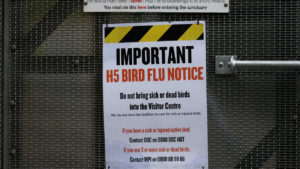
Australia will soon begin vaccinating its vulnerable native birds against the deadly H5N1 bird flu as the virus spreads more widely after first being detected in the country in June, the government said on Tuesday.

The vaccine rollout will begin in the "coming days and weeks," with an initial focus on priority species in captivity, Agriculture Minister Julie Collins told reporters in Canberra.

"The priority species will be identified based on vulnerability to the H5 bird flu and the potential conservation impact," Collins said.

"We've been very clear that we cannot stop the H5 bird flu from spreading amongst wild birds, but we can take action to protect the species most at risk, and the vaccination is now part of that response."

The move follows neighboring New Zealand's decision in July to begin a vaccination program for 300 core breeding birds from five of its most endangered species.

About 45% of Australia’s roughly 850 bird species are endemic, government data shows, meaning they are unique to Australia and found nowhere else on Earth.

Australia reported its first mass seabird deaths from avian influenza last week, marking an escalation of an outbreak that began after the virus was first detected in migratory seabirds before spreading to native species last month.

Australia was the last continent to report bird flu, although the virus was detected in late 2025 on the sub-Antarctic territory of Heard Island.

Get help now

Send a message with a description of your problem and possible ways of assistance and we will contact you as soon as we consider your problem.